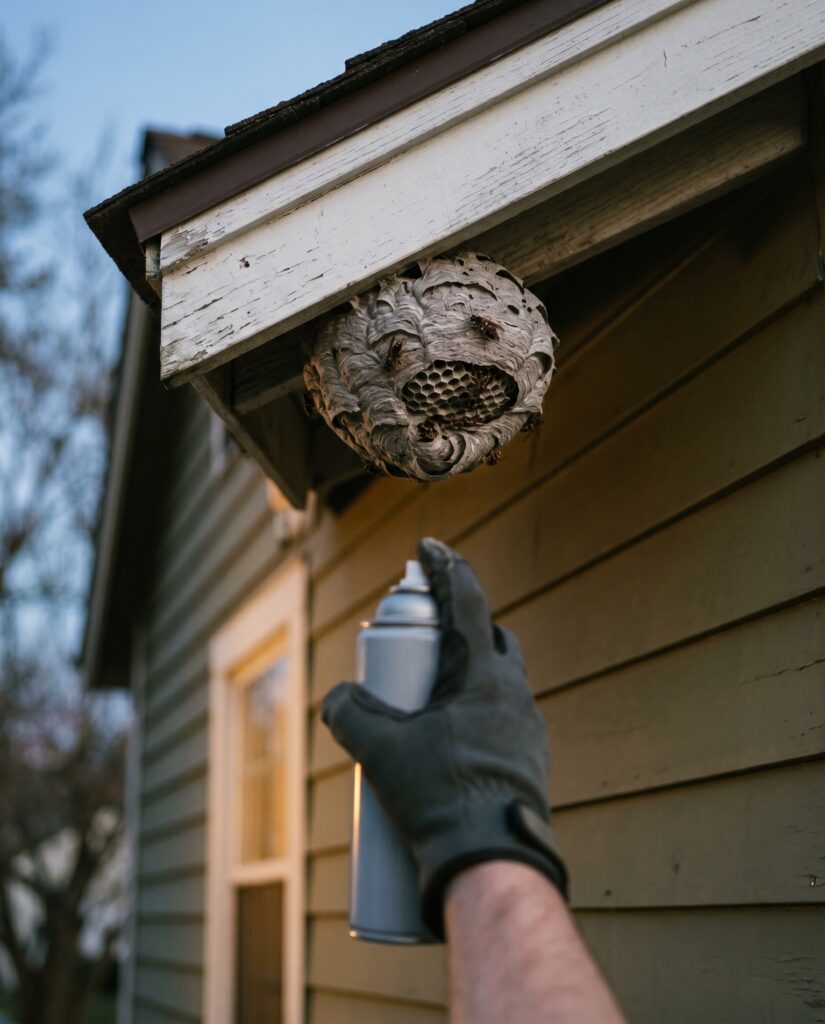
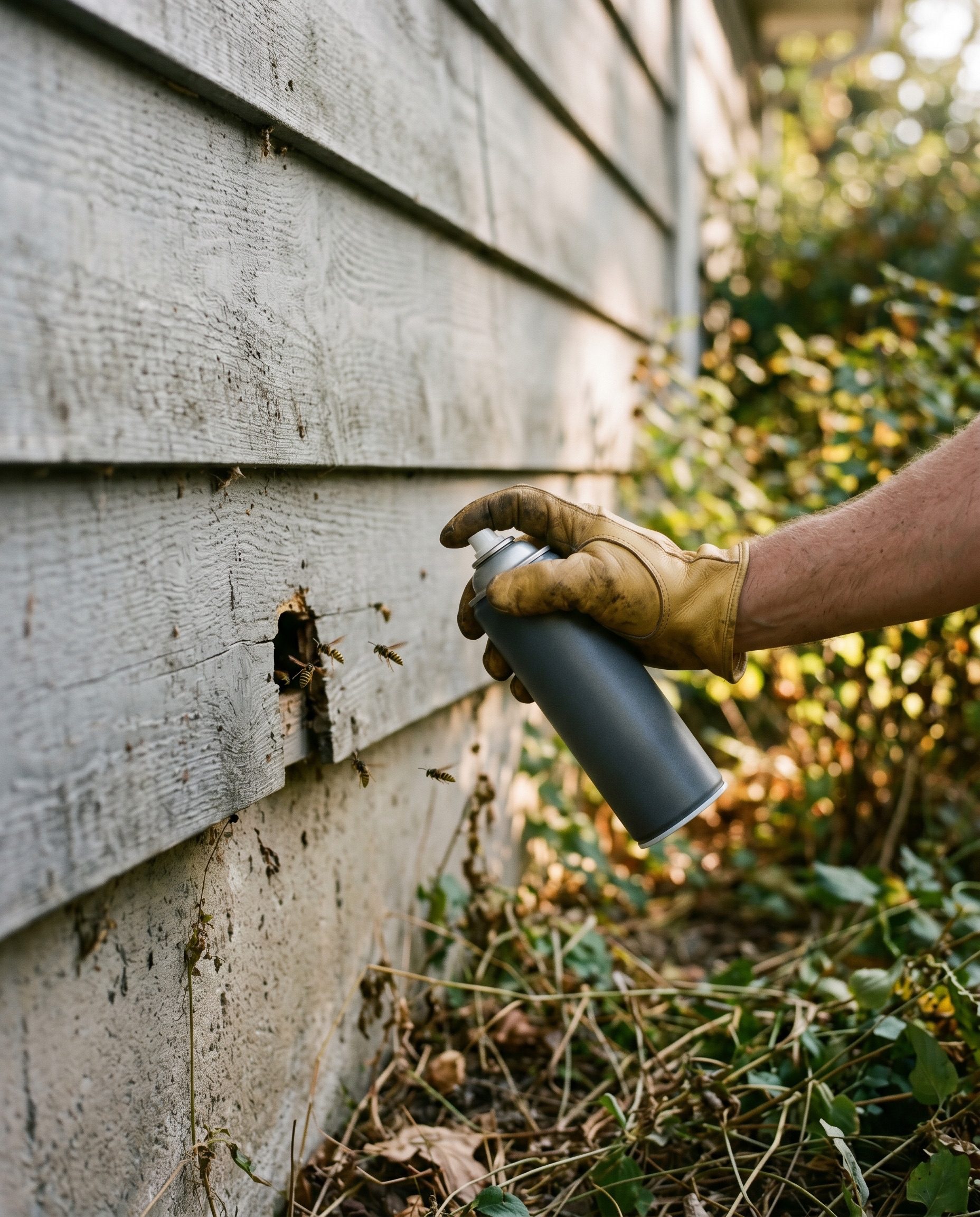
There is no single best wasp spray, only the right can used the right way, and the right way is from a distance with a long-range jet, at dusk when the wasps are home and sluggish, with a clear escape path behind you. Match the can to the nest: a 20-foot jet for a reachable umbrella nest, foam to seal an entry point in siding, and an electrically non-conducting formula near a porch fixture. The short answer: spray from the ground at dusk, never off a wobbly ladder, and treat a large, high, or in-wall nest, or any sting allergy in the household, as a job for a pro and not a do-it-yourself project. For our own porch we keep one long-range can on hand and use it once, at night, then walk away. Most lists rank cans by kill speed; the comparison below sorts them by the situation you are actually standing in front of.
The safe way to spray a nest is from a distance with a long-range jet, at dusk when wasps are home and sluggish, with an escape path behind you; match the can to the nest, and leave a large, high, in-wall, or allergy-risk nest to a pro.
- Do first (free): Wait for dusk, plan an escape path on solid ground, and identify the nest before you buy or spray anything.
- Match the job: A 20-foot jet for a reachable open nest, foam to seal an entry hole, a non-conducting formula near fixtures.
- Skip: Spraying off a ladder, treating a live nest in daylight, or burning or sealing a nest with wasps still inside.
What to do first
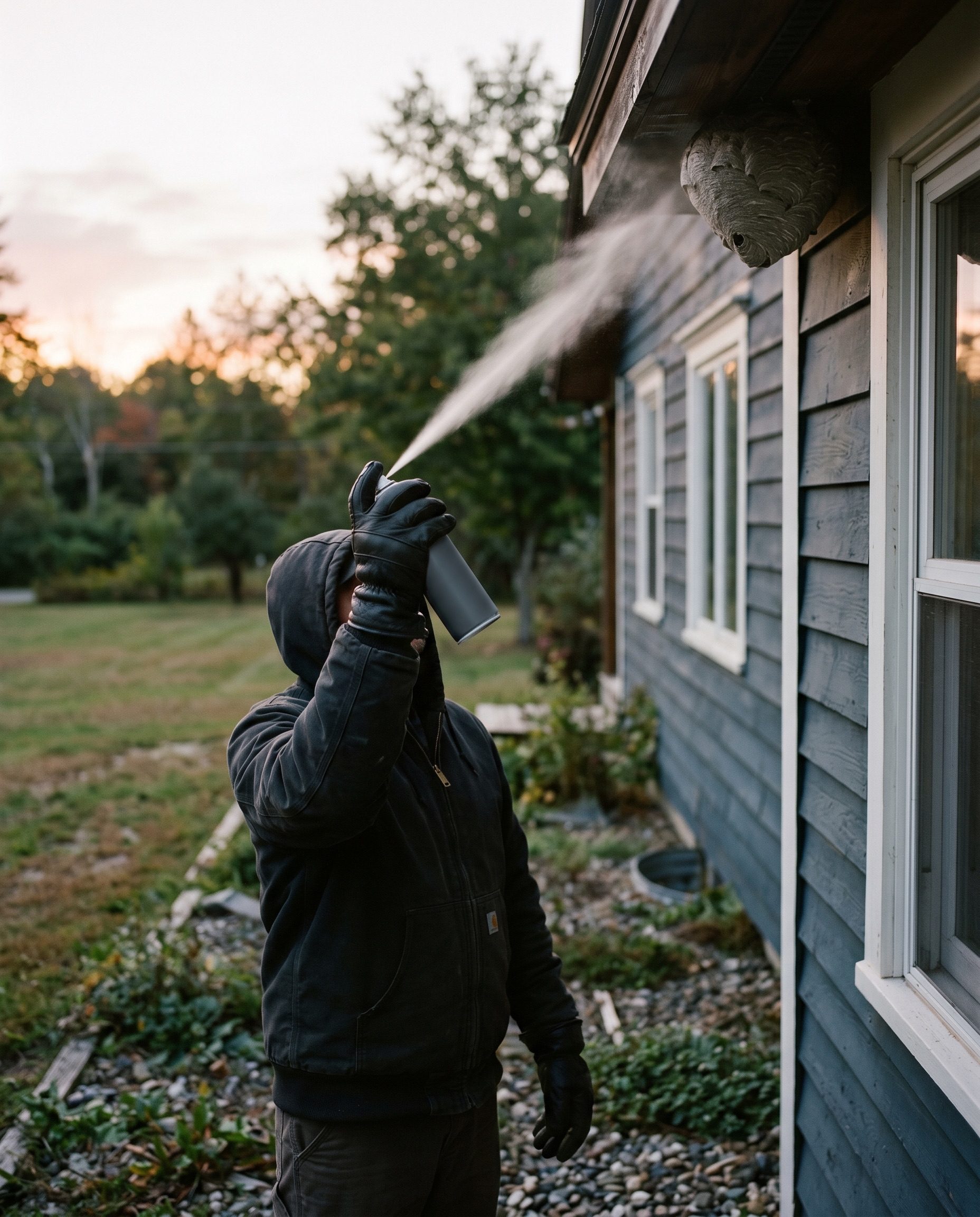
Before any can comes off the shelf, get the free part right, because timing and footing decide whether this goes well. Treat the nest at dusk or after dark, when nearly all the wasps are home and slowed down by the cool air, and never in the heat of the day when foragers are out and the colony is most defensive. The UC IPM guidance on yellowjackets and other social wasps is explicit that evening treatment, applied when the colony is least active, is the safer window. Stand on solid, level ground with a clear path to back away, kill any porch light that would draw wasps toward you, and wear long sleeves.
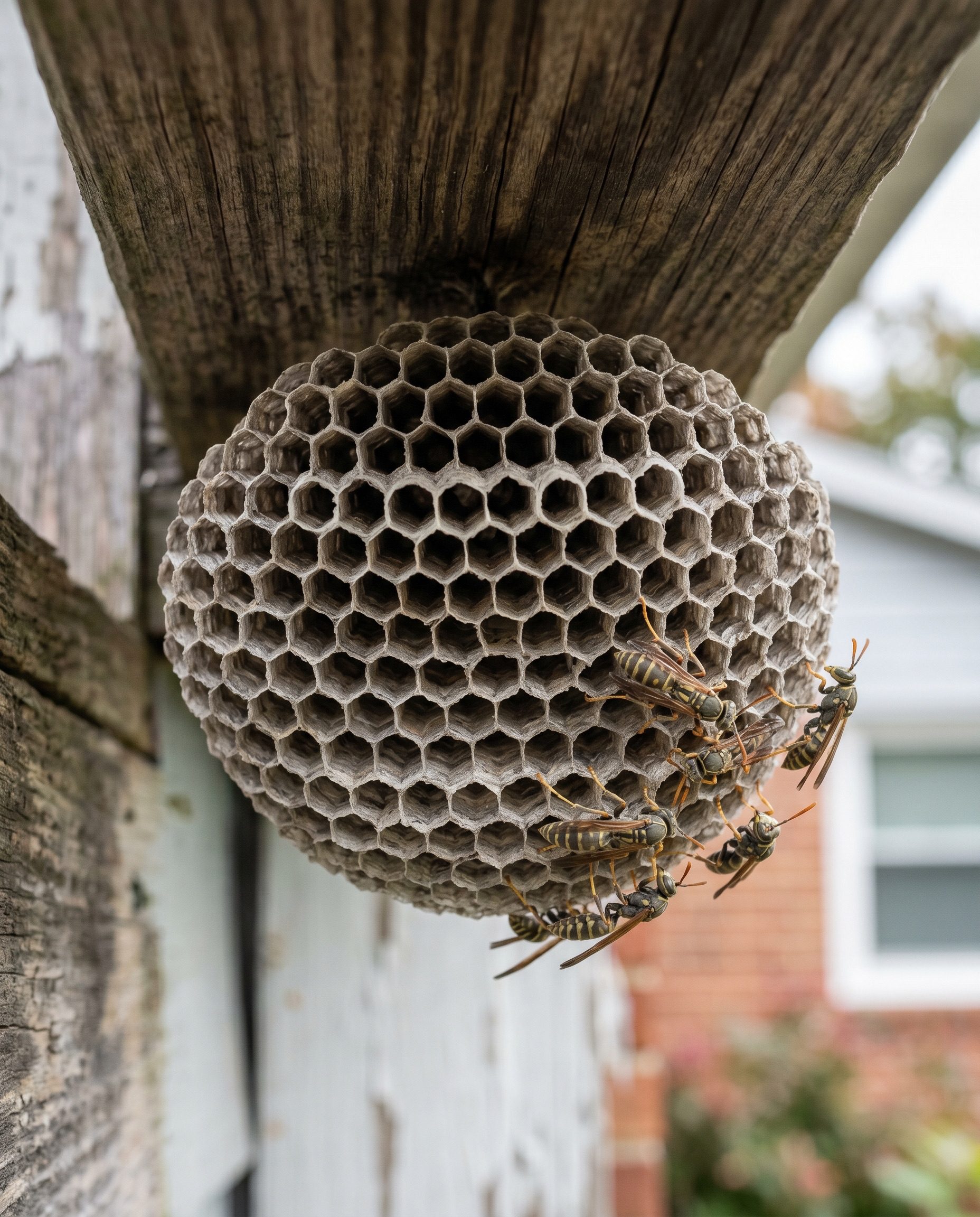
Then figure out what you are actually dealing with before you treat. A paper-wasp umbrella nest under an eave is a different job from a yellowjacket nest buried in the ground or hidden inside a wall. The open, exposed combs of paper wasps and aerial hornets can often be hit directly with a jet, while a nest you only see wasps entering, at a gap in the siding or a hole in the lawn, is a sealed void you cannot fully reach. If you are not certain it is even a wasp, our guide to the difference between a bee, a wasp, and a hornet sorts that out, and it matters, because honeybees are protected pollinators you should never spray. A product is worth buying once you know the nest type and have a safe approach, not before.
Paper wasp or hornet goes further into judging it from several metres.
When the nest is a pro’s job, not a ladder’s
Here is the part most “top killer” lists skip. A can with a long jet is for a small, reachable, ground-level nest, and nothing more. The most dangerous mistake homeowners make is spraying a nest while balanced on a ladder, because the natural reaction to a few angry wasps is to flinch or step back, and there is no safe way to do that from a rung. If the nest is high under a second-story eave, deep in a wall void, inside a chimney or attic, or the size of a football or bigger, that is the moment to put the can down and hire a licensed professional with the right equipment.
The same goes for anyone in the home with a known sting allergy. The University of Kentucky’s ENTfact on wasps, hornets, and yellowjackets is clear that large or concealed nests, and any allergy risk, push the job out of DIY territory. There is no product that makes a wall-void yellowjacket nest safe to treat from a step stool, and trying anyway is how people end up with dozens of stings at once. One firm rule beyond the ladder: never burn a nest or seal a live one shut. A flame near a dry nest and the eave around it is a fire risk, and sealing the entry only drives wasps to chew a new exit, sometimes into the living space. Our walkthrough on how to get rid of a wasp nest safely covers the full sequence for the nests that are fair game.
Match the can to the nest
Once you know the nest type and that it is safe to treat, the can choice is short. Decide by two questions: can you see and reach the nest opening, and is it near anything electrical. The point is to pick the form that fits the situation, not the loudest claim on the label.
| Spray type | Best for | Watch-out |
|---|---|---|
| Long-range jet aerosol | Open, reachable nests under eaves or in shrubs | Aim and wind matter; keep the full distance and an escape path |
| Expanding foam | Sealing an entry hole in siding or a void after treatment | Treat the nest first; do not trap live wasps inside the wall |
| Non-conducting formula | Nests near porch lights, outlets, or fixtures | Still follow the label voltage limit; cut power where you can |
Why not just grab the strongest can and be done? Because the strongest jet is the wrong tool for a nest tucked beside a light fixture, where an electrically non-conducting formula is what keeps the application from becoming a shock hazard. A long-range jet earns its place on an open paper-wasp or hornet nest you can hit from the ground, while a foam is for sealing the gap a yellowjacket was using, after the colony is dead. And none of these is a guarantee on a hidden nest: the EPA’s safe pest control principles put correct identification and using the least-toxic effective approach ahead of reaching for the biggest can. If wasps are mostly a yard nuisance rather than a nest emergency, the best wasp traps for your yard thin out foragers without anyone going near a nest at all.
How to apply it safely
Spray the nest, not the air, and do it in one committed pass. Stand at the can’s full rated distance, aim the jet at the nest opening or the underside of an open comb, and soak it, then back away along your planned path without turning your back on it. One thorough dusk treatment beats three nervous half-treatments in daylight. Read and follow the product label, because under federal law the label is the law, and it sets the legal distance, the surfaces, and the voltage limit on a non-conducting can; do not improvise rates or uses it does not list. Leave the nest in place overnight and check the next evening for returning activity before you remove or seal anything.
Treat these cans as the pesticides they are. Keep children and pets indoors and well clear until the treated area has dried and the activity has stopped, do not spray where the drift lands on a vegetable garden or a pet’s water bowl, and store the can out of reach. For an outdoor nest near flowering plants, avoid spraying open blooms and time the treatment for dusk when bees are not foraging, so you are not hitting pollinators along with the wasps. If someone is exposed to the product, contact a doctor or your local poison control center, and you can read the safe-use basics on the EPA’s safe pest control page for any application question.
Carpenter bees are the one case to slow down on. Those big bees boring round holes in fascia and decking are clumsy pollinators, not aggressive nesters, and the University of Kentucky’s carpenter bee ENTfact recommends excluding and sealing their galleries rather than reaching for a wasp can first. And a true honeybee swarm is never a spray target; call a local beekeeper to relocate it instead of killing a protected pollinator.
The picks
Cards come after the analysis on purpose, because the situation decides which can you buy. These three cover a reachable nest, a near-fixtures nest, and a lower-tox option, and all are common, widely available wasp sprays.
InsectoGuide is reader-supported. As an Amazon Associate we earn from qualifying purchases at no extra cost to you.
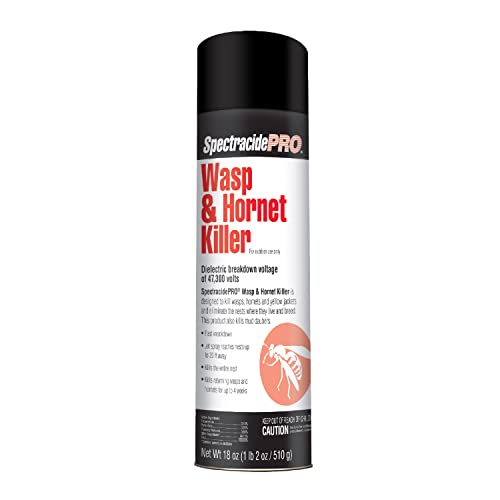
For a reachable open nest you want to hit from a safe distance.
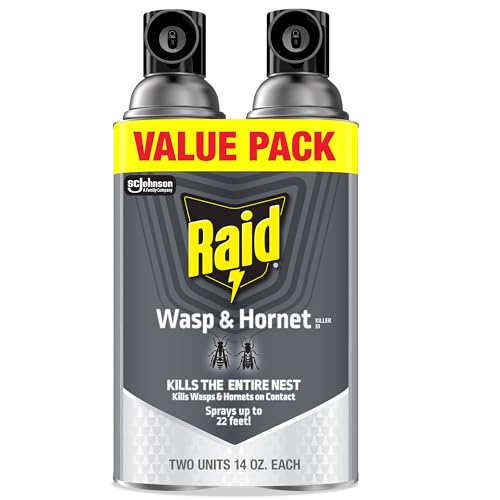
A widely stocked can for a paper-wasp nest near a porch fixture.
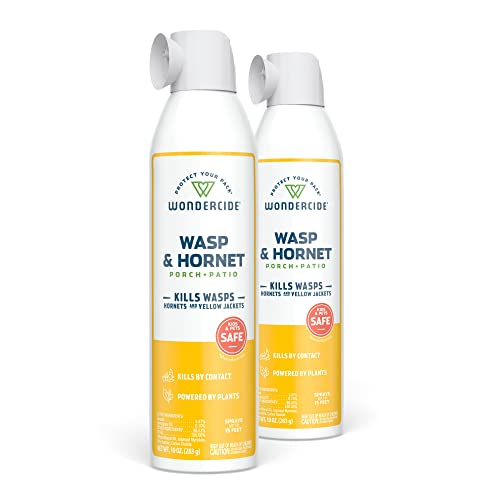
A lower-tox essential-oil option for around the home when the label fits.
Common questions
When is the best time of day to spray a wasp nest?
At dusk or after dark, when nearly all the wasps are back at the nest and slowed by the cool air. The UC IPM guidance points to evening treatment because the colony is least active and least defensive then, which is far safer than a daytime hit.
How far back should I stand when I spray?
Use the can’s full rated distance, which is why a 20-foot jet exists, and keep a clear path to back away on solid ground. Never spray from a ladder, because flinching from a rung is how falls and mass stings happen.
Can I just seal or burn the nest instead?
No. Sealing a live nest only pushes wasps to chew a new exit, sometimes into the house, and burning a dry nest under an eave is a fire risk. Treat the colony first, confirm it is dead, then seal the gap with foam.
Is a wasp sting an emergency?
For most people it is painful but not dangerous, and the MedlinePlus guidance on insect bites and stings covers basic first aid. But anaphylaxis is a medical emergency: get emergency medical help right away for trouble breathing, throat or tongue swelling, dizziness or fainting, or hives spreading fast, and use a prescribed epinephrine auto-injector if you have one. Talk to a doctor or an allergist about your own risk.
What about a nest that turns out to be bees?
Do not spray it. Honeybees are beneficial pollinators, and a swarm or colony should be relocated by a local beekeeper, not killed. Carpenter bees boring into wood are best excluded and their galleries sealed, with a spray as a last resort only.
Final verdict
There is no single best wasp spray, and any list that crowns one is skipping the only question that matters: where is the nest and can you reach it safely. Treat it at dusk, from the ground, with a long-range jet and a clear escape path, never off a ladder and never with a flame. Match the can to the situation: a 20-foot jet for an open reachable nest, foam to seal the entry hole afterward, and a non-conducting formula near fixtures. Hand a large, high, in-wall, or allergy-risk nest to a licensed professional, because no product makes that job safe from a step stool. And if it turns out to be bees, leave the spray on the shelf and call a beekeeper instead.