Wasps pick your house for the same two reasons every spring: a sheltered spot to build under, and easy food nearby. The way to keep nests off your property is to win the season early. Knock down the small, queen-only nests in spring before they grow into summer colonies, seal the soffit and wall gaps wasps slip into, and keep trash and food covered so foragers move on. A ten-minute walk around the eaves in April beats fighting a hundred-wasp colony in July.
Prevent wasp nests by removing the small founding nests early in spring, sealing the soffit and wall gaps they build in, and cutting off food and sugar so foragers do not settle in. Spring prevention is far easier than treating a full summer colony.
- Do first (free): Walk the eaves, soffits, and shed weekly in spring and knock down any small golf-ball nest before it grows.
- Best for the common case: Seal soffit, fascia, and wall gaps with caulk or screen, and keep trash lidded and food covered.
- Skip: Waiting until midsummer to react, then spraying a large active colony yourself from a ladder.
Why wasps build where they do
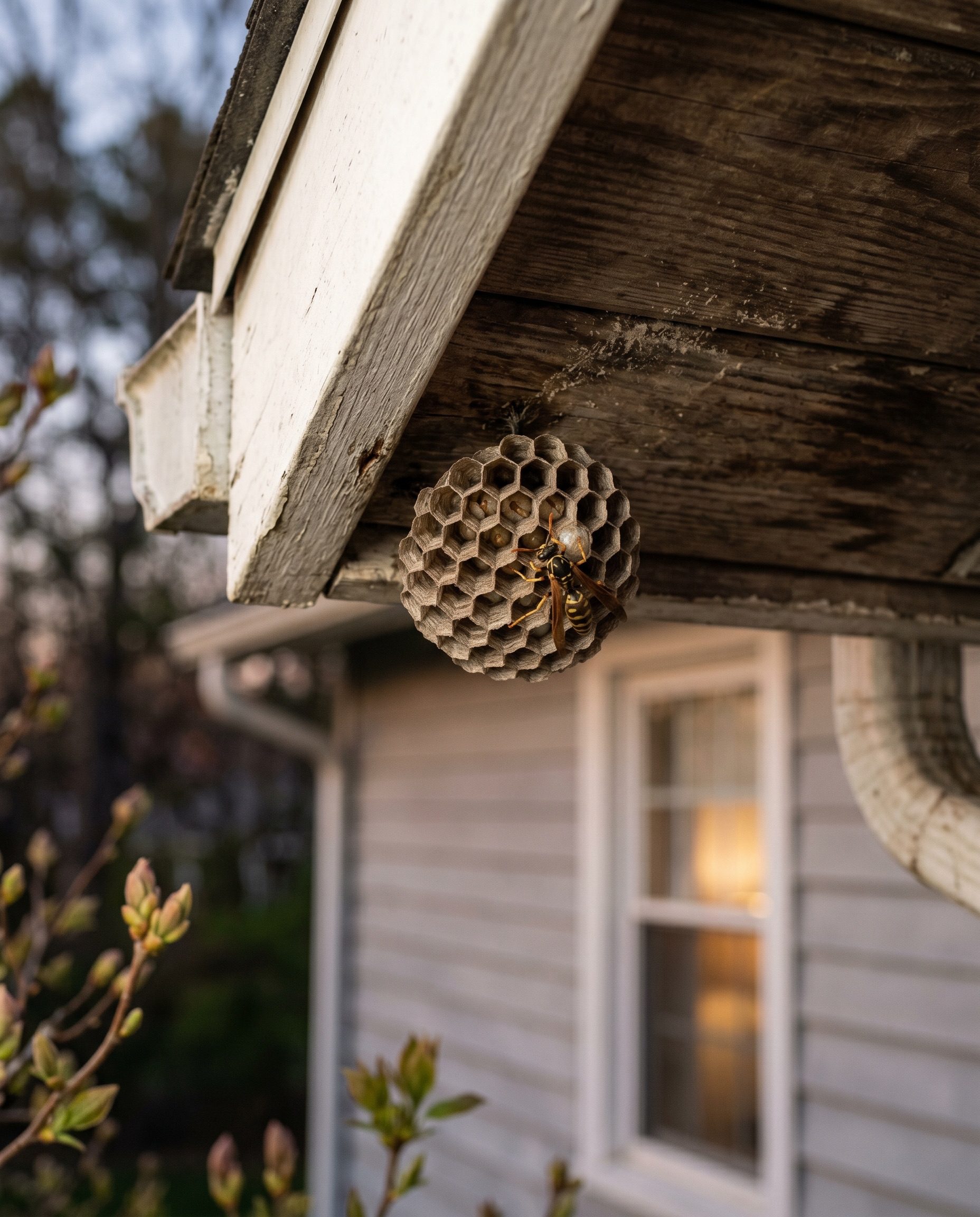
Wasps are not picking your house at random. A founding queen wants a dry, sheltered overhang she can hang a paper nest from, protected from rain and wind, and she wants forage within easy flying distance. That is why eaves, soffit corners, porch ceilings, door frames, sheds, and the inside of grills and mailboxes get hit year after year. As yellowjackets and paper wasps nest where they find shelter and food, the same handful of spots on a property attract a new queen every season.
Food is the other half of the draw. In spring the queen hunts insects to feed her first larvae, but by late summer the colony shifts to sugar and protein scraps, which is when wasps start crowding your soda can and trash bin. An uncovered bin, fallen fruit under a tree, a pet bowl left out, or sticky recycling is an open invitation. Cut the shelter and cut the food, and most queens look elsewhere before they ever commit to your house.
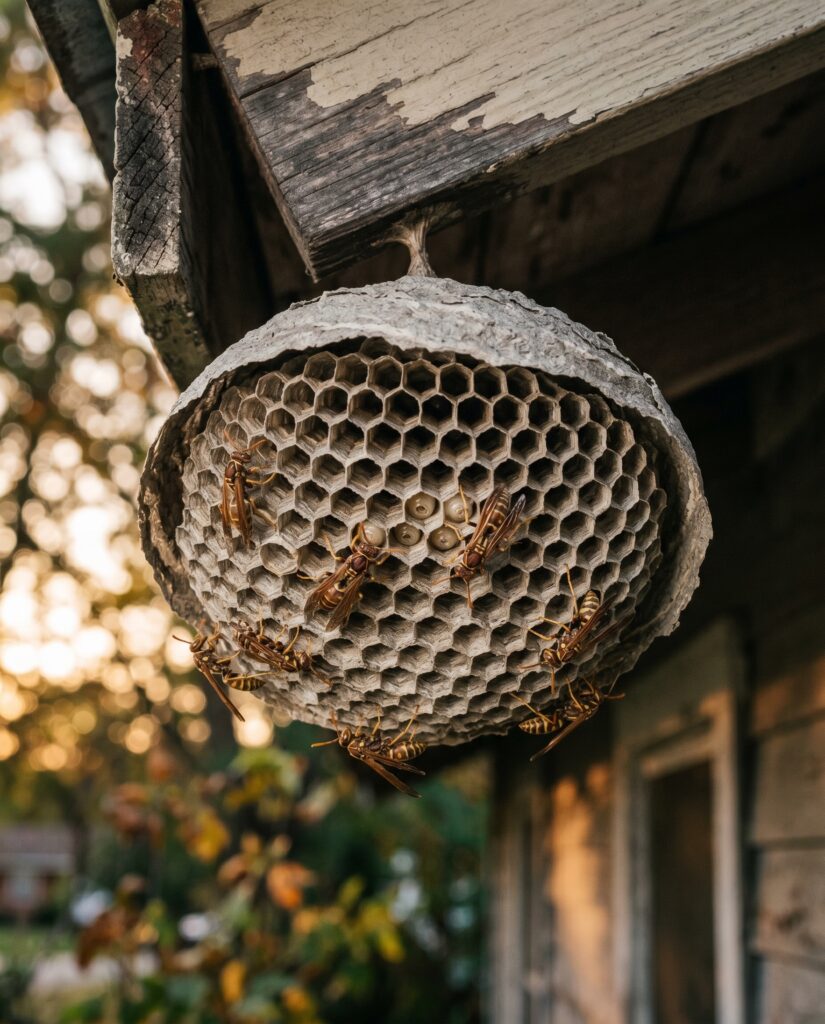
It helps to know which insect you are dealing with, because the prevention is similar but the tolerance differs. Paper wasps build the open, umbrella-shaped combs under eaves and are fairly docile. Yellowjackets nest in the ground or in wall voids and are far more aggressive. Our paper wasp versus yellow jacket identification and control guide walks the visual differences so you can judge how cautious to be.
Spring is the only easy window
Here is the timing that changes everything. In early spring a nest is a single queen and a comb the size of a golf ball, with no workers to defend it. By midsummer that same nest can hold hundreds of wasps that will swarm anything that threatens it. The entire strategy of prevention rests on acting in that early window. What to do first costs nothing: walk your eaves, soffits, porch, and shed every week or two from April into early June and look for those tiny starter nests.
When you find one that small and clearly inactive or holding just the founding queen, the safest play is knocking down a small queen-started nest in spring with a long pole or a strong hose stream, then scraping the attachment point so she does not simply rebuild on the same stub. Do this at dusk when the wasp is least active, and only on a nest small enough that one or no wasps are present. If workers are already flying in and out, it is past the easy stage and you should treat it as a control job, not a prevention one. Our how to get rid of a wasp nest safely guide covers the larger-nest case in detail.
Seal the gaps they slip into
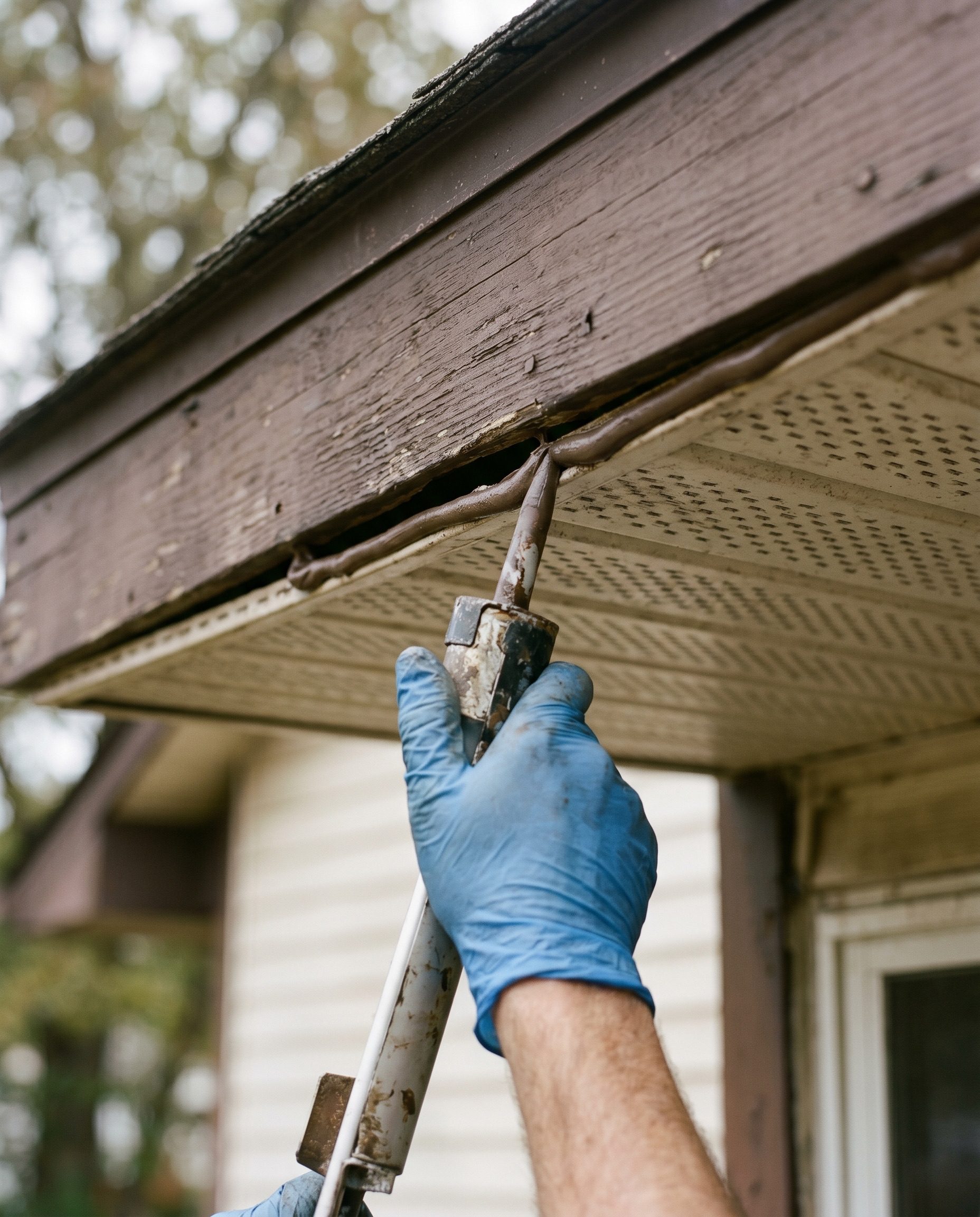
Removing nests is reactive. Sealing entry points is what actually stops next year’s queens, and it is the step most homeowners skip. Wasps and especially yellowjackets exploit small openings to nest inside soffits, wall voids, and attic edges where you cannot easily reach them. Walk the exterior and close the gaps before the season starts, ideally in late winter or very early spring.
Focus on the spots wasps actually use. Caulk the seams where the soffit meets the fascia, screen or cap gable and soffit vents with fine metal mesh, seal cracks around utility penetrations and light fixtures, repair torn screens, and add weatherstripping where siding panels gape. This work doubles as energy-saving home maintenance, which is part of why the the EPA’s integrated pest management approach puts physical exclusion ahead of spraying. Do not seal a void that already has an active nest in it, because trapped wasps will chew toward the living space looking for another way out. Clear the nest first, confirm it is empty, then close the hole.
One caution while you are sealing. If you find round, dime-sized holes drilled into bare fascia, deck rails, or eaves, those are carpenter bees, not wasps. Carpenter bees are pollinators you exclude rather than kill, so the right move is to fill and paint or seal the galleries to redirect them, treating them as a last resort rather than reaching for spray.
Cut the food and water supply
Wasps that cannot find an easy meal are far less likely to settle near your house. Keep outdoor trash and recycling bins tightly lidded, rinse sticky containers before they go in the bin, and pick up fallen fruit from under trees promptly. At cookouts, cover food and drinks, use cups with lids instead of open cans, and clear plates quickly. A covered pet bowl and a clean grill remove two reliable late-summer attractants most people forget.
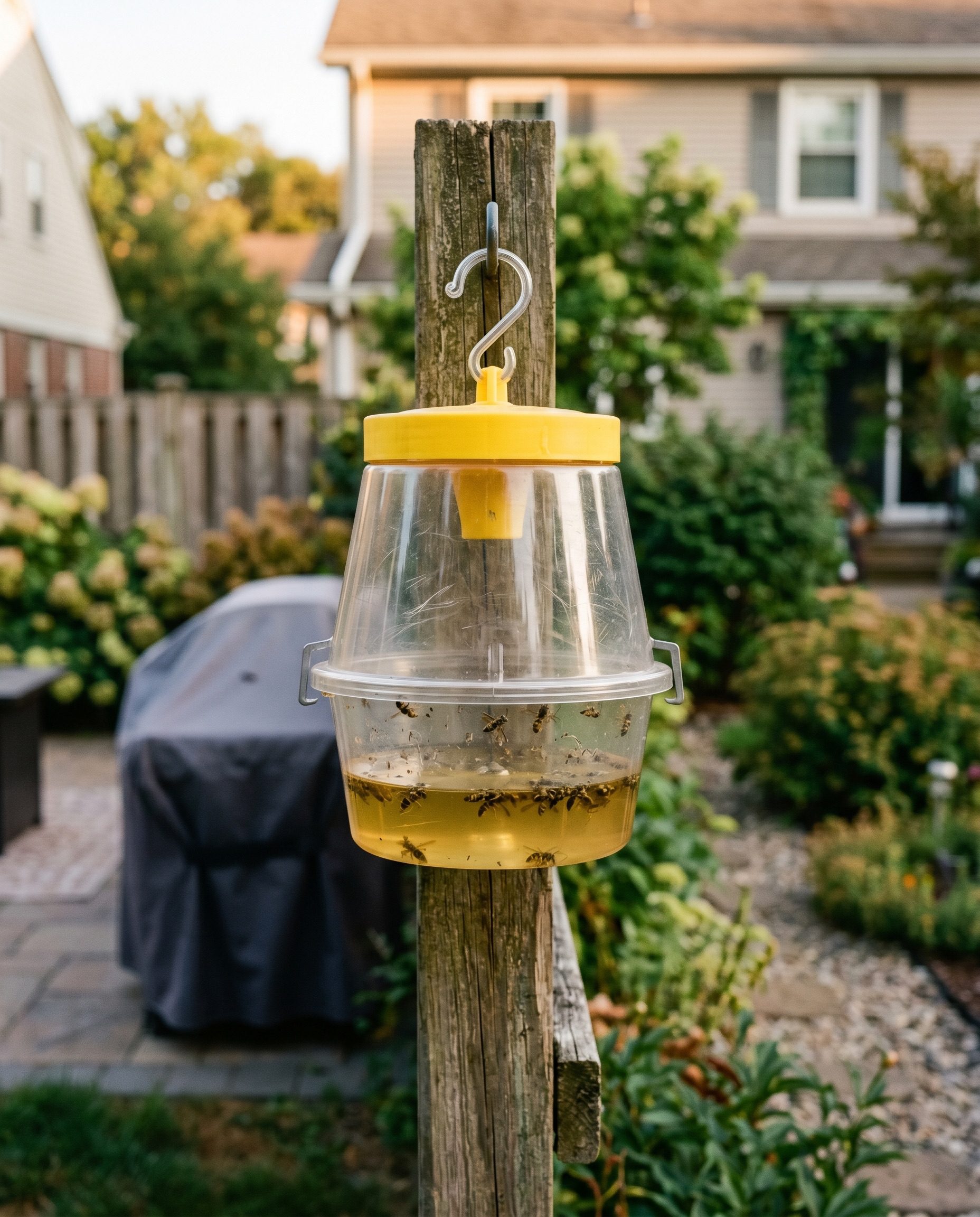
Standing water matters too, since wasps drink and use water to build. Empty saucers under planters, fix dripping outdoor faucets, and keep gutters draining so puddles do not sit. Hanging wasp traps can help at the edges of the yard, drawing foragers away from your patio rather than toward it, but place them along the perimeter, never near the door or the table you actually use. Our best wasp traps for your yard, tested sorts the lure types and where each one belongs.
Where to focus by spot
Different parts of a property invite different problems, so the prevention tactic shifts with the location. This is the quick map for the spots that get hit most.
| Spot | Best prevention | Watch out for |
|---|---|---|
| Eaves, soffits, porch ceiling | Weekly spring checks plus caulk and vent screen | Sealing a void that still has a live nest |
| Trash, grill, patio | Lidded bins, covered food, lidded cups | Sticky recycling and open soda cans |
| Yard perimeter and fences | Traps at the edges, fallen fruit cleared | Placing traps near the door or table |
| Wall voids, ground, large nests | Treat at dusk from a distance, or hire a pro | Spraying from an unstable ladder |
That last row is the honest limit. If a nest is already large, hidden in a wall void or in the ground, or near a doorway where you cannot keep your distance, do not improvise. Treating a mature nest is a dusk job done treating any nest at dusk from a safe distance with an escape route in mind, never from a wobbly ladder, never by sealing or burning a live nest. A licensed pest-control professional is the right call for anything high, hidden, or close to where people pass.
When stings become an emergency
Most wasp stings are painful but minor, and prevention keeps the odds low. The exception is a severe allergic reaction. Anaphylaxis is a medical emergency that needs epinephrine and emergency care: get emergency medical help right away for trouble breathing, swelling of the throat or tongue, dizziness or fainting, or hives spreading fast, and use a prescribed epinephrine auto-injector if one has been prescribed. MedlinePlus explains that anaphylaxis is a medical emergency rather than something to wait out. If you or anyone in the household has a known sting allergy, that alone is reason to be aggressive about spring prevention and to leave any active nest to a professional. For diagnosis or an auto-injector prescription, talk to a doctor or an allergist.
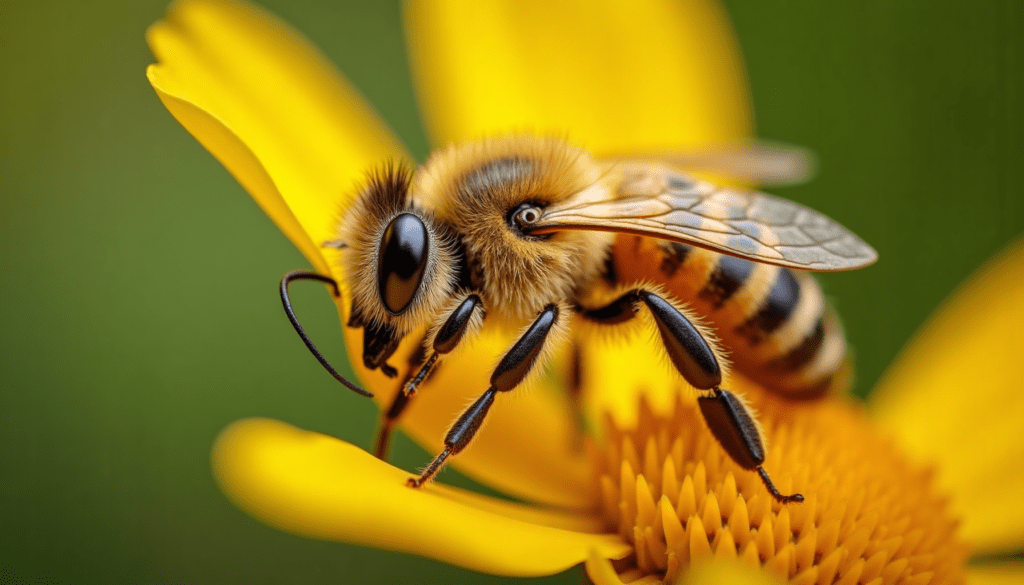
One more distinction that matters at this point: honeybees. If you find a clustered swarm of honeybees rather than wasps, do not treat it. Honeybees are beneficial pollinators, and a local beekeeper will usually relocate a swarm for free. Reserve all of the management advice above for wasps, hornets, and yellowjackets.
Common questions
When is the best time to prevent wasp nests?
Early spring, before colonies build. From roughly April into early June, a nest is just a founding queen and a tiny comb you can remove safely. Sealing entry gaps is best done in late winter or very early spring before queens are scouting. Waiting until midsummer means dealing with a full, defensive colony instead.
Do fake wasp nests actually work?
The evidence is thin. Paper wasps are mildly territorial, so a decoy nest may discourage a new queen in some spots, but it is not reliable on its own and does nothing about yellowjackets. Treat it as a minor add-on, not a substitute for sealing gaps and clearing food and water sources.
What smells keep wasps away?
Some homeowners report that peppermint oil and similar strong scents make a porch less appealing, and they are low-risk to try. Do not count on a scent to clear an established nest, though. Scents are a mild deterrent at best, while exclusion and removing food are what genuinely keep wasps from settling.
Should I spray a wasp nest myself?
Only a small, low, accessible one, and only at dusk from a distance with a clear escape path. Never spray from an unstable ladder, never seal or burn a live nest, and never tackle a large nest, a wall-void nest, or anything near a doorway. When in doubt, hire a licensed pest-control professional.
Why do wasps keep coming back to the same spot?
Because the shelter and the food that drew them are still there, and old nest attachment points and scent cues mark the spot as suitable. Scrape off old nest stubs, seal the gap if they were nesting in a void, and remove the nearby food source. Fix the cause and the return visits usually stop.
Final verdict
Preventing wasp nests is about timing and maintenance, not firepower. Walk your eaves and soffits weekly through spring and knock down the small queen-only nests while it costs you nothing and carries little risk. Seal the soffit, fascia, and wall gaps wasps slip into, doing it before the season starts and never over a live nest. Keep trash lidded, food covered, and standing water gone so foragers have no reason to stay. Leave honeybee swarms to a local beekeeper, and hand any large, hidden, or doorway-adjacent nest to a professional. Do the spring work and you simply will not be fighting a colony in July.
Next steps:
– Tell the two species apart before you act with our paper wasp versus yellow jacket identification and control guide.
– If a nest is already established, handle it the safe way with our how to get rid of a wasp nest safely guide.
– Set perimeter traps the right way using our best wasp traps for your yard, tested.