
A hard domed shell with a straight seam running down the middle of the back means beetle, and that one feature rules out bed bugs, cockroach nymphs and everything soft-bodied. Six families cover household beetles, and where you found it decides which: in food, in fabric, on a windowsill, in damp new plaster, or in from the garden.
- Inside a food packet: a pantry beetle or a weevil, and the packet is the whole problem.
- In carpet, a wardrobe, or dead on a sill: carpet beetle, and the larvae are what matter.
- Hundreds at once in a new or damp room: foreign grain beetle, which leaves when the damp does.

Hardness is one of the more reliable things a person can report, because it is felt rather than seen. A beetle’s forewings are modified into rigid cases that meet in a straight line down the back, and once you know to look for that seam it is visible on anything above two or three millimetres.
What the seam rules out
Bed bugs are flat and leathery, not domed and hard, and have no wing case seam. That reassurance is worth stating early, because it is why most people are searching.
Cockroach nymphs are wingless and flexible.
True bugs, including stink bugs, have a triangular plate behind the head and wings that overlap rather than meeting in a line.
If you can see a clean seam dividing the back into two halves, you are looking at a beetle, and the list gets short.
Sorting by where you found it
| Where | Family | The tell |
|---|---|---|
| In flour, rice, cereal, pet food | Pantry beetles and weevils | Found in the packet, not near it |
| Carpet edges, wardrobes, dead on sills | Carpet beetles | Rounded, mottled, 2 to 4 mm |
| Dark corners, lofts, old buildings | Spider beetles | Round, shiny, long legs |
| New build or damp room, in numbers | Foreign grain beetle | Arrives en masse, then vanishes |
| Running along a wall at night | Ground beetles | Fast, dark, came in under a door |
| Below timber with fine dust | Powderpost beetles | Small round exit holes in wood |
The pantry group
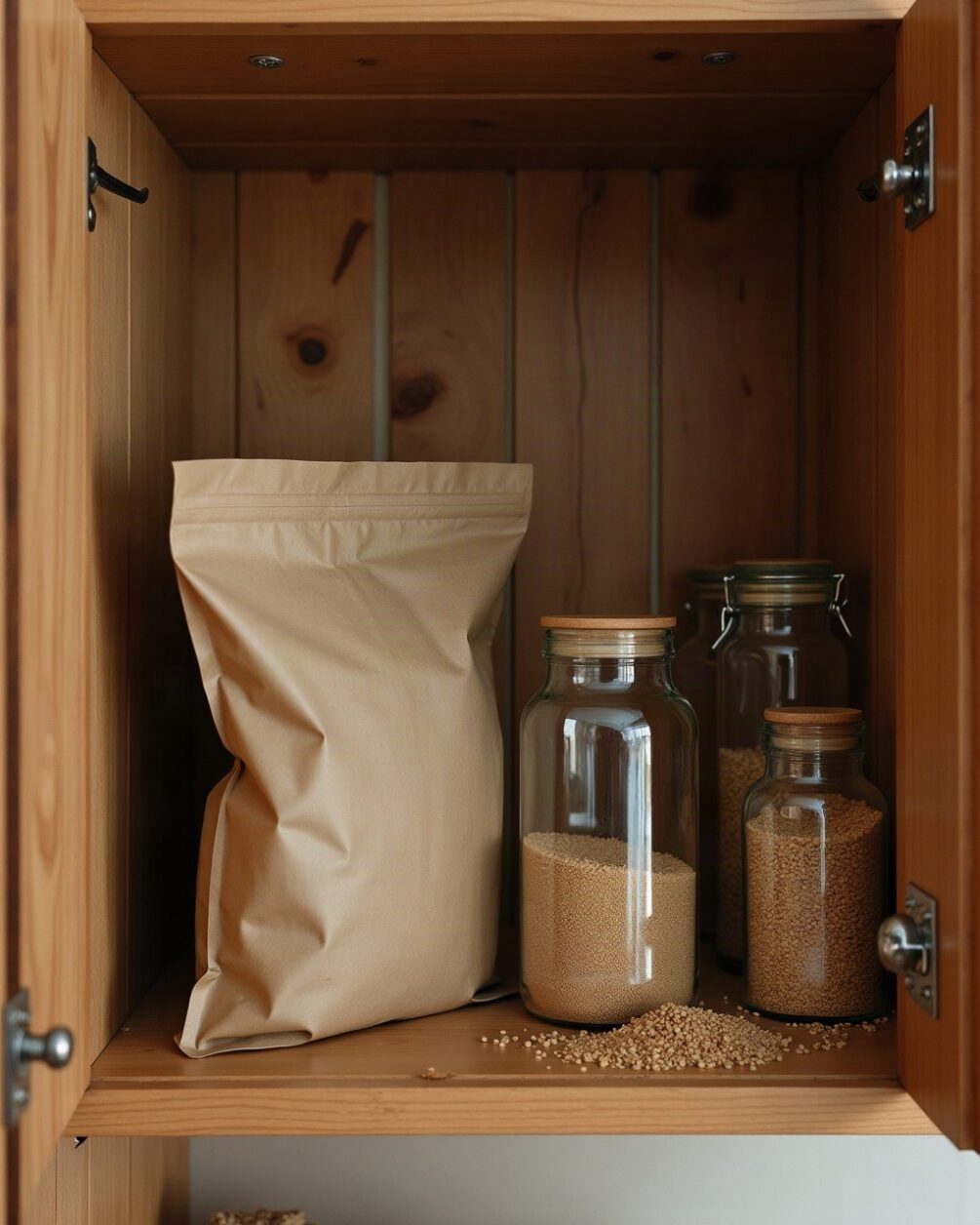
If the beetle came out of a cupboard, open the packets before doing anything else. Kentucky’s guidance is that stored product infestations usually trace to a single contaminated item, often something old at the back that has not moved in a year.
Weevils are the easiest to name because of the snout, a long downward curve on the head that no other household beetle has. Drugstore, cigarette and sawtoothed grain beetles are all a few millimetres, brown and rounded, and distinguishing between them matters far less than finding the packet.
All of them arrive in a package rather than through a window, and all are solved the same way: find and bin the source, vacuum the shelf, and store the survivors in glass or hard plastic, because they chew through paper and thin card. Our pantry pest guide covers the search and the cupboard guide covers the full cast.
Carpet beetles, and why the adult is the wrong stage
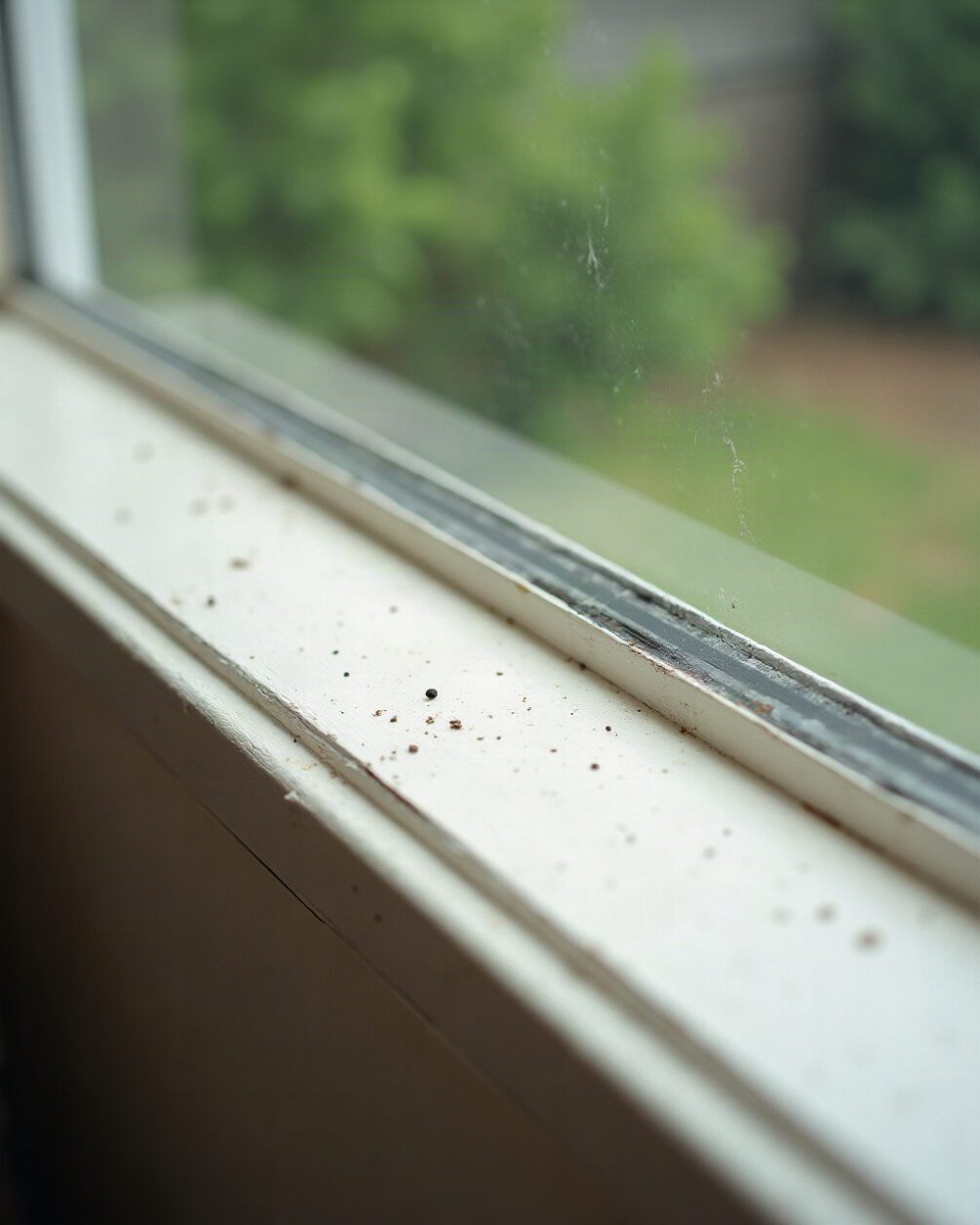
Adults are two to four millimetres, rounded, and mottled brown, black and cream depending on species. They feed on pollen outdoors and are drawn to light, which is why the ones you find are usually on a windowsill and often apparently dead.
Kentucky notes that the larvae feed on wool, fur, feathers and other animal products. The adult on the sill is a prompt to search, not a problem in itself, and the search is wardrobes, carpet edges, under heavy furniture, and the eaves, where a bird nest can feed a population indefinitely.
They also frequently are not dead. Beetles play dead readily, and our guide to the white paper test covers how to tell, which changes whether you are collecting arrivals or looking at a breeding population indoors.
Spider beetles and foreign grain beetles
Spider beetles are round, shiny, dark reddish brown, with long legs and antennae that give a spider-like impression. They are harmless scavengers on dried organic material and their presence usually means an undisturbed food source somewhere: a burst bag behind a cupboard, birdseed in a shed, or debris in a loft. Our spider look-alike guide covers the confusion.
Foreign grain beetles produce a specific and alarming pattern: a new build, an extension, or a room that got wet, suddenly full of very small brown-black beetles over a few weeks. They feed on the surface mould that grows on damp plaster and fresh timber. Kentucky is blunt that these beetles are associated with damp conditions and disappear once the moisture resolves. Insecticide is largely pointless because the mould is the food. Ventilate, run heating, wait.
The ones that are only passing through
Ground beetles are dark, often shiny black, hard-shelled, and run in determined straight lines along a wall at night. They come in under doors, particularly after rain, and feed on nothing indoors. Our guide to fast crawling bugs covers them, and the fix is a door sweep.
Click beetles are elongated, and if turned on their back they snap a hinge in the body to flip themselves with an audible click. Outdoor insects, entirely accidental indoors.
June bugs and other chafers arrive at lights in early summer and blunder in. Our guide to insects and light covers why the bulb matters more than anything else.
The one that is a building question
Powderpost beetles leave very fine flour-like dust below timber, with small round exit holes in the wood itself. That is a structural finding rather than a housekeeping one, and it needs distinguishing from carpenter ants, which push out coarse shavings, and from termites, which pack their galleries and eject nothing.
Our powderpost beetle versus termite guide covers the comparison, and the guide to reading specks covers frass alongside the other kinds of debris.
Common questions
It looks dead but there are more every week.
Then they are probably not dead, or something is breeding indoors. Clear the sill completely and check again in a week: replenishment is the signal.
Do any of these bite?
None of the household beetles bites people. Carpet beetle larvae irritate skin on contact, which is different, and a large ground beetle can pinch if handled and does no harm.
How did they get into sealed packets?
Usually they did not. They were present as eggs when the item was bought, and paper and thin card are not a barrier for adults either. That is why glass containers, rather than better cupboard hygiene, are the answer.
Final verdict
Feel for the shell and look for the seam: two hard halves meeting in a line down the back means beetle, which rules out the things most people are afraid of. Then let the location finish it. In the food means one contaminated packet. In fabric or dead on a sill means carpet beetles and a search for wool. Hundreds in a damp new room means foreign grain beetles and a building that is still drying. And fine flour-like dust under a beam means stopping and looking at the timber properly.
Pingback: Shiny Metallic Bugs in the House: What They Are