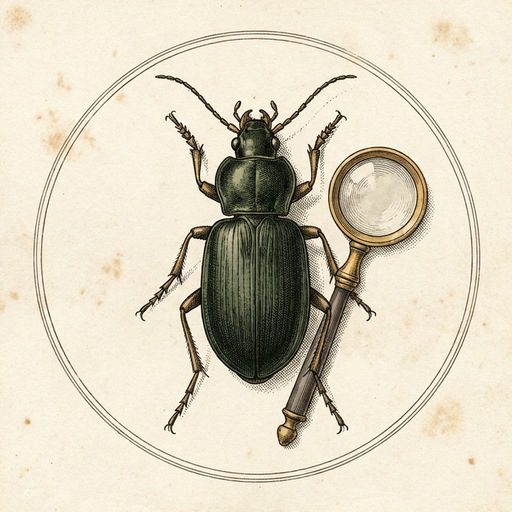
Eight legs makes it an arachnid but not necessarily a spider. A spider has two clear body sections joined by a narrow waist, and no antennae. Harvestmen have one solid oval body. Ticks are flat and have no waist. And two of the most convincing impostors are insects with six legs: spider beetles and camel crickets.
- One solid body, very long thin legs, no web: harvestman, not a spider and harmless.
- Round shiny body, long legs, six of them: spider beetle, a scavenger pointing at an old food source.
- Flat, oval, eight legs, no waist, found on skin or a pet: tick, and removal matters more than identification.
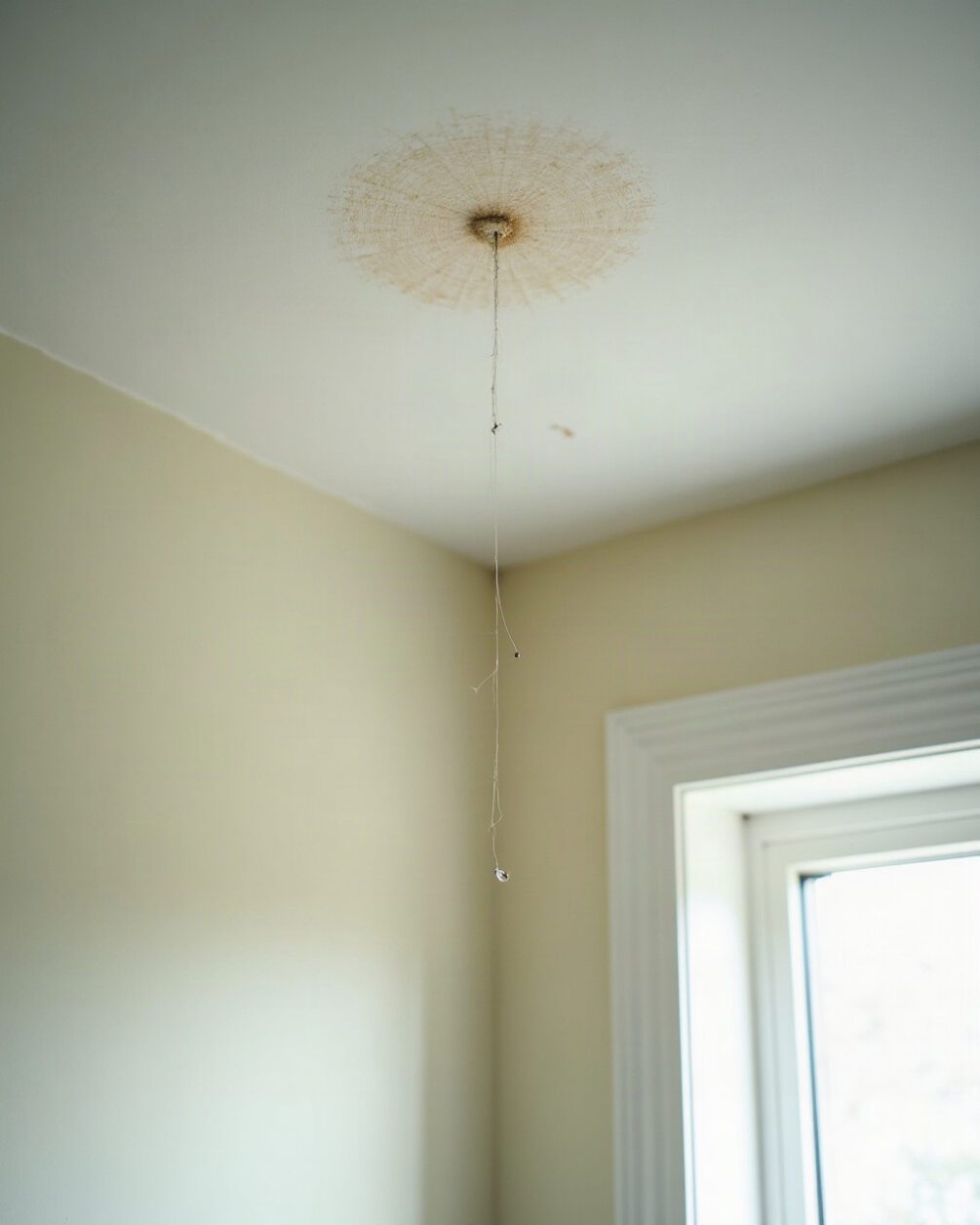
Leg count is the first check people reach for and it does less work than expected, because several things have eight legs and two of the best impostors have six. The features that finish the job are the waist and the antennae.
What makes a spider a spider
Two body sections joined by a narrow waist. A cephalothorax at the front carrying the legs and eyes, and an abdomen behind it. The pinch between them is visible without magnification on anything larger than a few millimetres.
Eight legs, and no antennae. Spiders have pedipalps near the mouth that can look like a short extra pair of legs, but nothing resembling the long mobile antennae of an insect.
Kentucky’s overview of common spiders found around homes and buildings covers the species people actually meet, and our house spider identification guide is the practical version.
The eight-legged non-spiders
Harvestmen, also called daddy long-legs, have one solid oval body with no waist and extremely long thin legs. They do not build webs, do not have venom glands and cannot bite people. The story that they are the most venomous spider but cannot pierce skin is false on both halves: they are not spiders and they have no venom.
Ticks are flat, oval, and have no waist, with the legs clustered at the front. Eight legs as nymphs and adults, six as larvae. If one is found on skin or on a dog, removal comes before identification. Our tick look-alike guide covers it from the other direction, and the removal guide covers the method.
Mites are eight-legged and usually too small to resolve. Clover mites on a windowsill are the common household example, and our clover mite guide covers them.

The six-legged impostors
These are the two that fool people properly, because the impression of a spider comes from the leg length rather than the count.
Spider beetles are round, shiny, dark reddish brown, with long legs and long antennae held forward. At a glance in poor light they read as a small fat spider. They are harmless scavengers on dried organic material, and their presence usually points at an old food source somewhere undisturbed: a burst bag of flour behind a cupboard, birdseed in a shed, debris in a loft. Our pantry pest guide covers the search, which applies even when the source is not in a kitchen.
Camel crickets are larger and cause a different kind of alarm. Humpbacked, long-legged, wingless and pale brown, they live in basements, garages and crawl spaces. What unsettles people is the behaviour: when startled they jump toward the disturbance rather than away from it. They are harmless. Our camel cricket guide covers them, and the guide to bugs that jump covers the wider group.
The spiders worth identifying properly
Most house spiders are harmless and useful, and the two that matter medically in North America are worth being able to rule out rather than worried about generally.
Black widow is glossy black with a red hourglass on the underside of the abdomen, and builds an irregular tangled web low down in undisturbed places: garages, sheds, woodpiles, under garden furniture. Our black widow guide covers the identification.
Brown recluse has a violin-shaped mark behind the head and six eyes in three pairs rather than the usual eight, and it has a genuinely limited range that is much smaller than the internet suggests. Our brown recluse guide covers both the identification and the range.
Hobo spiders get blamed for far more than the evidence supports. UC IPM’s account of the hobo spider is worth reading precisely because it is calmer than the reputation, and our hobo spider guide covers the same ground.
If a bite is the actual concern rather than a sighting, our guide to spider bites and when to worry is the right page. It is worth saying plainly that most wounds attributed to spider bites turn out to be something else, frequently an infection, and that a clinician looking at the wound has better information than anyone looking at a photograph of a spider.

What the web tells you
If there is a web, its shape narrows the species faster than the body does.
A neat flat orb means an orb weaver, which is harmless and usually outdoors.
A messy three-dimensional tangle in a corner means a cobweb spider, the common house spider group.
A funnel with a retreat at the back means a funnel weaver, often mistaken for something more serious.
No web at all, hunting in the open in daylight means a jumping spider or a wolf spider, both of which chase prey rather than trap it.
Kentucky’s guide to eliminating spiders around homes and buildings covers control, though the honest answer for most households is that spiders indoors are eating the insects you like less. Our guide to what attracts spiders makes the same point: reduce the prey and the lighting that draws it, and the spiders follow.
If you find a papery sac rather than a spider, our egg sac guide covers what to do about it.
Common questions
It had eight legs but also antennae.
Then it is not an arachnid, and you are probably looking at pedipalps or at a beetle whose front legs are held forward. Photograph it from the side on white paper.
Daddy long-legs: dangerous or not?
Not, on every version of the question. The long-legged thing in a cellar is either a harvestman, which has no venom at all, or a cellar spider, whose venom is unremarkable and which cannot meaningfully bite a person.
Should I kill house spiders?
That is a preference rather than a pest control decision. A spider indoors is a sign there is prey, and the prey is the more useful thing to address.
Final verdict
Count the legs, then look for the waist. Eight legs with a pinched waist and no antennae is a spider. Eight legs with one solid body and very long thin legs is a harvestman, which has no venom. Eight legs, flat, with no waist and found on skin is a tick, and that one needs removing rather than identifying. Six legs with a round shiny body is a spider beetle pointing at a forgotten food source, and six legs with big jumping legs in a basement is a camel cricket that will startle you and nothing more.