
Carpenter ants do not eat wood. They excavate galleries in it and push the debris out, so what falls is coarse, fibrous shavings that look like pencil sharpenings, usually mixed with fragments of dead ants, insect legs and bits of the insects they have eaten. That mixture is the identification. Almost always the wood was already damp before they arrived, which means the moisture source is the actual problem and the ants are the symptom.
- Coarse shavings, not powder and not pellets. It compresses between the fingers.
- Insect parts mixed in is the feature that confirms it.
- Find the damp. Treating ants and leaving a leak repeats the problem.
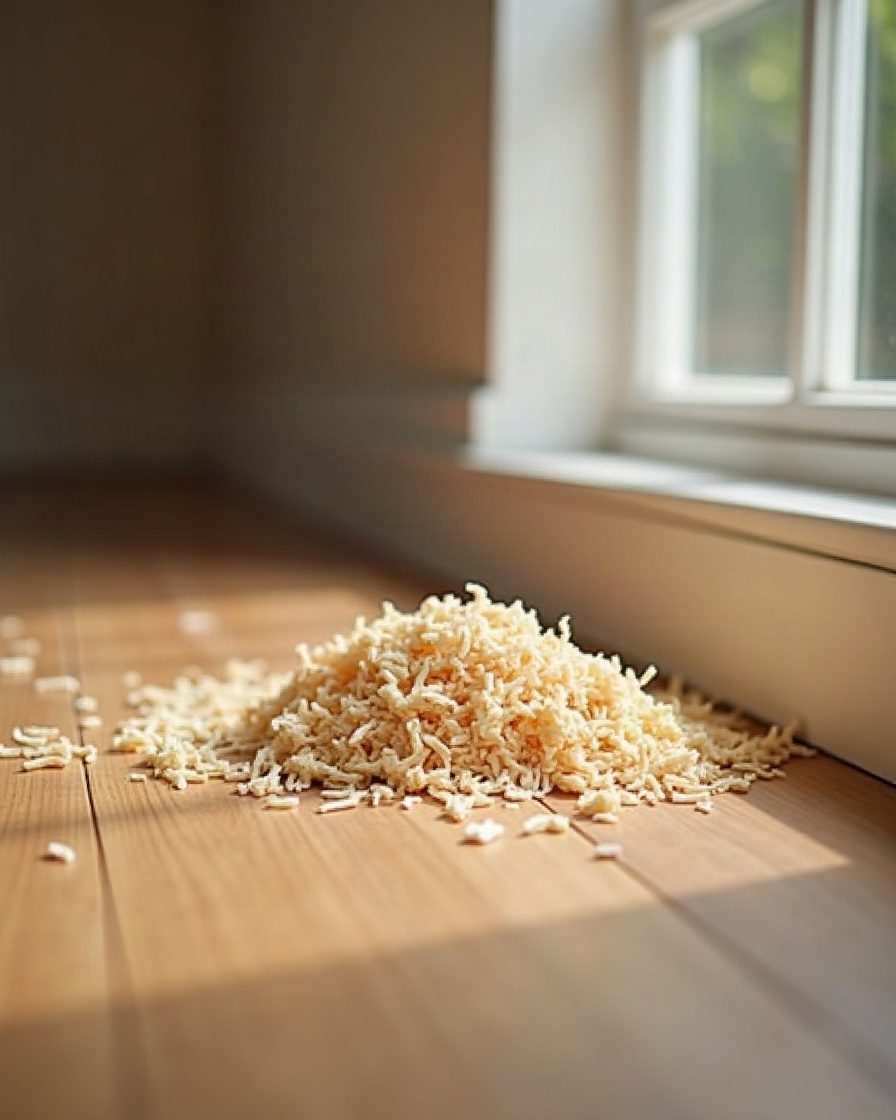
The word frass is slightly misleading here. For most wood-boring insects it means digested waste. For carpenter ants it means spoil: the material removed from a tunnel and dumped outside, having passed through nothing.
That distinction is why the pile looks the way it does, and it makes the identification easier than most on this subject.
What the pile looks like
Texture. Coarse and fibrous. Individual shavings are visible to the naked eye, often several millimetres long, curled or splintered. Rubbed between the fingers it compresses and mats rather than rolling.
Colour. The colour of the wood, and often paler than the surface because it comes from inside the timber.
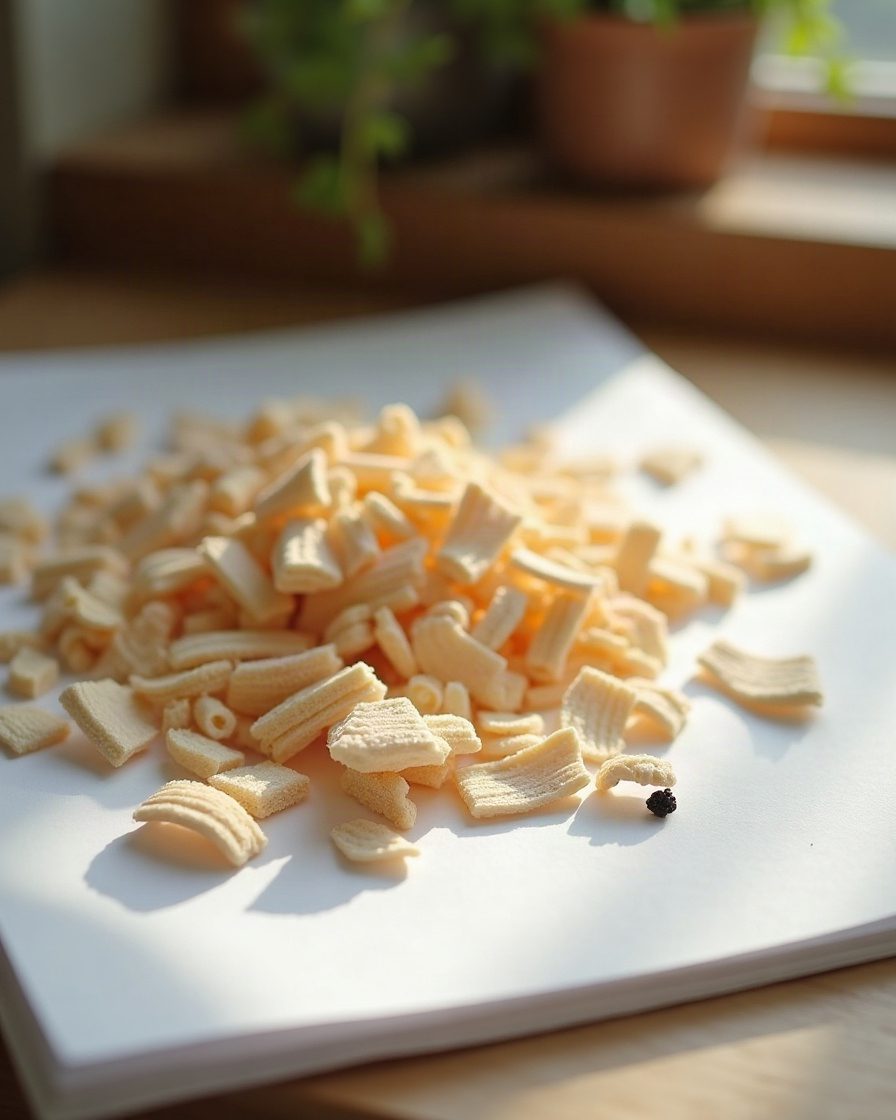
Contents. This is the diagnostic part. Because carpenter ants use the same opening to remove nest debris generally, the shavings are mixed with fragments of dead ants, discarded wings, insect legs and the remains of prey. Spread a sample on white paper and look for the dark, angular, non-wood fragments. Nothing else on the list produces that combination.
Position. Beneath a slit-like opening rather than a round hole, often along a joint, at a window frame, below a door head, or at the junction between structural members.
The University of Kentucky’s guide to carpenter ants covers the nesting behaviour that produces this pattern.
What it is not
Termite frass. Hard, granular, uniform six-sided pellets around 1 mm, poured from a small round hole. It rolls; carpenter ant shavings do not. No insect parts. See termite frass identification.
Powderpost beetle frass. Talc-fine powder that drifts and feels like flour. Falls from round holes 1 to 2 mm across. See powderpost beetle frass.
Ordinary sawdust. From drilling or cutting. Uniform in a different way, no insect parts, and its position usually explains itself.
Wood shavings from a rodent. Rodents gnaw structural timber and produce coarse debris too, but it comes with paired parallel groove marks on the surface and with droppings. Reading gnaw marks covers the difference, and sawdust piles indoors sets all of these side by side.
The damp is the real finding
Carpenter ants can excavate sound timber, but they very strongly prefer wood that is already softened by moisture, and in domestic buildings that is almost always where the nest is.
So the productive search is not for ants. It is for water.
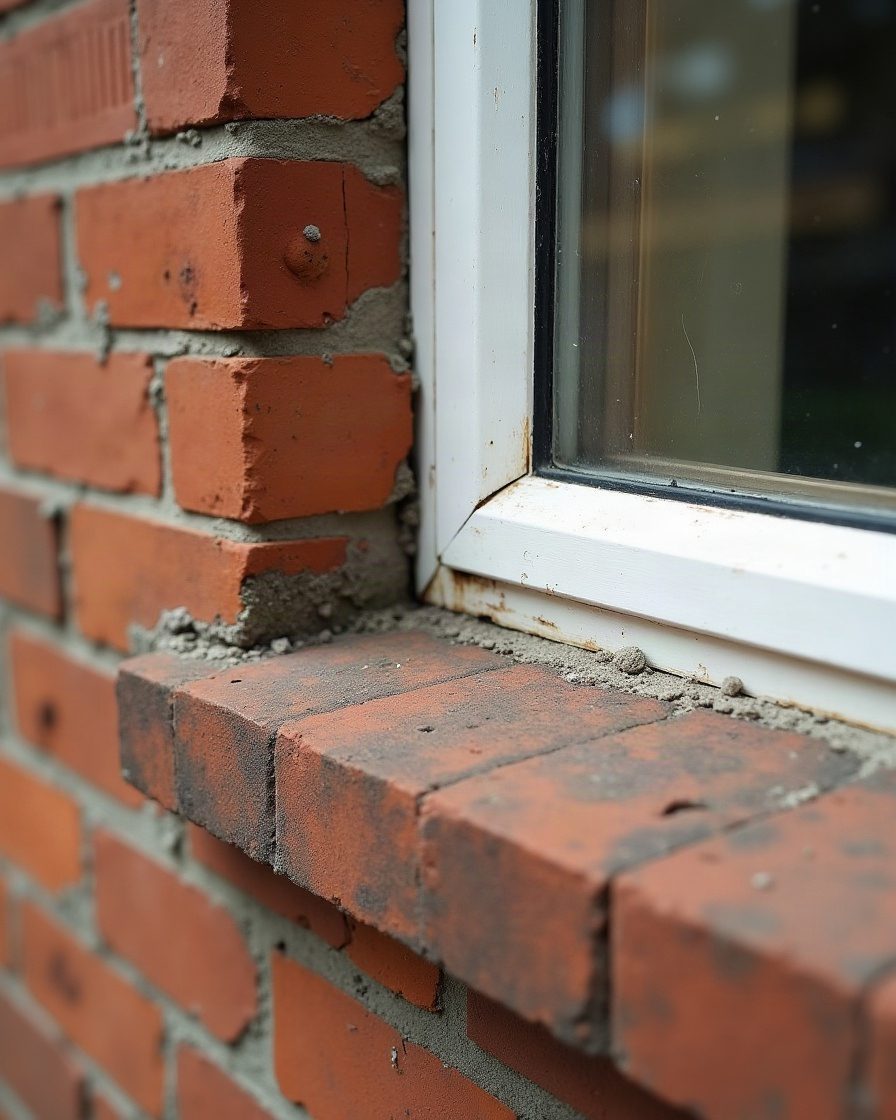
The places to check: around and below window and door frames where sealant has perished, beneath a bath or shower where a seal has failed, around a chimney or roof penetration with defective flashing, at the base of porch posts and deck framing in contact with soil, behind gutters that overflow, and anywhere a previous leak was repaired but the timber was left in place. Penn State’s guide to carpenter ants is clear that moisture correction is the durable part of the control.
Wood that gives under a screwdriver, sounds hollow when tapped, or shows staining is the target. The galleries themselves are smooth and clean-walled, almost sanded in appearance, which distinguishes them from the mud-packed galleries of subterranean termites.
Parent nests and satellites
One structural point that changes the search. A carpenter ant colony frequently maintains a parent nest outdoors, typically in a dead tree, a stump, a woodpile or a fence post, and one or more satellite nests indoors. The satellites hold workers and older larvae and can persist independently.
Two consequences. First, finding and treating an indoor nest may not end the traffic, because there is a supply outside. Second, the trail between them is worth following: carpenter ants forage at night, so a torch at midnight along a fence line, a utility line or a branch touching the roof will often show the route. Anything overhanging the building is a bridge worth cutting.
Active or historic
The same test as everywhere else on this subject.
Clear the pile completely, note the date, check in a week. Carpenter ants clear debris steadily while a nest is occupied, so a new pile is good evidence of current activity. Nothing new over several weeks in the season suggests the nest has been abandoned, which does happen once wood dries out.
Season matters here: activity is much reduced in winter, so a negative result in January means less than one in July.
Common questions
I see large black ants indoors but no frass. Foraging ants often come in for food and nest elsewhere. Frass means a nest in the structure; ants alone do not. Bugs that look like ants covers the identification, since winged carpenter ants and termite swarmers are confused constantly.
Do they damage the structure like termites? More slowly and usually less severely, because they excavate rather than consume, and because they are confined to timber that is already compromised. A long-established colony in a load-bearing member is still a real problem.
Can I treat it myself? Locating the nest matters far more than what is applied. Sprays along a trail kill foragers and leave the colony intact.
They came back the next spring. That is the signature of an untreated moisture source or an outdoor parent nest.
The bottom line
Coarse shavings with insect parts mixed through them mean carpenter ants, and mean a nest in the structure rather than passing foragers. Then stop looking at the ants and start looking for the water, because the timber they chose was chosen because it was wet, and drying it out is the part of the fix that lasts.
Pingback: Sawdust Piles Indoors: Four Things That Make Them