
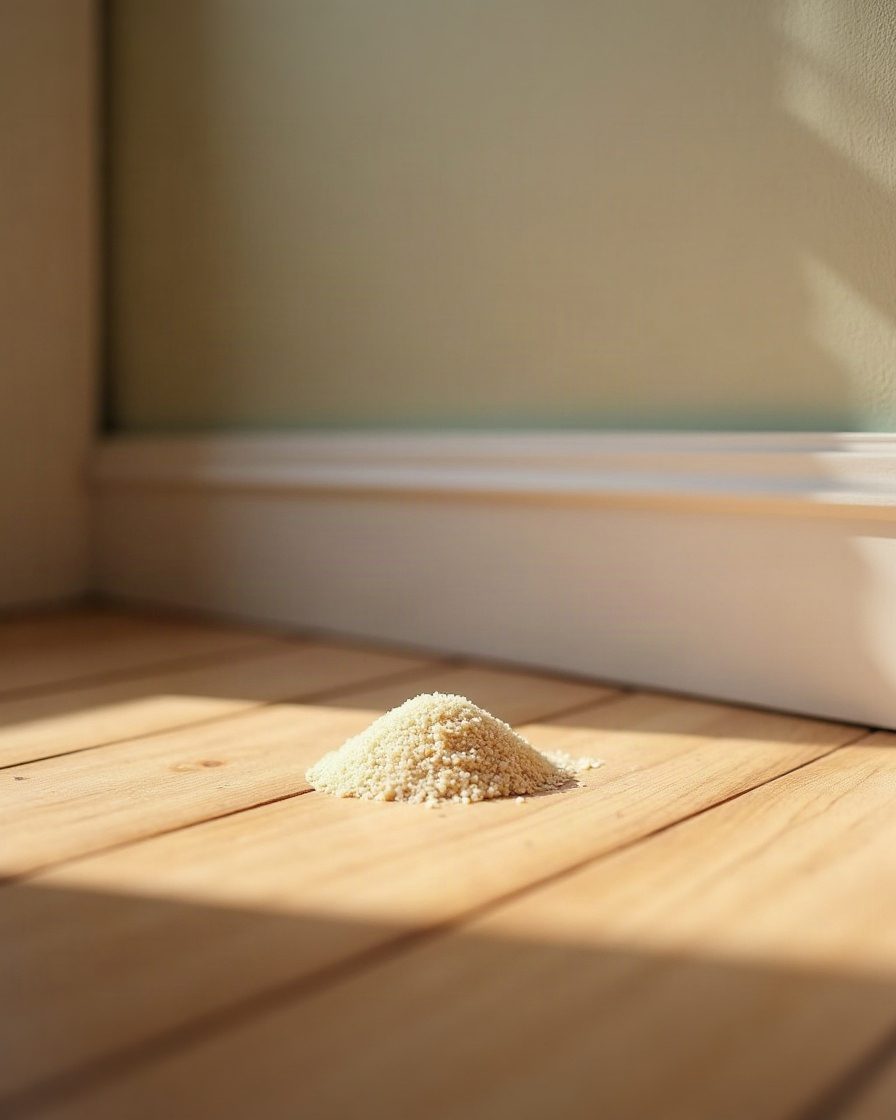
Drywood termite frass is a small, hard, six-sided pellet, roughly 1 mm long, sand to dark brown depending on the wood, and strikingly uniform. It accumulates in a neat pile beneath a tiny kick-out hole, because the termites eject it from the gallery. Subterranean termites, which cause the great majority of structural damage, produce no frass whatsoever; they leave mud tubes instead. So the absence of pellets rules nothing out.
- Six flat sides is close to unique. Almost nothing else produces a hexagonal pellet.
- A pile under one point means a kick-out hole above it.
- No frass does not mean no termites. Subterranean species leave mud, not pellets.
Termite frass gets searched for far more often than it is found, largely because most people looking for termite evidence have the wrong species in mind. It is worth being clear about which termite leaves what, because the two groups differ in almost every practical respect.
What drywood frass looks like
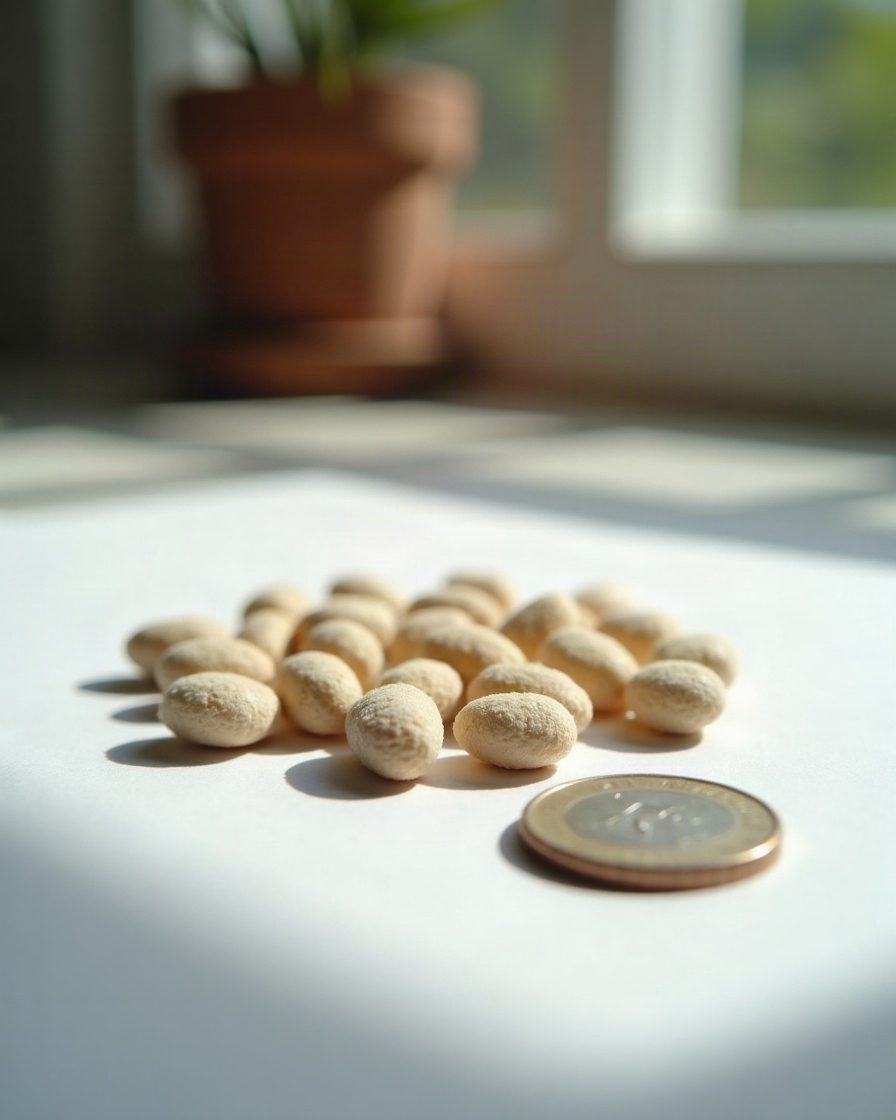
Shape. This is the diagnostic feature and it is unusually clear cut. Each pellet has six slightly concave flat sides, giving a faceted, almost geometric appearance. Under a phone camera at close range the facets are visible. Nothing else in a house produces that shape.
Size. Around 1 mm, occasionally a little less. Small enough to read as coarse sand from a distance.
Colour. Determined by the wood being eaten, not by the insect, so it ranges from pale cream through tan to near black. A single pile is usually one colour throughout.
Texture. Hard and gritty. Pellets roll rather than compress. Rubbed between finger and thumb they feel like fine sand rather than like dust.
UC IPM’s guide to drywood termites covers the biology behind that: they live entirely within the wood, need no contact with soil, and periodically open a small hole to eject accumulated waste from the gallery.
The kick-out hole
The pile is the second finding. The first is what is above it.
Drywood termites push frass out through a hole roughly 1 to 2 mm across, then seal it again. So the sequence is: a small pile appears, is cleaned away, and reappears. Looking directly above a pile with a torch will often find the hole, sometimes plugged with a brown membrane.
The pile itself is characteristically conical and directly below one point, not spread along a joint. That distinguishes it from debris falling out of a gap.
What it is not
Sawdust from carpenter ants. Coarse, fibrous, varied in size, and mixed with fragments of insect and other debris, because carpenter ants excavate rather than eat and push out whatever is in the way. It compresses between the fingers. Carpenter ant frass compared with sawdust covers the difference properly.
Powderpost beetle frass. Talc-fine and it drifts in air, where termite pellets are granular and stay put. If it is a powder rather than a set of discrete pellets, read powderpost beetle frass instead.
Caterpillar frass. Larger, softer, often green, and found under plants rather than under timber. See caterpillar frass in the garden.
Ordinary sawdust from building work. Varied, soft, fibrous. The uniformity test settles it: termite pellets are all the same size and shape, which no mechanical process produces.
Sawdust piles indoors sets all four side by side.
The species that matters more leaves nothing
This is the point of the article.
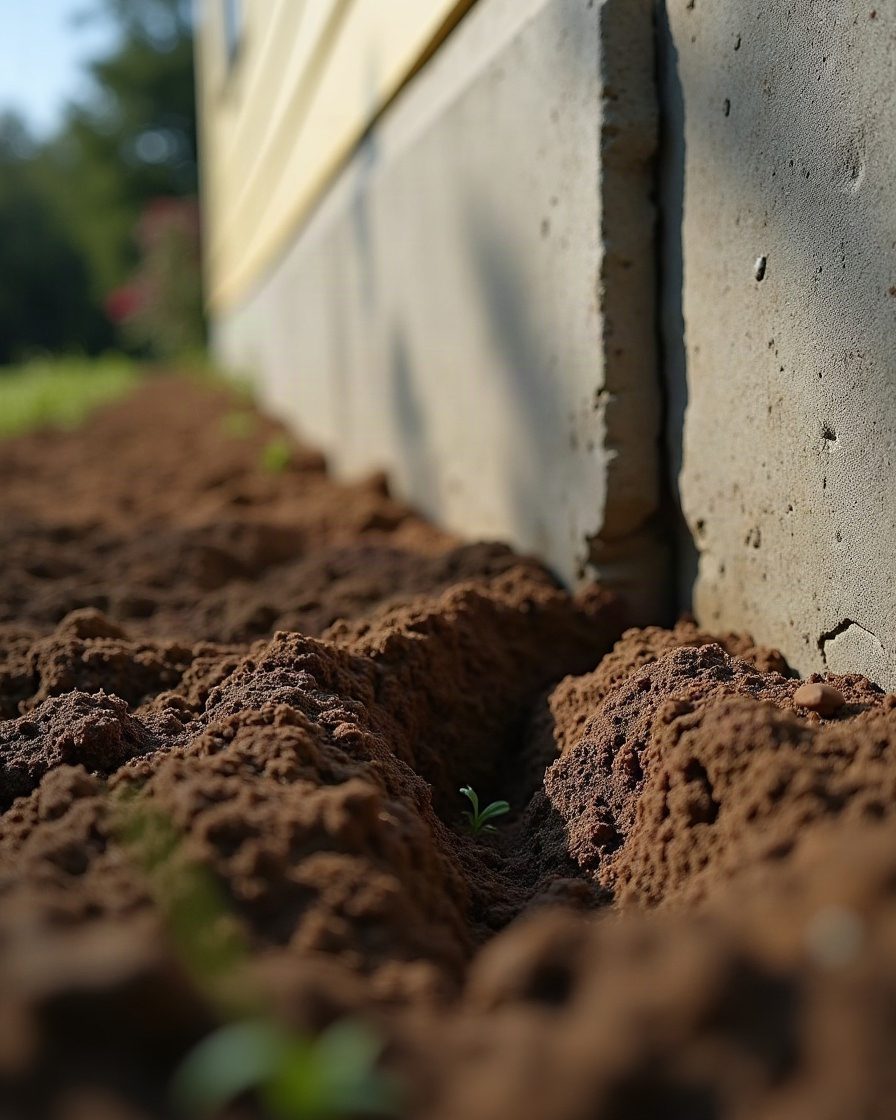
Subterranean termites account for the overwhelming majority of structural termite damage. They live in soil, maintain contact with it, and carry moisture into the wood. They do not eject frass; they pack their waste into the galleries and use it as building material.
What they leave instead is mud tubes: pencil-width earth tunnels running up foundations, over concrete, along joists and through voids, built to keep the workers in a humid environment while crossing exposed ground. A tube on a foundation wall is a far more serious finding than a pile of pellets, and it is the one to look for. The University of Kentucky’s guide to termite control for homeowners covers the inspection and why the treatment differs so completely between the two groups.
Other subterranean evidence: discarded wings in a pile near a window after a swarm, wood that sounds hollow when tapped and gives under a screwdriver, and paint that blisters over a section of timber.
Fresh or historic
The clean-and-wait test decides whether anything needs doing, and it costs nothing.
Sweep the pile away completely. Photograph the spot and note the date. Check in a week and again in a month.
A new pile means an active colony. Nothing new over a month, in a dry indoor location, usually means the gallery is spent or the activity has moved. Wood-boring insects frequently leave evidence that is decades old, particularly in furniture and reclaimed timber.
Fresh pellets are also slightly paler and looser than old ones, which take on dust and compact.
What to do about it
Honestly: this is one of the few findings on this site where the correct next step is a professional inspection rather than a purchase. Drywood termite treatment ranges from localised injection to whole-structure fumigation depending on how far the infestation has spread, and that determination requires opening up and probing timber. Subterranean treatment is an entirely different exercise involving soil and barriers.
What is worth doing first: establish whether it is active, look for mud tubes on the foundation regardless of what the pellets say, and check whether any timber is in direct contact with soil, since that contact is the commonest route in. Small holes in wood covers the hole measurements that separate the wood-boring families.
Common questions
I found pellets in furniture, not in the structure. Common, and often the infestation arrived with the piece. It still needs treatment, but the structural question is separate.
Could this be from a plant pot or compost? Frass in a plant pot is far more likely to be from a caterpillar or a beetle larva in the soil.
How urgent is it? Drywood termites work slowly, measured in years. Urgent enough to get inspected this month, not this afternoon. Subterranean evidence is more time-sensitive.
Does the colour tell me the species? No. It tells you what they are eating.
The bottom line
Six flat sides, uniform size, hard and granular, piled under a single point: drywood termites. Then do the thing the pellets cannot tell you and go outside to look at the foundation for mud tubes, because the species that leaves no frass is the one that does the damage worth worrying about.
Pingback: Carpenter Ant Frass vs Sawdust: How to Tell
Pingback: Powderpost Beetle Frass: Fine Powder Under Furniture
Pingback: Mud Tubes on a Foundation: The Termite Sign That Matters