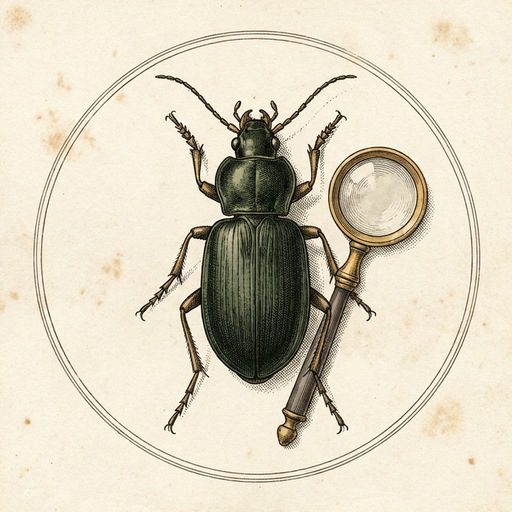
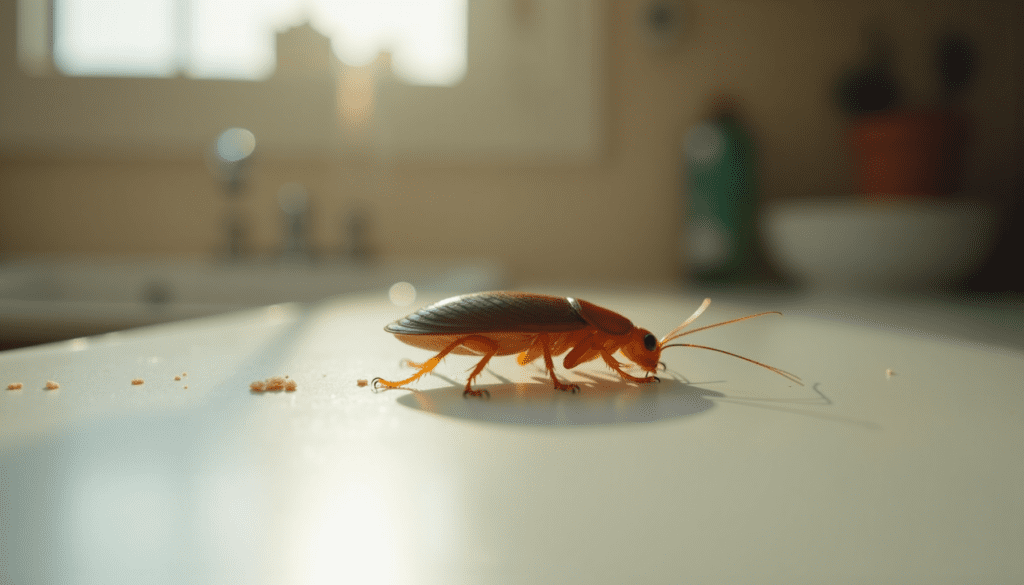
Two checks separate a cockroach from almost everything mistaken for one. Cockroaches have long thin whip-like antennae, often as long as the body, and a shield-shaped plate covering the head from above. Crickets have long antennae but also large back legs built for jumping. Ground beetles have short antennae and hard wing cases that meet in a straight line down the back.
- Big back legs and it jumped: a cricket, not a roach. Camel crickets are the usual culprit.
- Hard shell, straight seam down the back, short antennae: ground beetle, in from outside.
- Ran for a gap when the light came on, long whip antennae: that is a cockroach, and worth acting on.
Almost anything brown and fast in a kitchen at night gets called a cockroach, and the stakes feel high because a real cockroach problem grows. The good news is that the distinguishing features are visible without magnification once you know which two to look at.
What actually makes a cockroach a cockroach
Antennae. Long, thin, flexible and constantly moving, frequently as long as the body or longer. This is the most reliable single feature.
A shield over the head. The pronotum, a flat plate behind the head, covers the head from above so that a cockroach seen from directly overhead appears to have no head at all.
A flattened oval body and, in most species, wings lying flat over the back rather than in hard cases.
Behaviour. Kentucky notes that German cockroaches are the species most likely to infest homes and apartments, and UC IPM notes that cockroaches are active at night and spend the day in cracks and crevices. The scatter-for-cover response to a light coming on is the behavioural signature.
Crickets, the most common mistake
Camel crickets cause more false alarms than anything else, particularly in basements and garages. They are brown, roughly the right size, and they have long antennae, which is where the confusion starts.
The difference is obvious once pointed out: large muscular back legs and a humpbacked profile, with no wings at all in camel crickets. And the behaviour is unmistakable, because when startled they jump, often toward the disturbance rather than away, which is why people find them so unpleasant.
They are harmless. They eat organic debris and fabric in damp conditions and do not carry the concerns that come with cockroaches. Our camel cricket guide covers them, camel versus house cricket covers the two indoor species, and whether crickets bite answers the usual worry.
Ground beetles, in from outside
Dark, often shiny black, hard-shelled, and they run in purposeful straight lines along a wall. They come in under doors at night, particularly after rain, and are common in autumn.
The check is the back. A beetle has hard wing cases meeting in a straight seam down the middle, which cockroaches do not. Their antennae are also much shorter and thicker.
They do not feed on anything in a house, do not breed indoors and do not bite meaningfully. They are a perimeter question, and our guide to autumn pest proofing covers the door sweeps and threshold gaps that stop them.

Water bugs, and a naming problem
This one is mostly a vocabulary issue. In much of the United States, “water bug” is a colloquial name for large cockroach species, particularly the American and oriental cockroach, which live in drains, sewers and damp basements. Called by that name, they sound harmless. They are not a different insect.
There are genuine aquatic water bugs, including giant water bugs, but those live in ponds and are not what anyone finds in a bathroom. So if somebody tells you the large brown insect in your basement is “just a water bug”, check the antennae. Our German versus American cockroach guide covers the difference that actually matters, because the two need different approaches, and the smokybrown guide covers the outdoor species that wanders in.
The distinction is genuinely important. A large outdoor species coming up a drain is a plumbing and perimeter problem. A German cockroach breeding behind a fridge is a growing infestation. Our cockroach species guide separates them.
The other look-alikes
Beetles generally, including June bugs and various wood-boring species, get mistaken for roaches by size and colour. The wing case seam settles it every time.
Cockroach nymphs are the reverse problem: they are genuinely cockroaches but look like something else, being small, wingless and brown. Our baby cockroach guide covers the stages, and this is the identification worth getting right, because nymphs mean breeding rather than a single visitor.
Crickets that fly confuse people further, and the question of whether cockroaches fly is covered separately, because some species genuinely do and others have wings they never use.
Why getting this right matters
The two conclusions lead to completely different work.
If it is not a cockroach, the answer is usually a door sweep, a dehumidifier, or nothing at all. Crickets and ground beetles do not establish indoors.
If it is a cockroach, and particularly a German cockroach, early action changes the outcome substantially. Populations grow fast, they hide in warm equipment such as the backs of fridges and dishwashers, and a problem that could be handled with baits at week one is a much larger job at month six. Our guides to German cockroaches and what attracts cockroaches cover the approach.
Common questions
It had wings but did not fly.
Common in cockroaches. Several species have full wings and rarely or never use them, particularly females.
It was in the bath and could not get out.
Typical of both cockroaches coming up a drain and of crickets and beetles that fell in. Smooth sides defeat all of them, so this tells you little on its own.
Does one sighting mean an infestation?
For a large outdoor species, often not: it came in through a drain or a door. For a small brown nymph that scattered when the light came on, treat it as a signal rather than an accident.
Final verdict
Look at the antennae and the back. Long whip-like antennae plus a shield over the head plus a dash for cover means a cockroach. Long antennae plus big jumping legs means a cricket, and camel crickets in a basement are the usual answer. A hard shell with a straight seam down the back and short antennae means a ground beetle that came in under the door. Only the first one is worth acting on quickly, and with that one, quickly is genuinely better.