
If you keep finding roaches even though your kitchen is clean, the thing pulling them in is almost certainly water, not crumbs. A roach can coast about a month with no food as long as it has water, but it dries out and dies in roughly a week without it. So a dripping pipe under the sink is a stronger magnet than a stray crumb. The fix that matters most is the boring one: stop the leaks and dry out the damp spots first, then deal with food and the cracks they hide in. This guide walks the order I use.
Water is the top attractant, ahead of food, so a leaky pipe under the sink beats a spotless kitchen for roach risk; cut off moisture first, then food, then the cracks they hide in.
- Do first (free): Fix the drip under the sink, dry the dish rack and shower, empty drip trays, and pick up pet water at night.
- Then: Seal food in containers, wipe grease, take out the trash nightly, and clear clutter where they hide.
- Skip: Bug bombs and ultrasonic repellers; they do not touch the water and harborage that actually draw roaches in.
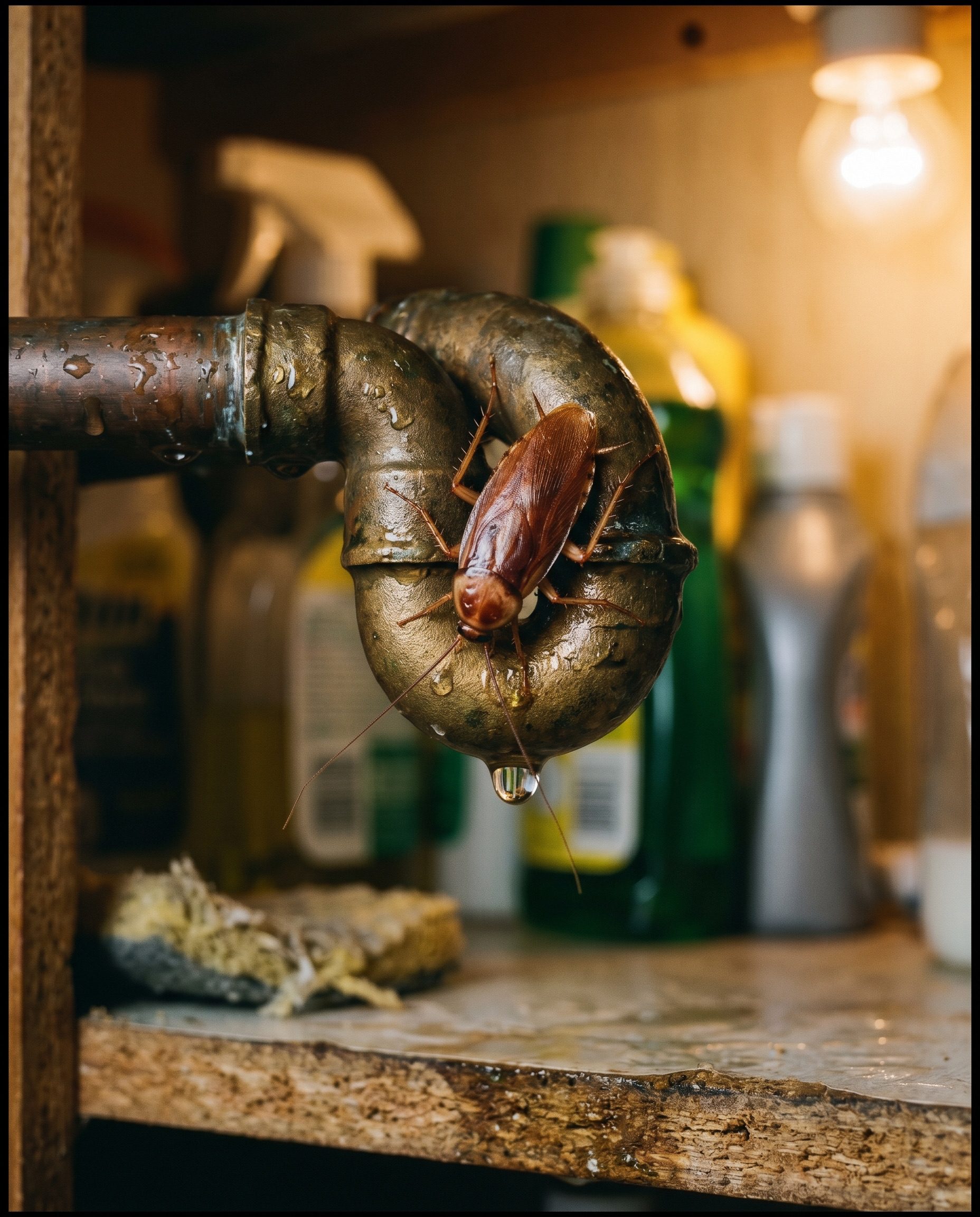
Water draws them first
The single thing most people get wrong is treating cockroaches as a crumb problem. They are a water problem with a food problem attached. Cockroaches need standing water or steady humidity far more urgently than they need food, which is why a leak you ignore beats a counter you wipe. The UC IPM guidance on managing cockroaches leads with it: “Eliminate plumbing leaks and other sources of moisture. Increase ventilation where condensation is a problem.” That is the first lever, and moisture control does the heaviest lifting in keeping them out.
This is also why a clean house still gets roaches. You can keep a spotless kitchen and still hand them everything they want if the trap under the sink is sweating, the bath fan is dead, and a pipe is weeping behind the wall. Roaches do not need a feast; they need a drink. Get the water under control and you have cut off the attractant that no amount of wiping addresses.
Where the damp hides
Roaches go where it is warm, dark, and wet, which is a short list of spots in most homes. The UC IPM quick tips card notes they “hide in warm, dark, moist areas like cracks, water meter boxes, sewers, and crawl spaces” during the day. Indoors that means under the sink, behind the toilet, around the dishwasher and washing machine, and near the water heater. The German cockroach, the one that turns into a real indoor infestation, clusters where humidity runs highest.
Texas A&M’s urban entomology team is specific about this. The Texas A&M profile of the German cockroach says they “usually seek dark shelters near moisture and food, such as kitchens and bathrooms,” and because they “cannot tolerate cold temperatures they are mainly an indoor pest.” For the record, that roach is *Blattella germanica*, and it rides into a home in grocery bags, cardboard, and secondhand appliances, then settles wherever the water is.
The damp sources people miss are the ones worth hunting down. NC State Extension’s roach guidance lists the quiet ones: “Empty pans under refrigerators used to catch water from condensation. Avoid overwatering houseplants. Be aware that pet water bowls may be a source of moisture,” and it flags that “water condensation on pipes, under sinks, etc., may also be a source of moisture.” Those are exactly the spots a clean kitchen overlooks.
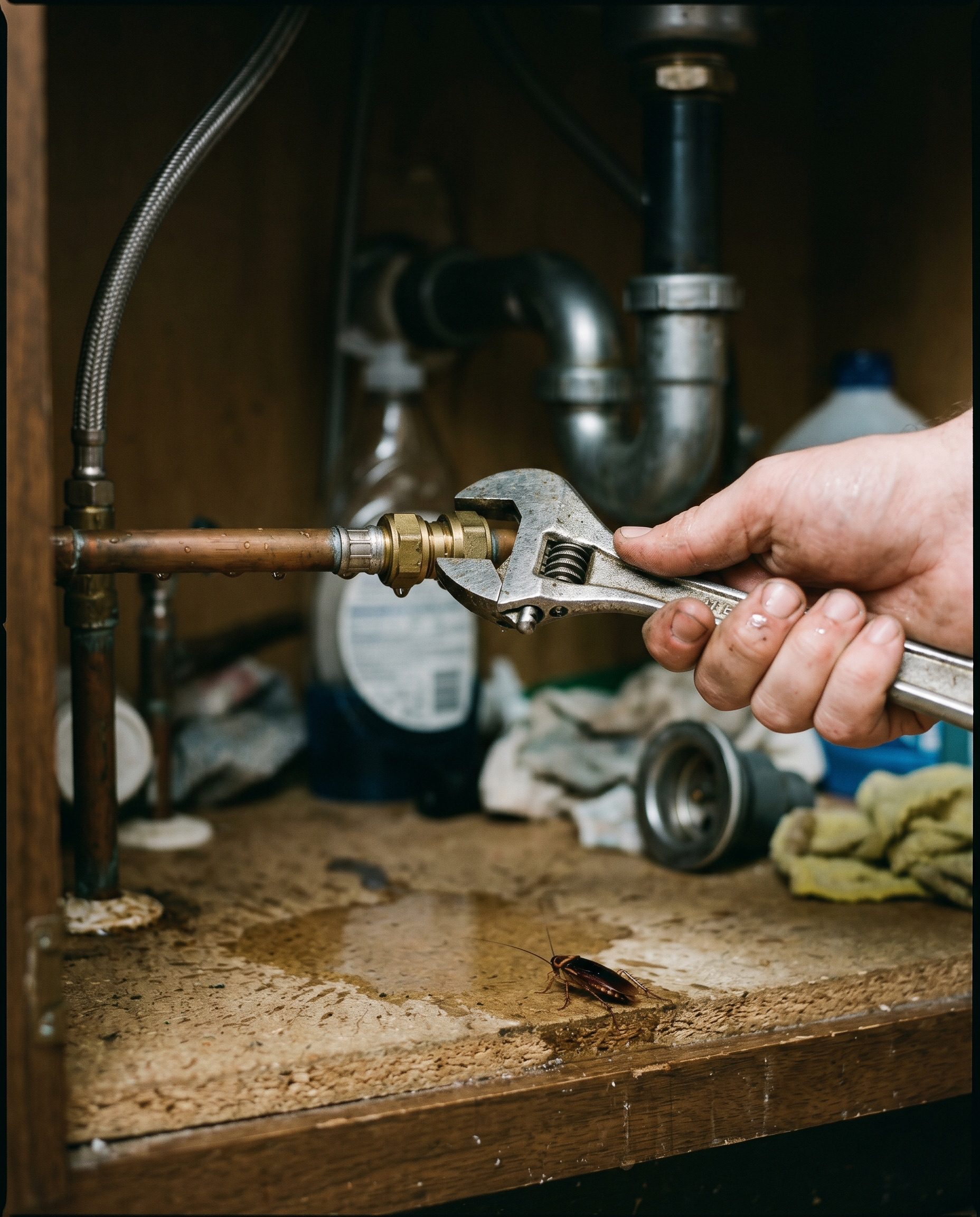
Dry them out first
Because water is the top draw, drying the place out is the first move, and it costs nothing but a wrench and a few minutes. Fix the leak under the sink, tighten the dripping faucet, and dry the dish rack and shower after use. Empty the drip tray under the fridge, run the bathroom fan, and pick up the pet’s water bowl overnight. Penn State Extension’s IPM guidance puts it the same way: “Pick up pets’ water at night and repair water leaks. Don’t leave dishes in the sink overnight.”
The EPA frames leaks as the priority repair, not an afterthought. Its guidance for housing managers on pests says to “fix leaking pipes and faucets as soon as possible,” and that integrated pest management “emphasizes eliminating nesting places as well as sources of food and water.” In plain terms, chasing roaches with spray while the pipe still drips is treating the symptom. Stop the water and you starve the problem of the thing it cannot live without.
If you cannot find the source, look for the signs of chronic damp: a musty smell, a sweating cold-water pipe, condensation on a window, soft drywall under the sink. Those are the addresses roaches are heading for, and ventilation or a small dehumidifier in a damp basement or laundry room is a cheap, durable fix.
Then cut off food
With the water handled, food is the second attractant, and roaches need very little of it. The UC IPM quick tips note that “even tiny crumbs or liquids can attract cockroaches,” so the standard is sealed, not just tidy. Store dry goods and pet food in containers with tight lids, wipe grease off the stove and counter, run the dishwasher rather than soaking dishes overnight, and take out the trash every night in a lidded can.
Grease is the food source people forget. Roaches love the film that builds up behind the stove, under the range hood, and around the burners, so degrease those spots the way you would wipe a counter. The same goes for the gunk in floor and sink drains, which feeds them and holds moisture at once. Keeping drains clean does double duty against both attractants.
Clutter is the food-and-shelter combo that quietly feeds an infestation. Cardboard, paper bags, and stacked boxes give roaches something to eat and somewhere dark to breed, and they soak up the aggregation scent that pulls more roaches in. Clearing that clutter, especially anything damp or stored on a basement or garage floor, removes a harborage and a food source in one pass.
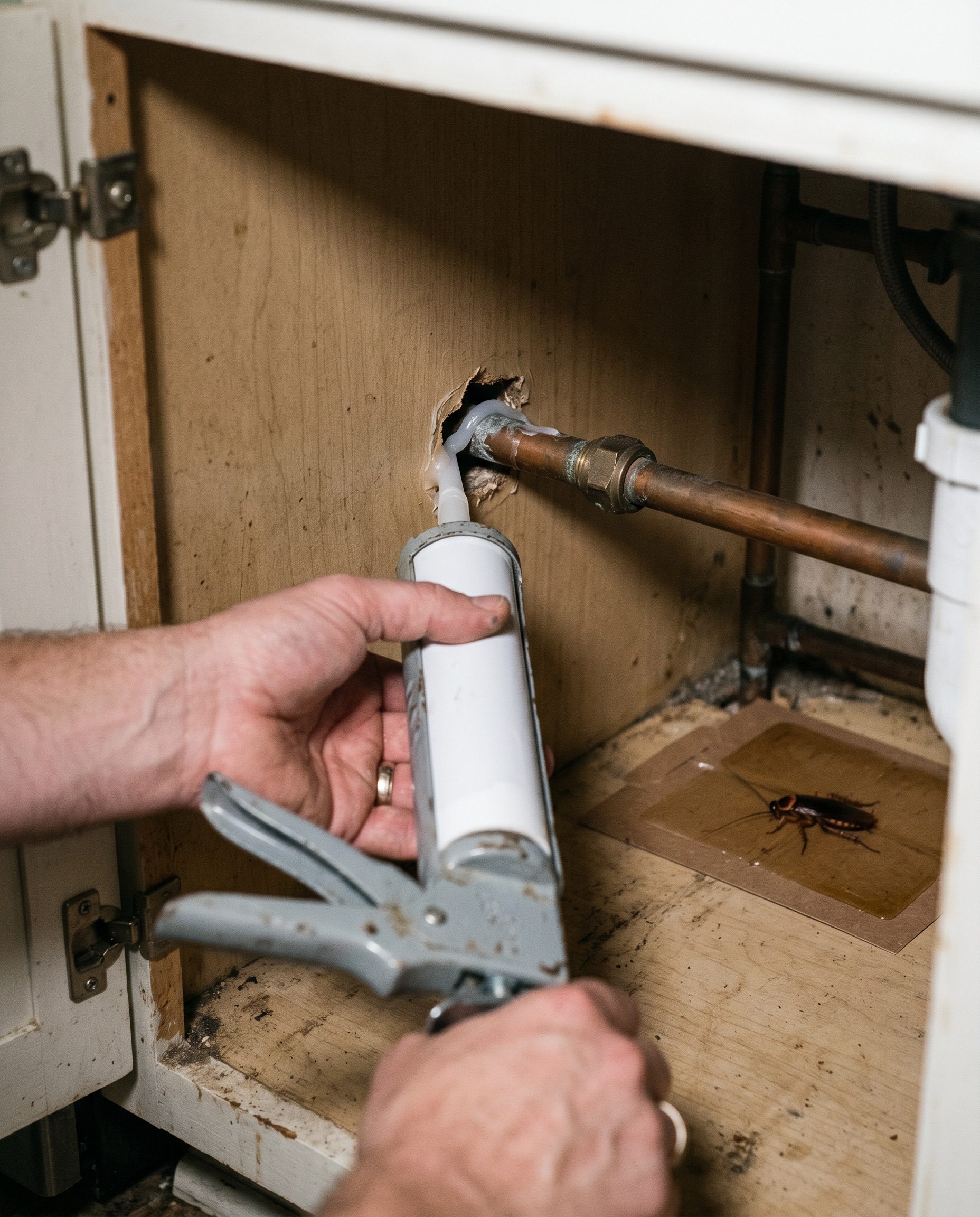
Seal where they get in
The last attractant is the easy harborage and entry point, because a gap near moisture is a roach’s idea of prime real estate. Once the water and food are handled, deny them the cracks. The NPIC cockroach page recommends sealing “cracks and crevices around cabinets, backsplashes, windows, doors, crawl spaces, pipes, wires, and cables.” Run a bead of caulk along those gaps, fit door sweeps, and patch the openings where pipes pass through the wall, which double as the highway between apartment units.
Set out flat sticky monitors while you work, not as the cure but as your eyes. NPIC’s advice is to “monitor and assess cockroach activity using sticky traps or glue boards,” and the corner that catches the most is telling you where the damp harborage is. Tuck them under the sink, behind the trash can, and along the backsplash, then check after a few nights. If the infestation is already large enough that bait is warranted, place it in those flagged cracks, keep it off food-prep surfaces and out of reach of children and pets, and follow the product label, because under federal law the label is the law. Skip the fogger; Penn State warns that with foggers and sprays, “you can’t control where the chemicals go, and the risk of exposure is high.” For the full clear-out sequence once they are already inside, see our guide to getting rid of cockroaches and the German cockroach playbook.
When to call a pro
Most homes can cut off what attracts roaches with the moisture, food, and sealing work above. A few situations call for a licensed pest-control professional instead of another trip to the store. Bring one in if a hidden leak is behind a wall and you cannot reach it, if roaches keep returning from shared walls in a multi-unit building, or if you are seeing them in daylight across several rooms, which means the population is already large. Apartment-wide German cockroach problems usually need a coordinated, building-level effort that a single unit cannot pull off alone. Calling someone in those cases is just the efficient move, not an admission of defeat.
Common questions
What attracts cockroaches the most?
Water, ahead of food. A roach can go about a month without eating as long as it has moisture, but it dies in roughly a week without water, so leaks, condensation, and standing water are the strongest draw. A spotless kitchen with a dripping pipe is still a roach magnet. Fix the moisture first and you remove the attractant that nothing else addresses.
Do cockroaches come into clean houses?
Yes. Cleanliness helps, but it does not remove the two things roaches care about most: water and a warm hiding spot. A sweating pipe, a damp basement, or a wet drip tray under the fridge will draw them into a tidy home. They also hitchhike in on cardboard, grocery bags, and secondhand appliances, so a clean house near an infested neighbor still gets visitors.
Does keeping the house dry get rid of roaches?
Drying it out is the most important single step, but it works in combination, not alone. Cutting off water makes the home far less attractive and slows the colony, since roaches cannot survive long without it. Pair it with sealed food, degreasing, clutter removal, and sealed cracks, and on an active infestation, monitoring and bait. Removing the cause is most of the fix.
What smells attract cockroaches?
Less smell than substance: food residue, grease, garbage, and the aggregation scent roaches leave in their droppings, which pulls others to the same spot. Damp cardboard and pet food are common draws. There is no single magic odor to mask; the reliable move is to remove the food and moisture rather than cover the smell.
Are cockroaches a health risk?
They do not bite or sting, but their droppings, shed skins, and saliva are documented allergens. The EPA notes that household pests are linked to asthma and allergies, especially in children. That is the real reason to take an infestation seriously. If someone at home has worsening asthma, talk to a healthcare provider and prioritize cleanup alongside control.
Final verdict
What attracts cockroaches is water, then food, then an easy place to hide near both. The mistake is treating them as a crumb problem; the leak under your sink does more to invite them than a stray crumb ever will, because they can outlast missing food but not missing water. So fix the drips, dry the damp spots, and ventilate before anything else, then seal food and clear clutter, then caulk the cracks where they hide near that moisture. Skip the bug bomb and the ultrasonic repeller, which touch none of it. Leave a sticky monitor out afterward so the next one does not become a colony.
Next steps:
– Already have an active infestation? Work the clear-out sequence in our guide to getting rid of cockroaches.
– If it is the small striped indoor roach, follow the targeted plan in our German cockroach guide.
– Walk your home once a season for new leaks and damp spots; that one habit prevents most repeat visits.
Pingback: Bugs Behind the Fridge: Why That Spot Specifically