
n
n
n
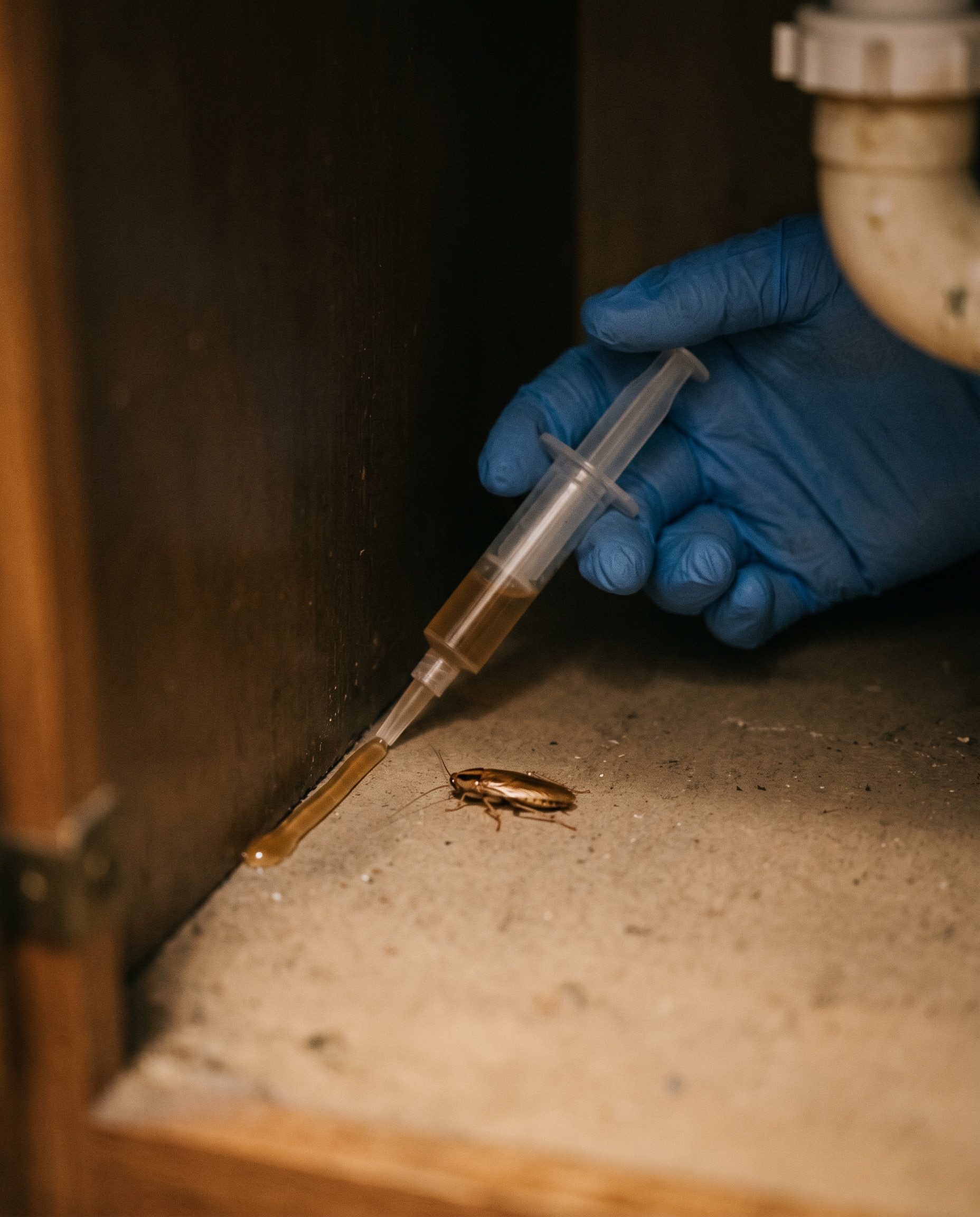
If you are standing in the pesticide aisle trying to pick the best roach killer, the honest answer is that there is not one. The right product depends on where the roaches are and what kind you have, and the can of spray most people grab first is usually the wrong call. For the common German cockroach problem in a kitchen, a gel bait clears a colony far better than any spray. Before you buy anything, wipe up food and grease and fix the leak under the sink, because a starved colony shrinks on its own. At my own house the whole kit is a couple of glue boards and one syringe of gel.
For the leak the insects are reporting, see our guide to what lives under a kitchen sink.
nn
n
There is no single best roach killer; match the type to the situation, and gel bait beats the spray most buyers reach for, because a spray scatters German roaches instead of clearing them.
n
- n
- Do first (free): Clean up food and grease, fix leaks, and seal cracks so any product works better.
- Best for the common case: Gel bait placed in cracks and crevices, which foragers carry back to the colony.
- Skip: Sprays and foggers as your main tool; they scatter German roaches and leave residue where roaches never walk.
n
n
n
n
nn
nn
What to do first
nn
Before any product, take away the three things roaches need: food, water, and clutter to hide in. This costs nothing and does more than anything you can buy. The EPA’s first advice on pest control is to starve, dry, and keep them out before reaching for a pesticide at all. Wipe counters and the stovetop nightly, store dry goods and pet food in sealed containers, fix the drip under the sink, and clear out cardboard and paper bags. A clean, dry kitchen is your biggest lever, and it makes every product on this page work better.
nn
The reason sanitation matters this much is the math behind a roach problem. The German cockroach (Blattella germanica) is the one that turns into a real indoor infestation, and the UF/IFAS profile of the German cockroach notes that each egg case holds 30 to 40 eggs and the species “is found throughout the world in association with humans.” Put 30,000 potential offspring in a year against a sticky trap, and you see why the product is the last step, not the first. If sanitation alone has not knocked the numbers down within a week or two, that is when a bait earns its place.
nn
Why spray is the wrong default
nn
Most people reach for a spray because it feels decisive, and for a German cockroach problem that instinct backfires. A spray kills the roach you hit and does nothing to the colony in the wall. Worse, the UC IPM Pest Notes on cockroaches state plainly that “insecticide sprays do not provide long-term control” and warn that sprays “may repel and disperse cockroaches to other areas of the building.” That dispersal is the trap: a contact spray scatters the survivors into rooms and voids you were not treating, so the problem spreads instead of shrinking.
nn
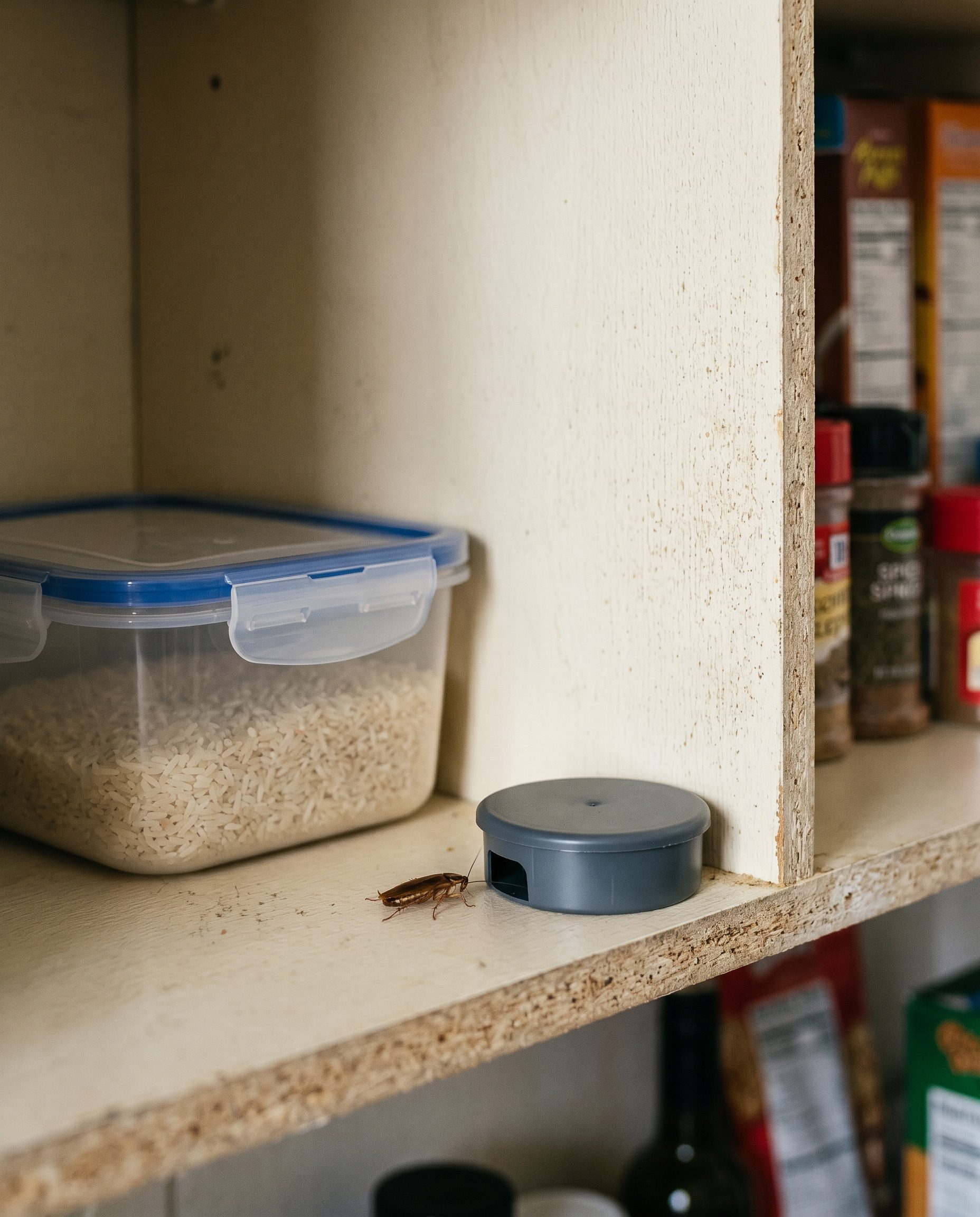
Bait does the opposite. A forager eats the bait, returns to the harborage, and the active ingredient spreads to roaches that never left the wall through their droppings and grooming. A spray cannot reach the nest that way. An Entomological Society of America research roundup on cockroach baits found that liquid and gel baits are the best option for consumers, with both consumer-grade and professional-grade baits reaching at least 80 percent mortality in tested roaches. The one situation where a spray belongs is the occasional large outdoor roach wandering in from outside; for the German cockroach colony in your kitchen, bait is the tool that reaches the nest. If you still want a perimeter product for that outdoor case, our guide to the best roach sprays covers where one actually helps.
nn
nn
Match the type to the situation
nn
This is the part the buyer’s guides skip. There is no overall winner because the four product types each solve a different problem. Pick by where the roaches are, whether you have pets or kids, and how much effort you want to spend.
nn
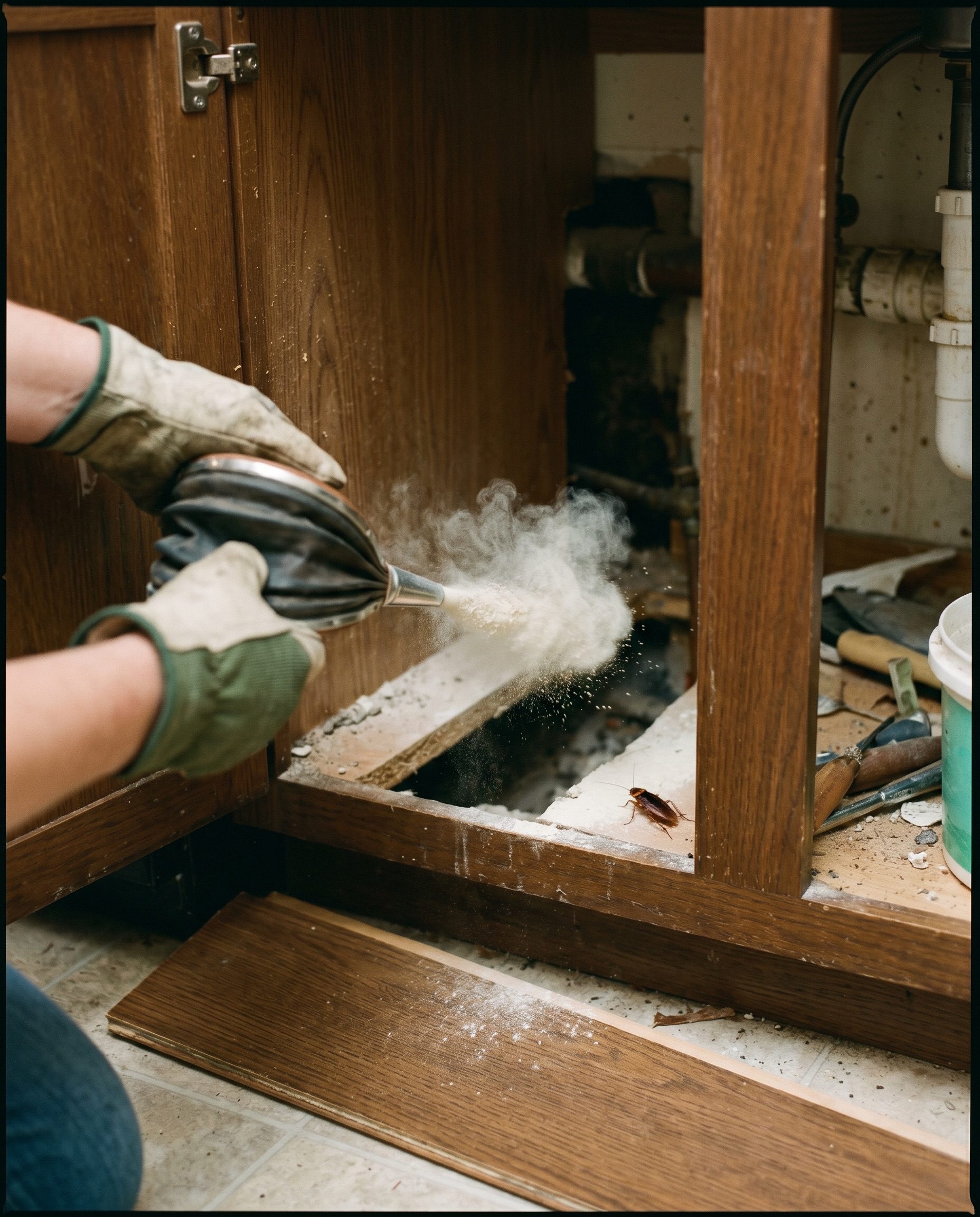
Gel bait is the workhorse for a German cockroach problem in a kitchen or bathroom. You apply small beads into the exact cracks and crevices where they hide, and foragers carry it back. Bait stations are the low-effort, child-resistant option: pre-dosed discs you set in corners and forget, ideal when you have toddlers or pets and do not want to manage open gel. Dust like boric acid is the long-game tool for hidden voids; UC IPM notes that boric acid powder, “if it remains dry and undisturbed, it provides control for a very long time” in wall voids and under appliances. Sprays are the situational pick for the odd outdoor roach at an entry point, not a colony fix.
nn
| Type | Best for | Watch-out |
|---|---|---|
| Gel bait | German roaches in kitchen and bath cracks | Dries out; keep off food-prep surfaces |
| Bait stations | Hands-off use with kids or pets | Slower; place where roaches actually travel |
| Dust (boric acid) | Wall voids and behind appliances | Light dusting only; never a thick pile |
| Spray | Occasional outdoor roach at an entry point | Scatters German roaches; no colony reach |
nn
When the bait you chose eats down but the population will not crash, do not switch to a spray. The NPIC cockroach page advises that if you are baiting, “consider switching brands,” because roaches can develop an aversion to one flavor or active ingredient. Rotating to a bait with a different active is the move, not abandoning bait altogether.
nn
Where to place and how to apply
nn
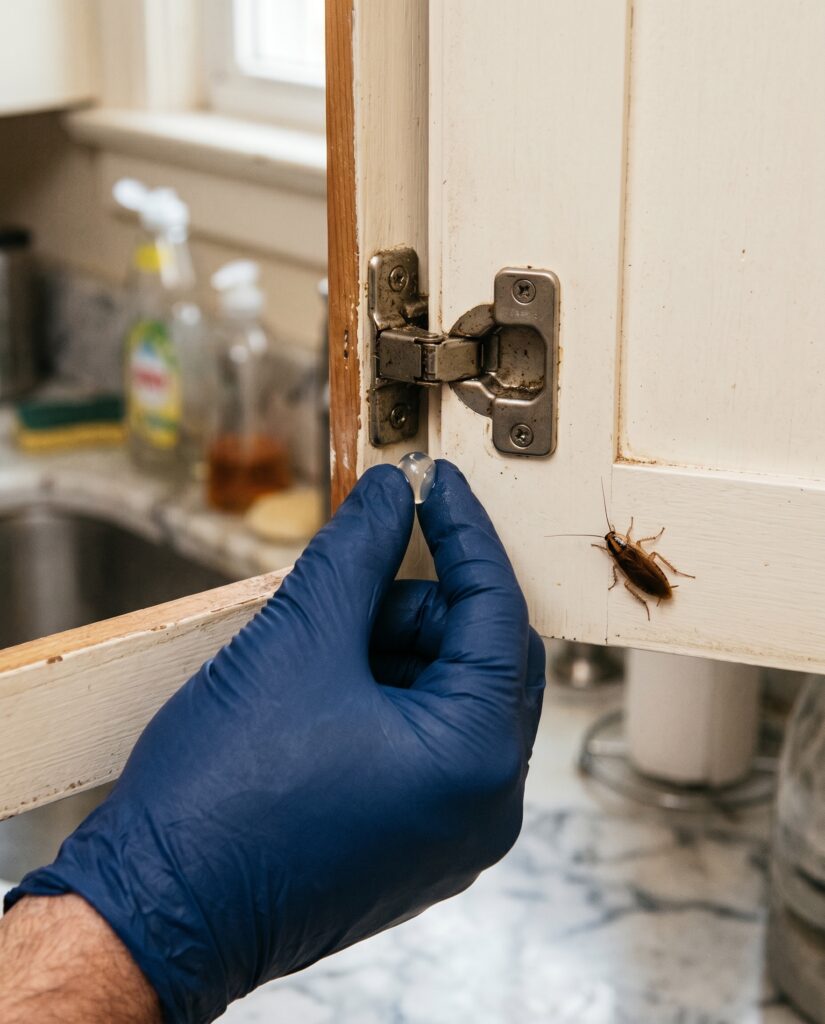
Placement decides whether a product works. Put bait where roaches live, not where you see them in the open. The NPIC page recommends sealing cracks and crevices around cabinets, backsplashes, pipes, and wires and using sticky traps to find the hot spots first. Set flat glue boards flush into corners where the backsplash meets the counter, behind the trash can, and inside the under-sink cabinet, check them after a few nights, and the corner with the most catches is where the bait goes.
nn
Apply gel as small beads, about the size of a grain of rice, directly into those cracks: cabinet corners and hinges, the gap behind the fridge motor, around the dishwasher, and along the under-sink pipe runs. For stations, tuck them into the same corners rather than the middle of a shelf. For dust, use a light puff into voids only. Keep every product out of the open, off food-prep surfaces and pet bowls, and away from where children can reach. Whatever you use, the EPA’s rule is that the label is the law, so read and follow the product directions and do not invent stronger doses or treat sites the label does not list. For exposure concerns, the NPIC pesticide-safety page is the place to start, and you can contact a doctor or your vet.
nn
nn
Skip the bug bomb
nn
The single biggest waste of money in roach control is the fogger, also sold as a bug bomb or total release aerosol. It feels powerful and it does almost nothing to a roach problem. A peer-reviewed BMC Public Health study on total release foggers tested four fogger products in infested homes and found that “TRFs failed to reduce cockroach populations, whereas similarly priced gel baits caused significant declines.” Worse, pesticide residue after the foggers fired measured “603-times higher than baseline” on kitchen surfaces, exactly where you cook and where kids and pets touch.
nn
The reason is physical. A fogger settles a mist on open horizontal surfaces, but roaches hide under and inside things, so the poison lands where they never walk. Texas A&M AgriLife Extension summed up the same research bluntly, reporting that in apartments treated with gel baits “cockroach numbers dropped 70-95%,” while the bombs bombed. Foggers are also a real fire risk near pilot lights and gas appliances. The money a bug bomb costs buys a far better syringe of bait, so skip the fogger entirely.
nn
The picks
nn
These three cover the situations that actually come up. The first is the gel I keep for a German cockroach problem; the second is the budget version that does the same job; the third is the hands-off pick for homes with kids or pets.
nn
InsectoGuide is reader-supported. As an Amazon Associate we earn from qualifying purchases at no extra cost to you.
nn
n 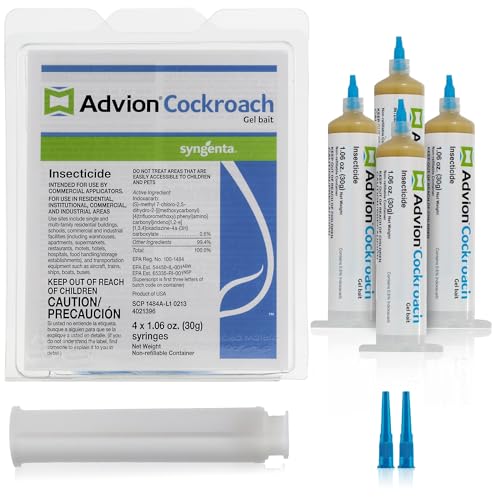 n
n
n
n
A pro-grade indoxacarb gel for crack-and-crevice baiting against German roaches.
n
n
nn
n 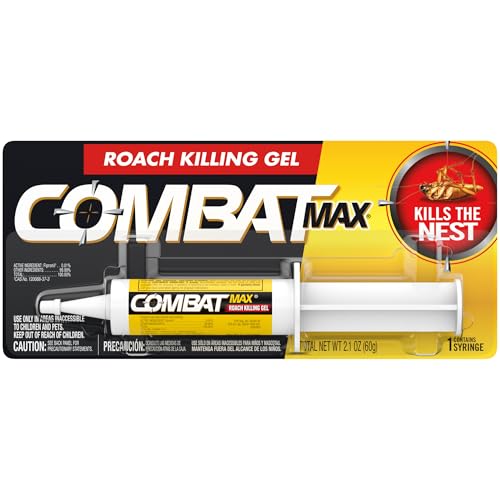 n
n
n
n
A low-cost fipronil gel that does the colony-reaching job for a few dollars.
n
n
nn
n 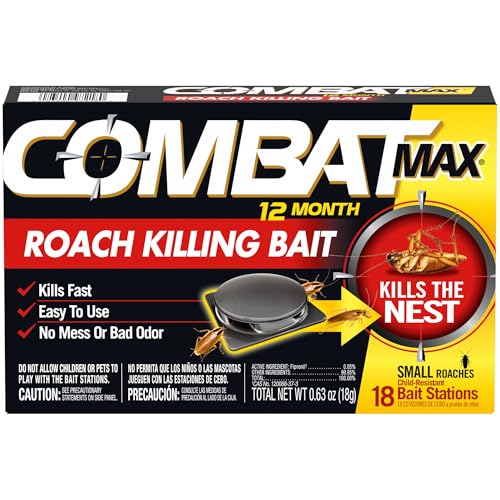 n
n
n
n
Pre-dosed child-resistant discs you place in corners and forget.
n
n
nn
Common questions
nn
What is the most effective roach killer?
n
For the common German cockroach problem, gel bait is the most effective type, because foragers carry it back to the colony in the wall. The Entomological Society of America roundup found gel and liquid baits the best option for consumers. Sanitation comes first, then bait; a spray treats one roach, not the nest.
nn
Does boric acid work on roaches?
n
Boric acid is a commonly recommended low-cost dust that roaches pick up and ingest while grooming. Apply it only as a very light dusting in cracks and voids where they travel, never in a thick pile they will walk around and never on food-prep surfaces. Keep it away from children and pets, and treat it as a supporting tool alongside bait.
nn
Are bait stations safe around children and pets?
n
Bait stations seal the active ingredient inside a child-resistant plastic casing, which is why they are the better pick for homes with toddlers or pets than open gel. Place them in corners where children cannot pry them open, and follow the label. No product is fully childproof, so supervision still matters.
nn
Why should I not use a roach spray?
n
A spray kills the roach you hit but cannot reach the colony, and on German roaches it can scatter survivors into other rooms. UC IPM notes that sprays do not provide long-term control. The exception is the occasional large outdoor roach at an entry point, where a labeled perimeter spray has a role.
nn
How long does it take baits to work?
n
Expect a visible drop within one to two weeks and a clear-out over four to six weeks, as long as you keep up the sanitation. Heavy or apartment-wide infestations take longer. If the bait eats down but the numbers will not fall, switch to a bait with a different active ingredient rather than reaching for a spray.
nn
Final verdict
nn
There is no single best roach killer, only the right type for your situation. Clean up food and water and seal the cracks first, then bait those cracks: gel for a German cockroach problem, stations for a hands-off home with kids or pets, and a light dust for hidden voids. Skip the spray as your main tool and skip the fogger entirely; both scatter German roaches and leave residue where the colony never walks. For most kitchens a clean counter and one syringe of gel does the work. If the infestation survives a few weeks of correct baiting, or you are fighting it across shared walls in an apartment, bring in a licensed pest-control professional rather than buying another can.
nn
Next steps:
nn
– See the full clear-a-colony sequence in how to get rid of cockroaches.
n
– Compare specific gels in the best cockroach gel baits roundup.
n
– Pick a hands-off option in the best roach bait stations guide.
nn
Pingback: Best Roach Killer Sprays for Fast Knockdown (and Their Limits)
Pingback: Best Roach Bait Stations for Set-and-Forget Control