nnn
n
Head lice spread almost entirely through direct head-to-head contact, the kind young children have constantly at school and at play. Sharing hats, brushes, or pillows is a real but minor route, and lice cannot jump, fly, reach you through a pool, or come from pets. Clean hair offers no protection, so lice say nothing about your family’s hygiene.
n
- n
- The main route: Hair touching hair for a few moments, which is why kids ages 3 to 11 get lice most often.
- The minor route: Freshly shared combs, brushes, and hats can occasionally pass a louse along.
- The non-routes: Jumping, flying, swimming pools, pets, and dirty hair. None of these spread head lice.
n
n
n
n
nn nn
nn
The note from school lands in the backpack, your scalp starts itching in sympathy, and the first question is always the same: how did this happen? That question matters, because most of what parents believe about how lice travel is wrong, and the wrong beliefs lead to wasted effort, unnecessary shame, and missed rechecks. The honest picture is simpler and more reassuring than the folklore.
nn
The main route: head-to-head contact
nn
Head lice move between people one way above all others: hair touching hair. A louse on one child’s head crawls across the bridge that forms when two heads lean together, and that is the whole event. The University of Kentucky’s head lice ENTfact is direct about it: head lice are mainly transferred by direct head-to-head contact with an infested person’s hair. No leap, no flight, no lurking on a doorknob. Just a short crawl during a hug, a huddle over a tablet, a selfie, a sleepover pillow pile, or a whispered secret on the reading rug.
nn
This explains the pattern every school nurse knows. Lice cases cluster where heads cluster: preschools, elementary classrooms, sleepovers, team benches, the back seat of the carpool. It also explains why lice keep circulating despite decades of screening, because the behavior that spreads them is affection and play. A louse needs several blood meals a day and a warm scalp to survive, so its entire strategy is to stay on a head and wait for the next head to arrive within crawling distance.
nn
Understanding this changes what prevention looks like. It is not about cleaning harder. It is about long hair tied back during outbreaks, a gentle word to kids about keeping heads apart during close play, and quick checks after sleepovers. Our school-year lice prevention guide for parents walks through the habits that actually reduce risk without turning your child into the kid who cannot hug a friend.
nn
Shared hats and combs: real, but a minor route
nn
The second route exists, but it is far smaller than most parents assume. A louse can occasionally travel on an object that goes directly from one head to another while the louse is still fresh and vigorous: a brush passed between sisters, a knitted hat tried on by three kids in a row, a headband swapped at recess. The MedlinePlus head lice overview puts sharing personal items such as hats and hairbrushes in the “can rarely occur” category, clearly behind close person-to-person contact.
nn
Why is this route so weak? Because a head louse away from a scalp is a dying louse. It cannot feed, it loses moisture and warmth, and per the University of Kentucky an adult louse off its host typically dies within 1 to 2 days. The same UKY guidance notes that the probability of transmission through pillowcases and bedding is extremely low. Coat hooks, couches, and cinema seats are far less dangerous than the folklore says; objects matter mainly when they move warm and directly from one head to the next.
nn
The practical translation: during an active case, do not share brushes, combs, hats, helmets, or hair accessories, and run recently used bedding, hats, and pillowcases through a hot wash and a hot dryer cycle. That is one targeted evening of laundry, not a whole-house decontamination. Our guide on cleaning the house after lice covers what needs washing, and the skip list is longer than most parents expect.
nn
Myths you can cross off the list
nn
Back-to-school season revives every piece of lice folklore, and the biology is unambiguous on the big three. First, lice cannot jump and cannot fly. MedlinePlus states it plainly: lice move by crawling, because they cannot hop or fly. Their six claw-tipped legs are built to grip hair shafts, not to leap, so if the hair-to-hair bridge never forms, a louse stays where it is.
nn
Second, pools do not spread lice. Lice grip hair tightly when submerged, chlorinated water does not dislodge or deliver them, and swimming next to someone with lice is not a meaningful exposure. Third, pets play no role. Head lice are strict human parasites; dogs and cats neither catch them nor carry them between children. If the family dog is scratching, it has a different problem, most often fleas, which look and behave nothing like lice.
nn
| Route | Reality |
|---|---|
| Head-to-head contact | The main route by far; a few seconds of hair contact is enough |
| Shared brushes, hats, headbands | Possible but uncommon; requires a fresh louse moving head to head quickly |
| Bedding and pillowcases | Extremely low probability per extension guidance; hot-wash recent items and move on |
| Jumping or flying | Never; lice can only crawl |
| Swimming pools | Not a transmission route |
| Pets | Never; head lice live only on humans |
nn
One more piece of good news belongs here: per MedlinePlus, head lice do not spread disease. They are an itchy nuisance and a logistics problem, not a health emergency, which is worth saying out loud to a worried child.
nn nn
nn
Why kids ages 3 to 11 get lice most
nn
Every reputable source lands on the same age band. MedlinePlus notes that children ages 3 to 11 and their families get head lice most often, and the reason is behavioral, not biological. Children in this range play in physical clumps. They huddle, wrestle, share secrets at whisper distance, nap side by side at daycare, and pile four heads into one phone screen. Each of those moments is a rope bridge for a crawling louse. A classroom or daycare simply concentrates dozens of heads within crawling distance for hours a day, which the University of Kentucky highlights as the core reason school-age children dominate the case counts.
nn
There is nothing about a child’s scalp that attracts lice more than an adult’s. Once children grow into teenagers who guard their personal space, head-to-head contact drops and so does lice risk. In the meantime, the realistic goal is not zero exposure, which would require zero friendship, but quick detection: a five-minute weekly comb check during the school year catches cases while they involve a handful of insects instead of an established population. Our parents’ guide to checking for lice shows exactly where to part the hair and what you are looking for.
nn
How adults get them, and why clean hair does not help
nn
Adults absolutely get head lice, and they overwhelmingly get them from their children. Lice do not care about age, only proximity, and nobody has more head-to-head contact with a 6-year-old than the parent who reads the bedtime story and shares the pillow on a sick night. When a case comes home from school, checking every head in the household, including your own, is standard practice, not paranoia.
nn
Now the stigma, because it deserves to be dismantled directly. MedlinePlus could not be clearer: personal hygiene and cleanliness have nothing to do with getting head lice. A louse grips a freshly shampooed hair shaft exactly as well as any other, and some evidence suggests clean hair is, if anything, easier to move through. The University of Kentucky makes the same point: an infestation is not an indicator of poor personal hygiene.
nn
The confusion comes from a different insect entirely. Body lice, a separate louse that lives in clothing seams rather than on the scalp, genuinely is linked to infrequent bathing and unwashed clothes, and per the MedlinePlus body lice article, regular bathing and weekly hot-washing of clothes and bedding makes body lice unlikely to persist. People blur the two species into one, and head lice inherit a hygiene reputation they never earned. Our comparison of body lice versus head lice untangles the two properly. The takeaway for the school pickup line: a lice note home is evidence of a sociable child, nothing more.
nn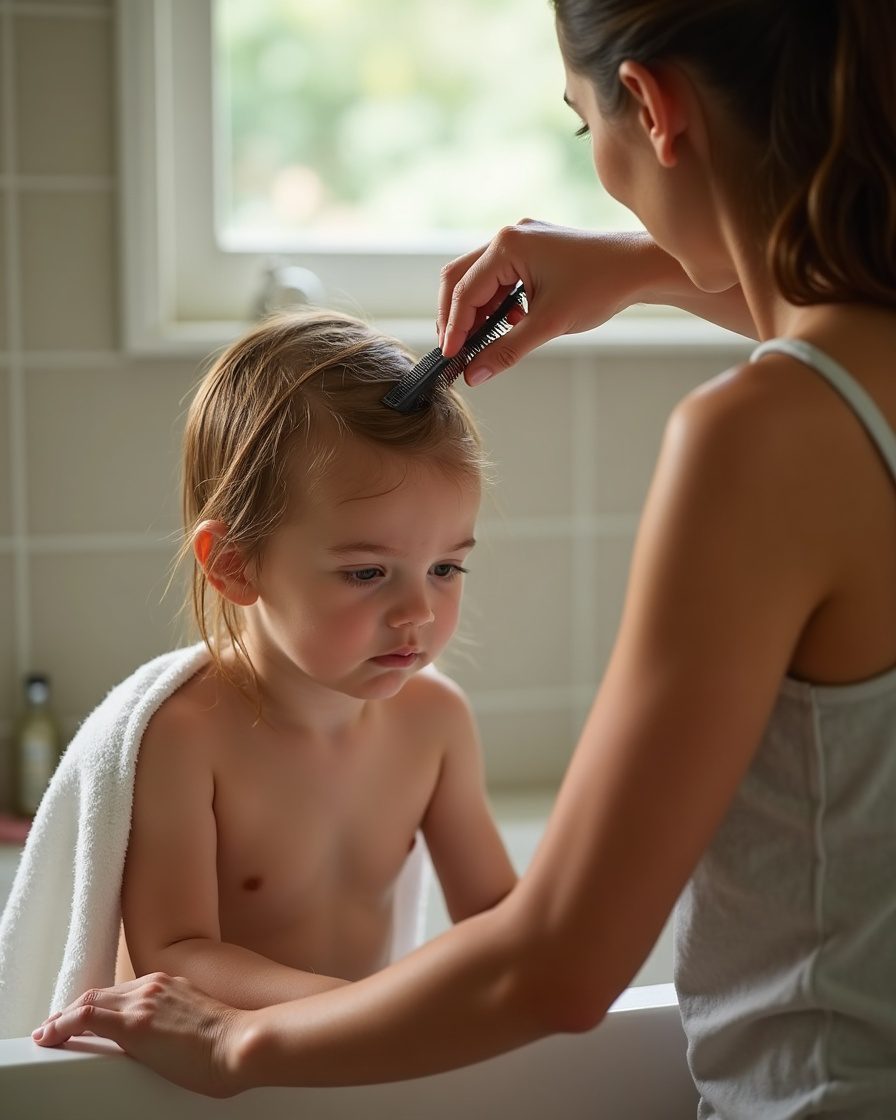 nn
nn
What to do when lice come home
nn
First, confirm before you treat. Itching alone is not a diagnosis, and dandruff, dry scalp, and hair-product flakes fool parents constantly. You are looking for live crawling insects about the size of a sesame seed and for nits, which per the MedlinePlus head lice encyclopedia entry are tiny specks glued firmly to the hair shaft near the scalp. A nit holds fast when you tug; a dandruff flake lifts away instantly, which is the quickest field test there is.
nn
For a confirmed case, the standard first-line approach is an over-the-counter treatment from one of two active ingredient classes, permethrin 1% lotions or pyrethrin-based products, applied exactly as the label directs, including the label’s guidance on retreatment about a week later. Follow the label, not the internet, on timing and amounts. Alongside any product, wet-combing with a quality fine-toothed nit comb is the mechanical backbone of getting clear: MedlinePlus recommends comb-outs to remove lice and nits after treatment and rechecking the hair every 2 to 3 days for 2 to 3 weeks until you are sure everything is gone. Treatments target crawling lice more reliably than nits, so the comb does work the chemistry cannot. The full sequence is in our head lice removal guide.
Where why a nit is not a diagnosis is the actual question, bugs that look like lice answers it.
nn
Skip the kitchen-cabinet remedies. Mayonnaise, household oils, and petroleum jelly are messy suffocation attempts that extension guidance specifically warns against, and herbal or essential-oil products lack the quality assurance and evidence base of registered treatments. Independent testing and public-health guidance simply do not support them.
nn
When to bring in a clinician or pharmacist
nn
Most cases resolve at home with a labeled product and patient combing, but some situations belong with a professional. Talk to a clinician or pharmacist before treating a child under 2 years old, and before using any pediculicide during pregnancy or while nursing. See a clinician if you have followed an over-the-counter product’s label correctly, including retreatment, and live lice are still present, since treatment failure can reflect resistant lice, the so-called super lice, and a clinician can prescribe alternatives that work through different mechanisms. Our overview of super lice identification and treatment explains how resistance shows up in practice. Finally, scratched scalps can get infected: spreading redness, warmth, oozing, swollen neck glands, or fever mean the scalp needs medical eyes, not another round of lice shampoo.
nn
Common questions
nnCan you get head lice from a swimming pool?n
No. Lice grip hair tightly underwater, and pool water does not carry them between swimmers. Pool-day cases trace back to towels shared head to head or to close contact on the deck, not to the water.
nnHow long can lice live on pillows, hats, and furniture?n
Not long. An adult louse off the scalp typically dies within 1 to 2 days, and extension guidance rates bedding transmission as extremely low probability. Hot-wash and hot-dry recently used items and vacuum where heads rest; fumigation is never needed.
nnDo pets spread head lice?n
No. Head lice are human-only parasites. Dogs, cats, and other pets cannot catch head lice from a child and cannot pass them to one, so the family pet needs no treatment during a lice episode.
nnDoes getting lice mean my child’s hair is dirty?n
No. Hygiene has nothing to do with head lice, which grip clean hair just as easily as unwashed hair. The hygiene link belongs to body lice, a different species that lives in clothing. A head lice note home reflects close play with friends, nothing else.
nnCan adults catch lice from their kids?n
Yes, and it is the most common way adults get them. Shared pillows, bedtime snuggles, and leaning over a child’s head during checks all create the hair-to-hair contact lice need. When one household member has a confirmed case, check every head, including the adults.
nn
Final verdict
nn
Head lice travel on one main road: direct head-to-head contact, the everyday physics of children playing close together, which is why kids ages 3 to 11 and their families carry most cases. Shared brushes and hats are a genuine but minor side road, worth a few days of not-sharing and one hot laundry cycle. Everything else is myth: lice cannot jump or fly, pools do not spread them, pets never carry them, and clean hair is no defense, so there is no shame in that school note. Confirm with a comb, use a labeled permethrin 1% or pyrethrin product exactly as directed with thorough comb-outs, and bring in a clinician for babies under 2, pregnancy, treatment failures, or signs of scalp infection. The lice are beatable. The myths were always the harder pest.
nnThis article is for information only and is not medical advice.n