Four things account for nearly every bathroom bug: drain flies, silverfish, springtails and booklice. All four are there for the same reason, which is standing moisture and the organic film or mould that grows in it. That makes the bathroom itself the target. Ventilation and a cleaned drain solve more of these than any spray.
- Small fuzzy moth-like flies resting on walls: drain flies, breeding in the film inside a drain.
- Silver, tapered, wriggles like a fish: silverfish, feeding on starch and damp paper.
- Jumps when you touch it: springtail, and a straightforward humidity signal.
InsectoGuide is reader-supported. As an Amazon Associate we earn from qualifying purchases at no extra cost to you.
A bathroom is the wettest room in a house and the one most often sealed shut. Insects that need moisture do not have to find their way in from outside so much as simply persist, because the conditions never dry out. That is why the same short list appears in bathrooms everywhere, and why the fixes are so similar.
Drain flies, the ones on the wall
If small dark fuzzy flies are sitting motionless on the tiles or the ceiling near a shower, these are drain flies, also called moth flies. They are two to five millimetres, heart-shaped in outline, and they hold their wings roof-like over the body.
They do not come up from a sewer in the way people fear. They breed in the gelatinous organic film that coats the inside of a drain, feeding on it as larvae. That is why they appear around a shower or a basin that gets used less often, and why pouring bleach down the drain rarely works: bleach runs straight through the film without removing it.
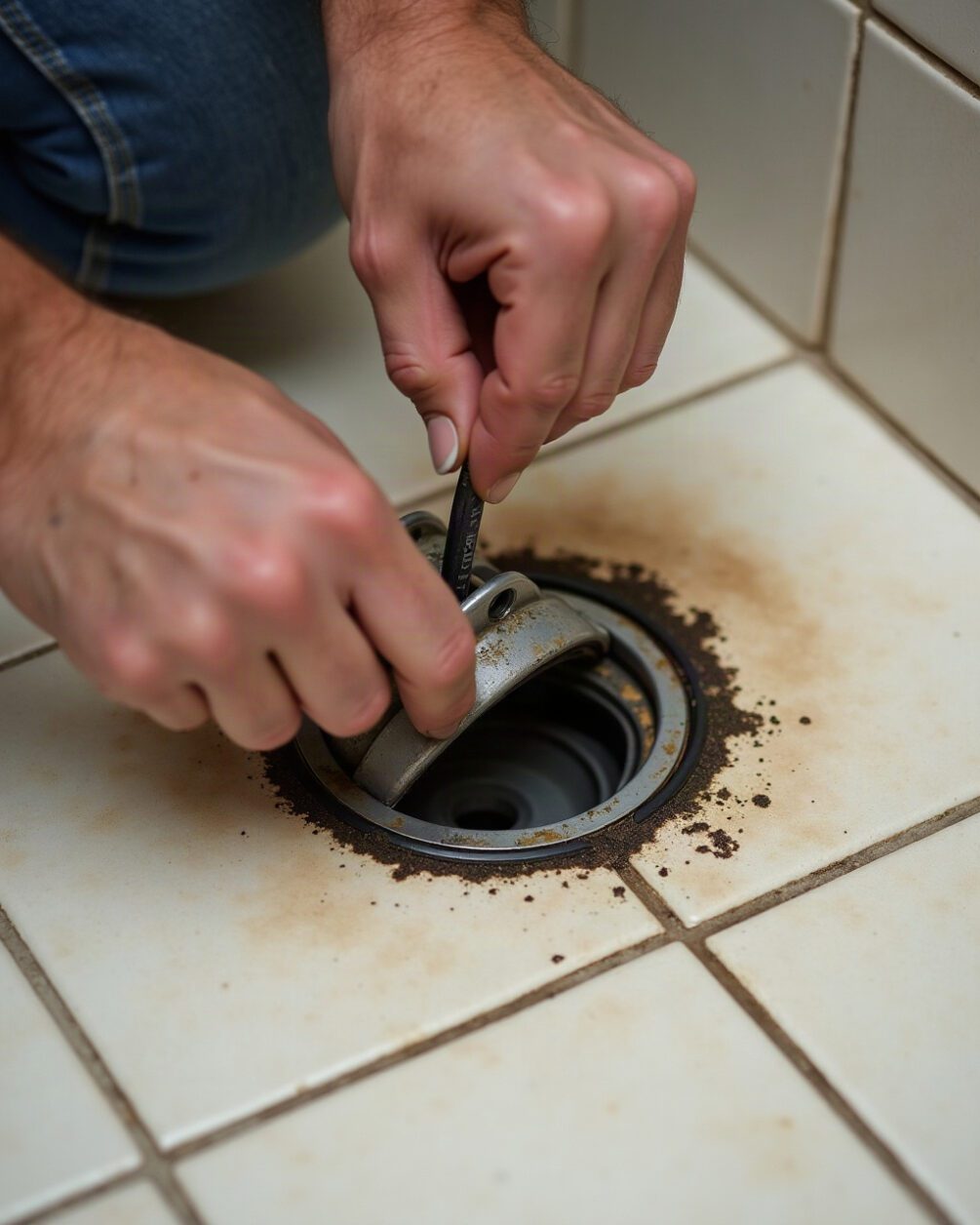
The fix is mechanical. Take off the drain cover, scrub the inside of the pipe as far as you can reach with a brush, and treat with an enzyme or bacterial drain product designed to digest the film. Our guides to getting rid of drain flies and to drain treatments that actually break down the film cover the method. If the flies are in a kitchen instead and hover around fruit, they are a different insect, and Kentucky’s guidance on fruit flies breeding in fermenting residues applies. Our gnat identification guide separates the three.
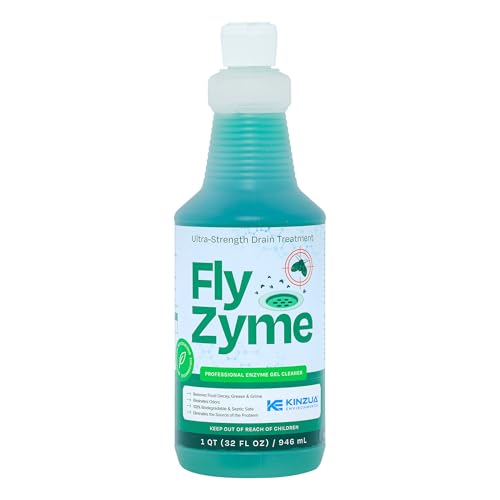
An enzyme gel that digests the organic film the larvae actually live in, which is the part bleach runs straight past.
Silverfish, the classic bathroom insect
Silverfish are the ones people recognise. They are ten to fifteen millimetres, tapered from head to tail, covered in silver-grey scales, with three tail filaments and long antennae. The movement is unmistakable: a rapid side-to-side wriggle like a fish, usually along a skirting board or in a bath at night.
They eat starches and polysaccharides, which in practice means paper, book bindings, wallpaper paste, cardboard, dried food residues and some fabrics. They are slow to mature and long-lived, so a population builds quietly rather than exploding.
They do not bite and carry no disease, though they can damage stored paper. Our silverfish identification guide covers the biology, whether silverfish bite answers the common worry, and silverfish versus firebrats covers the near-identical relative that prefers hot places such as airing cupboards and boiler rooms.
Springtails and booklice, the humidity pair
These two are much smaller, one to two millimetres, and both are pure moisture indicators.
Springtails jump. That single behaviour identifies them. They appear around basins, in shower trays, on damp tiles and in the soil of any bathroom plant. UC IPM notes that springtails are harmless and indicate excess moisture, and Penn State describes them feeding on mould and decaying material.
Booklice crawl. They are pale, slow and found on damp paper, on the back of wallpaper, on plaster in a newer building, and on packaging stored in a bathroom cupboard. Despite the name they cannot live on a person and are unrelated to head lice.
Neither needs treatment as such. Both disappear when the surface humidity comes down.
The room is the actual problem
Every insect above is telling you the same thing, so it is worth acting on the message rather than the messenger.
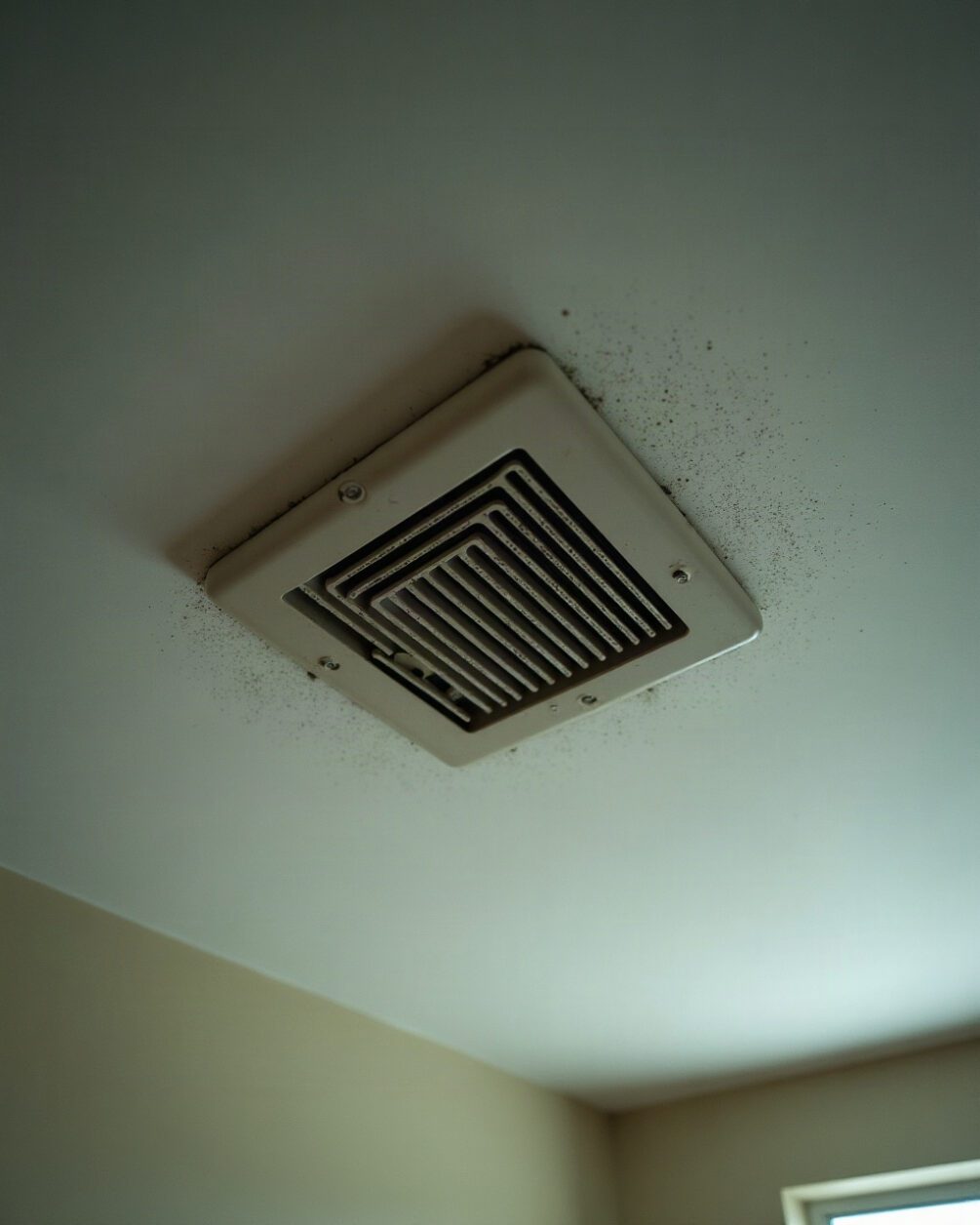
Run the extractor fan for longer. Most bathroom fans are set to run for a few minutes after the light goes off, which is not enough to clear the moisture from a shower. If there is no fan, a window opened properly for fifteen minutes after bathing does more than any product.
Clear the drains mechanically. The film inside them is the food source for drain flies and part of the moisture source for everything else.
Find the slow leak. Under a basin, behind a toilet cistern, at a bath sealant edge. Swollen chipboard, soft plaster, a musty smell or peeling paint are the signs. A leak feeds an insect population indefinitely.
Check what is stored in there. Cardboard boxes, old magazines, paper packaging and towels left damp all feed silverfish and booklice. Our guide to protecting books and paper from silverfish covers storage properly.
What is almost never in a bathroom
Bed bugs. They stay close to where people sleep. A bathroom sighting is essentially always something else, and if a bed is genuinely the concern, our inspection guide is the right page.
Fleas, unless a pet sleeps in there. Fleas concentrate where an animal rests.
Anything that will bite you. Nothing on the bathroom list feeds on people. If there are actual bites appearing, the source is more likely a bedroom or an outdoor exposure, and the bite identification chart is a better tool than hunting for an insect in the wrong room.
Common questions
They come back every time I clean. Why?
Cleaning removes the visible generation. If the drain film or the damp surface is still there, the next generation follows. The population lives in the moisture, not on the surfaces you are wiping.
Can drain flies come from the sewer into the house?
The larvae develop in the film inside your own pipework, including traps that have dried out from disuse. A rarely used guest shower or floor drain is a common source, and simply running water into it weekly helps.
Is a centipede in the bath a problem?
House centipedes are hunting the other insects, so their presence means there is something to hunt. They are harmless to people. Our house centipede guide covers them, and they usually leave when their prey does.
Final verdict
Bathroom insects are a symptom of a room that never dries. Fuzzy flies resting on tiles mean the drain film needs scrubbing out. A silver wriggler means starch and damp paper. Anything that jumps means humidity, and anything pale and slow on damp plaster means the same. Deal with ventilation, drains and leaks, and the identification becomes a matter of curiosity rather than a problem to solve.