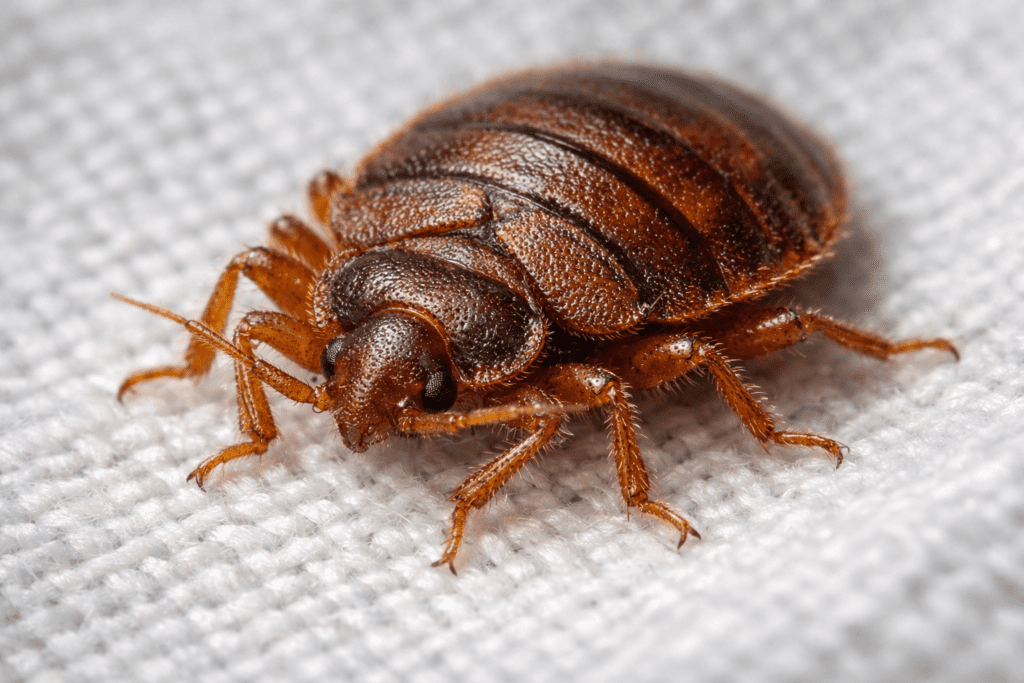
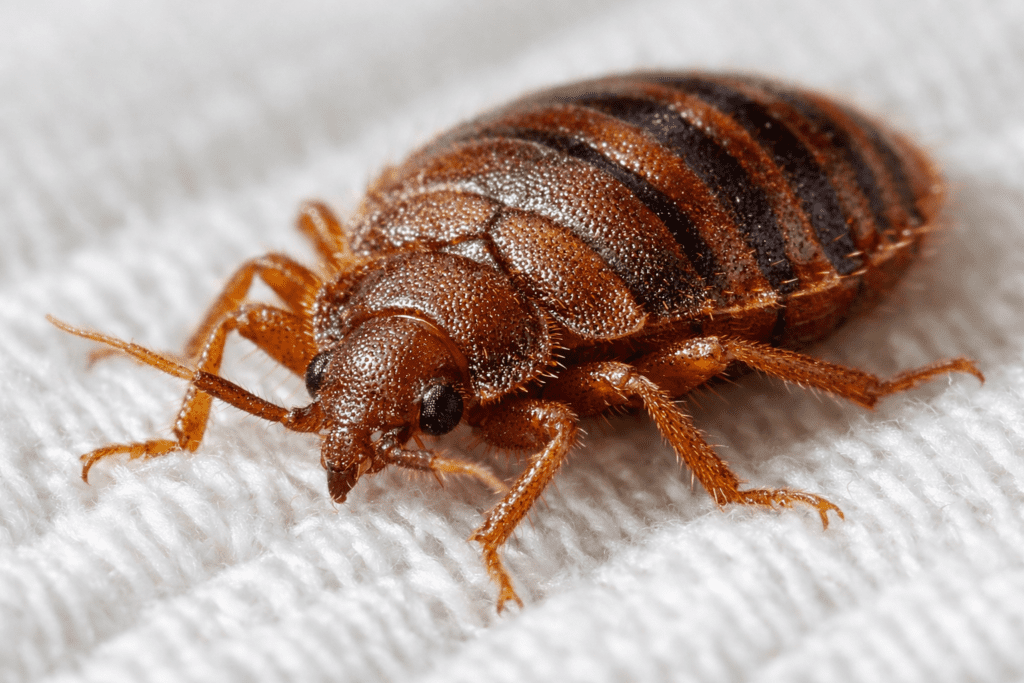
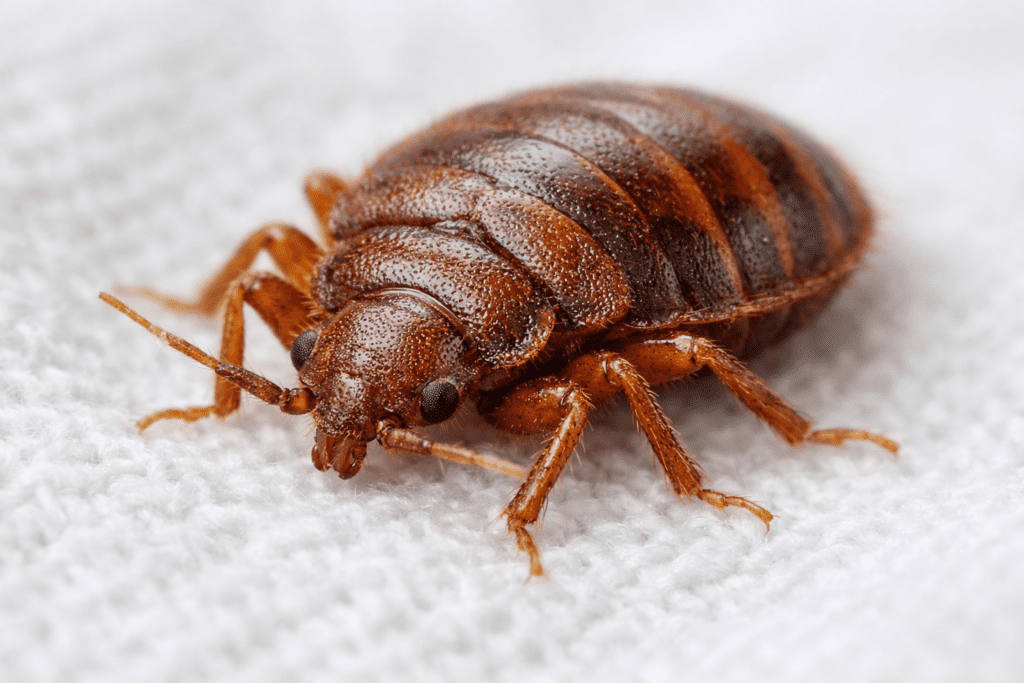
Bed bugs are reddish brown, not black, so a genuinely black bug in a bed is usually something else: a carpet beetle larva, a spider beetle, a flea, or a booklouse. The colour is the fastest way to calm this down, but it is not proof on its own, because a bed bug that has recently fed looks much darker. Three physical checks settle it.
- Shape: bed bugs are flat and broad, like an apple pip. Carpet beetle larvae are bristly. Spider beetles look round and shiny with long legs.
- Evidence beats sightings: bed bugs leave dark spotting and shed tan skins along mattress seams. No spotting, very probably no bed bugs.
- Location within the bed: bed bugs concentrate in seams, the frame and the headboard. Things found loose on top of the duvet usually came from elsewhere in the room.

This is one of the most anxious searches in the whole subject, and it deserves a straight answer rather than a slideshow of horror. If the thing you found is genuinely black, the odds are already in your favour. That is not a guarantee, and this guide covers the exception too, but it is a real and useful starting point.
Why colour is worth trusting here, and where it breaks
An adult bed bug is reddish brown. Unfed, it is closer to a pale tan. The University of Kentucky describes adult bed bugs as brownish, oval and flattened, roughly the size of an apple seed. Nothing in that description is black.
Here is the exception, and it matters. A bed bug that has just fed swells, darkens and looks almost black to the naked eye. So does a squashed one. If what you found was engorged, rounded rather than flat, or found as a smear, colour has stopped being useful and you should go straight to the physical evidence check below.
The other honest limit is scale. At two or three millimetres in poor light, most people cannot reliably call brown from black at all. That is why the shape and evidence tests carry more weight than the colour test.
The four things it usually turns out to be
Carpet beetle larvae are the most common answer by a wide margin. They are three to five millimetres, dark, oval, and covered in short bristles that give them a fuzzy or banded look. Kentucky notes that carpet beetle larvae feed on wool, feathers and other animal fibres, which is exactly what a duvet, a wool blanket and a mattress topper are made of. They do not bite, though their bristles can irritate skin and produce a rash that people reasonably mistake for bites. The full comparison is in our carpet beetle versus bed bug guide.
Spider beetles cause a specific kind of alarm because they genuinely do look like a small dark spider at a glance. They are round, shiny, long-legged, and they scavenge dry organic material. They are harmless and their presence usually points at an old food source somewhere else in the house.
Fleas belong here only if there is a pet or there recently was one. A flea is dark, but it is flattened side to side rather than top to bottom, and it jumps hard enough to disappear. Kentucky’s guidance is that flea control runs through treating the animal rather than the bedroom. If the bites are at ankle height rather than on the upper body, read our flea bites guide and check the pet.
Booklice turn up on damp bedding, headboards and stored linen. They are under two millimetres, pale to grey rather than truly black, wingless, and they feed on the mould that grows on damp surfaces. They are a humidity reading, not an infestation.

The three checks that settle it
Do these in order. The first two take about five minutes and are worth more than any amount of photograph comparison.
Check the seams, not the surface. Strip the bed and run a torch along the piped seam of the mattress, then the box spring or divan edge, then the joints of the frame and the back of the headboard. Bed bugs hide in tight seams and screw holes, not out in the open on a duvet.
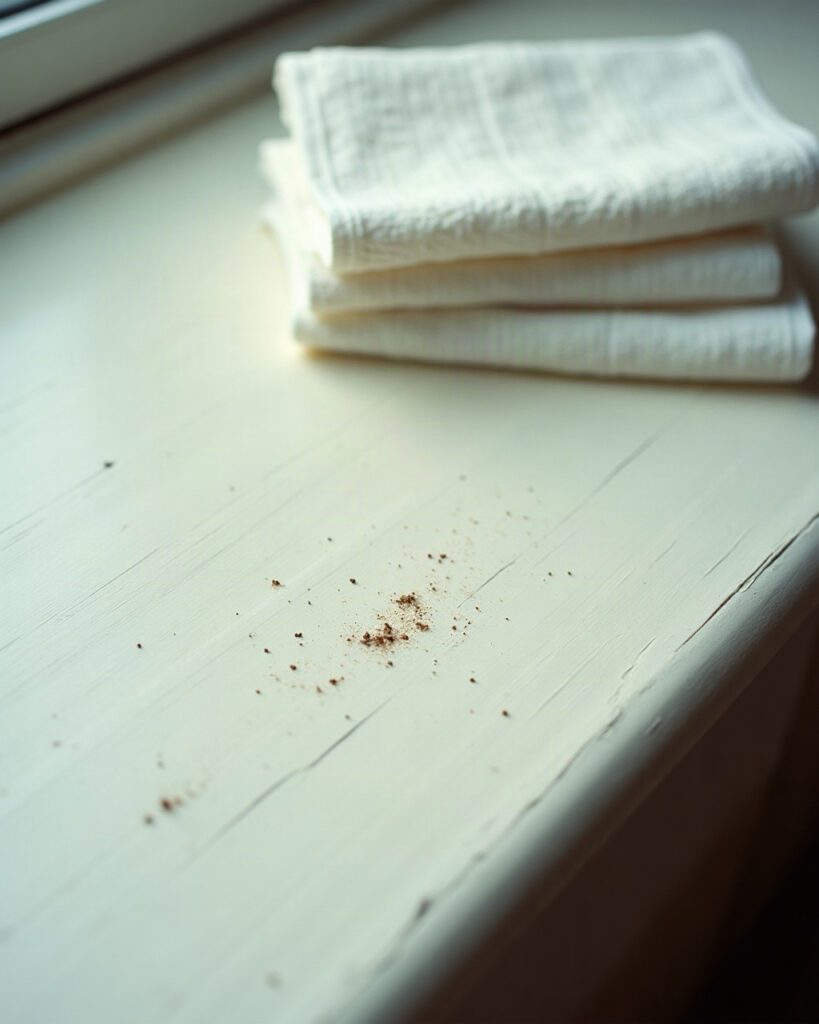
Look for the spotting. This is the decisive evidence. Bed bugs leave small dark spots that look like a marker pen dot bleeding slightly into the fabric, plus shed tan skins from moulting. Insects without that spotting are usually not bed bugs, however dark they looked. The step by step version is in our bed bug inspection guide.
Check what else is in the room. Carpet beetles come from wool, felt, taxidermy, old carpet under a wardrobe, or a bird nest in a soffit. Booklice come from damp. Spider beetles come from a forgotten food source. If you can find the source, you have your answer without ever identifying the insect properly.
What the bites do and do not tell you
People often try to work backwards from marks on their skin, and it is worth being clear that this direction is unreliable. Reactions vary enormously between people, a significant share of people do not react to bed bug bites at all, and reactions can be delayed by days. A partner sleeping in the same bed with no marks proves nothing either way.
If you are trying to read your skin anyway, the insect bite identification chart lays out the common patterns side by side, and our bed bug bites guide covers what a genuine reaction tends to look like. Neither replaces finding physical evidence in the bed.
One more source of confusion worth naming: dust mites. They are far too small to see, so anything you can see with the naked eye is not a dust mite, whatever a search result suggested. Our dust mites versus bed bugs guide covers why that distinction matters for people with allergies.

Common questions
I found one black bug and nothing else. Should I be worried?
A single insect with no spotting, no shed skins and no repeat sightings is usually a wanderer rather than a resident. Vacuum, check the seams once properly, and move on. Bed bug problems do not present as one insect on one occasion.
Can bed bugs be black when they are young?
No. Nymphs are the opposite: they are pale, almost translucent, and become visible mainly after feeding, when they show red inside. Young bed bugs are harder to see, not darker.
Does finding them in the bed mean the bed is the source?
Not necessarily. Carpet beetle larvae migrate from a wardrobe, under a bed, or a carpet edge. The bed is where you notice them because it is where you are still and looking closely.
Final verdict
Black is genuinely good news here, with one exception: a recently fed or squashed bed bug looks dark. So do not stop at colour. Strip the bed, put a torch along the seams and the frame joints, and look specifically for dark spotting and shed skins. If those are absent, you are almost certainly dealing with a carpet beetle larva, a spider beetle, a flea from a pet, or a booklouse on damp fabric. All four are solved by cleaning, drying or finding a source, and none of them is feeding on you.