
You pulled a book off the shelf or flicked on the bathroom light and something silver wriggled away fast, and the first question is what is this. The short version: a silverfish is unmistakable once you know it, a small, teardrop-shaped, silvery-grey insect with three long tail bristles and a darting, fish-like motion when it runs. They are harmless to people, do not bite, and do not carry disease. They just eat starches, paper, and glue in damp places. Get the shape and the three tails right and you have separated it from its one real look-alike, the firebrat.
If you see a teardrop-shaped, silvery-grey insect with three long tail bristles that wriggles like a fish when it runs, it is a silverfish (Lepisma saccharina), not the firebrat. It is harmless to people and feeds on starches and paper in damp spots.
- The confirming feature: A carrot-shaped silvery body with three long tail filaments and a side-to-side, fish-like wriggle.
- Most-confused look-alike: The firebrat, which is mottled grey-brown rather than uniform silver and lives in hot, not just damp, places.
- What it means: Harmless nuisance. Fix the moisture, and if you want it gone see our complete guide to getting rid of silverfish.
Quick answer
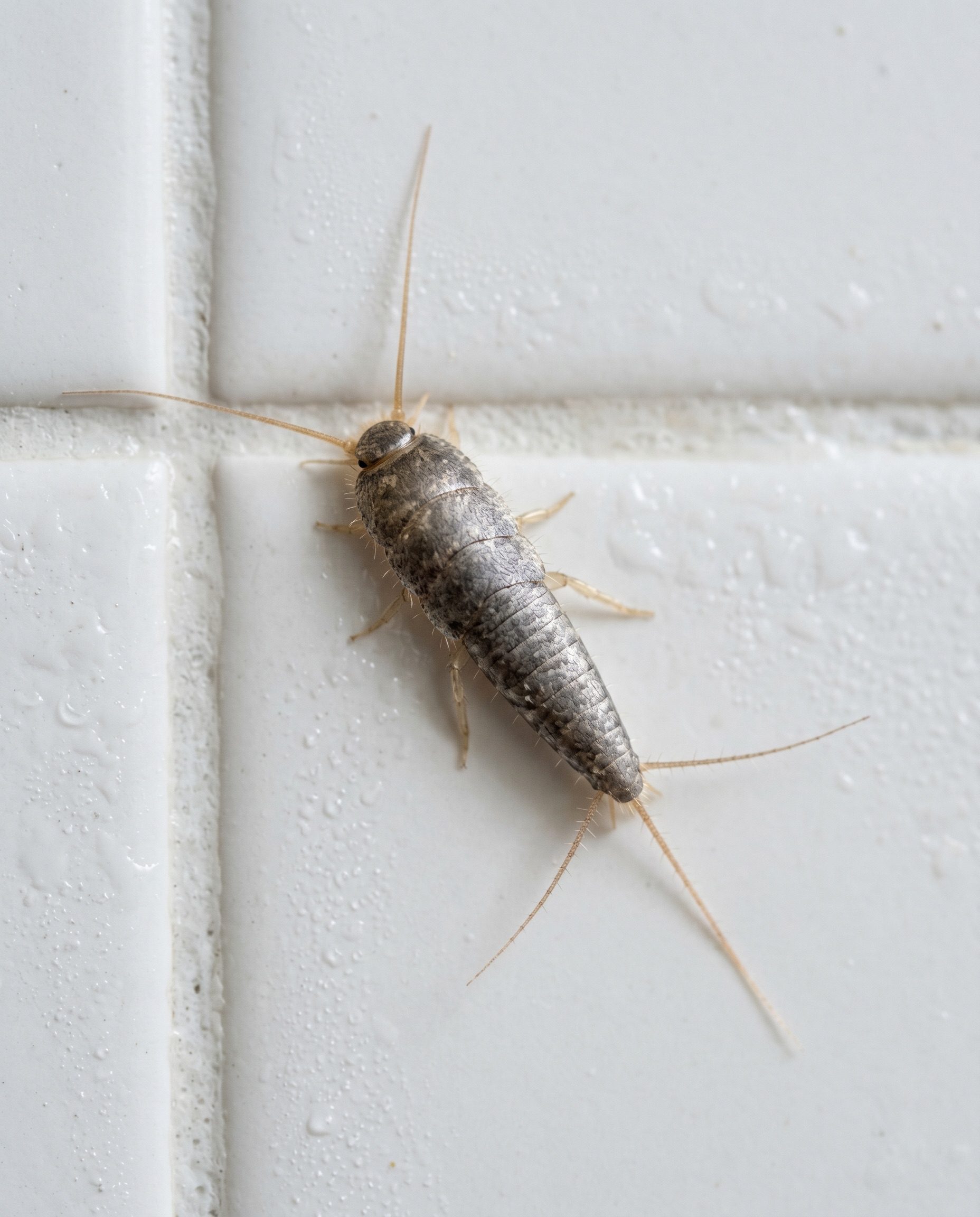
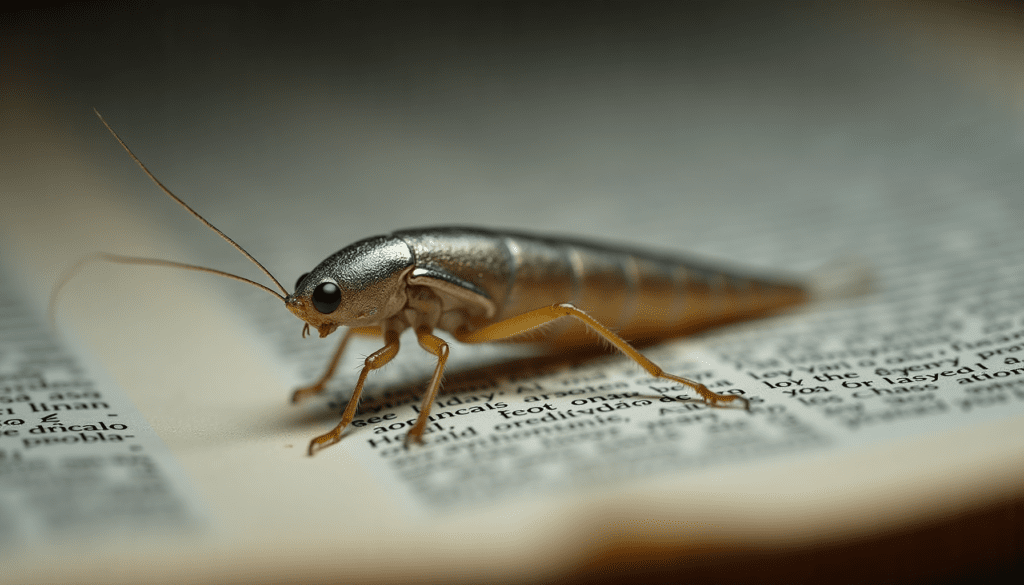
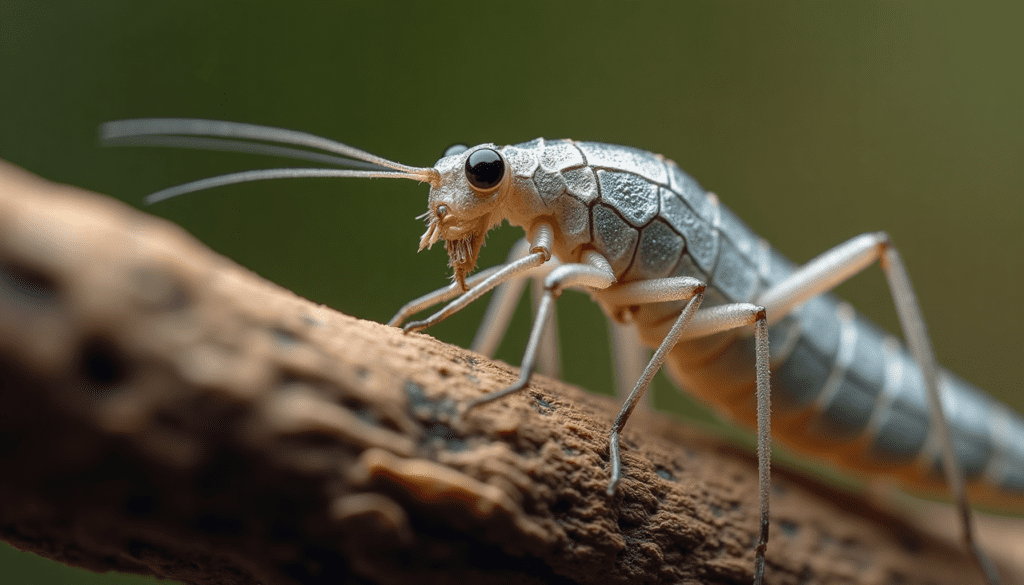
A silverfish is a small wingless insect, the common species being Lepisma saccharina. The whole identification rests on a body shape and a tail. Picture a flattened teardrop or a carrot lying on its side, widest near the head and tapering to the rear, covered in fine metallic scales that give it that pewter sheen. At the back end sit three long bristly filaments that spread out like the tail of a tiny fish, and at the front a pair of long thread-like antennae. Add the motion, a quick side-to-side wriggle as it bolts for a crack, and you rarely need anything else. The one insect people mix it up with is the firebrat, which is the same body plan but mottled brown rather than silver and partial to heat. Everything below is just confirmation.
The three tails settle it
If you remember one thing, count the tails. A silverfish carries three tail filaments at the rear, two angled out to the sides and one pointing straight back, each nearly as long as the body. No other common household insect of this size and shape has that arrangement, which is why entomologists treat it as the decisive tell. According to UC IPM’s Pest Notes on silverfish and firebrats, those three appendages, called cerci and a central filament, are a defining feature of this whole insect group.
The tails are easy to check even on a fast specimen, because they trail behind as the insect runs and stay visible against a pale floor or wall. The body backs them up. The metallic, scale-covered teardrop shape is the second half of the ID, and the two features together are conclusive. If the tails are there but the body looks brownish and banded instead of solid silver, you are likely looking at the firebrat, which shares the three-tail design. That is the only realistic confusion, and the next section handles it.
Full description
Run down the field marks in order and a silverfish identifies itself quickly. Size first: an adult is roughly half an inch long, body only, not counting the antennae or tails. That puts it between a grain of rice and a small paperclip, small enough to slip under a baseboard. The colour is the giveaway most people notice, a uniform silvery-grey to pale pewter that comes from tiny overlapping scales. Rub one and the scales smudge off like dust from a moth’s wing, leaving a faint smear.
The shape is what the name “fish” points to. The body is broadest just behind the head and narrows steadily toward the tail, a tapered carrot or teardrop rather than the parallel-sided tube of a typical beetle larva. Count the legs and you confirm it is an insect, six legs, not the eight of a spider, set on a low, flattened body that hugs the surface. There are no wings at any stage, so a winged insect is something else entirely.
At the head sit two long, segmented antennae that sweep ahead as the insect feels its way. At the rear are the three filaments already described. Silverfish are also long-lived and slow to mature for their size, molting many times and continuing to molt as adults, which is unusual among insects and part of why a population builds quietly over a year or two rather than exploding in a season.
Silverfish vs firebrat vs earwig
People confuse the silverfish with a short list of other small, fast, indoor insects. The firebrat is the genuine look-alike because it shares the carrot body and three tails. The difference is colour and where it lives: the firebrat is mottled grey-brown rather than uniform silver, and the firebrat prefers genuinely hot spots like the area around ovens, water heaters, and hot pipes, while silverfish want cool damp. Earwigs get lumped in too, but an earwig has obvious pincers at the rear instead of soft tails and is more of an outdoor moisture invader. For that one, our earwig identification guide walks the pincer-versus-tail distinction in detail.
| Insect | Key feature | Where found |
|---|---|---|
| Silverfish | Uniform silver, teardrop body, three soft tails | Cool, damp: bathrooms, basements, closets |
| Firebrat | Mottled grey-brown, same tails, prefers heat | Hot: near ovens, heaters, hot pipes |
| Earwig | Hard pincers at the rear, no soft tails | Outdoor mulch and damp; wanders indoors |
Where you find them and why
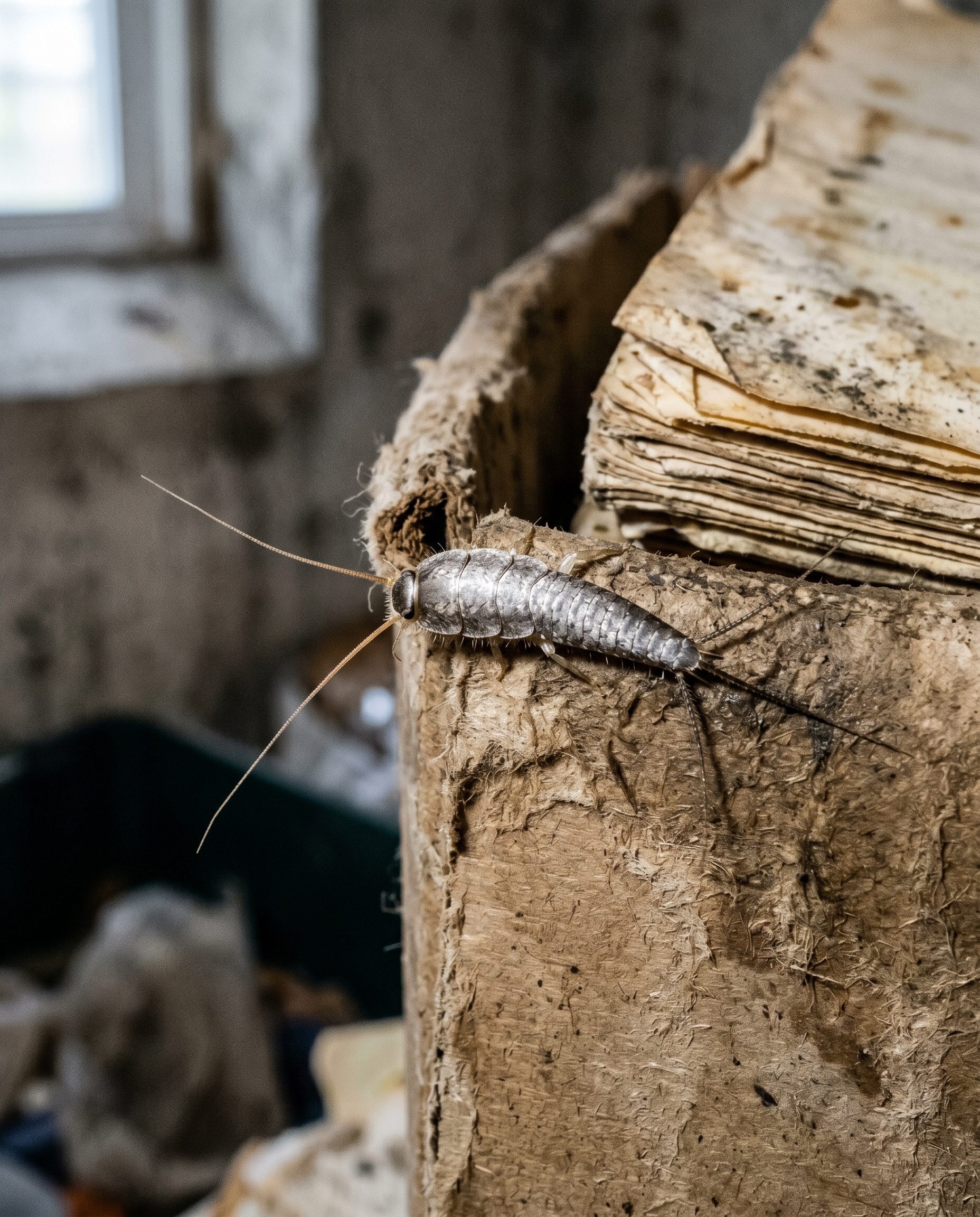
You meet a silverfish most often in the bathroom, the basement, the laundry area, or a closet against an exterior wall, which is itself a clue, because the common thread is moisture and quiet. They are nocturnal and shun light, so the classic sighting is a quick silver dash when you flip a switch at night or move a stored box. They feed on carbohydrates, meaning the starches and sugars in paper, book bindings, wallpaper paste, cardboard, dried goods, and even the sizing in fabric, which is why old paper and damp storage attract them.
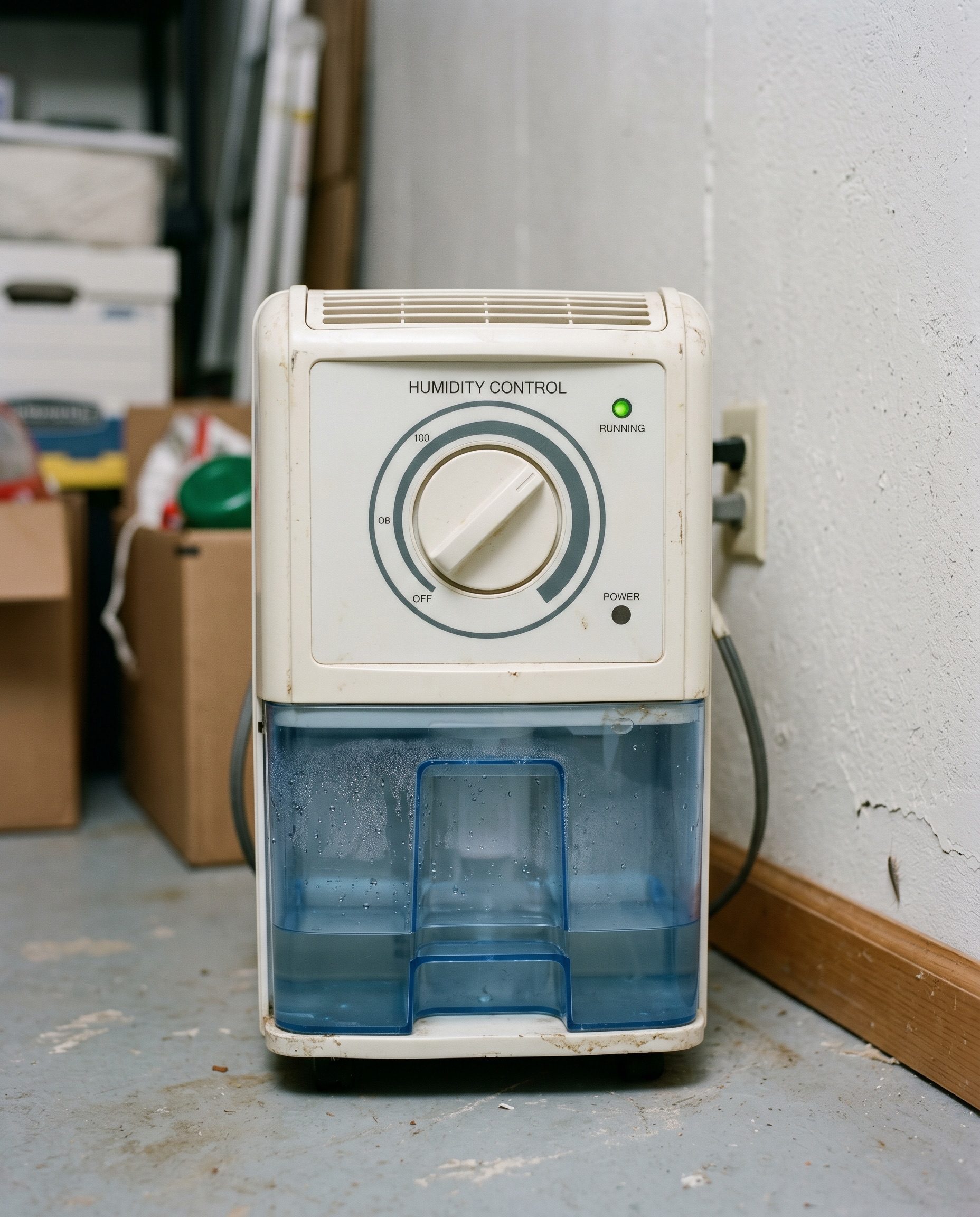
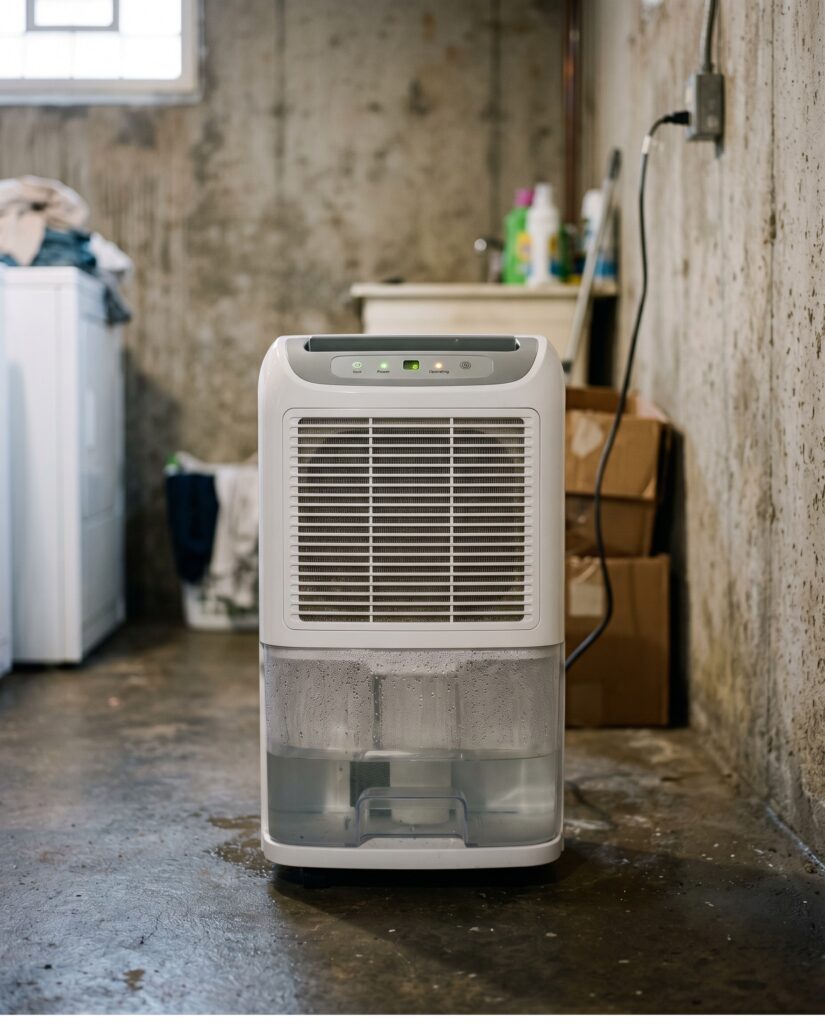
These are moisture-driven occasional invaders, not a sign of filth or a breeding crisis in your walls. A handful turning up over a few weeks is normal in any humid corner of a US home. The University of Kentucky’s entomology fact sheet on silverfish and firebrats ties their presence directly to humid microclimates and starchy food, which is also the lever for control: lower the humidity and you make the space inhospitable. A dehumidifier in a damp basement and fixing a leaky trap under a sink does more than any spray, and it lines up with the EPA’s principles of safe, low-toxicity pest control, which put habitat changes ahead of chemicals.
Are they dangerous?
No, and this is the reassuring part of the ID. Silverfish do not bite people, do not sting, and are not known to carry disease. They have no venom and no interest in you, only in your paper and pantry starches. The honest harm they do is cosmetic and material: they can nibble holes in book pages, photographs, wallpaper, and stored documents, and a large long-running population can stain or scallop the edges of paper. That is a property nuisance, not a health threat.
So the proportionate response is calm. Knock down the dampness they depend on, store paper and dry food in sealed containers, and the numbers fall on their own. If they are already established and you want them gone, University of Kentucky guidance on reducing the dampness they need is the place to start, and our silverfish traps and killers buyers guide covers the sticky monitors and baits worth using once moisture is handled.
Common questions
Are silverfish harmful to humans?
No. Silverfish do not bite, sting, or transmit disease, and they are not venomous. The only damage they cause is to materials, chewing small holes in paper, book bindings, wallpaper, and starchy fabrics. They are a nuisance, not a health risk, so there is no reason to panic over a sighting.
What is the difference between a silverfish and a firebrat?
Both have the carrot-shaped body and three tail filaments, so the tell is colour and habitat. A silverfish is a uniform metallic silver and likes cool, damp rooms; a firebrat is mottled grey-brown and seeks out hot places like the spaces near ovens and water heaters. Same shape, different finish and different climate.
Why do I suddenly have silverfish?
Almost always moisture. Silverfish are drawn to humid, quiet spots with starchy food, so a damp basement, a leaky bathroom, or a box of old papers in a closet is enough to draw them in. They are occasional moisture invaders rather than a sign of a dirty home or a structural infestation.
Do silverfish mean my house is dirty?
No. A spotless home with a humid bathroom or basement will still see silverfish, because they are after moisture and paper starch, not crumbs or grime. They are common in tidy US homes anywhere the air stays damp.
How long do silverfish live?
Surprisingly long for such a small insect. Silverfish can live for several years and keep molting throughout adult life, which is unusual. That long, slow lifespan is why a population builds up gradually rather than appearing all at once, and why steady moisture control beats a one-time spray.
Final verdict
A silverfish is one of the easier household insects to name once you know what to look at. Confirm the teardrop, silvery-grey body with three long tail filaments and the quick fish-like wriggle, and you have it, separated from the firebrat by its uniform silver colour and its taste for damp rather than heat. It is harmless to people, does not bite or carry disease, and turns up because a corner of your home is damp and holds paper. Treat it as a moisture problem rather than a pest emergency: dry out the space, seal up paper and dry food, and the numbers fade.
Next steps:
– If you want them gone, start with our complete guide to getting rid of silverfish.
– Compare the monitors and baits worth using in the silverfish traps and killers buyers guide.
– Found pincers instead of soft tails? Check the earwig identification guide.
Pingback: Long Thin Bugs in the House: Identification Guide
Pingback: Tiny Grey Bugs in the House: Identification Guide