If those little fuzzy moth-like flies keep showing up around your sink, the fix is not in the air, it is in the pipe. Drain flies breed in the slimy organic film coating the inside of your drainpipes, which is exactly why bleach fails: it rinses straight past the gunk without removing it. The short answer: scrub what you can reach for free tonight, then pour in an enzyme or bio-gel cleaner that clings to the pipe wall and digests that film, because removing the breeding source is what stops new flies from hatching. In our own house we keep one enzyme gel under the sink for the drain that always acts up. Most lists push fly sprays and traps first; that is backward, and the comparison below shows why.
Drain flies breed in the slimy film inside your pipes, so treat the drain, not the air: an enzyme or bio-gel that clings and digests the film clears the breeding source, while bleach just rinses past it.
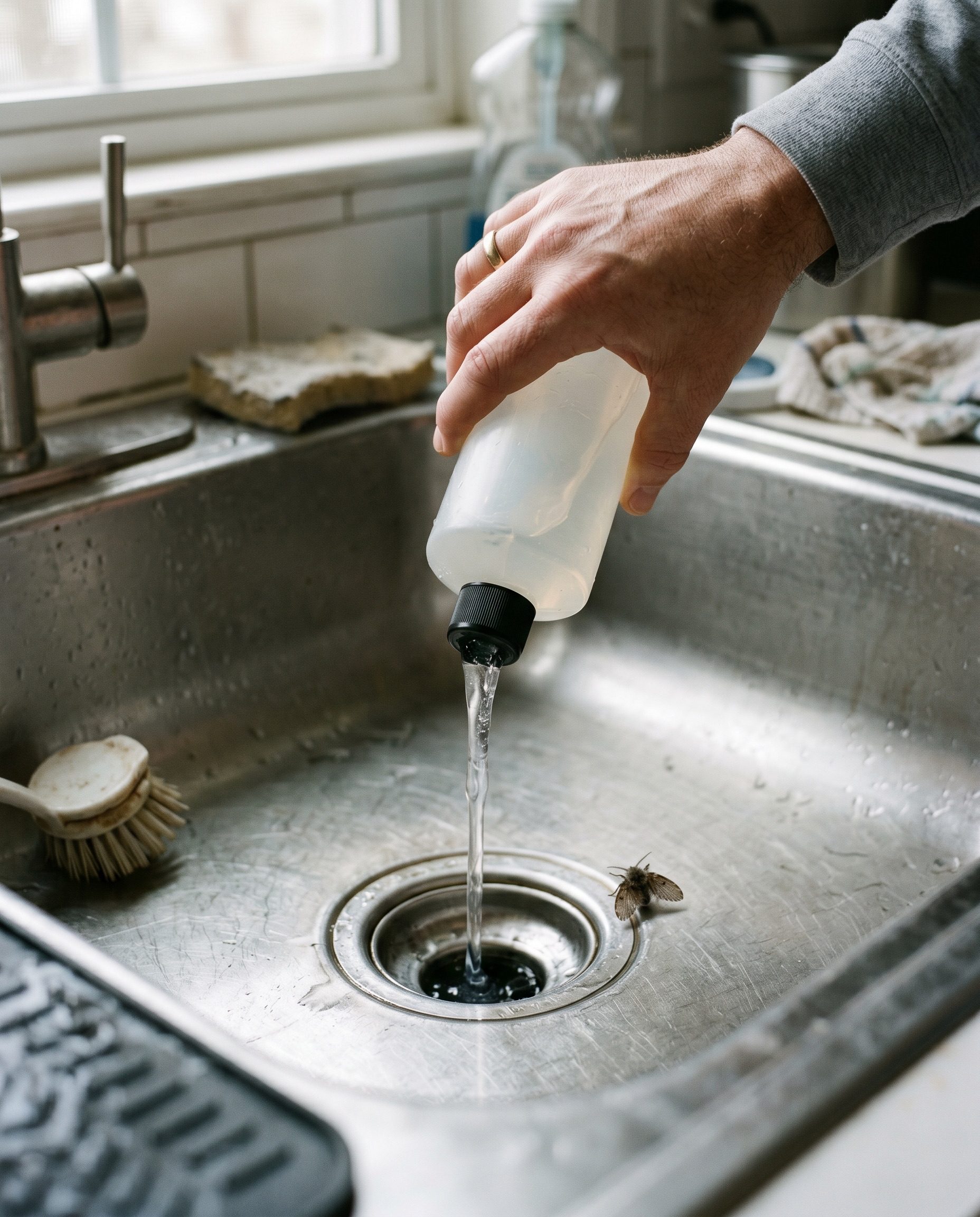
- Do first (free): Scrub the drain rim and stopper with a stiff brush and flush with very hot water to knock down loose film.
- Best for the common case: An enzyme or bio-gel drain cleaner poured in overnight to digest the biofilm flies breed in.
- Skip: Bleach and air sprays as your main fix; they kill what they touch but leave the breeding slime behind.
n
For the neighbouring question, see Types of Flies: Identification Guide.
n
Find the drain first
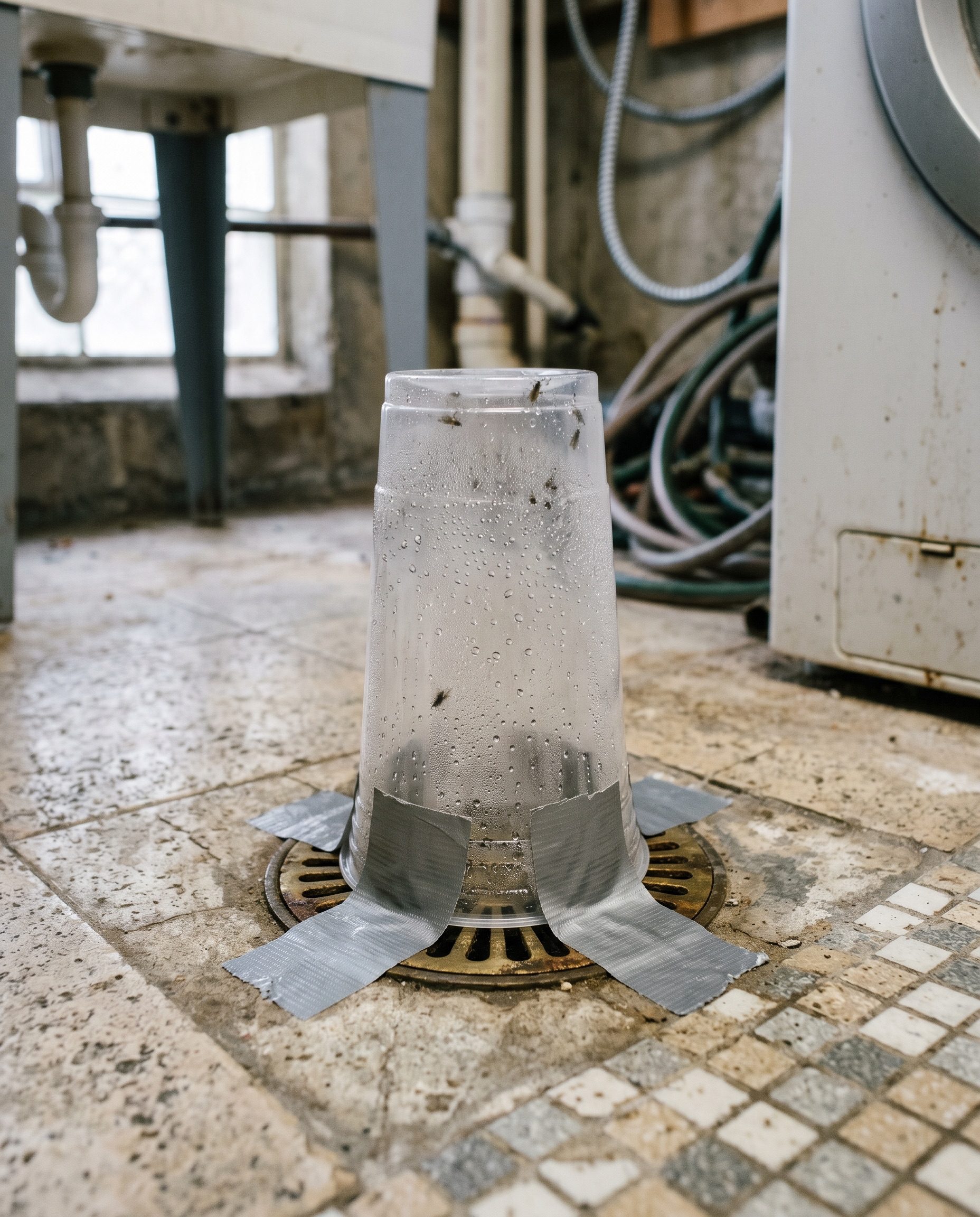
Before you buy anything, confirm which drain is the nursery, because treating the wrong one wastes the product. The free test costs nothing: tape a clear plastic cup upside down over a suspect drain overnight, and if flies are trapped under it in the morning, you found the source. Check the kitchen sink, bathroom sinks, the shower, floor drains in the basement or laundry, and any rarely used drain where water sits and slime builds. The EPA’s safe pest control guidance leans on this kind of sanitation-first, source-first approach before any chemical, and it is the whole game with small flies.
Once you know the drain, do the free part. Scrub the visible rim, the stopper, and as far down the pipe as a stiff brush reaches, then flush with very hot water to loosen the film. Mechanical scrubbing removes slime that pouring liquids alone leaves behind. This will not clear a deep colony on its own, but it cuts the population and preps the pipe so a gel can grip the wall instead of sheeting off a greasy surface. Our full walkthrough on how to get rid of drain flies lays out the inspection and scrub order step by step.
Why bleach and sprays fail
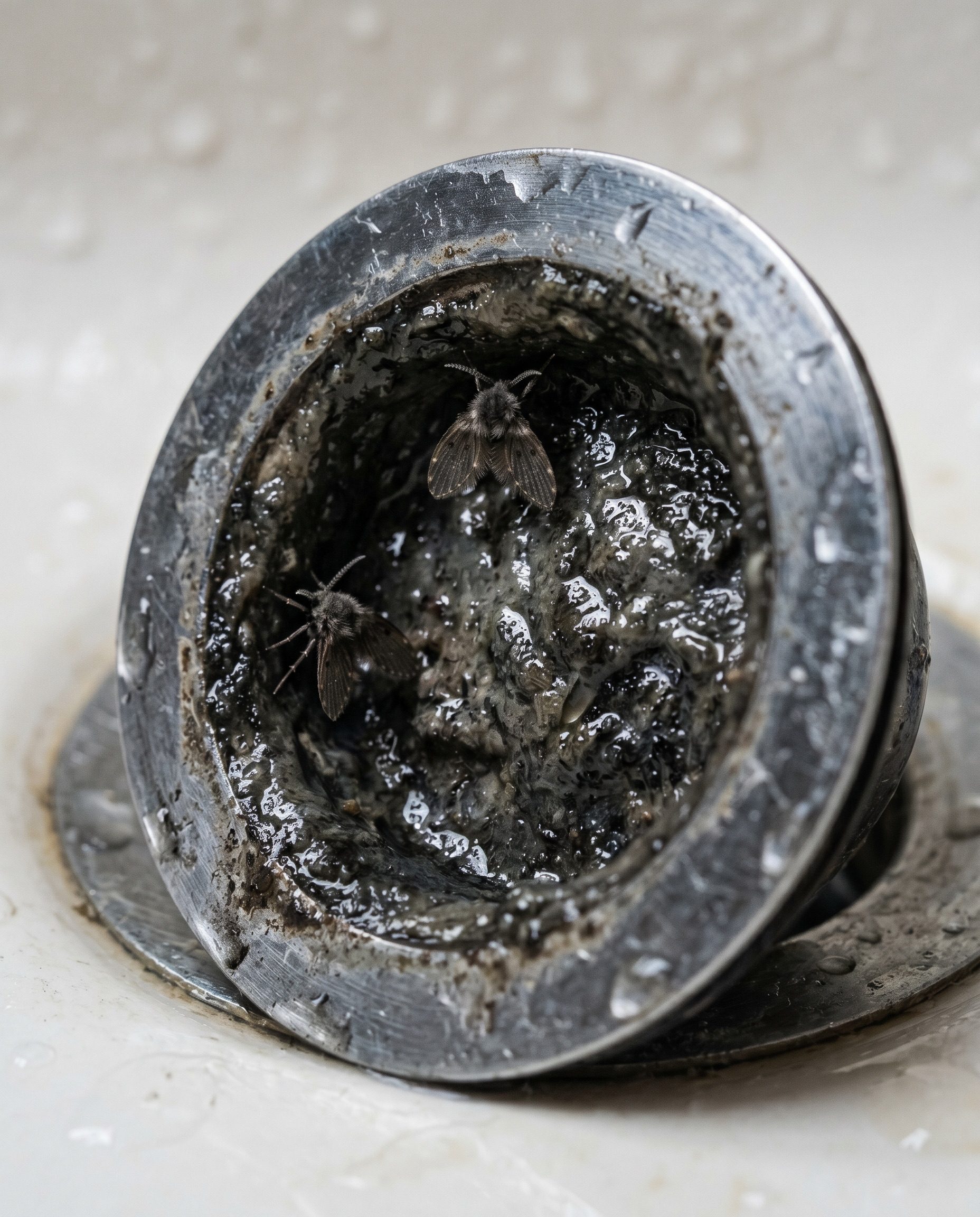
Here is the part most quick fixes get wrong. People reach for bleach because it disinfects, but disinfecting is not the same as removing. Bleach is a thin liquid that pours straight down the drain and rinses past the gunk without lifting it off the pipe wall. The biofilm, the soft organic scum that drain fly larvae feed and breed in, stays right where it was, and within days new flies hatch from the same spot. You killed some surface bacteria and changed nothing about the nursery.
Air sprays and fly bombs have the same flaw aimed at the adults. Knocking down the flies you can see does nothing about the larvae living in the slime below, so the cloud of flies just comes back as the next batch matures. UC IPM’s guidance on small flies and their breeding sources, including the UC IPM note on drains and rotting organic matter as fly breeding sites, is blunt that the only durable control is finding and eliminating the material they breed in, not spraying the room. Trap and kill the adults all you want; if the film stays, the flies stay. The product that actually works has to do one specific job: cling to the pipe wall and digest that organic film. That is what an enzyme or bio-gel cleaner is built for, and it is the reason it beats a jug of bleach.
Gel vs enzyme vs bio-foam
Once you accept that the target is the film, the category choice is short. All three working options share the same logic, they break down the organic scum, but they differ in thickness, contact time, and how much pipe they cover.
| Treatment type | Best for | Watch-out |
|---|---|---|
| Thick bio-gel | Vertical sink and shower pipes where cling time matters | Needs a slow overnight dwell; do not flush right after pouring |
| Concentrated enzyme cleaner | Recurring drains that need repeat digestion of buildup | Works over days, not minutes; reapply per the label |
| Microbial bio-foam | Wider pipes and floor drains needing full-wall coverage | Larger pro-grade volume; overkill for one small sink |
The reason gel matters more than people expect is cling. A watery cleaner behaves like bleach and slides past the film, while a thick gel coats the vertical pipe wall and stays in contact long enough to eat through the scum. Enzyme and microbial products go a step further by digesting the organic matter biologically rather than just rinsing it, which is why they keep working between treatments on a drain that always recurs. None of these is instant; the EPA and Extension both frame durable fly control as source reduction over time, not a one-pour miracle. If your flies are coming from rotting produce or a forgotten fruit bowl instead of the drain, that is a different nursery, and our guide to gnats in the house helps you tell the small flies apart.
How to treat the drain
Treat the pipe wall, not the standing water. Pour the gel or enzyme cleaner slowly around the inside edge of the drain so it coats the wall on the way down, not straight through the center. The product has to dwell to digest the film, so do it last thing at night when no one will run water. Most enzyme and bio-gel labels call for an overnight contact window with the tap off; check the NPIC and EPA-aligned safe-use principles on the EPA safe pest control page and read the product label, because under federal law the label sets the legal terms of use. Refresh on the schedule the label gives, usually a repeat pour after a few days for a stubborn drain, then weekly maintenance.
Keep it sensible around the house. These cleaners are far milder than the bleach-and-spray approach, but still keep them out of reach of children and pets, do not mix them with bleach or other drain products, and do not pour them where they would contaminate food-prep surfaces. The point of UC IPM’s source-reduction approach to filth and small flies is that you rarely need harsh chemistry at all when you remove the breeding material. Pair the treatment with the free habits that keep film from rebuilding: run hot water through low-use drains weekly, wipe the sink, and fix slow drains that let scum settle. For the fruit-bowl side of the kitchen, the right fruit fly traps catch the adults while you cut off their produce source.
The picks
Cards come after the analysis on purpose, because the diagnosis decides which one you pour. All three target the film inside the pipe rather than the flies in the air, and all are common, widely available drain treatments.
InsectoGuide is reader-supported. As an Amazon Associate we earn from qualifying purchases at no extra cost to you.
A thick pour-in gel for the common sink-drain case.
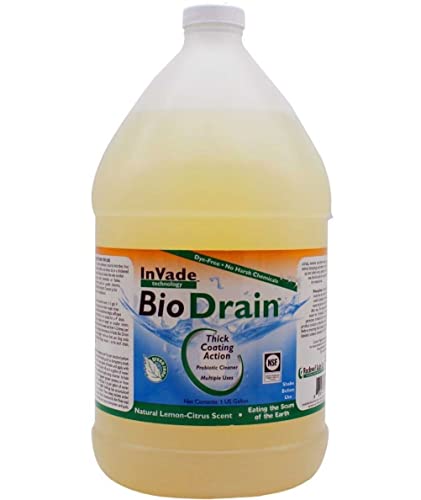
A pro-grade volume for floor drains and repeat treatment.
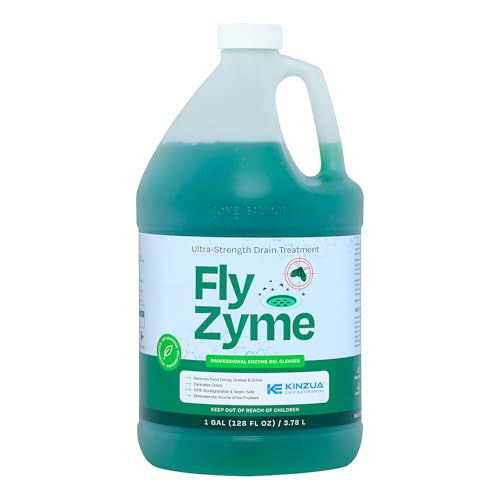
A concentrated enzyme for drains where flies keep coming back.
Common questions
Does bleach kill drain flies?
Not durably. Bleach disinfects the surface but pours straight past the slimy film without removing it, so the larvae living in that film survive and new flies hatch within days. An enzyme or bio-gel that clings to the pipe and digests the film is what clears the breeding source.
Will fly spray or a trap get rid of them?
A trap or spray only catches the adults you can see, and that is the wrong target. Traps catch adults only, so you must eliminate the breeding source too. The UC IPM guidance on small-fly management is clear that lasting control comes from removing what they breed in, not from killing the visible flies.
How long until the flies are gone?
Plan on a week or more. The gel or enzyme needs repeated overnight dwell time to digest the film, and the last batch of larvae still has to mature and die off. If you scrub first and treat consistently, you should see the numbers drop steadily rather than overnight.
Are these gels safe around pets and kids?
Enzyme and bio cleaners are milder than bleach, but still keep them out of reach, never mix them with other drain products, and keep them off food-prep surfaces. Read and follow the label, because it sets the safe-use terms; for any exposure concern, contact a doctor or your local poison control center.
The flies are by my fruit bowl, not the sink. Same fix?
No, that is a different nursery. Fruit flies breed in rotting produce, not pipe film, so you bin the overripe fruit and trap the adults instead. The UC IPM note on fruit-fly breeding sources covers that case; match the fix to where they are actually breeding.
Final verdict
There is no spray-the-room fix for drain flies, because the problem is never really in the air. Find the drain first with the cup test, scrub what you can reach for free, then pour in an enzyme or bio-gel that clings to the pipe and digests the film they breed in. That is the whole point: treat the drain, not the air, and the flies stop appearing as the source dries up. A thick gel fits the common sink, a microbial foam handles floor drains and wider pipes, and a concentrated enzyme is the one for a drain that keeps recurring. Skip the bleach and the fly sprays as your main weapon; they leave the breeding slime untouched, which is exactly why the flies keep coming back.
The detail on the drain fly that fools everyone sits in our guide to bugs that look like moths.