
n
n
n
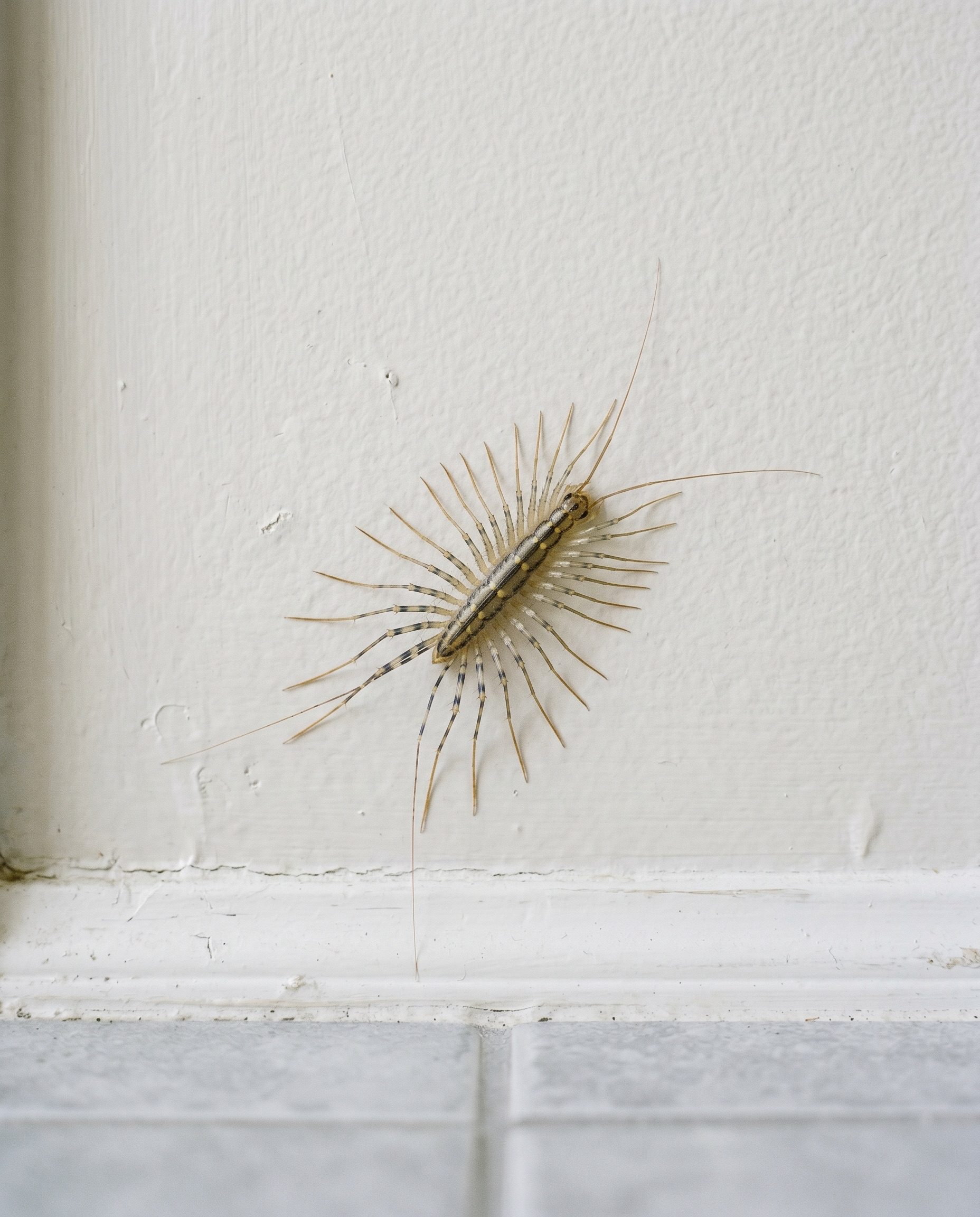
You spotted something flat and pale streaking across the bathroom wall on what looked like a hundred legs, and the first word that came to mind was probably not “harmless.” The house centipede (Scutigera coleoptrata) is the scariest-looking beneficial guest most homes ever get. It is essentially harmless, and it earns its keep by hunting roaches, silverfish, and other indoor pests. The single feature that confirms it is the legs: 15 pairs of very long, fringe-like legs on one flattened, yellowish-grey, striped body. Count those and you have your answer.
The detail on eight legs is not enough on its own sits in bugs that look like spiders.
nn
n
If it has 15 pairs of long thin legs on a single flat striped body and moves in a fast blur, it is a house centipede, not a worm, a millipede, or a venomous threat. It looks alarming but it is harmless and useful, and it almost never bites.
n
- n
- The confirming feature: 15 pairs of long legs on one flattened yellowish-grey body with darker stripes.
- Most-confused look-alike: the millipede, separated by leg length and speed (millipedes are slow with short legs; many legs per segment).
- What it means: a beneficial predator and a moisture clue, not an infestation. If you still want it gone, see our centipede control guide.
n
n
n
n
nn
nn
Quick answer: what you saw
nn
What ran across your wall was a house centipede, the one centipede species that lives its whole life indoors in North America. It is the long-legged, fast-moving arthropod people describe as looking like an eyelash with a hundred legs. The body is flattened and yellowish-grey with three darker lengthwise stripes, and it carries 15 pairs of legs that get longer toward the back, which is why a moving one looks like a rippling fringe rather than a solid shape.
nn
The two-second confirmation is leg count and motion. A house centipede has one pair of legs per body segment and moves in fast, darting bursts before freezing. A millipede, the thing most people confuse it with, is slow, dark, hard-shelled, and has two pairs of short legs per segment. Get the name right first, because what you do next depends entirely on which one this is.
nn
The 15 leg pairs that confirm it
nn
The decisive feature is the legs, and not just that there are a lot of them. A mature house centipede has exactly 15 pairs of legs, one pair attached to each leg-bearing segment, and the hind pairs are dramatically longer than the front ones. On a female the last pair can be nearly twice the body length, which makes the animal look bigger and more dramatic than its roughly one-inch body actually is. Those long banded legs are the single tell that separates this species from almost anything else you will find indoors.
nn
To check it, you do not need a hand lens. Look for the legs splaying out well beyond the body outline and arranged in evenly spaced pairs rather than packed in dense rows. The legs are usually striped or banded, which adds to the “too many to count” impression. If the animal is curled, dead, or has shed a few legs after a struggle, fall back on the body: one flattened, segmented, yellowish-grey trunk with stripes, plus a pair of long antennae up front and long sensory appendages at the rear that can look like a second set of antennae. UC IPM notes that centipedes are predators that hunt other small arthropods indoors, and those long legs are built for exactly that, running down prey across a wall faster than you can swat.
Where why poisoning in a cavity causes it is the actual question, how long a dead mouse smells answers it.
nn
Full description and behavior
nn
Size and color come first because they settle most cases on sight. An adult house centipede runs about one to one and a half inches in body length, with the leg span making it look closer to three or four inches across. The body is yellowish-grey to tan, the three dark dorsal stripes run head to tail, and the legs carry matching dark bands. It is delicate and dry-looking, nothing like the glossy hard tube of a millipede.
nn
The behavior is as diagnostic as the anatomy. House centipedes are nocturnal hunters that run in fast bursts and then hold dead still, which is why you tend to meet one suddenly when you flip on a bathroom or basement light. They are not building anything and not chewing anything. They are looking for prey, and your home’s prey list is the reason they came in: silverfish, cockroach nymphs, small spiders, ants, firebrats, and other soft-bodied arthropods. A house centipede in the wall is, in a real sense, a sign you have other bugs for it to eat.
nn
They favor damp, sheltered spots, so the usual encounters are in bathrooms, basements, crawl spaces, closets, and around floor drains. Seeing one is a moisture clue as much as a pest sighting. They do not bite people for food and have no interest in you, your pantry, or your fabrics. The only thing they want from your house is darkness, dampness, and something smaller to hunt.
nn
nn
Centipede or millipede?
nn
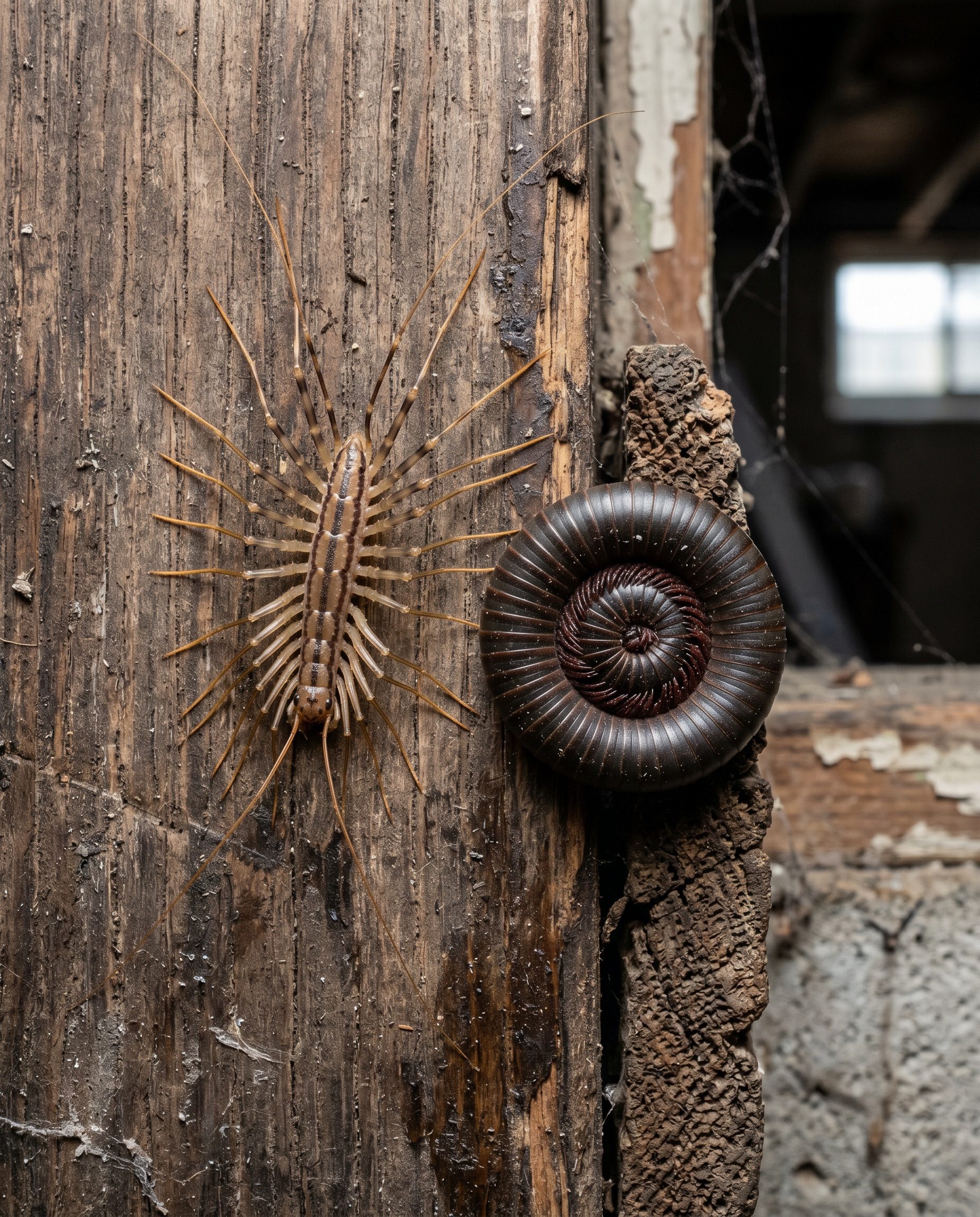
The confusion pair is almost always the millipede, and people mix them up because both are long, many-legged, and turn up in the same damp basements. They are easy to separate once you know where to look. The fastest split is leg length and speed: a centipede has long legs and runs; a millipede has short legs and plods. The second split is legs per segment: centipedes carry one pair per segment, millipedes two. The third is shape: a house centipede is flat and fringe-legged, a millipede is round and hard-shelled and curls into a coil when disturbed.
nn
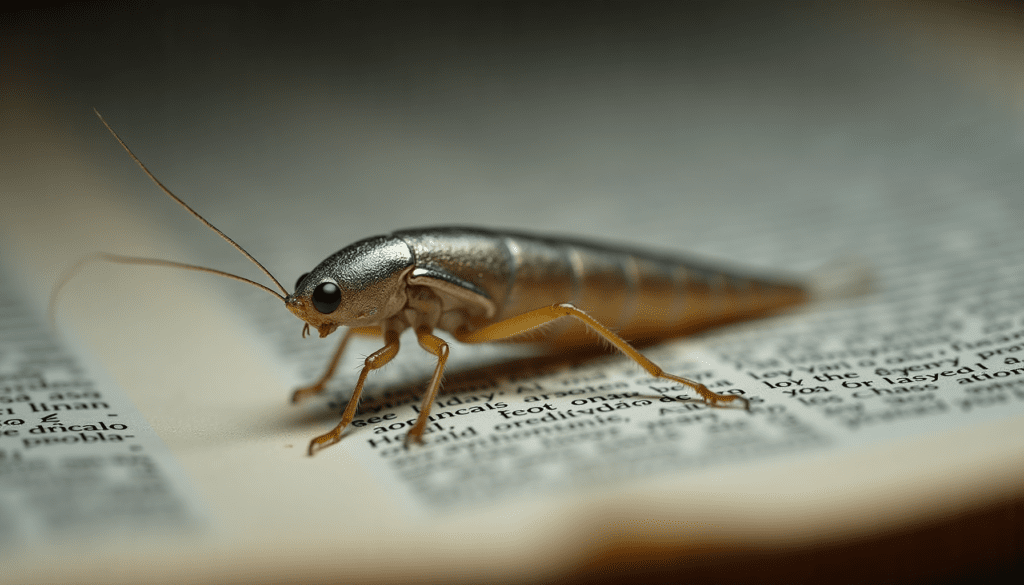
The other animal people guess is a “silverfish on legs,” but silverfish have just six legs and a tapered, scaled, carrot-shaped body with three tail filaments, not a fringe of fifteen leg pairs. For a side-by-side walkthrough of the two most-confused crawlers, our centipedes versus millipedes comparison lays out the separating features in order.
nn
| Animal | Key feature | Where found |
|---|---|---|
| House centipede | 15 pairs of long legs, flat striped body, fast and darting | Bathrooms, basements, drains, damp closets |
| Millipede | Two pairs of short legs per segment, round hard body, slow, coils up | Damp soil, mulch, occasional indoor wanderer |
| Silverfish | Six legs only, scaled carrot-shaped body, three tail filaments | Bathrooms, pantries, paper and damp areas |
nn
Where and when you meet them
nn
House centipedes are found across the United States, more visibly in the South and along the coasts but common in heated homes nationwide because the indoor population does not care about the weather outside. The defining habitat detail is moisture. They concentrate where it is damp and dark, which is why a basement, a slab crawl space, or the area behind a bathroom vanity is where you are most likely to meet one.
nn
Timing is a clue too. You see more of them in late summer and fall, when outdoor individuals move toward the warmth and humidity of the house, and during any wet stretch that raises indoor humidity. The University of Kentucky describes how they enter as moisture-driven occasional invaders rather than breeding infestations, which is the key framing: a few wandering hunters drawn to damp harborage, not a colony multiplying in your walls. If the sightings spike, the honest read is that the building got damper or the prey supply grew, not that you are losing a war.
nn
Are they dangerous?
nn
This is the question that brought you here, and the answer is reassuring. A house centipede is not dangerous to people, pets, or your home. It has venom glands tied to its front legs, which it uses to subdue the small prey it hunts, but it is built for silverfish, not for you. It does not damage structures, food, fabric, or plants, and it carries no known disease.
nn
It can technically bite if you grab or trap it against skin, and its mouthparts often cannot even break human skin. On the rare occasion one does, the result is usually no worse than a mild bee sting, a brief sting and a little local swelling that fades on its own. As with any sting, a person with a known severe allergy who develops trouble breathing, swelling of the throat or tongue, dizziness, or hives spreading quickly should get emergency medical help right away and use an epinephrine auto-injector if one has been prescribed; that caution applies to any bite or sting, not to a centipede specifically. For anything beyond a fleeting sting, contact a doctor.
nn
The practical point is that this is a beneficial predator. The EPA’s view that integrated pest management leans on habitat change before chemicals fits a house centipede perfectly: the responsible move is to dry out the space and seal the gaps it crawls through, not to reach for a spray on an animal that is quietly eating your roaches. If the look of them is simply too much to live with, our guide to getting centipedes out of the house covers the moisture and exclusion steps that actually work.
nn

nn
Common questions
nnAre house centipedes poisonous?n
They have venom they use on prey, but they are not poisonous to handle or harmful to people in any meaningful way. A bite is rare, often cannot even pierce skin, and at worst feels like a mild bee sting that fades on its own. They pose no danger to children, pets, or your home.
nnDo house centipedes bite people?n
Very rarely, and only if cornered or pressed against skin. They have no interest in biting humans and would rather flee at speed. If a bite does happen, it is a minor local sting, not a medical emergency for most people.
nnShould I kill a house centipede?n
You do not need to. It is a beneficial predator that eats silverfish, roach nymphs, and other indoor pests, so leaving it alone means free pest control. If you cannot stand it, focus on drying out and sealing the space rather than spraying, since exclusion and drying out the spaces they favor keeps them out.
nnWhy do I suddenly have house centipedes?n
A sighting usually means two things: the area is damp, and there is prey to hunt. They wander in from outside in late summer and fall or during wet weather, drawn to moisture and the smaller insects already living in the space. Reduce both and the visits drop.
nnWhat is the difference between a centipede and a millipede?n
Centipedes are fast, flat, and long-legged with one leg pair per segment; millipedes are slow, round, and short-legged with two pairs per segment and curl into a coil when disturbed. The house centipede also carries exactly 15 leg pairs, which a millipede never does.
nn
Final verdict
nn
The house centipede looks like a horror-movie extra and behaves like a helpful tenant. Count the legs: 15 pairs on one flat, striped, yellowish-grey body, moving in fast darts, and you have confirmed it over the slow, hard-shelled millipede and the six-legged silverfish. It is harmless, it almost never bites, and a sighting is really a clue that the room is damp and stocked with the small pests it eats. Treat it as a moisture-driven occasional visitor and a beneficial predator, not an infestation, and you will read the next one on your wall correctly.
nn
Next steps:
nn
– Tell it apart from its slow cousin with our centipedes versus millipedes comparison.
n
– If you would rather not share the bathroom, follow the moisture and exclusion steps in how to get centipedes out of the house.
n
– For the product category if you decide on treatment, see our centipede and millipede killers overview.
nn

Pingback: Fast Crawling Bugs in the House: What Moves Like That