A maggot is legless, pale and tapered with no distinct head, which separates it from every beetle and moth larva immediately. After that the species barely matters, because maggots are always a location problem: a bin, a drain, a plant pot, a wall cavity or something dead. Find the wet thing and the maggots end. Killing the ones you can see does nothing.
- Legless and tapered, no head capsule: a fly larva rather than a beetle or moth larva.
- In a bin or on food: house fly or blow fly, and the bin is the whole problem.
- Appearing in a room with no obvious source: look up and inside. Something dead in a cavity is the usual answer.
Maggots are the larval stage people find most alarming and the one whose identification matters least. Every species points at the same instruction: find what they are eating.
Ruling out everything else first
A fly larva is legless, pale cream to white, tapered so one end is narrower than the other, and it has no distinct head capsule or visible eyes. It moves by contracting rather than walking.
That rules out the other larvae people confuse it with:
Beetle larvae, including carpet beetles, have three pairs of true legs at the front and a visible head. Our carpet beetle larvae guide covers the bristly one found in fabric.
Moth larvae are caterpillars with legs and prolegs and usually leave silk. Our clothes moth larvae guide covers the webbing.
Fungus gnat larvae are technically fly larvae but are translucent with an obvious dark head, and they live in compost rather than in waste. Our houseplant soil guide covers those.
Our larvae hub sorts the whole group by where it was found.
Where they are is what they are
| Where | Fly | What it means |
|---|---|---|
| Kitchen bin, food waste | House fly or blow fly | The bin, and how often it is emptied |
| Drain, wet organic film | Drain fly or phorid fly | Pipe film, or a leak under it |
| Fruit bowl, recycling, spilled drink | Fruit fly | Fermenting residue, not decay |
| Wall or ceiling cavity, no visible source | Blow fly or phorid fly | Something dead, or a broken drain |
| Outdoors, on a dead animal or dung | Blow fly | Normal and useful; nothing to do |
| Compost bin | Soldier fly | Beneficial and speeds decomposition |
Kentucky describes fruit flies breeding in fermenting residues in drains, bins and recycling, and the same logic runs through the whole table: the larva is where its food is, so the larva names the food.
The bin, which is most cases
A fly laid eggs on food waste and they hatched. It is unpleasant and it is not a sign of anything wrong with the house.
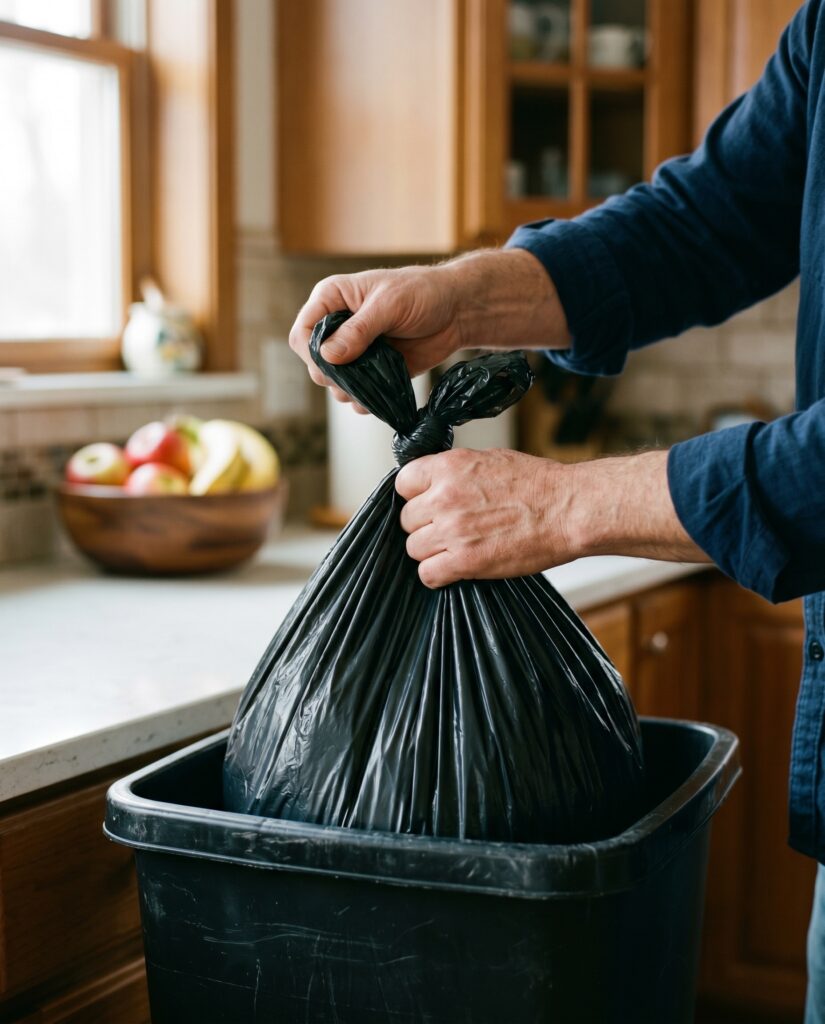
The fix is mechanical: bag the waste, wash the bin with hot soapy water rather than bleach alone, dry it, and keep the lid closed in warm weather. Meat and fish scraps are the usual trigger, and freezing them until collection day removes the window entirely.
Our guide to why there are suddenly a lot of flies covers the adult side of the same problem.
The drain, and why bleach disappoints
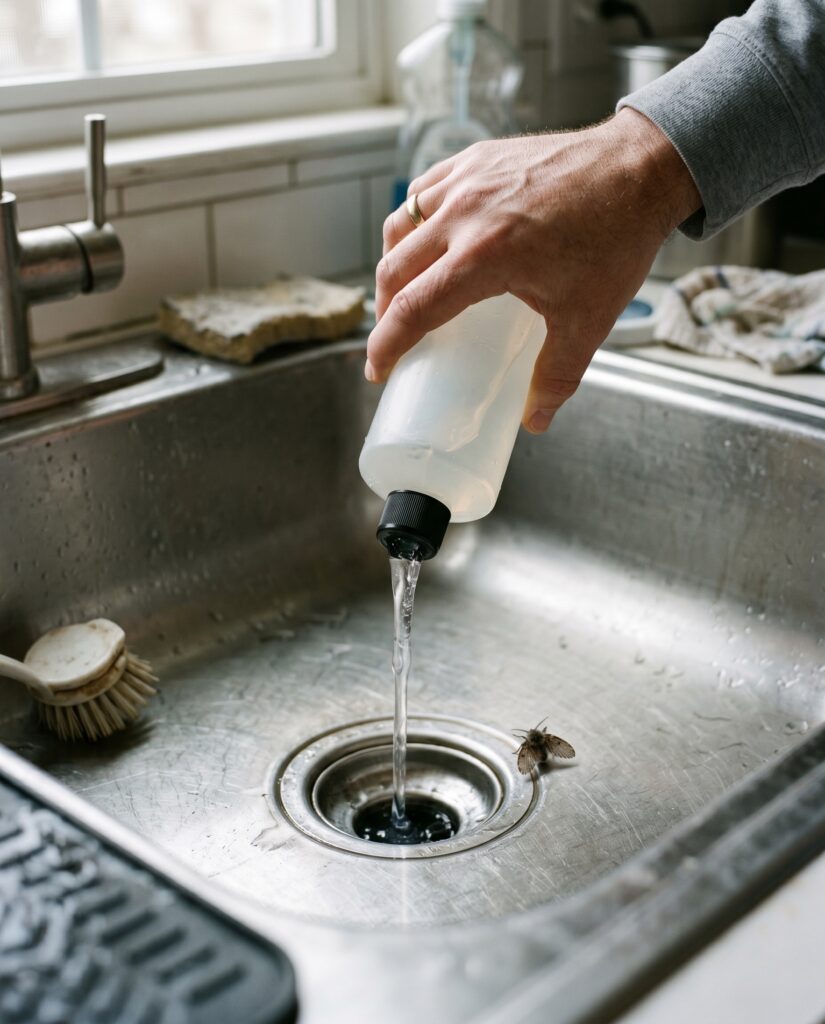
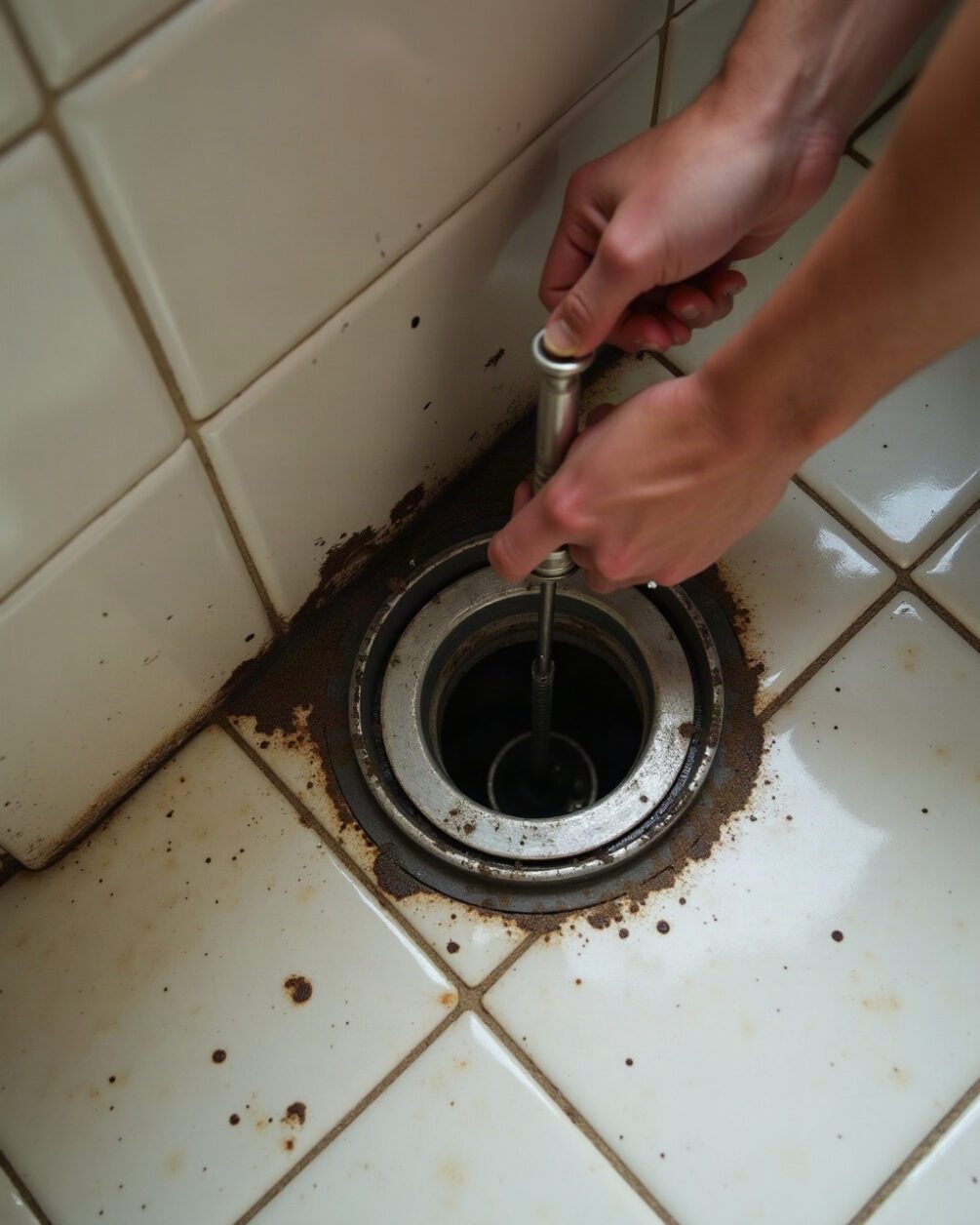
Drain fly larvae live in the gelatinous organic film coating the inside of a waste pipe. Bleach runs straight through that film without removing it, which is why the treatment appears to fail repeatedly.
The fix is scrubbing the pipe with a brush and then treating with an enzyme or bacterial product that digests what is left. Our drain fly guide covers it, the bathroom guide covers the room, and the under-sink guide covers the cupboard where a slow leak keeps the whole thing going.
The one worth taking seriously
Maggots appearing in a room with no bin, no drain and no visible food are a different situation, and it is worth naming plainly rather than leaving people to guess.
Something is dead, or something is leaking. A rodent in a wall cavity or under a floor, a bird in a chimney or soffit, or a broken drain under a slab. Blow flies and phorid flies both find these and both will produce larvae that then emerge into the room through gaps around pipework, light fittings and skirting.
The clues that point this way: a smell that appears and then fades over one to two weeks, activity concentrated in one room, and larvae appearing at a wall or ceiling junction rather than near anything obvious. Our guide to reading a ceiling sighting covers the direction, and the rodent guide covers what usually died.
UC IPM’s note that insects shelter in cracks and crevices applies to the emergence route: the larvae are travelling from the cavity to somewhere dry to pupate, which is why they turn up on a floor with no explanation.
What to do
Find the source. Do not treat the larvae. A spray kills what you can see and leaves the food supply producing more.
Handle it dry. Larvae ready to pupate travel away from their food and end up on floors and walls, which is the stage most people find. Sweeping them up is fine; they are not going anywhere useful.
Check the timing. Larvae from a bin appear within days of warm weather. Larvae from a cavity appear one to two weeks after a smell started, which is the diagnostic sequence.
Do not bleach a drain and expect a result. Scrub, then enzyme.
Common questions
Are they dangerous?
The larvae are unhygienic rather than dangerous in a domestic setting. What they indicate, decaying material somewhere, is the part worth acting on.
Why are they climbing the wall?
Because they have finished feeding and are looking for somewhere dry to pupate. That behaviour is a useful clue: it means the source is nearby and slightly below.
They came back after I cleaned the bin.
Then either the bin is not the source, or eggs were laid again. Check under the bin, the recycling, and any drain in the same room.
Final verdict
Legless with no head capsule means a fly larva, and after that the species is close to irrelevant. Maggots always name a location: a bin, a drain film, fermenting residue, or something dead in a cavity. The last one is the case worth pursuing properly, and its signature is a smell that came and went, activity in one room, and larvae appearing at a wall junction with nothing obvious nearby.