
The larva is small, pale and cream-coloured with a darker head, and it builds silk as it feeds. That silk is the diagnostic: webbing in a fold, a silk tube stuck to fabric, or a small portable case the larva drags with it. The adult moth you saw does not feed at all, so killing it changes nothing about the damage.
- Silk is the tell: webbing, tubes or a case. Carpet beetle larvae leave none.
- Damage sits in folds and stored items, not on things worn regularly, because the larva avoids light and disturbance.
- The adult eats nothing. It exists to lay eggs, which is why traps for adults monitor rather than solve.
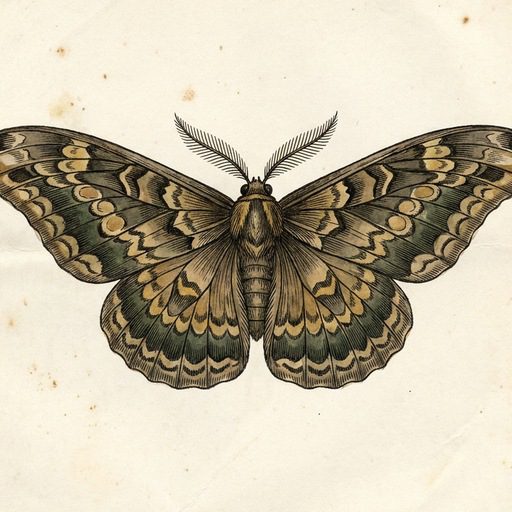
Most people meet the adult and assume it is the problem. It is not: a clothes moth adult has no functional mouthparts for feeding on fabric. Everything that happens to a jumper happens in the larval stage, in the dark, over months.
What the larva looks like
Up to about a centimetre at full size, cream to off-white, with a slightly darker head capsule and a soft segmented body. It has true legs at the front and prolegs behind, which is what makes it a caterpillar rather than a grub.
The two common species behave differently enough to name:
The webbing clothes moth larva spins silk tunnels and sheets across the fabric as it feeds, and stays inside them. You find irregular webbing with frass caught in it.
The case-bearing clothes moth larva builds a small portable case of silk and fibre from whatever it is eating, and carries it around like a sleeping bag. The case takes the colour of the garment, which is why it is so easy to miss on a dark jumper.
Silk is the check that settles it
The larva that gets confused with this one is the carpet beetle, and the distinction is straightforward once you know what to look for.
Clothes moth larvae leave silk. Webbing, tubes, cases, and frass stuck into it.
Carpet beetle larvae leave bristly shed skins and no silk at all. Kentucky notes that carpet beetle larvae feed on wool, fur, feathers and other animal products, so both are found in the same wardrobes eating the same things, and the silk is what separates them. Our carpet beetle larvae guide covers the other one.
The damage differs slightly too. Moth larvae graze in patches and often eat through in one concentrated area. Carpet beetles leave more scattered, irregular holes. Our wardrobe guide covers reading the damage across all three fabric pests.
Where the damage is, and why
Larvae avoid light and disturbance, which decides everything about where you find them.
In folds rather than on flat surfaces.
Under collars, in cuffs, and along seams, where fibre is dense and the larva is sheltered.
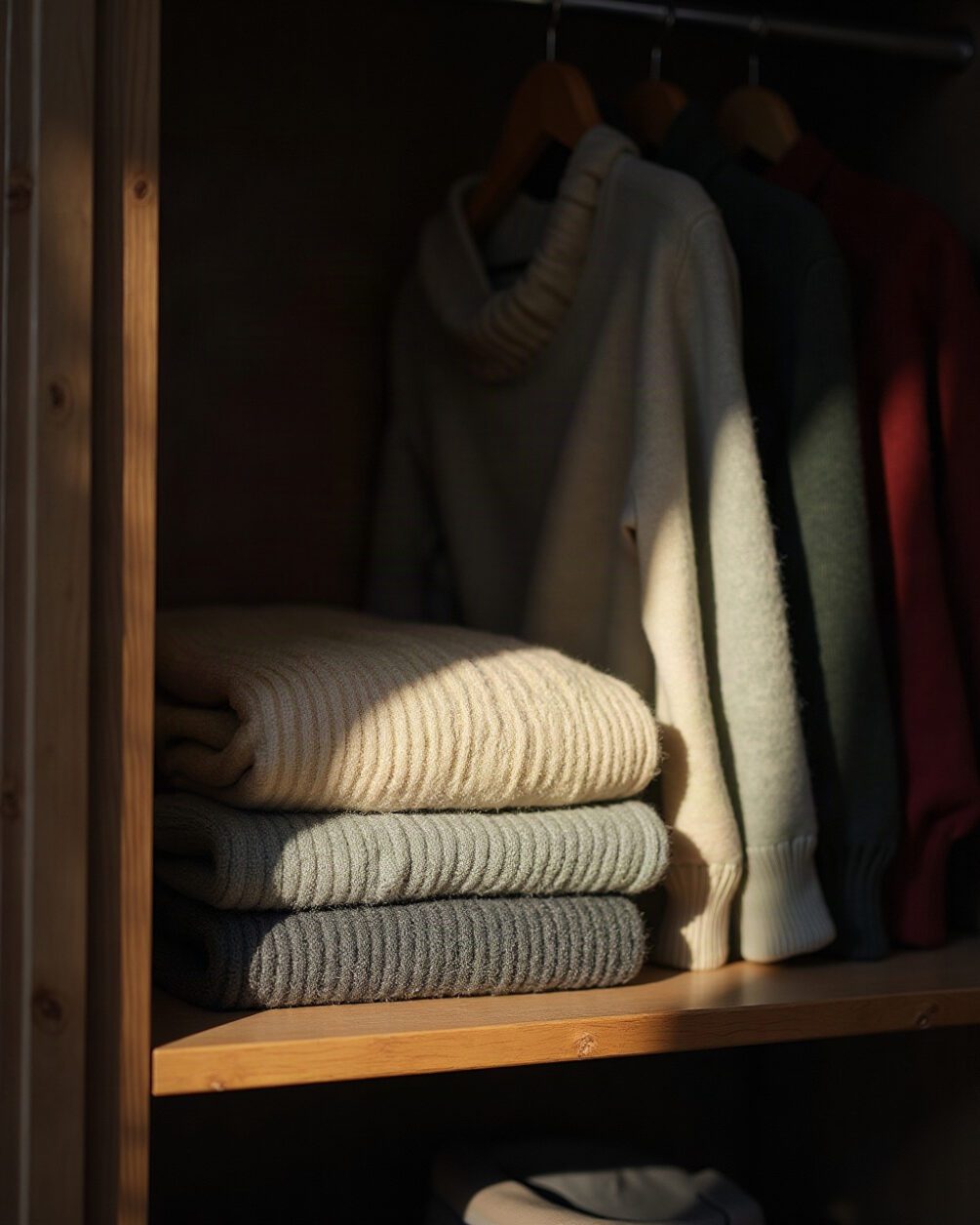
In stored items rather than worn ones. Anything handled regularly is rarely damaged, which is why the casualties are always at the back.
Where a garment was put away soiled. Sweat, skin oils and food traces attract egg-laying far more than clean fibre does. The jumper worn once and stored unwashed is the one that gets eaten.
Under heavy furniture and in carpet edges too, since the same larvae will use wool carpet and underlay.
What they eat, and what they cannot
They need keratin, so the menu is animal fibre: wool, cashmere, silk, fur, felt, feathers, and down. Our guide to which fabrics they eat covers it in detail.
They cannot digest pure synthetics or pure cotton. Blends complicate that: a wool-polyester mix is edible in the wool portion, and heavily soiled cotton can support them because of what is on it rather than what it is.
This is also the point where the pantry moth gets confused into the search. That is a different insect in a different room, feeding on stored food, and Kentucky’s guidance that stored product infestations trace to a single contaminated item applies to it rather than to this one. Our pantry versus clothes moth guide is the fastest way to work out which search you are running.
Why pheromone traps monitor rather than solve
Traps catch male adults using a sex pheromone. They are genuinely useful for telling you whether you have a problem and whether it is getting better, which is not a small thing.
What they do not do is reduce the damage, because the damage is done by larvae already in the fabric and because the females are unaffected. Treat a trap as a thermometer, not a cure.
What actually works
Clean before storing. The single highest-value habit, because it removes what attracts egg-laying.
Store sealed. A zipped bag or a lidded box excludes adults. A garment bag open at the bottom does not.
Wash hot or freeze. Hot washing kills all stages. A sealed bag at household freezer temperature for several days works for a single item that cannot be washed.
Vacuum the wardrobe itself, including the floor, shelf edges and the track, where fibre and eggs collect.
Move things. Both fabric pests need stillness.
Cedar and lavender are weak. They may repel slightly at high concentration in a sealed space and they do not kill larvae already present. Our clothes moth guide covers the treatment properly.
Common questions
I killed the moth. Is it over?
No. The adult does no damage and its larvae may already be in the fabric. Search the folds of stored wool rather than the air.
Holes but nothing found.
Normal. Larvae are small, avoid light and hide inside folds and seams. Check for silk and frass, which persist.
Do they bite?
No. Neither the larva nor the adult bites, and neither carries disease.
Final verdict
Look for silk. Webbing in a fold, a tube stuck to the fabric, or a small case the colour of the garment means clothes moth larvae. Bristly husks with no silk means carpet beetles instead. The moth in the air is irrelevant to the damage, the traps tell you how you are doing rather than fix it, and the habit that actually protects a wardrobe is washing things before they are put away and sealing them once they are.
Pingback: Webs in Corners: Spider, or Something Else