
Five things use the cupboard under a sink: drain flies, silverfish, springtails, ants and cockroaches. All five are there for water rather than for food, which means the insect is telling you about a joint that weeps. Find the leak and the identification stops mattering, because none of the five can stay in a dry cupboard.
- Small fuzzy flies resting on the cupboard wall: drain flies breeding in the film inside the waste pipe.
- Anything jumping, or pale and slow: springtails or booklice, which are pure humidity readings.
- Swollen board or a musty smell: the leak is already doing damage. That is the actual finding.
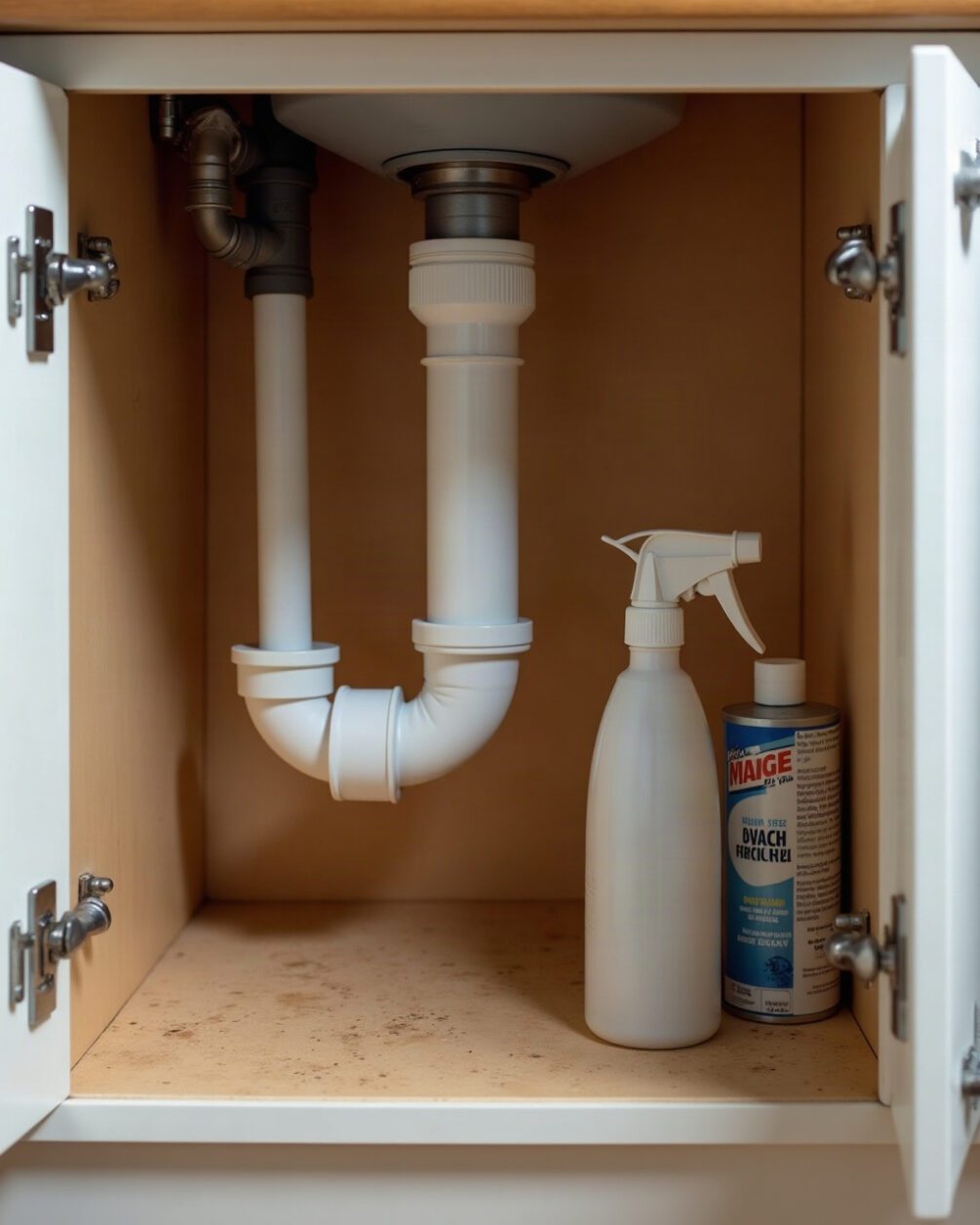
The cupboard under a kitchen sink is a small dark box containing a water pipe, a waste trap, and usually a stack of cardboard. It is reliably the dampest cavity in the room, and it is opened briefly and closed again without anyone looking at the back.
That is why the same short list turns up in it everywhere, and why the useful question is not which insect but where the water is coming from.
Start with the board, not the bug
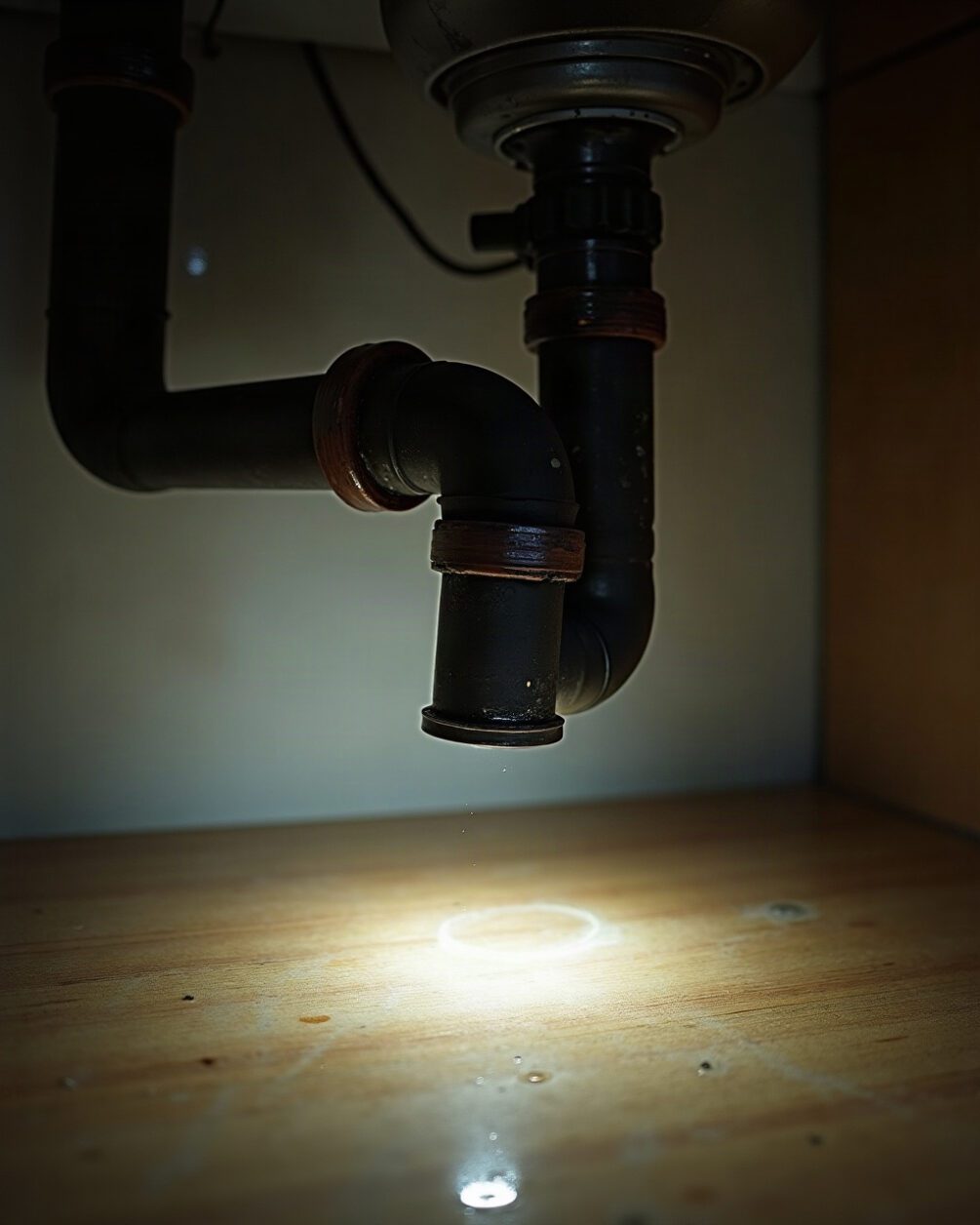
Before identifying anything, empty the cupboard and put a torch across the base and the back corners.
A dark ring or a tide line on the chipboard means water has been sitting there. Swelling, softness or a crumbling edge means it has been sitting there for a long time. A musty smell means mould is growing, which is the food source for half this list.
Then check the joints with a dry tissue: the trap connections, the point where the waste pipe meets the wall, and the supply valves. A weep too slow to drip still keeps a cupboard permanently humid.
The five, and what each one means
Drain flies are the ones resting motionless on the cupboard wall or the underside of the worktop. Two to five millimetres, fuzzy, heart-shaped in outline, holding their wings roof-like. They breed in the gelatinous film that coats the inside of a waste pipe, which is why bleach does so little: it runs straight through without removing the film. The fix is mechanical scrubbing plus an enzyme treatment. Our drain fly guide covers the method, and the bathroom guide covers the same problem in the room where it is most common.
If the small flies are hovering around the bin or a fruit bowl instead, they are fruit flies, which Kentucky describes breeding in fermenting residues rather than in plumbing. Our gnat identification guide separates the three, and they need different fixes.
Silverfish want damp and starch, and an under-sink cupboard supplies both: the humidity from the pipe, and cardboard packaging for the starch. They move in a fish-like side-to-side wriggle and are usually seen at night. Our silverfish guide covers them and whether they bite answers the usual worry, which is no.
Springtails and booklice are the smallest and the least alarming. Springtails jump when disturbed; booklice crawl slowly on damp surfaces. Penn State describes springtails feeding on mould and decaying material, which is the whole story. Neither can bite or damage anything, and both vanish when the cupboard dries. Our guide to tiny white bugs covers the pair.
Ants come for the water in dry weather as much as for food, and a slow leak is a reliable supply. The trail matters more than the insects: erase the chemical marker from the surfaces, then find where it enters. Our ant identification guide covers the species differences that change the treatment.
Cockroaches treat this cupboard as prime real estate for the same reasons as the gap behind the fridge, and Kentucky notes German cockroaches shelter in cracks and crevices near warmth, food and moisture. The evidence to look for is fine peppery droppings in the corners and pale shed skins. Our guide to the space behind a fridge covers the sister cavity, and the two should be checked together.
What to actually do
Fix the leak. Everything else is downstream of this. A weeping trap connection is often a five-minute repair with a new washer or a quarter turn.
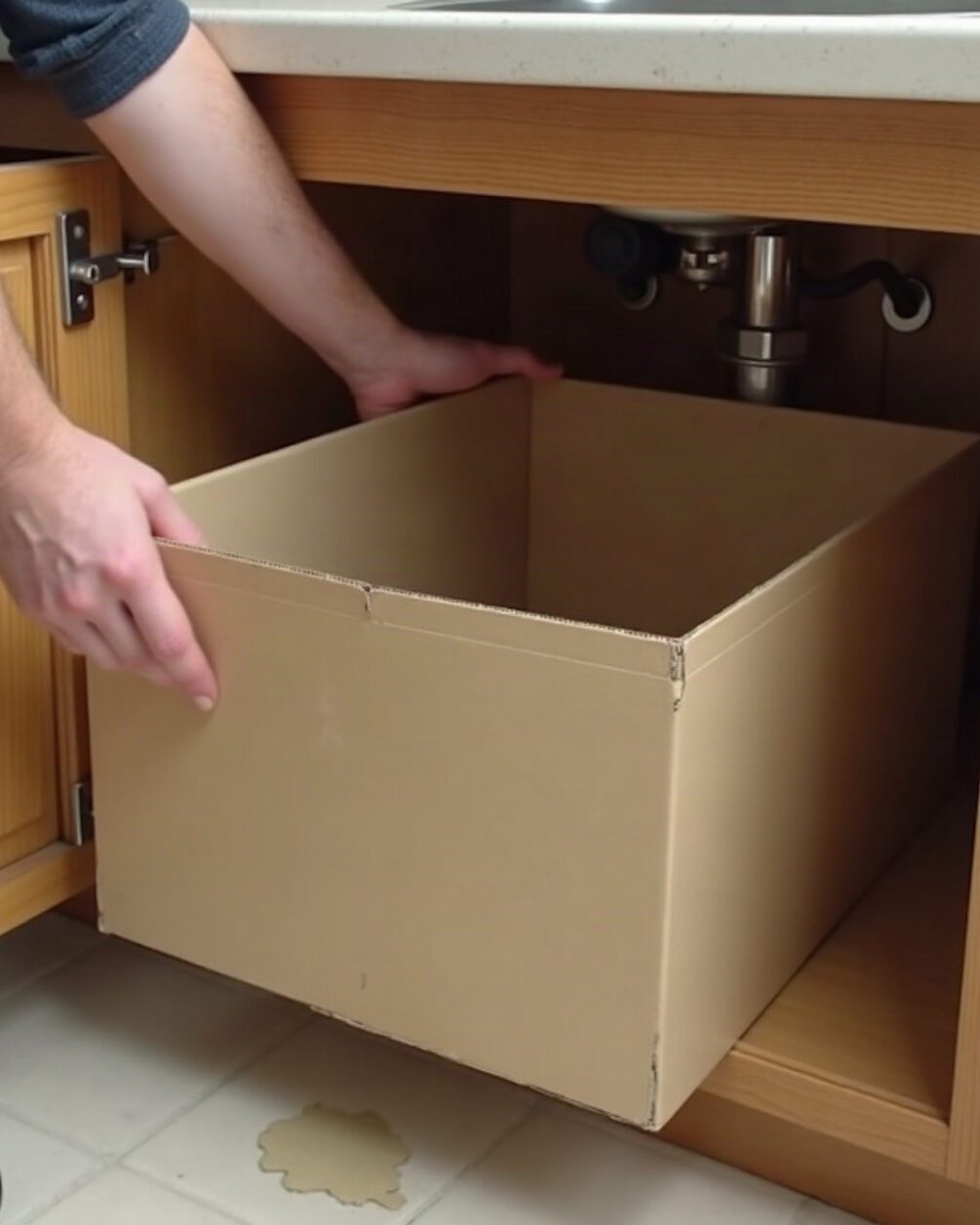
Take the cardboard out. Boxes under a sink absorb moisture, feed silverfish and booklice, and give everything somewhere to hide. Plastic tubs do not.
Let it breathe. Leaving the doors open for a few hours after mopping, or fitting a small vent in the cupboard base, changes the humidity more than any treatment.
Scrub the waste pipe. If drain flies are the problem, this is the only step that ends it.
Seal the pipe penetration. The hole where the waste pipe leaves the cabinet is usually oversized and open to the wall cavity. Filling it closes the route.
Do not spray. This is a cupboard holding food-contact cleaning items, and the insects are living in a wet cavity a spray does not reach. Repairing and drying works; residue on the surfaces you store cloths on does not.
Common questions
Everything comes back a week after I clean.
Then the water is still there. Cleaning removes the generation you can see; the conditions produce the next one. This is the single most common pattern in the whole topic.
Is a musty smell dangerous?
It means damp and mould growth, which is worth dealing with for the building and for air quality regardless of insects. It is also the reason booklice and mould mites are there.
Could this be bed bugs?
No. They stay close to where people sleep and have no reason to be in a kitchen cupboard. If a bed is the real concern, our inspection guide is the right page.
Final verdict
Empty the cupboard and look at the board before you look at the insect. A tide line, swollen chipboard or a musty smell is the finding; the insect is only how you noticed. Fuzzy flies on the wall mean the waste pipe needs scrubbing. Anything jumping or pale and slow means humidity. Peppery specks in the corners mean cockroaches and a check behind the fridge too. Fix the weep, bin the cardboard, seal the pipe hole, and the cupboard stops being habitat.
Pingback: A Musty Smell in the House: Pest or Damp