
Sorting caterpillars by which butterfly or moth they become is interesting and rarely useful. Sorting by what they are eating and what the damage looks like tells you what to do. Four groups cover almost everything: brassica feeders, tomato and pepper feeders, stem and root cutters, and the small group with stinging hairs that are worth recognising and not touching.
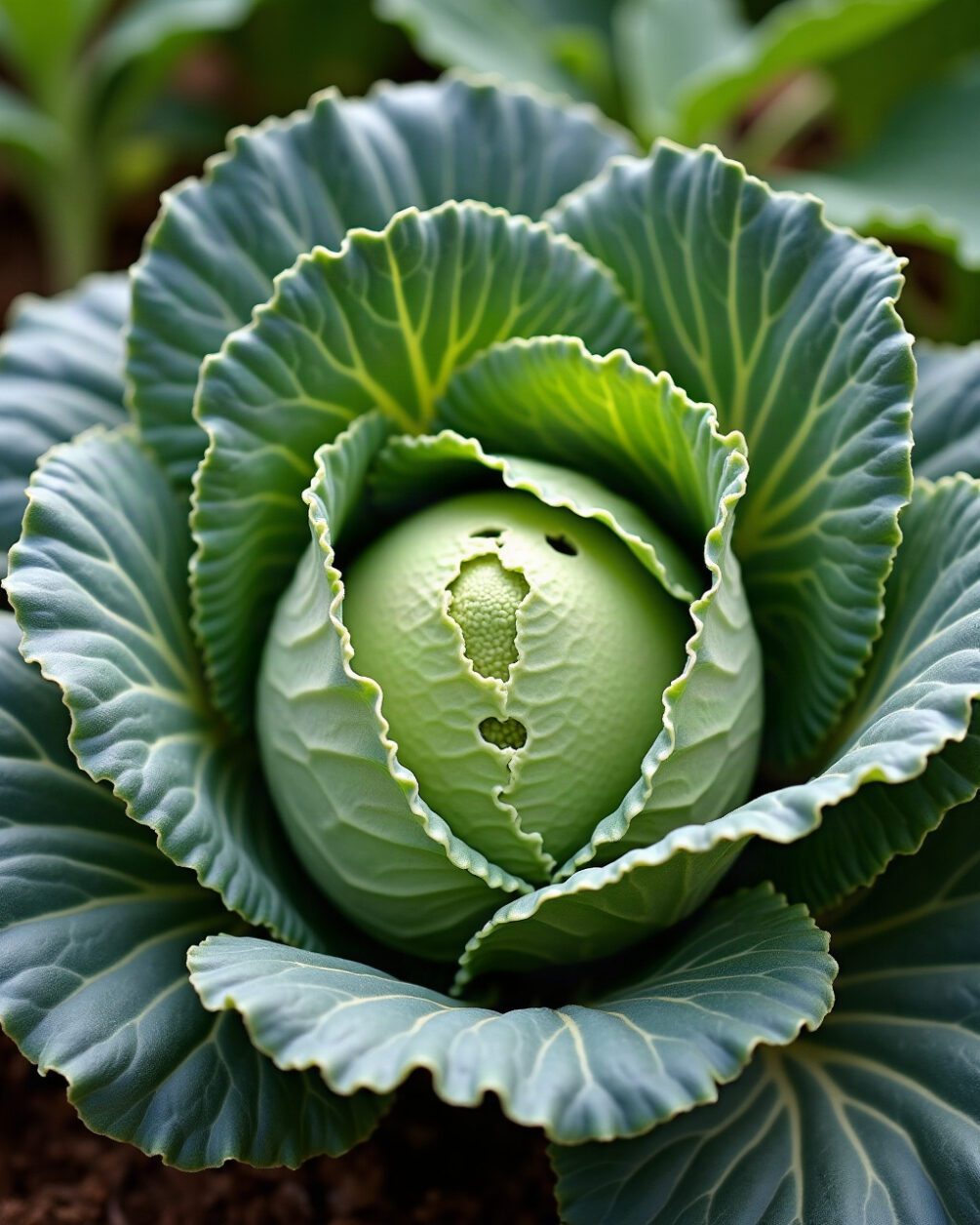
- Ragged holes in cabbage and kale: cabbage white or cabbage looper.
- A branch stripped bare overnight on a tomato: hornworm, large and easy to hand-pick.
- Conspicuously hairy or spiny: do not handle. A few cause a genuine sting.
Most caterpillar identification guides start from the adult, which is backwards for anyone standing over a chewed plant. The plant and the damage pattern narrow it faster, and they also decide the response.
Sorted by what they are eating
| Plant and damage | Likely | Response |
|---|---|---|
| Cabbage, kale, broccoli, ragged holes | Cabbage white, cabbage looper | Netting before they arrive |
| Tomato or pepper, a branch stripped bare | Tomato or tobacco hornworm | Hand-pick; they are large |
| Seedlings cut off at soil level overnight | Cutworms | Collars around stems |
| Sweetcorn tips, tomato fruit bored | Corn earworm | Timing and variety choice |
| Apples and plums, tunnels in fruit | Codling moth | Pheromone monitoring, sanitation |
| Webbing over a branch tip | Tent caterpillars, webworms | Prune out the tent; rarely fatal to the tree |
The brassica group
If holes are appearing in cabbage, kale, broccoli or rocket, the candidates are few.
Cabbage white caterpillars are the classic: green or green-and-yellow, velvety, feeding openly on the leaf. Cabbage loopers move by arching their backs into a loop, which is a diagnostic worth knowing because it separates them at a glance. Diamondback moth larvae are smaller, thinner and wriggle violently when disturbed, often dropping on a silk thread.
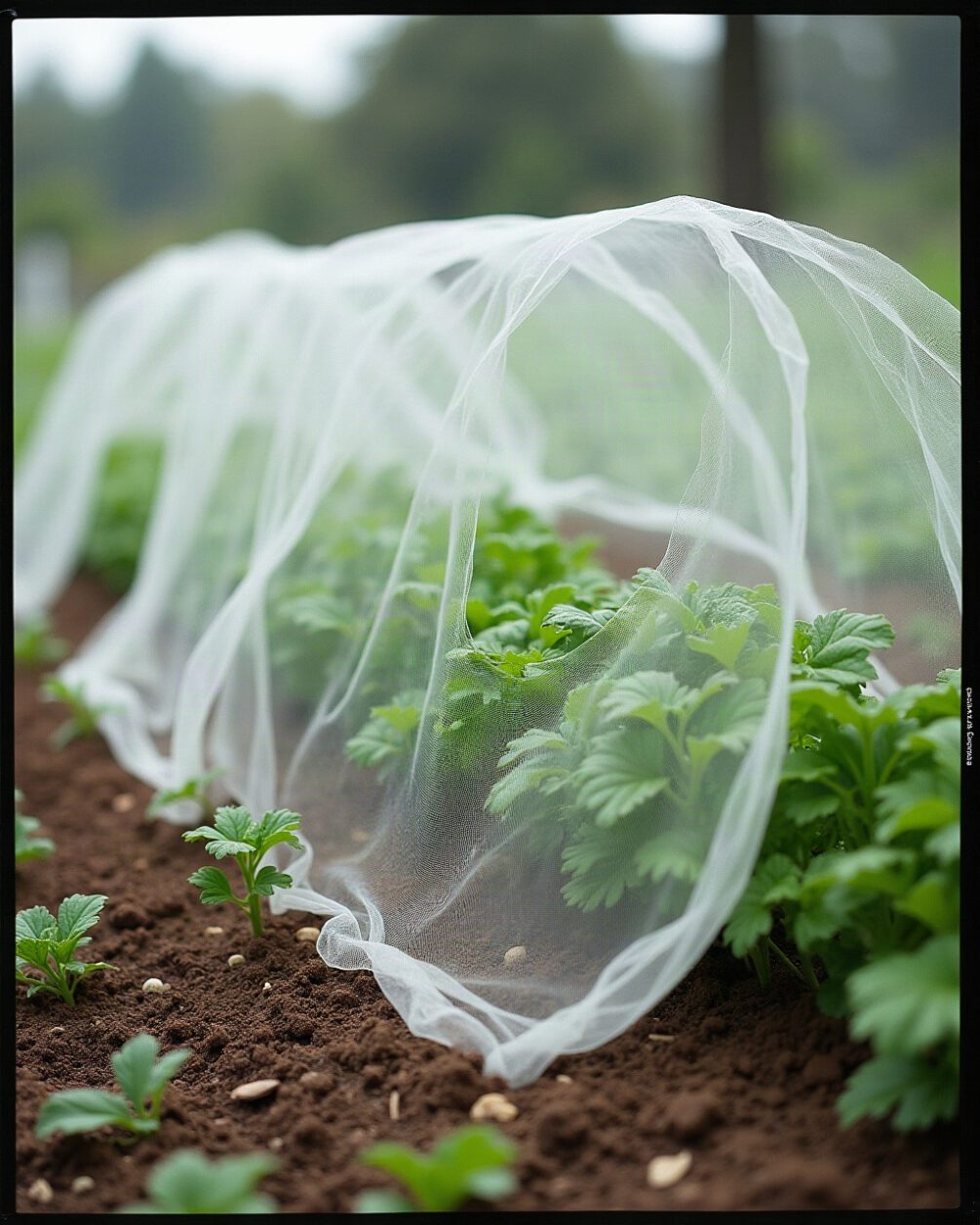
All three are handled the same way, and the useful point is timing rather than treatment: netting put on before the butterflies arrive works, and netting put on after they have laid does not. Our guide to protecting brassicas covers the method, and the netting guide covers the material, which needs to be fine enough and sealed at the soil.
Hornworms, which look worse than they are
Tomato and tobacco hornworms are large, green, with diagonal stripes and a soft horn at the rear. They are the single most alarming caterpillar most gardeners meet and among the easiest to deal with.
The damage is unmistakable: a branch stripped to bare stems overnight, with dark pellets of frass on the leaves below. The frass is usually how people find them, because the caterpillar itself is well camouflaged.
They are big enough to hand-pick, which is the whole treatment for a domestic garden.
One thing worth knowing before you remove one: if it is covered in what look like small white grains of rice, leave it. Those are the cocoons of a parasitoid wasp that has already killed it, and letting them hatch puts more of those wasps in your garden. Our hornworm guide covers it.
Cutworms, which work at night
Smooth, dull grey-brown, and they curl into a tight C when disturbed. They feed at night at soil level and hide just under the surface by day.
The damage is distinctive and infuriating: a seedling cut clean through at the base and left lying, rather than eaten. A row of transplants lost overnight with no visible insect is a cutworm.
The fix is physical. A collar of card or a plastic sleeve pushed a couple of centimetres into the soil around each transplant stops them, and it costs nothing. UC IPM’s guidance on lawn and soil insects covers the wider group living at that level, and our grub guide covers the C-shaped larvae that get confused with them.
The stinging group, which is short and worth knowing
Most caterpillars are harmless to handle. A small number are not, and the rule that covers nearly all of them is simple: conspicuously hairy, spiny or tufted means do not touch.
The mechanism is not a sting in the wasp sense. The hairs are hollow and break off in skin, delivering an irritant. The result ranges from an itchy rash to genuinely severe pain depending on species.
Species worth recognising by region include the puss caterpillar, saddleback, io moth larva and browntail moth larva. Hairs can also become airborne around heavy infestations, causing a rash without any contact at all.
If contact happens: lift the hairs out with tape rather than rubbing, wash the area, and treat as an irritant reaction. MedlinePlus notes that most insect reactions are local and resolve on their own, but a spreading reaction, difficulty breathing or severe pain is a reason to seek medical help promptly. Our bite and sting chart covers reading a skin reaction, and this page describes patterns rather than giving medical advice.
The ones to leave alone
Worth stating, because reflexive removal costs more than it saves.
Swallowtail caterpillars on fennel, dill, parsley and carrot tops are conspicuous and harmless to a home garden in the numbers that occur. Monarch caterpillars on milkweed are the reason people plant milkweed.
Anything already parasitised, as above.
And caterpillars generally are what a great deal of garden wildlife lives on. Our guide to beneficial insects covers the predators that arrive when there is something to eat, and our guide to what wasp larvae eat covers one of the more effective ones.
Common questions
How do I know what it turns into?
Usually you do not need to. The plant it is on and the damage pattern decide the response, and the adult is a matter of curiosity.
It looped as it walked.
That is a looper or inchworm, which has fewer prolegs than a typical caterpillar and moves by arching. Cabbage looper is the common garden one.
Should I spray?
For a home garden, rarely. Hand-picking works for the large ones, netting works for the brassica group, and collars work for cutworms. Our integrated pest management guide covers thresholds, which is the part that decides whether anything is needed at all.
Final verdict
Identify by the plant and the damage rather than by the caterpillar. Ragged holes in brassicas means netting, and netting only helps if it goes on before the butterflies do. A tomato branch stripped overnight with frass below means a hornworm you can pick off by hand, unless it is already carrying wasp cocoons, in which case leave it. Seedlings cut at the base means cutworms and a card collar. And anything conspicuously hairy or spiny is the one group not to handle at all.
Pingback: Wasp Larvae in a Nest: What Is Inside the Cells