You will get a longer look at the nest than at the wasp, and the nest is the better identification anyway. Open paper cells under an eave means paper wasps. A grey enclosed football means a hornet or aerial yellowjacket. Mud tubes mean a solitary mud dauber that cannot sting you meaningfully. A hole in the ground means yellowjackets, which is the one to be careful with.
- Open umbrella of cells, small colony: paper wasps, defensive only near the nest.
- Enclosed grey papery ball or a hole in the ground: yellowjackets or hornets, and the aggressive ones.
- Mud tubes on a wall: mud daubers, solitary and essentially harmless.
Trying to identify a wasp by looking at it goes badly, because the encounter is brief and the differences are subtle at speed. The nest sits still, and it tells you the species, the likely colony size and how much caution the situation deserves.
The nest names the wasp
| What the nest looks like | Wasp | How defensive |
|---|---|---|
| Open umbrella of hexagonal cells, no covering | Paper wasp | Only close to the nest |
| Enclosed grey papery ball, layered | Bald-faced hornet or aerial yellowjacket | Highly, within several metres |
| Hole in the ground with steady traffic | Yellowjacket | Highly, and easy to disturb by mowing |
| Dried mud tubes on a wall | Mud dauber | Barely; solitary and placid |
| Neat round hole bored in bare timber | Carpenter bee, not a wasp | Males bluff, females rarely sting |
| No nest, single wasp on flowers | Solitary species | Not defensive at all |
Paper wasps
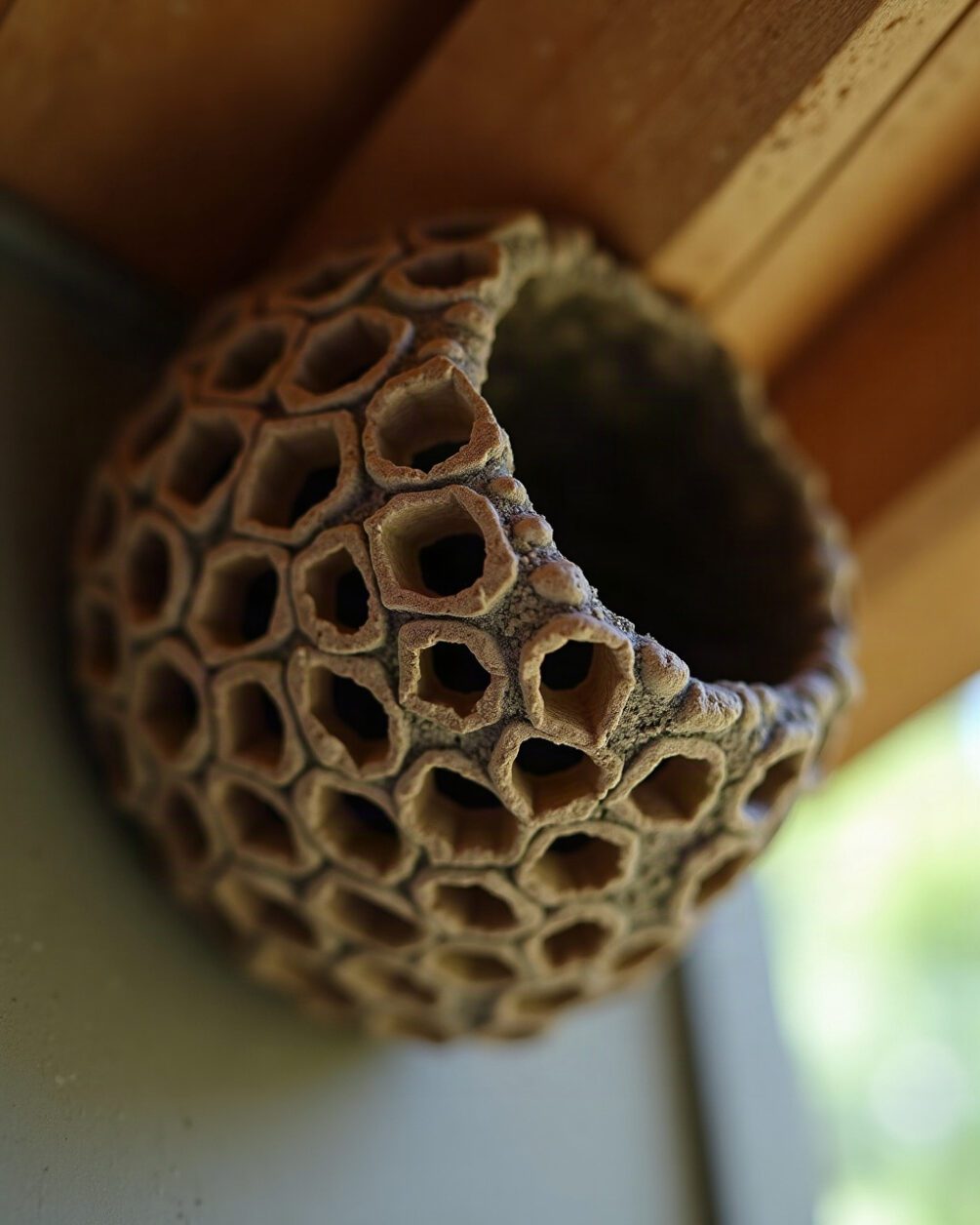
The open nest is unmistakable: a small umbrella of hexagonal cells on a stalk, hanging under an eave, a rail, a shed roof or inside an open shed. The cells are visible because there is no papery covering.
Colonies are small, often a few dozen. They are defensive within about a metre of the nest and largely indifferent beyond it, which is why a nest above a doorway matters and one at the far end of a garden usually does not. Our paper wasp versus yellowjacket guide covers the pair that get confused most.
They are also predators of caterpillars, which is worth weighing before removing a nest that is not in anybody’s way. Our caterpillar guide covers what they are eating.
Yellowjackets and hornets, the ones to respect
Yellowjackets nest in cavities: a hole in the ground, a wall void, a compost heap, under decking. The tell is steady two-way traffic at a single small entrance. Colonies reach thousands by late summer, and they defend aggressively with little warning. A lawnmower over a ground nest is the classic incident.
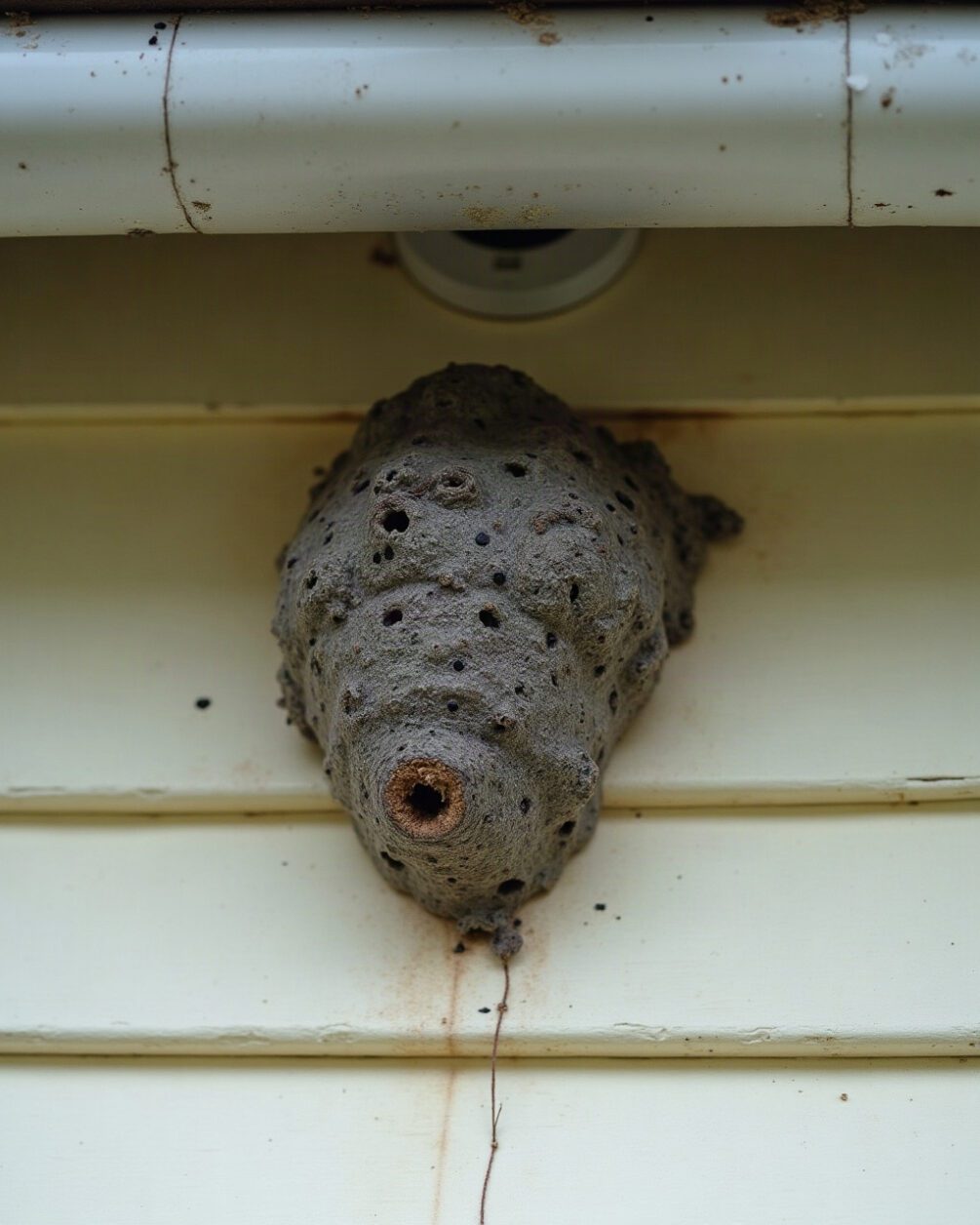
Bald-faced hornets and aerial yellowjackets build the enclosed grey football, layered and papery, hanging from a branch or a soffit. Same temperament, more visible.
These are the nests where the honest advice is to keep distance and get help rather than to try it in the evening with a can. Our guides to yellowjackets and removing a nest safely cover when it is reasonable to do it yourself and when it is not.
Mud daubers, which alarm people needlessly
Long, slender, often metallic blue or black with a very thin waist, and they build tubes of dried mud on walls, under porches and in sheds.
They are solitary: there is no colony to defend, so there is no defensive behaviour. They provision each mud cell with a paralysed spider for their larva and then leave. Stings are rare and require handling.
They are also useful, because what they are stocking those cells with is spiders. Kentucky’s overview of common spiders around homes covers what they are hunting. Our mud dauber guide covers the species, and an abandoned mud tube can simply be scraped off.
What is not a wasp
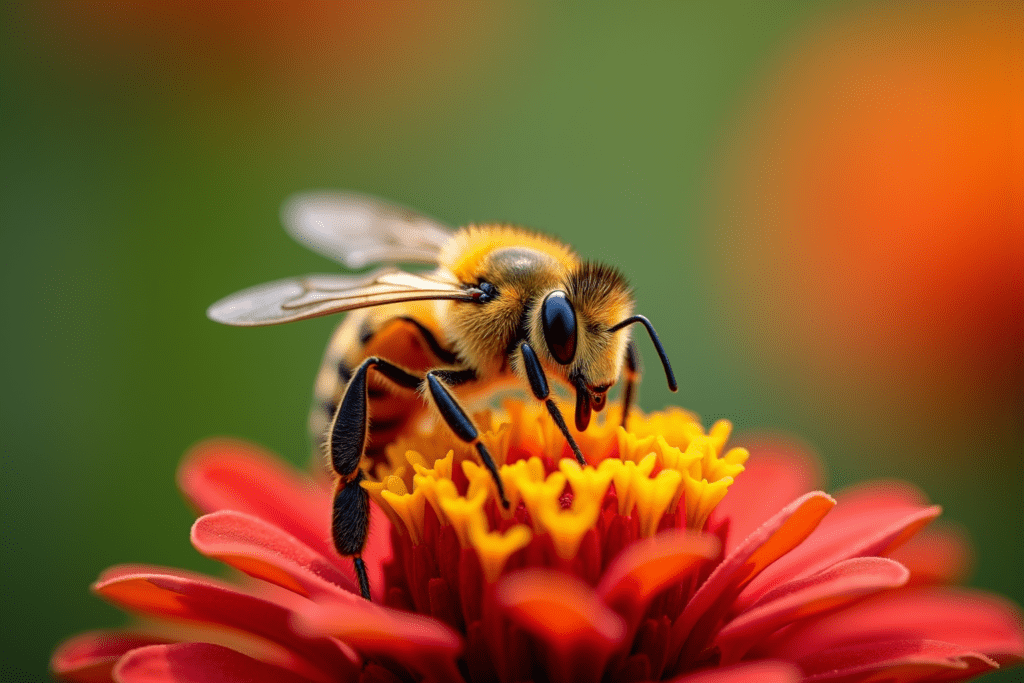
Bees are the commonest confusion and the distinction matters, because honeybees and bumblebees are worth protecting.
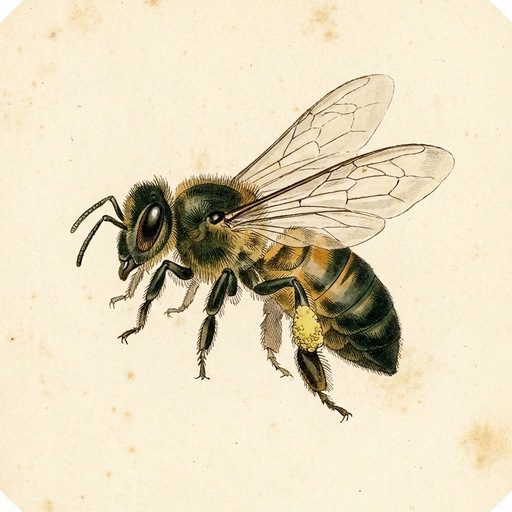
The quick check is the body: wasps have a sharply pinched waist and a smooth, often shiny body; bees are broader and visibly hairy. Our bee versus wasp versus hornet guide covers it properly.
Carpenter bees get called wasps because of the bare shiny abdomen. They bore neat round holes in unpainted timber, and Kentucky’s guidance on carpenter bees covers the damage question. Our carpenter bee versus bumblebee guide covers the check.
Hoverflies mimic wasp colouring convincingly and cannot sting at all. Two wings rather than four, and they hover in place, which no wasp does.
The seasonal thing worth knowing
A wasp nest is annual. The colony dies with the first hard frosts and only new queens survive, overwintering elsewhere. The nest is never reused.
That has two consequences. A nest found in late autumn is already finished and needs nothing done to it. And removing an old nest in winter prevents nothing, because next year’s queen will build somewhere new regardless.
It also explains the late-summer behaviour change: once the colony stops raising brood, workers switch to sugar and become the ones bothering a picnic. Our nest prevention guide covers the spring window, which is when action actually helps.
Common questions
Which type is most aggressive?
Yellowjackets, particularly ground-nesting ones in late summer. Paper wasps are defensive only near the nest. Mud daubers are not defensive at all.
Can I remove a nest myself?
An open paper wasp nest, small, reachable, at dusk, with a clear escape route, is often reasonable. An enclosed nest, a ground nest, anything above head height, or anyone in the household with a sting allergy makes it a job for someone equipped. Our safe removal guide covers the line.
What is in the cells?
Larvae, and our guide to wasp larvae covers what an opened nest contains and why an autumn nest is already empty.
Final verdict
Look at the nest rather than the wasp. Open hexagonal cells under an eave means paper wasps, defensive only up close. A grey enclosed ball or a busy hole in the ground means yellowjackets or hornets, and that is the one that deserves distance and probably help. Mud tubes on a wall mean a solitary mud dauber stocking spiders, which needs nothing at all. And every nest dies at the first frost, so an autumn find is already over.