Finding a wasp made of shiny blue metal or black-and-yellow stripes near your porch can trigger the same worry every homeowner has: “Is this one going to sting?” Mud Dauber Wasps are one of the least aggressive stinging insects you’ll meet, and they rarely bother people unless handled or trapped. This guide explains how to identify them, what “dangerous” really means in terms of stings and allergies, and what to do about those mud tube nests on eaves, garages, and sheds.
Quick ID + Quick Answer: Are Mud Dauber Wasps dangerous?
For most households, Mud Dauber Wasps are not dangerous. They are solitary wasps that usually ignore humans, and stings are uncommon unless a female is grabbed or pressed against skin.
Use this fast checklist to confirm what you’re seeing:
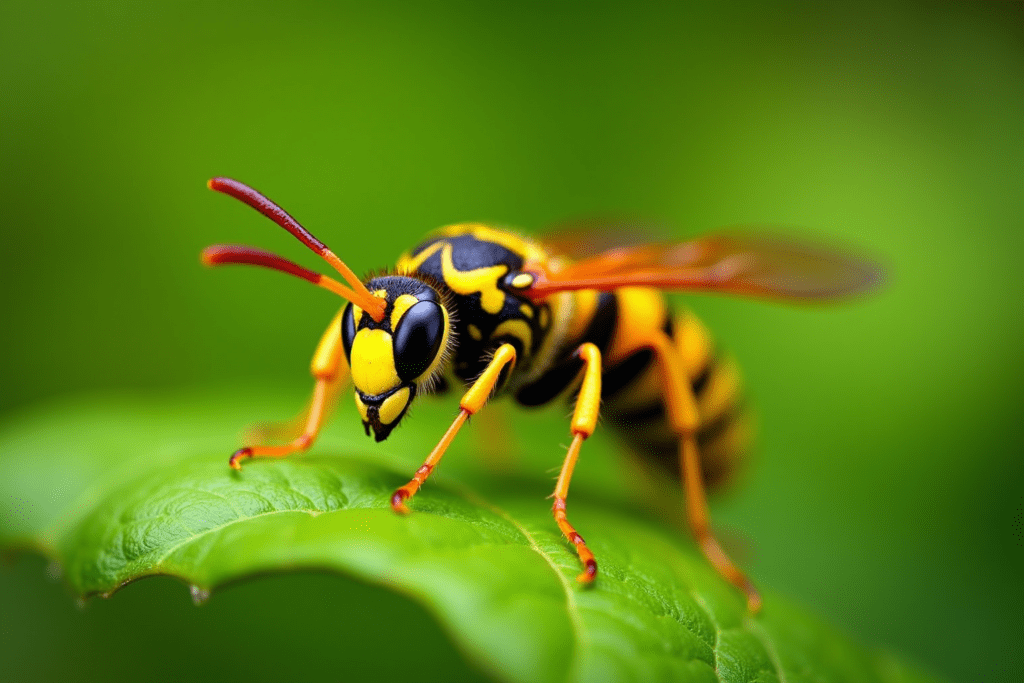
- Size: about 0.5–1 inch (1.3–2.5 cm) long
- Body shape: very slender with a thread-like waist
- Colors you may see:
- black-and-yellow (black-and-yellow mud dauber, Sceliphron caementarium)
- metallic blue (blue mud dauber, Chalybion californicum)
- dark with pale markings (pipe-organ mud dauber, Trypoxylon politum)
- Nest type: dried mud tubes or cells on sheltered surfaces (eaves, rafters, garages)
- Behavior: flies in and out calmly, hunts spiders, does not swarm
When they can be “dangerous”:
- If someone has a bee/wasp venom allergy, any sting can become a medical emergency. The WebMD medical overview on mud daubers notes that severe allergic reactions can be life-threatening even from a single sting.
How to identify mud daubers (and their nests) with confidence
Mud daubers are often misidentified as “just another wasp,” which leads to unnecessary fear and overreaction. The easiest way to get this right is to identify them the same way entomologists do in the field: body shape + nest style + behavior.
What mud daubers look like up close
Most species people encounter in North America share a distinctive silhouette:
- Long legs that often dangle in flight
- A narrow petiole (the “thread waist”) connecting thorax and abdomen
- A body that looks more like a thin sewing needle than a stocky yellowjacket
They’re commonly confused with paper wasps, but paper wasps have a less extreme waist and build open, umbrella-like comb nests. If you need a quick refresher on the bigger wasp family tree, see Bee vs Wasp vs Hornet: Key Differences.
Nest clues: the “mud work” is the giveaway
Mud dauber nests look like someone stuck small clay pots or organ pipes to your house.
Here’s a simple nest ID chart:
| Nest appearance | Likely builder | Where you’ll see it |
|---|---|---|
| Small clods or jug-like mud cells | Sceliphron mud daubers | Under eaves, porch ceilings, garages |
| Metallic blue adult nearby, old nests reused | Blue mud dauber (Chalybion) | Sheds, barns, attics, sheltered corners |
| Neat rows of parallel tubes (“pipe organ”) | Pipe-organ mud dauber (Trypoxylon) | Rafters, beams, rock ledges |
Behavior: calm, focused, and spider-obsessed
If you watch one for a minute, you’ll usually see a pattern: it lands, inspects a crack or corner, then leaves. Females provision each mud cell with paralyzed spiders as food for a single larva.
According to the Florida Pest Control mud dauber overview, they’re solitary wasps and are generally beneficial predators because of this spider-hunting habit.
Actionable takeaway: If the insect is slender, working alone, and associated with mud tubes, you’re almost certainly dealing with a mud dauber, not a nest-defending social wasp.
Mud Dauber Wasps: Are they dangerous to humans?
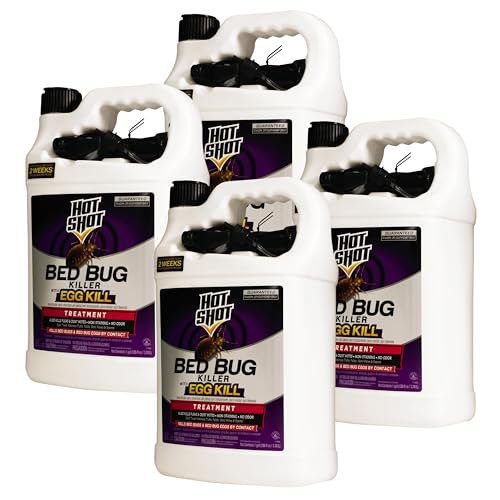
Hot Shot Bed Bug Killer With Egg Kill Ready-to-Use, 1 gallon, 4 Pack
This product is relevant as it can help homeowners manage pest issues in areas where mud dauber wasps might nest, especially if spiders are present, as they are the primary prey of these wasps.
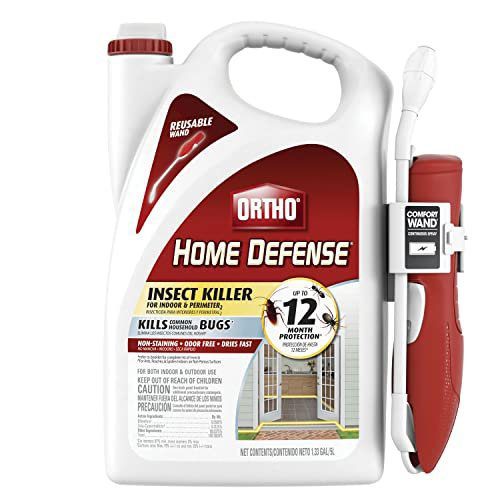
Ortho Home Defense Insect Killer for Indoor and Perimeter2 with Comfort Wand – Ready-To-Use Bug Spray, Kills Ants, Cockroaches & Spiders, 1.33 gal.
This insect killer is suitable for treating areas around the home where mud dauber wasps may build nests, providing a preventative measure against various pests.
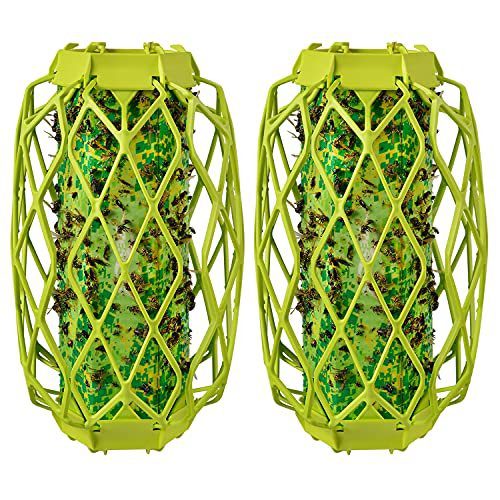
RESCUE! VisiLure® TrapStik for Wasps, Mud Daubers, Carpenter Bees – 2 Pack
This trap is specifically designed to catch wasps, including mud daubers, making it a practical solution for homeowners concerned about wasp presence.
This is where context matters. “Dangerous” can mean painful, aggressive, toxic, or medically risky. Mud daubers score low on most of those measures, with one important exception: allergy risk exists with any stinging insect.
Why mud daubers rarely sting
Mud daubers are solitary. There’s no colony, no queen to protect, and no army of workers. That single life-history detail changes everything about their risk level.
Social wasps like yellowjackets and hornets defend a shared nest and can sting repeatedly in coordinated defense. Mud daubers typically do not defend their nests that way. The Healthline sting guide emphasizes that they’re not aggressive and stings are uncommon.
Think of it like this: a yellowjacket nest is a guarded warehouse. A mud dauber nest is more like a single storage locker. There’s far less to defend.
How “mild” is their venom?
Mud dauber venom evolved primarily to paralyze spiders, keeping them fresh for developing larvae. It’s not designed as a high-impact defensive weapon against mammals.
Health information sources commonly describe mud dauber venom as relatively mild compared with many other wasps. The Healthline medical review on mud dauber stings notes that symptoms are usually localized and manageable at home for most people.
The real medical concern: allergic reactions
Even if a species is low-aggression and low-toxicity, a venom allergy changes the stakes. The WebMD guide to mud daubers cautions that people with bee and wasp allergies can have severe reactions to stings.
Use this quick risk snapshot:
- Low risk: most people, single sting, localized redness and swelling
- Moderate risk: large local reactions (swelling that spreads), history of strong reactions
- High risk: known venom allergy, asthma plus allergy history, signs of anaphylaxis
Comparison chart: mud daubers vs common “problem wasps”
| Trait | Mud daubers | Yellowjackets / many social wasps |
|---|---|---|
| Social or solitary | Solitary | Social colonies |
| Nest defense | Minimal | Strong, coordinated |
| Likelihood of multiple stings | Low | Higher near nest |
| Typical human encounters | Accidental, close-range | Food, trash, patios, nest zones |
If your concern is actually a more defensive species, use our targeted guide: How to Get Rid of Yellow Jackets.
Actionable takeaway: For most homes, mud daubers are a low-risk presence. The practical “danger” is mainly for people with venom allergies or when nests are in high-traffic areas.
What to do if a mud dauber stings you (first aid + red flags)
Most mud dauber stings resolve with basic first aid, but it’s worth knowing what’s normal and what is not. People often panic because they assume “wasp sting” automatically equals emergency. Usually, it doesn’t. Sometimes, it does.
Step-by-step first aid (simple and effective)
Recommendations from medical references like Healthline’s sting treatment guide and the WebMD sting overview align on these basics:
- Move away from the area to avoid another sting.
- Wash the site with soap and water.
- Cold pack (ice wrapped in cloth) for 10–15 minutes, then repeat as needed.
- For itch and swelling, consider:
- Hydrocortisone or antihistamine cream
- Calamine lotion
- A baking soda + water paste
- For pain, use an OTC pain reliever as directed on the label.
What’s normal after a sting?
A typical local reaction often includes:
- brief sharp pain
- a small red area
- mild swelling
- itching that can last a couple of days
When to call a doctor vs. seek emergency care
Use this quick decision list:
Call a clinician soon if:
- swelling keeps expanding after 24–48 hours
- redness becomes hot, very painful, or starts oozing (possible infection)
- you get a very large local reaction (for example, most of a hand/forearm)
Seek emergency care immediately if you notice signs of anaphylaxis:
- trouble breathing, wheezing, chest tightness
- swelling of lips, tongue, face, or throat
- widespread hives away from the sting site
- dizziness, fainting, rapid heartbeat, vomiting
If you’ve been prescribed epinephrine, use it as directed and then get emergency help.
“Do mud daubers bite?”
No. Mud daubers don’t bite people. Problem interactions are from stings, and stings are uncommon unless the wasp is pressed against skin or handled.
Actionable takeaway: Treat a sting like other wasp stings: basic first aid for typical symptoms, and fast emergency action if systemic allergy symptoms appear.

Mud dauber nests on your house: leave them, remove them, or call a pro?
A mud nest under an eave looks alarming, but it’s often more of a nuisance than a hazard. The best choice depends on location, household risk factors, and whether the nest is active.
First: decide if removal is necessary
Consider removal if:
- the nest is right next to a door, walkway, or kids’ play area
- someone in the home has a known sting allergy
- nests are accumulating and creating a mess on siding or masonry
- you’re seeing wasps repeatedly entering a wall void or attic space
Consider leaving it alone if:
- it’s in a low-traffic area (back of a shed, high rafters)
- no one in the household is allergic
- you value their spider-control benefits
The Florida Pest Control mud dauber facts page notes they’re unlikely to sting unless threatened, which is why tolerance is often a reasonable option.
Safe DIY removal (for inactive or low-risk situations)
Mud nests are basically dried clay. When they’re inactive, removal is usually straightforward.
DIY removal checklist:
- Choose timing: evening or cool weather when activity is low.
- Wear protection: long sleeves, gloves, eye protection.
- Scrape gently: use a long-handled scraper into a container or bag.
- Clean the spot: soapy water helps remove residue that can attract future nesting.
- Keep distance: keep kids and pets away until finished.
For a more general safety framework, follow our step-by-step guide: How to Safely Get Rid of a Wasp Nest.
When professional help is the smart move
Call a licensed pest professional if:
- you are allergic or unsure about allergy risk
- the nest is in a tight enclosed space (attic, wall void)
- you suspect you’ve misidentified the species
- there are many nests and ongoing activity
One more practical note: old mud dauber nests can sometimes be reused by other insects. Some pest management sources, including Adams Exterminating’s discussion of mud dauber risk, warn that abandoned nests may be taken over later by other wasps, which can change the risk profile.
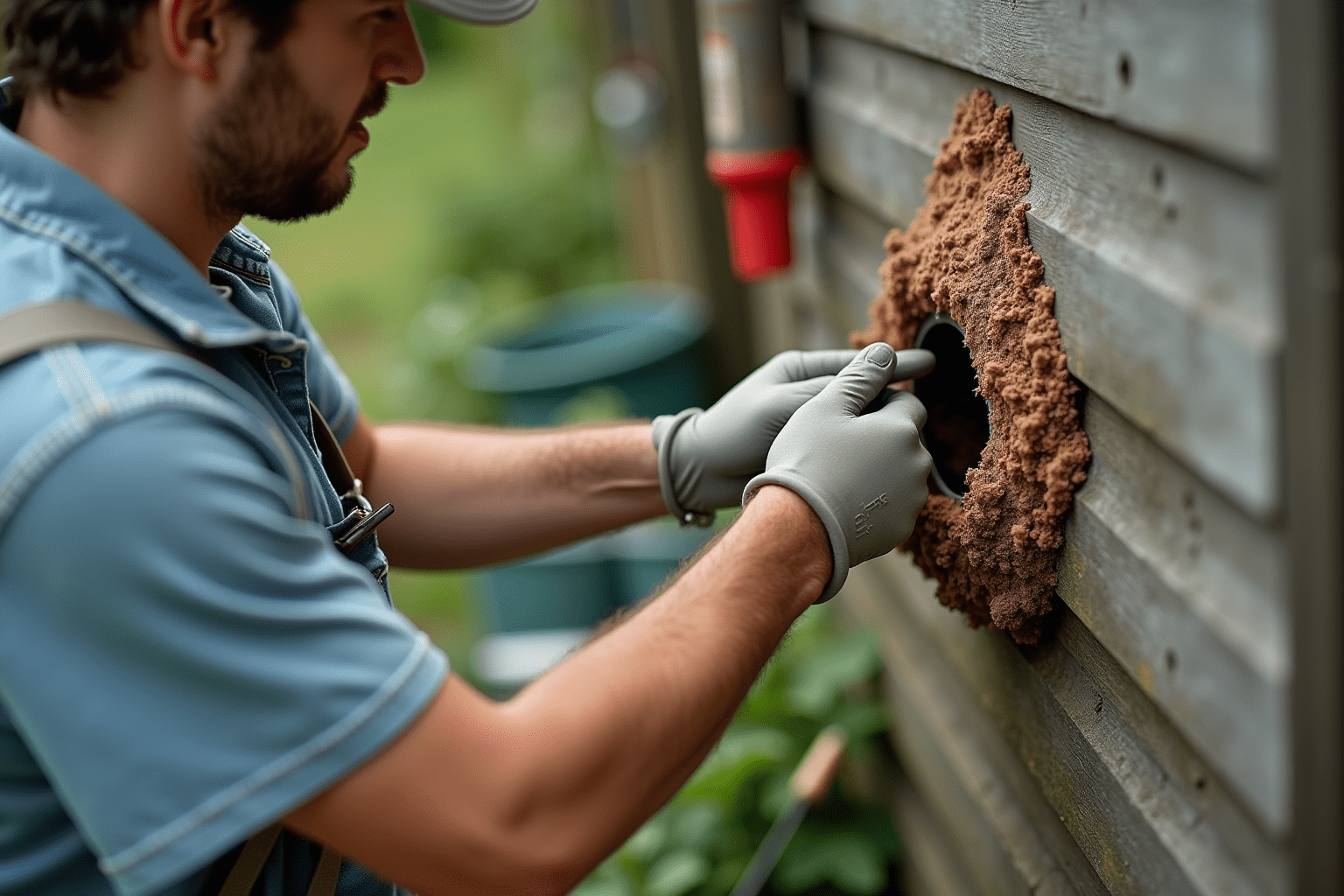
Where why a solitary wasp does not defend a nest is the actual question, mud dauber nests on walls answers it.
Actionable takeaway: If the nest is out of the way, leaving it is often fine. If it’s in a high-traffic area or allergy is a concern, removal or professional help is justified.
How to prevent mud daubers around eaves, porches, and garages (without overdoing chemicals)
Prevention works best when you focus on what mud daubers need: shelter, mud, and spiders. Remove one or two of those inputs and nesting drops off.
Prevention checklist (practical home steps)
Try these in order, from most effective to least:
-
Seal and screen common entry points
- Caulk gaps around windows, doors, soffits, and utility penetrations.
- Add screens to vents where appropriate.
-
Remove old nests promptly
- Many mud daubers investigate prior nesting spots.
- Scrape old nests and clean the surface.
-
Reduce spider habitat near the home
- Knock down webs in corners of porches and garages.
- Reduce clutter in sheds and under eaves.
- Adjust outdoor lighting to reduce insect buildup at night (which attracts spiders).
-
Limit mud sources close to the structure
- Fix dripping spigots and manage standing water.
- In rainy seasons, pay attention to shaded, damp corners where mud stays workable.
-
Use repellents carefully (optional)
- Some homeowners report deterrence from peppermint-based sprays, but evidence is mixed.
- If you try repellents, spot-test surfaces and avoid overapplying near beneficial insect habitat.
If you’re actually dealing with social wasps
Homeowners sometimes say “mud daubers” when they’re seeing paper wasps or yellowjackets. If you’re noticing defensive behavior, repeated stings, or open comb nests, confirm the ID first.
This comparison helps sort out two of the most commonly confused species: Paper Wasp vs Yellow Jacket: Identification and Control.
A quick “prevention vs. extermination” decision guide
| Situation | Best approach |
|---|---|
| One or two mud nests high under an eave | Tolerate or remove inactive nests |
| Nests by doors, patios, play areas | Remove + seal nearby gaps |
| Allergy in household | Avoid DIY, call a pro |
| Many wasps swarming or defending | Re-check ID, treat as social wasp issue |
Actionable takeaway: Prevention is mostly home maintenance and spider management. Routine insecticide use is usually unnecessary for mud daubers.
Key takeaways: living safely with mud daubers
Mud Dauber Wasps look intimidating, but their lifestyle makes them low-risk around people. They’re solitary hunters, not nest defenders, and most stings happen only through direct handling or accidental trapping against skin.
Remember these points:
- Identification is straightforward: thread waist + mud tube nests + calm behavior.
- For most people, they’re not dangerous, and their sting is typically mild and localized.
- The main serious risk is allergic reaction, as with any stinging insect.
- Nest removal is optional unless the nest is in a high-traffic area or allergy is a concern.
- Prevention is mostly sealing gaps, removing old nests, and reducing spiders near the home.
If you want to take the next step, review How to Safely Get Rid of a Wasp Nest for a broader safety checklist, and use Bee vs Wasp vs Hornet: Key Differences to confirm you’re dealing with the right insect before you act.
As an Amazon Associate, I earn from qualifying purchases. Product recommendations are based on real reviews and independent research.