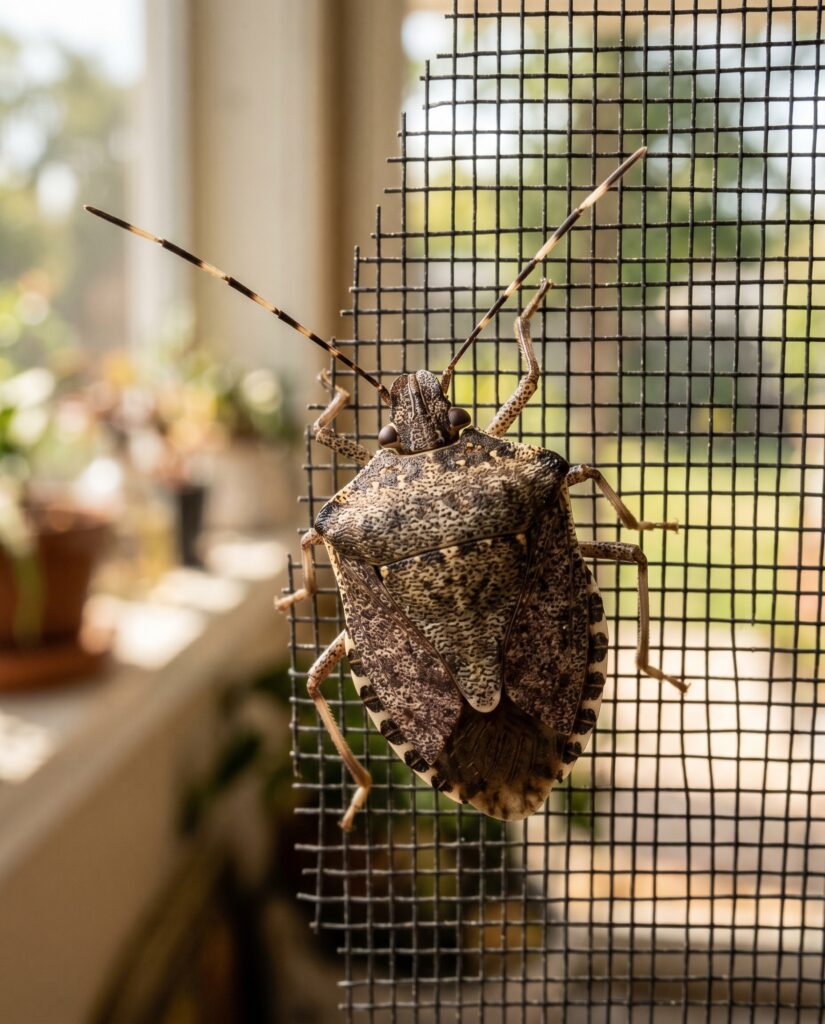
You found a shield-shaped brown bug bumbling across a window in October and the first worry is whether it bites. It does not. Stink bugs do not bite people, they do not sting, they carry no disease, and they do no structural damage to your house. Their only weapon is the foul odor they release when threatened or crushed, which is why the right response is calmly vacuuming and sealing the gaps they came through, not reaching for poison. The one you are almost certainly looking at is the brown marmorated stink bug (Halyomorpha halys), and the fastest tell is the pair of white bands on its antennae.
Stink bugs do not bite, sting, or spread disease, and they do not damage your house; the only thing they do is smell bad when crushed, so vacuum them and seal entry points instead of spraying indoors.
- The confirming feature: a shield-shaped body with two white bands on the antennae and along the abdomen edge.
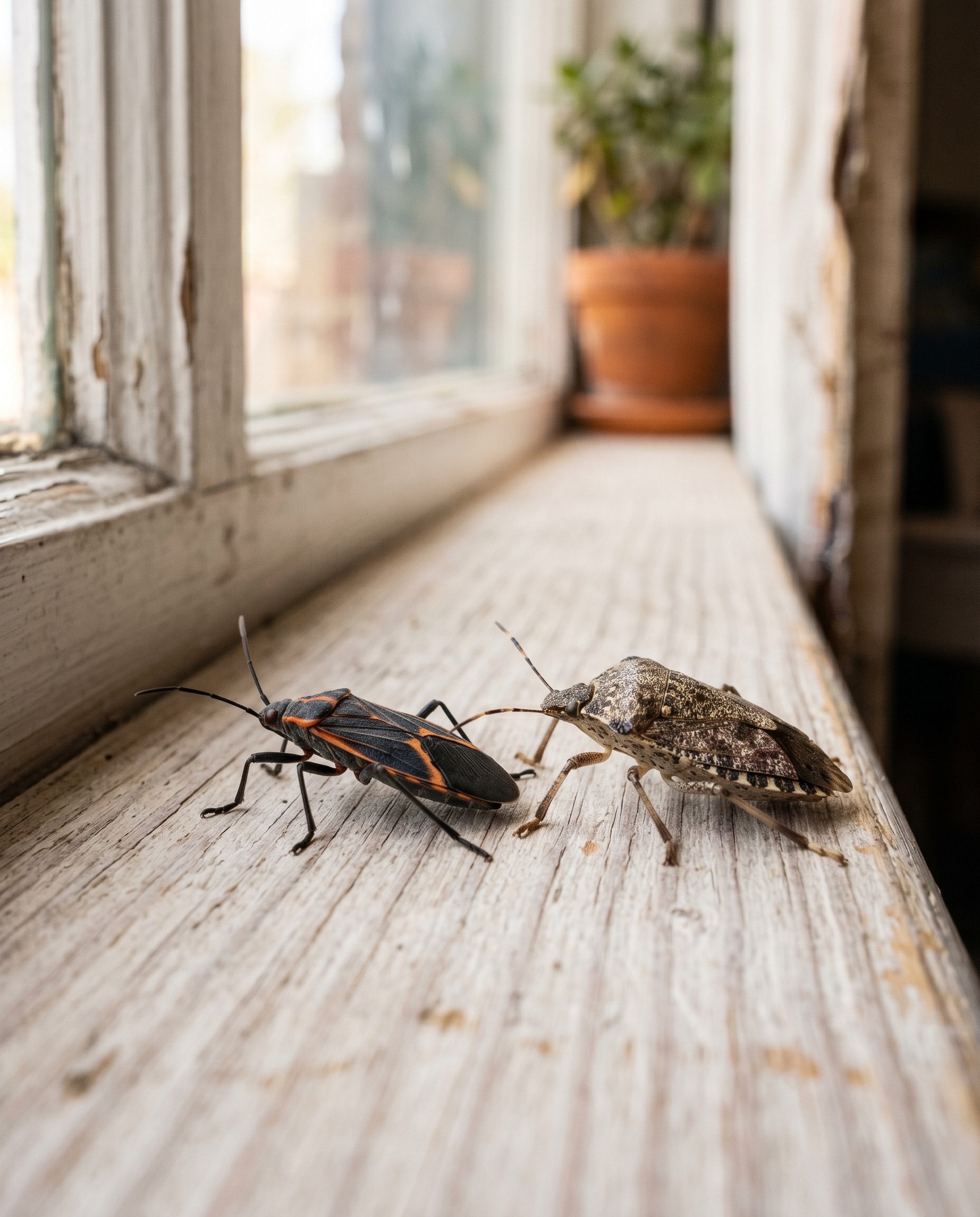
- Most-confused look-alike: the boxelder bug, separated by its slim black-and-orange body versus the stink bug’s broad mottled brown shield.
- What it means: harmless nuisance, so vacuum and exclude, and see our control guide if you want them out for good.
Quick answer on biting
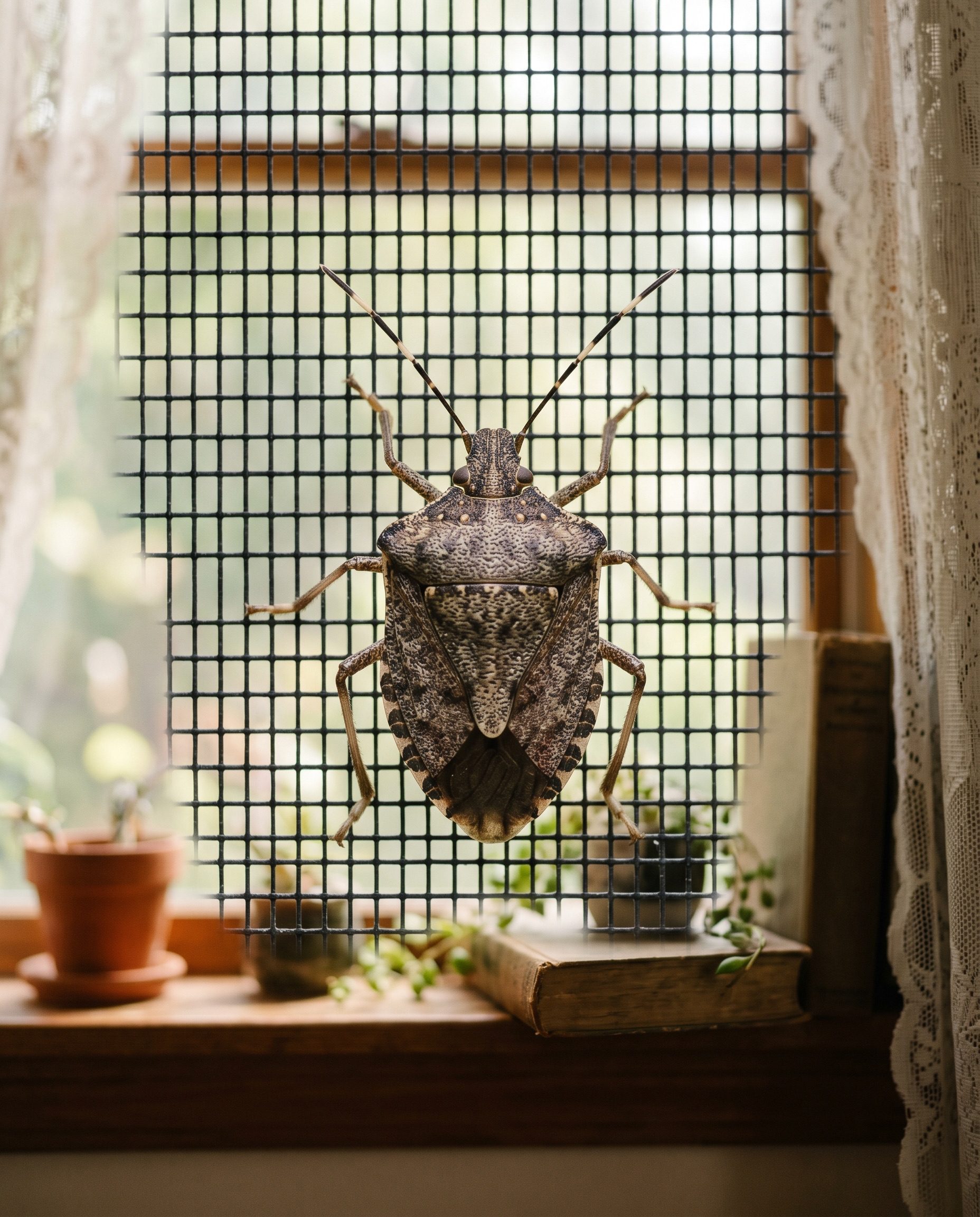
No, stink bugs do not bite. The brown marmorated stink bug feeds with a slender strawlike mouthpart called a proboscis, and that tool is built to pierce plant tissue, not skin. It physically cannot bite the way a mosquito or a flea does, and it has no stinger at the back end either. The insect you are seeing indoors in fall is not hunting you; it wandered in looking for a warm place to wait out winter. If you want the full identification rundown, our brown marmorated stink bug identification guide walks every diagnostic feature, but for the biting question the answer is simply no.
Why people fear a bite
The fear is understandable, because a stink bug looks armored and it lands on you without warning. What feels like a bite is almost always just the prickle of six clinging legs, or in rare cases the bug probing with that mouthpart, which can produce a brief pinprick sensation but does not break skin or inject anything. There is no venom, no saliva that causes a welt, and no allergic-bite reaction the way you get from a true biting insect. The only real downside of close contact is the smell. When alarmed, a stink bug releases a defensive odor from glands on its underside, and crushing one against your hand or a wall guarantees you get the full dose, which is the single best reason never to swat it.
What stink bugs actually harm
Stink bugs are a problem, just not for you. They are an agricultural pest of fruit, vegetable, and ornamental crops, and that is where the real damage happens, out in orchards and gardens where they puncture apples, peppers, and tomatoes and leave dimpled, corky scars. Inside your house their effect is almost entirely psychological plus the odor. They do not chew wood, they do not eat fabric or stored food, and they do not reproduce indoors, so unlike a termite or a clothes moth they leave no structural trail. They cannot infest your home the way a roach colony does; the bugs you see in winter are simply adults that came in to shelter and will try to leave in spring. The worst indoor consequence is a faint stale smell if enough of them die in a wall void, and the occasional stain if you press one against a curtain.
The white-banded antennae tell
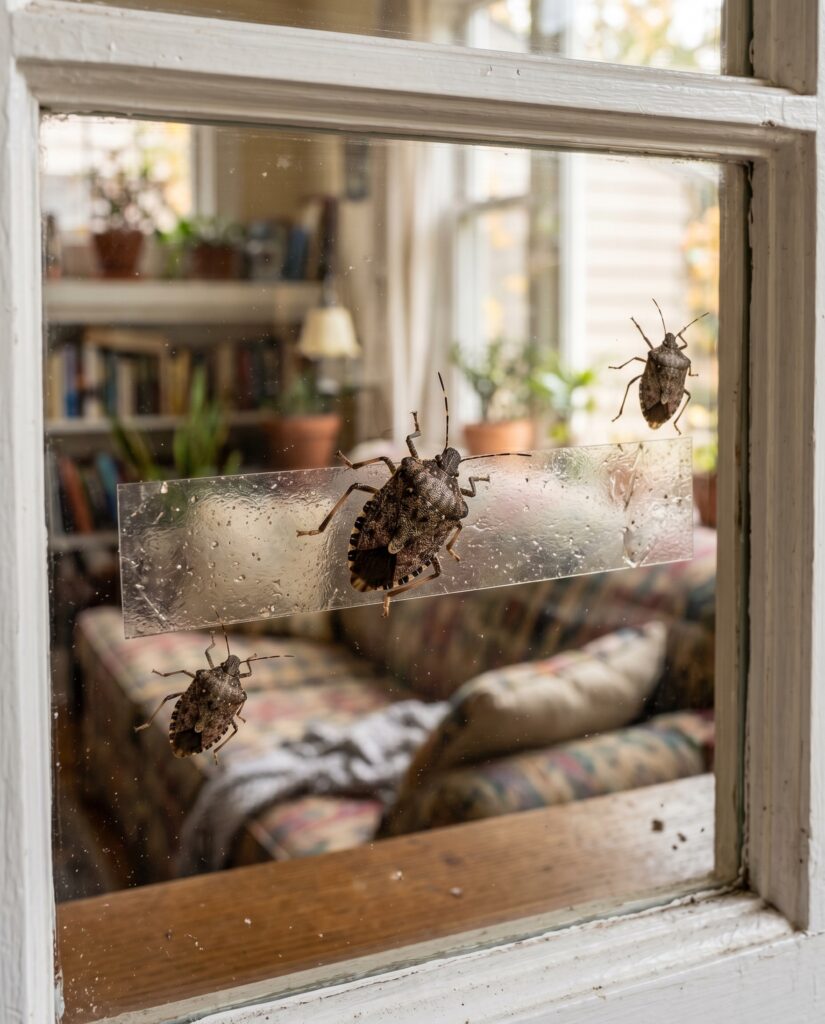
If you want to be certain it is a stink bug and not something that does bite, count the legs first: six legs means an insect, and a flat shield-shaped body settles it as a true bug. The decisive feature on the brown marmorated stink bug specifically is the banding. Look at the last two segments of each antenna and you will see alternating white and dark bands, and the outer edge of the abdomen carries the same white-and-dark checkering peeking out from under the wings. That pairing of banded antennae plus banded abdomen edge is what separates it from native brown stink bugs, which lack the clean white bands. The body itself is a mottled grayish-brown, roughly the size of a thumbnail, with the broad triangular shoulders that give the whole shield-bug family its outline.
Look-alikes that also do not bite
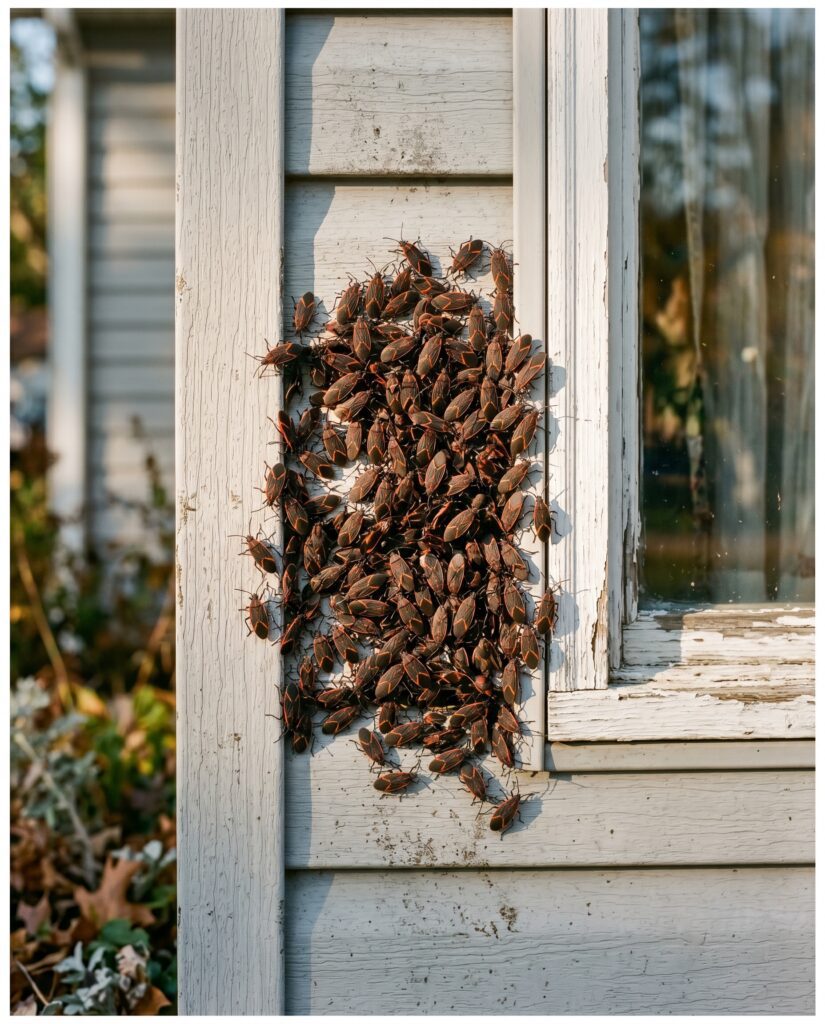
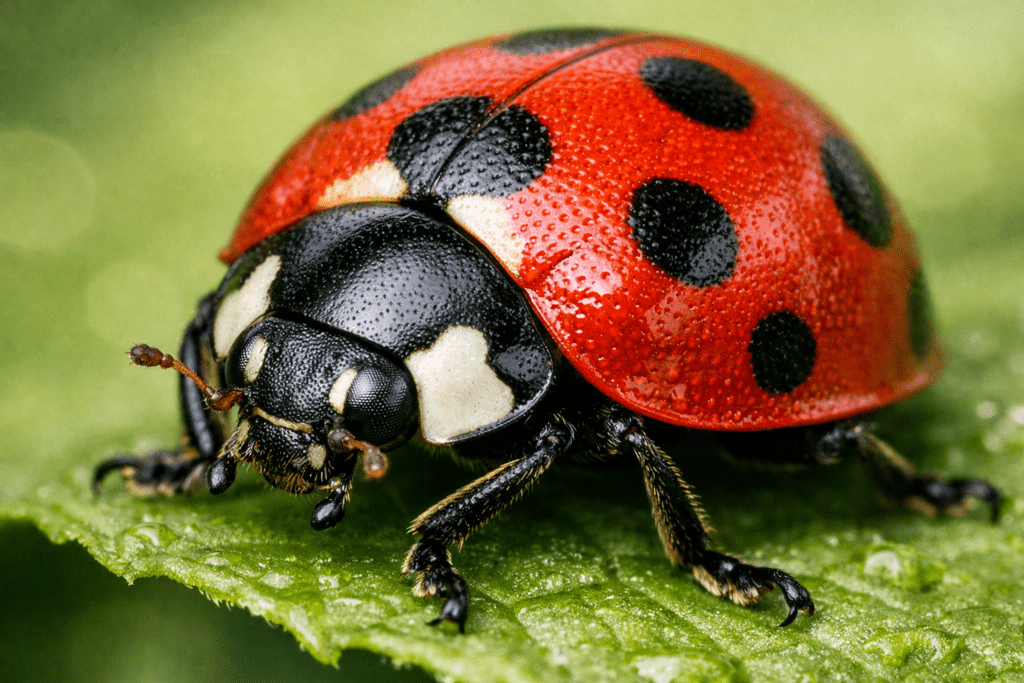
Three fall invaders get lumped together because they all sneak indoors in autumn, and reassuringly none of them bite or harm your house in any meaningful way. The brown marmorated stink bug is the broad brown shield. The boxelder bug is the slim one, and boxelder bugs gather on warm, sunny walls in fall before working their way inside, marked by their narrow black bodies with thin red-orange lines. The third, the lady beetle, is the round orange one, and multicolored Asian lady beetles invade homes the same way; a lady beetle can deliver a tiny defensive nip and a yellow stain, but it is not a true bite and breaks no skin. The shape alone separates all three at a glance. Our fall-invaders ID guide for stink bugs, boxelder bugs, lady beetles, and cluster flies lines them up side by side if you have a mixed crowd at the window.
| Insect | How to tell it | Does it bite or harm? |
|---|---|---|
| Brown marmorated stink bug | Broad brown shield, white-banded antennae | No bite, only odor when crushed |
| Boxelder bug | Slim black body, thin red-orange lines | No bite, only odor when crushed |
| Asian lady beetle | Round, orange to red, dark spots | Tiny defensive nip, no skin break |
When and where you see them
You will see stink bugs indoors most often in fall and again on the first warm days of late winter, which is itself a clue to what they are doing. These are overwintering invaders that move indoors as the weather cools, squeezing through gaps around windows, soffits, vents, and where utility lines enter the wall. They cluster on the warm, sun-facing side of a building first, then slip into wall voids and attics, and a few stragglers blunder into living space at lamps and windows. The brown marmorated stink bug has spread across most of the United States since arriving from Asia, so this is a national fall ritual now, not a regional oddity. A warm January afternoon can wake the ones hiding in your walls and send them drifting toward the light, which surprises people who thought the fall invasion was over.
The calm fix, no poison
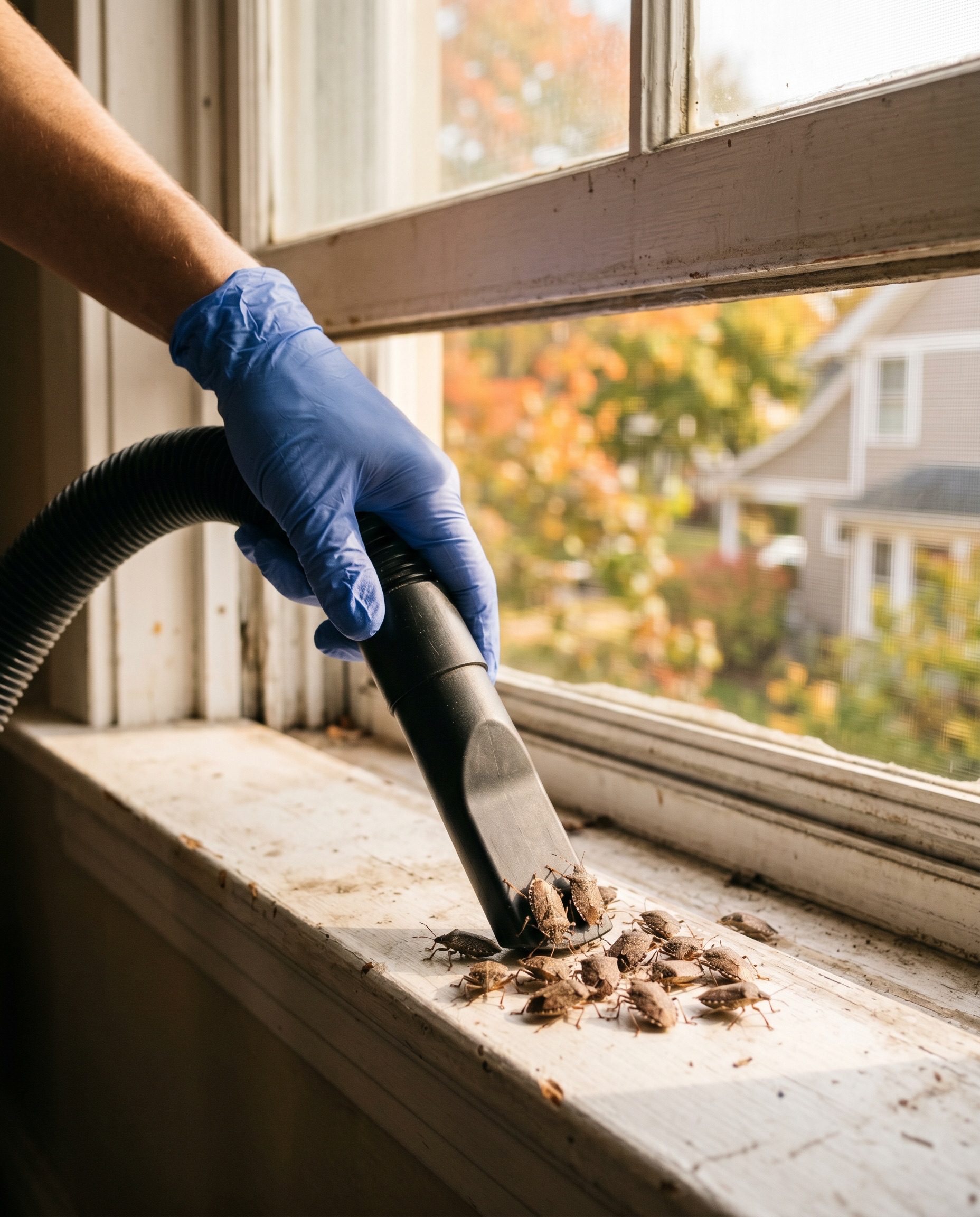
Because they do no real harm, the proportionate response is mechanical, not chemical. Vacuum the ones you find rather than crushing them, since crushing triggers the odor and can stain, and empty the canister or bag outside so the smell does not linger. The lasting fix is exclusion: seal cracks around windows and doors, screen vents and weep holes, and caulk where pipes and wires pass through walls before the bugs arrive. The EPA recommends exclusion and an early-fall exterior treatment, not indoor spraying, and there is a specific reason to avoid spraying inside the walls. A residual sprayed indoors kills bugs where you cannot reach them, and the dead-bug piles then attract carpet beetles, trading one nuisance for another. It is also worth knowing that some native stink bugs prey on pest insects and lady beetles eat aphids, so a blanket spray outdoors does collateral damage to genuinely useful insects. For the full step-by-step, see our guide on how to get rid of stink bugs in your house.
Common questions
Do stink bugs bite humans?
No. Stink bugs have a piercing mouthpart made for plant sap, not skin, and they have no stinger. What people read as a bite is usually the grip of the legs or a harmless probe that leaves no mark. They are not aggressive and have no interest in feeding on people or pets.
Are stink bugs poisonous?
No. Stink bugs are not poisonous or venomous, and they are not dangerous to touch. The defensive odor they release is unpleasant but not toxic, and it washes off skin with soap and water. Handling one barehanded only risks the smell, not your health.
Do stink bugs damage your house?
No. They do not chew wood, eat fabric, or nest in structures, so they cause no structural damage. The only indoor downsides are the odor if you crush them and a faint stale smell if many die inside a wall void. Their real damage is to crops outdoors, not buildings.
Why do stink bugs come inside?
They come in to overwinter. As nights cool in fall, adults seek a sheltered, frost-free place and slip through gaps around windows, vents, and utility penetrations. They do not breed indoors; they are simply waiting out winter and will try to head back outside in spring.
Should I crush a stink bug?
No, vacuum it instead. Crushing releases the defensive odor and can stain surfaces, and it does nothing the vacuum does not do more cleanly. Suck them up, empty the container outside, and seal the gaps they used to get in.
Final verdict
The honest answer to the question is the reassuring one: stink bugs do not bite, they do not sting, they spread no disease, and they do no structural harm to your house. The worst they can do is smell, and only if you crush or threaten them, which is the single best argument for the vacuum over the shoe. The brown marmorated stink bug is the white-banded brown shield, the boxelder bug is the slim black-and-orange one, and the lady beetle is the round orange one, and all three are autumn nuisances rather than threats. Treat them as a sealing-and-vacuuming job, skip the indoor spray that just feeds carpet beetles, and remember that a few of their relatives outdoors are on your side.
Next steps:
– Confirm the white-banded shield with our brown marmorated stink bug identification guide.
– Get them out and keep them out with our guide on how to get rid of stink bugs in your house.
– Sort out a mixed window crowd with the fall-invaders ID guide.