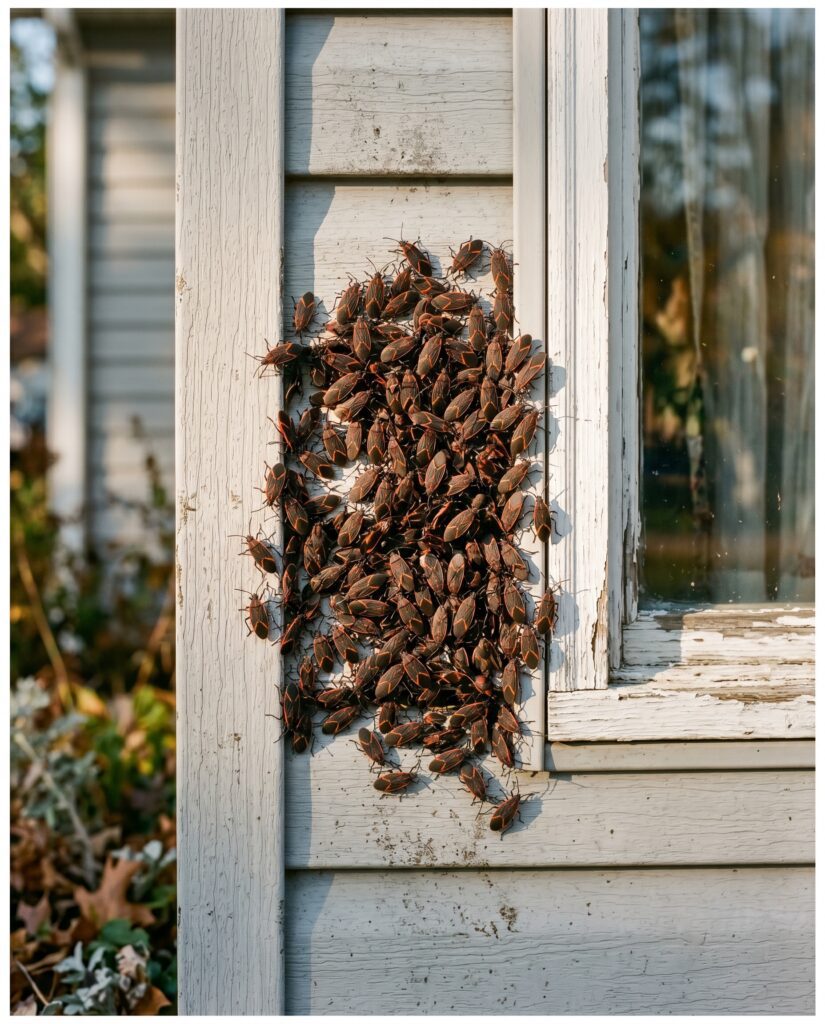
You found a flat, shield-shaped brown bug clinging to a window in October, and the first question is whether it is the invasive one everybody complains about. The short version: the brown marmorated stink bug (Halyomorpha halys) is the fall invader, and two marks separate it from the harmless natives that look almost identical. Check the antennae for alternating light-and-dark bands on the last two segments, and check the shoulder edge, which is smooth rather than toothed. Some native stink bugs are actually beneficial predators, so getting this ID right tells you whether you are dealing with the home invader or a bug you can simply put back outside.
If the last two antenna segments show pale-and-dark banding and the shoulder edge is smooth, it is a brown marmorated stink bug, not a harmless native. That banded-antennae check is the one tell that settles it before you do anything.
- The confirming feature: Alternating light-and-dark bands on the last two antenna segments, plus a smooth (not toothed) shoulder edge.
- Most-confused look-alikes: Native brown stink bugs and the predatory spined soldier bug, separated by plain antennae and toothed, pointed shoulders.
- What it means: A nuisance fall invader that does not bite or damage the house. To remove it, see our guide to getting stink bugs out of the house.
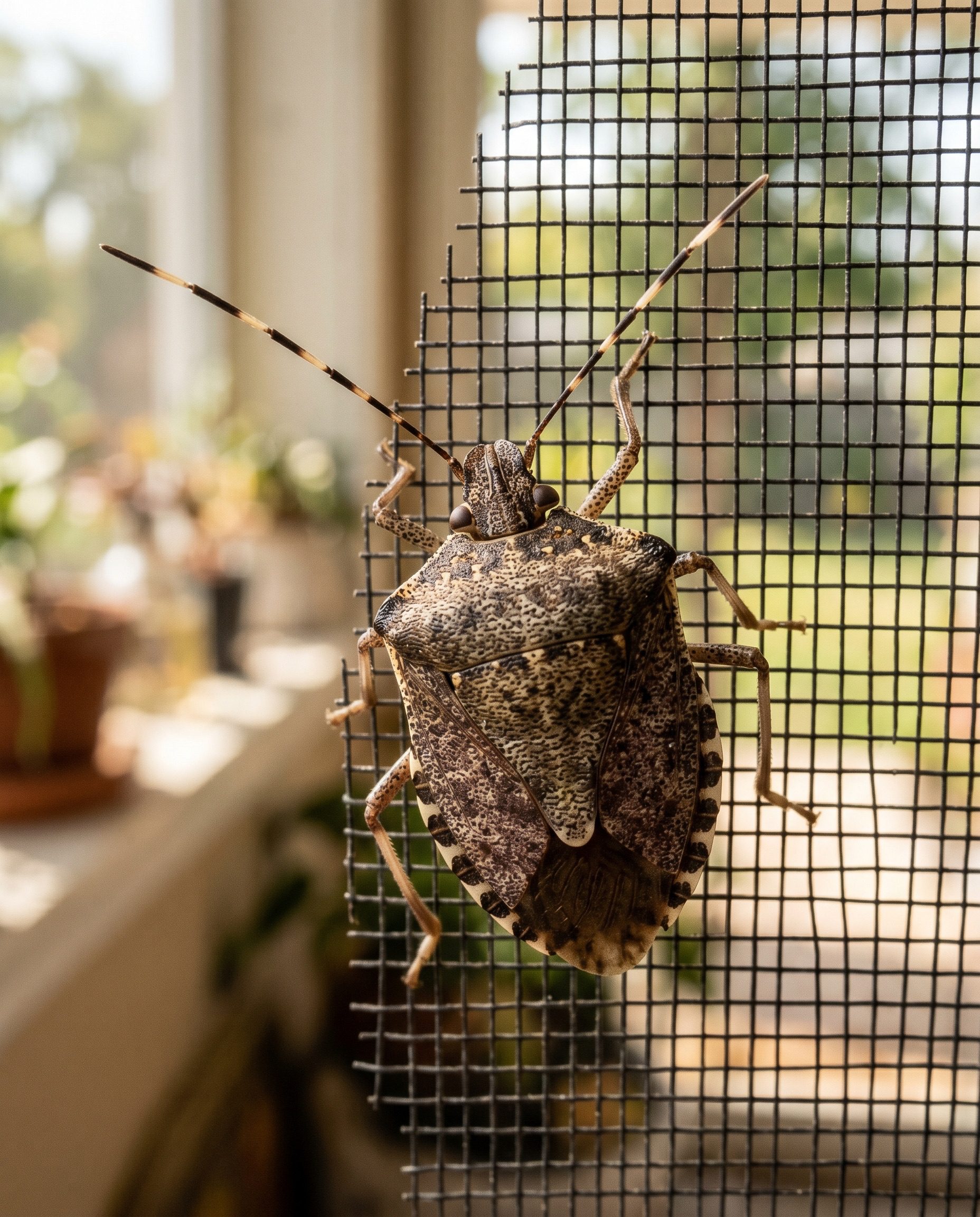
Quick ID in two checks
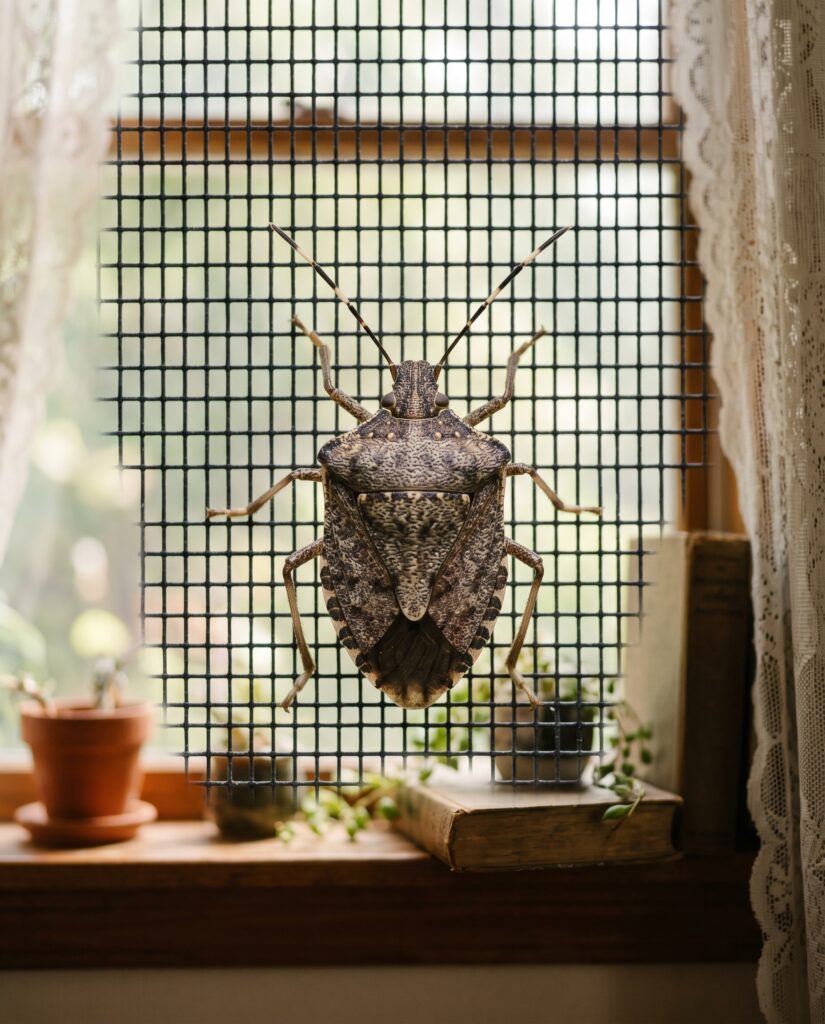
The brown marmorated stink bug is a mottled brown, shield-shaped insect about 17 millimeters long, roughly the size of a thumbnail. Plenty of native stink bugs share that exact silhouette, so shape alone never settles it. The banded antennae do. Look at the two segments nearest the tip and you should see a clear pale band against the darker segment, a pattern the common native browns lack.
The second check backs up the first. Run your eye along the edge of the “shoulders,” the pronotum just behind the head. On this species that margin is smooth and rounded, while the predatory natives people confuse it with carry small teeth or sharp points there. Marbled brown body, banded antennae, smooth shoulders: that combination is the invader and almost nothing else.
The one feature that confirms it
If you only check one thing, check the last two antenna segments. The alternating light-and-dark banding is the single most reliable field mark, because it is present on adults regardless of how worn or faded the body coloring gets. UC IPM leads with exactly this trait in its description of the banded antennae and smooth shoulder that identify this bug, and it is the feature professionals reach for first.
To see it well, you do not need a microscope, but a hand lens or your phone camera in macro mode helps. Hold the bug still on a light surface and look at the antenna tip against the background. A native brown stink bug shows antennae that are more or less one color along their length. The brown marmorated stink bug shows that interrupted, two-tone pattern near the end, like a thin pale ring painted on darker rod.
There is one honest limit to lean on. Nymphs and very dark or very faded adults can make the banding harder to read, so when the antennae are ambiguous, fall back on the smooth shoulder margin and the dark-and-light banding along the very edge of the abdomen, which peeks out past the folded wings. Two soft signals agreeing is as good as one strong one.
Full description
Run down the body the way an entomologist would. Size first: adults are about 14 to 17 millimeters, a little smaller than a dime laid flat. Color is a marbled, grayish brown across the top, which is where “marmorated” (marbled) comes from, with no bright markings on the back.
Then the antennae, the diagnostic piece, with their banded final segments. The legs are brown with faint pale mottling and, like every adult insect, there are six of them, which separates the bug at a glance from any eight-legged arachnid. The underside is pale, and the edges of the abdomen show that alternating dark-and-light banding visible from above past the wing margins.
The shield outline comes from the large triangular plate (the scutellum) in the center of the back, a hallmark of true stink bugs in the family Pentatomidae. The shoulder margin stays smooth and gently rounded, with none of the projecting points that mark some natives. Crushed or threatened, it releases the familiar cilantro-like odor from glands on its body, which is the reason vacuuming beats squashing.
Look-alikes worth ruling out
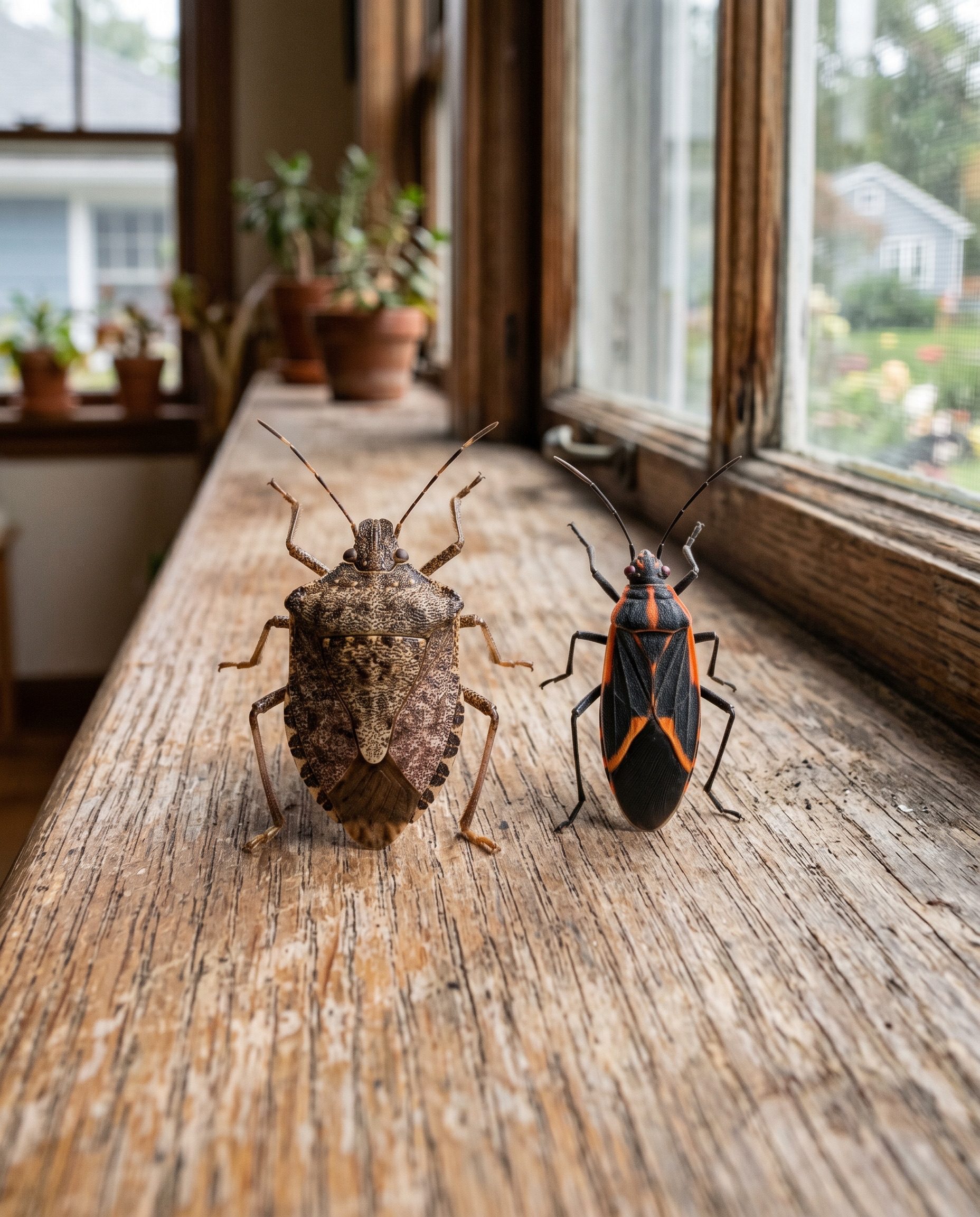
People confuse this bug with three things, and each one comes apart on a single feature. The native brown stink bugs look nearly identical until you check the antennae. The spined soldier bug, a beneficial predator, has sharp shoulder spines. And the boxelder bug, a different fall invader entirely, is the wrong color once you actually look. The table below is the quick separator.
| Species | Key feature | Where found |
|---|---|---|
| Brown marmorated stink bug | Banded last two antenna segments, smooth shoulders | On and inside homes, fall through spring |
| Native brown stink bugs | Plain one-color antennae | Gardens and field edges, rarely indoors in numbers |
| Spined soldier bug | Sharp toothed shoulder points, a predator | Gardens, where it eats pest larvae |
That spined soldier bug deserves a flag, because it is one of the good guys. It hunts caterpillars and beetle larvae, so a gardener who carpet-bombs every shield-shaped bug loses a free pest controller. The banded-antennae check is what keeps you from killing a beneficial by mistake. The USDA-funded research consortium that tracks this species keeps an updated gallery if you want to compare a tricky specimen side by side.
Where and when you meet it
You will meet this bug in fall, on the sunny side of the house, and that timing is itself a clue. As nights cool, adults leave gardens and crops and gather on warm south- and west-facing walls before slipping inside through gaps to overwinter in attics, wall voids, and window frames. On warm late-winter days they wake up and reappear at windows, confused, looking for a way back out.
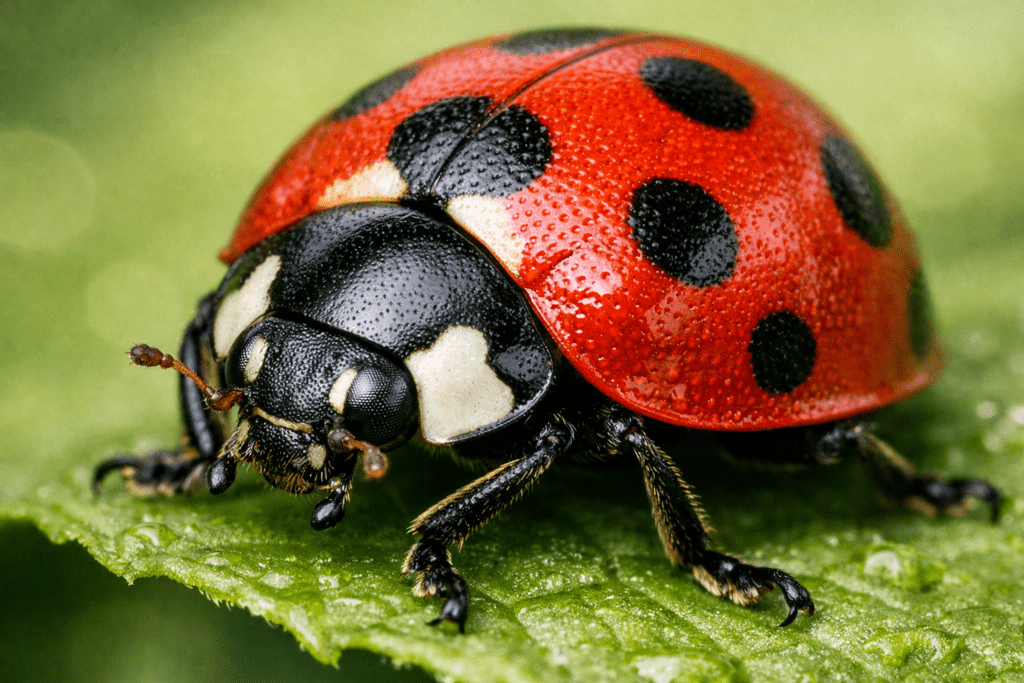
This is an introduced Asian species that has spread across much of the United States since the late 1990s, heaviest through the mid-Atlantic and now common coast to coast. The behavior pattern matters because it tells you the fix: this is an overwintering invader you exclude rather than spray indoors. The same fall clustering shows up in two other home invaders, since boxelder bugs gather on warm walls and should not be crushed either, and multicolored Asian lady beetles overwinter indoors much the same way. If you are sorting out which fall visitor you have, our field guide to fall invaders lines them up together.
Is it actually a problem
For your house and your body, almost none. This bug does not bite, sting, spread disease, or chew the structure. It is a nuisance because it shows up in numbers and smells when disturbed, not because it is dangerous, which our explainer on whether stink bugs bite or harm you covers in full. It is a real agricultural pest on fruit and vegetable crops, but indoors it is just an unwelcome guest.
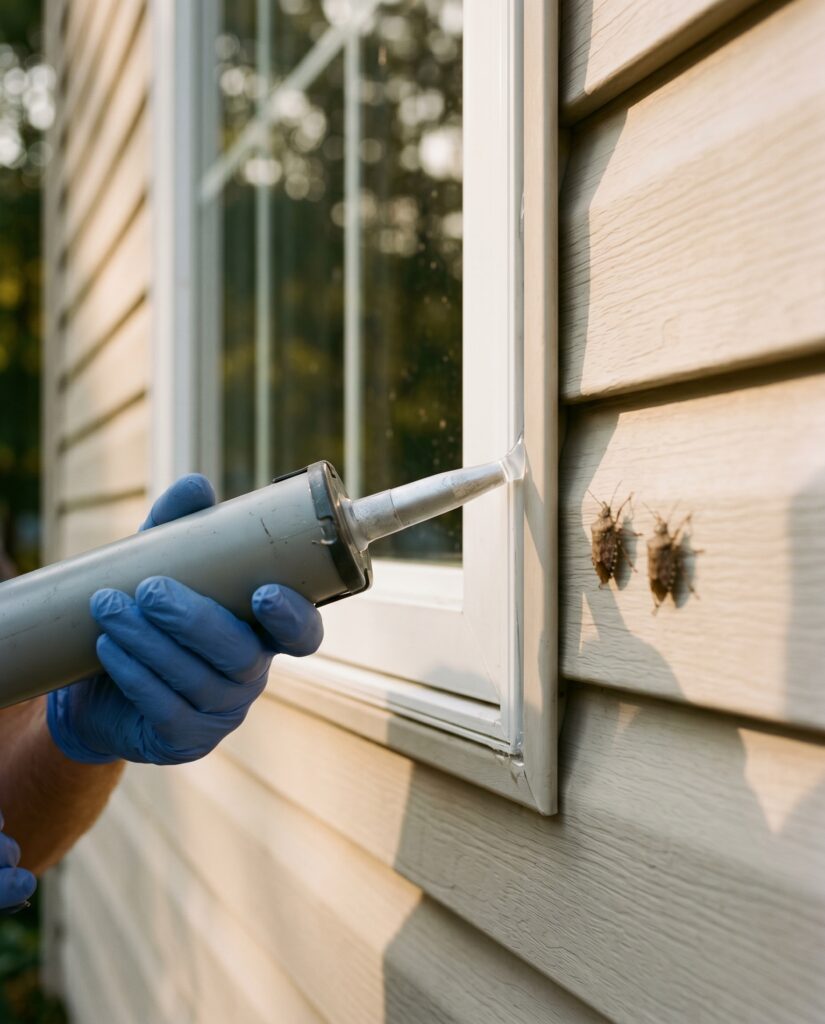
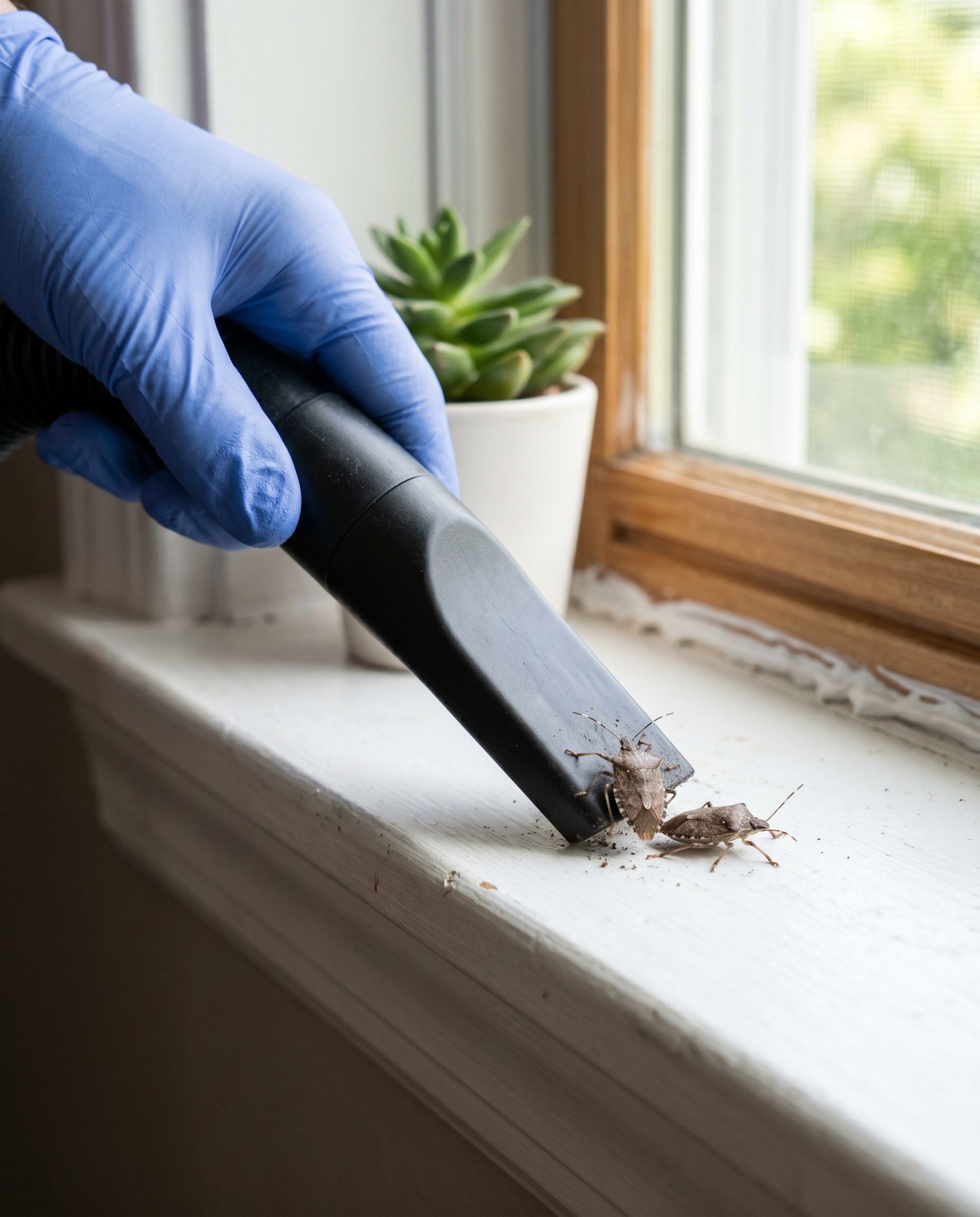
The proportionate response is exclusion and a vacuum, not a spray. Seal gaps around windows, doors, and utility lines, and vacuum the bugs that get in rather than crushing them, since crushing releases the odor and can stain. Spraying insecticide along interior walls is the move to avoid, because dead bugs piled in a wall void attract carpet beetles. If you want chemical help, the right and only place for it is outside: an exterior perimeter treatment timed before they move in, applied in early fall while following the label, since under federal law the label is the law.
Common questions
What is the easiest way to tell a brown marmorated stink bug from a native?
Check the antennae. The last two segments on this species show alternating pale and dark bands, while common native brown stink bugs have antennae of a single color. Back it up with the shoulder edge, which is smooth on the invader and toothed or pointed on the predatory natives.
Do brown marmorated stink bugs bite?
No. They have piercing mouthparts built for plant juices, not skin, and they do not bite people or pets or transmit disease. The only real downside indoors is the smell when they are crushed or vacuumed roughly.
Why do they come inside in fall?
They are looking for a sheltered place to wait out winter. As temperatures drop they gather on warm sunny walls and slip through gaps into attics and wall voids, then reappear at windows on warm late-winter days trying to get back out.
Should I crush them?
Better not. Crushing releases the cilantro-like defensive odor and can leave a stain, and a pile of dead bugs in a wall can draw carpet beetles. Vacuum them up instead, and empty the canister or bag outside.
Are any stink bugs good to have around?
Yes. The spined soldier bug is a native predator that eats caterpillars and beetle larvae, and it is easy to mistake for the invader. Its sharp shoulder points and plain antennae give it away, so the ID check protects a beneficial insect.
Final verdict
The brown marmorated stink bug is the fall home invader, and you confirm it with two quick checks: alternating light-and-dark banding on the last two antenna segments and a smooth, untoothed shoulder edge. The banded antennae alone settle most cases, and they matter because the look-alikes include both harmless native browns and the beneficial spined soldier bug, which you do not want to squash by accident. Once the ID lands, the response is calm and physical: this bug does no harm indoors, so seal it out, vacuum the ones inside, and skip the indoor sprays and the crushing.
Next steps:
– Get the ones already inside out with our guide to getting stink bugs out of the house.
– Confirm there is nothing to fear with our explainer on whether stink bugs bite or harm you.
– Sort out the other fall visitors with our field guide to fall invaders.