If cluster flies are droning against your windows on a warm winter afternoon, the spray can in your hand will not fix it. Cluster flies spend the cold months tucked inside your wall voids and attic, and the ones at the glass are just the few that woke up and crawled toward the light, so the population you actually need to reach is sealed behind drywall where no indoor insecticide can touch it. The fix is to seal and screen the house before fall so they cannot get in, vacuum up the ones that show up at the window, and put a trap at the glass. The only spraying worth doing is a single exterior treatment of the sunny walls in early fall, before they move in.
You cannot spray cluster flies out of your walls. The fix is exclusion before fall, vacuuming the ones at the glass, and a window trap; the only useful spray is on sunny exterior walls in early fall, never indoors.
- Do first (free): Vacuum the flies off the windows and seal gaps around window frames, vents, and the eaves with caulk and screen.
- Best for the common case: Window fly traps at the sunny panes, plus a labeled exterior perimeter spray on south and west walls in early fall.
- Skip: Indoor wall-spraying and crushing; dead flies in the wall draw carpet beetles, and crushing smears and stains.
Why spraying inside fails
The reason an indoor can of bug spray does almost nothing is simple: you are not where the flies are. By the time you see cluster flies on the windowsill, the bulk of them are deep inside the wall voids and the attic, waiting out the cold. Killing the dozen at the glass does not touch the hundreds behind the plaster, and they will keep trickling out on every sunny day all winter. This is the same overwintering pattern shared by the overwintering invader behavior the UC IPM Pest Notes describe for stink bugs, and the lesson is identical: once they are in the wall, exclusion and vacuuming beat chemicals.
There is a second reason to put the can down. If you do manage to fog the wall void, you end up with piles of dead flies inside the wall, and those carcasses feed carpet beetles and other scavengers that then chew on wool, stored fabrics, and pantry goods. You would be trading a harmless nuisance for a pest that actually does damage. Cluster flies do not bite, do not sting, do not spread disease, and do not harm your house; they are an annoyance, not a threat, which is exactly why the heavy chemical response is the wrong call.
What the flies on the glass mean
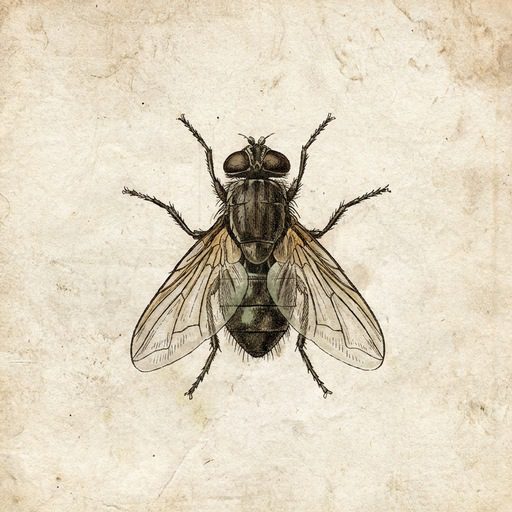
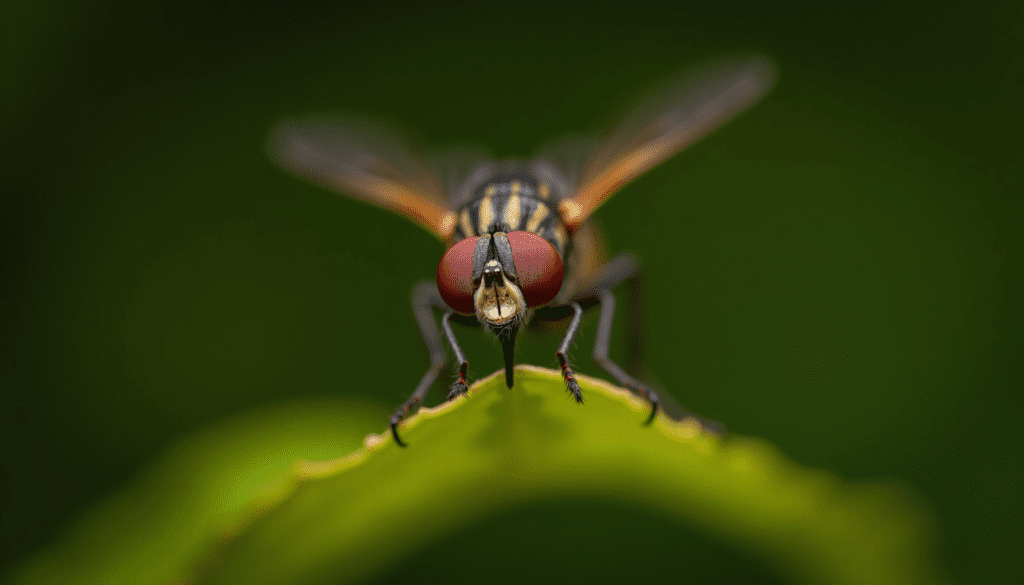
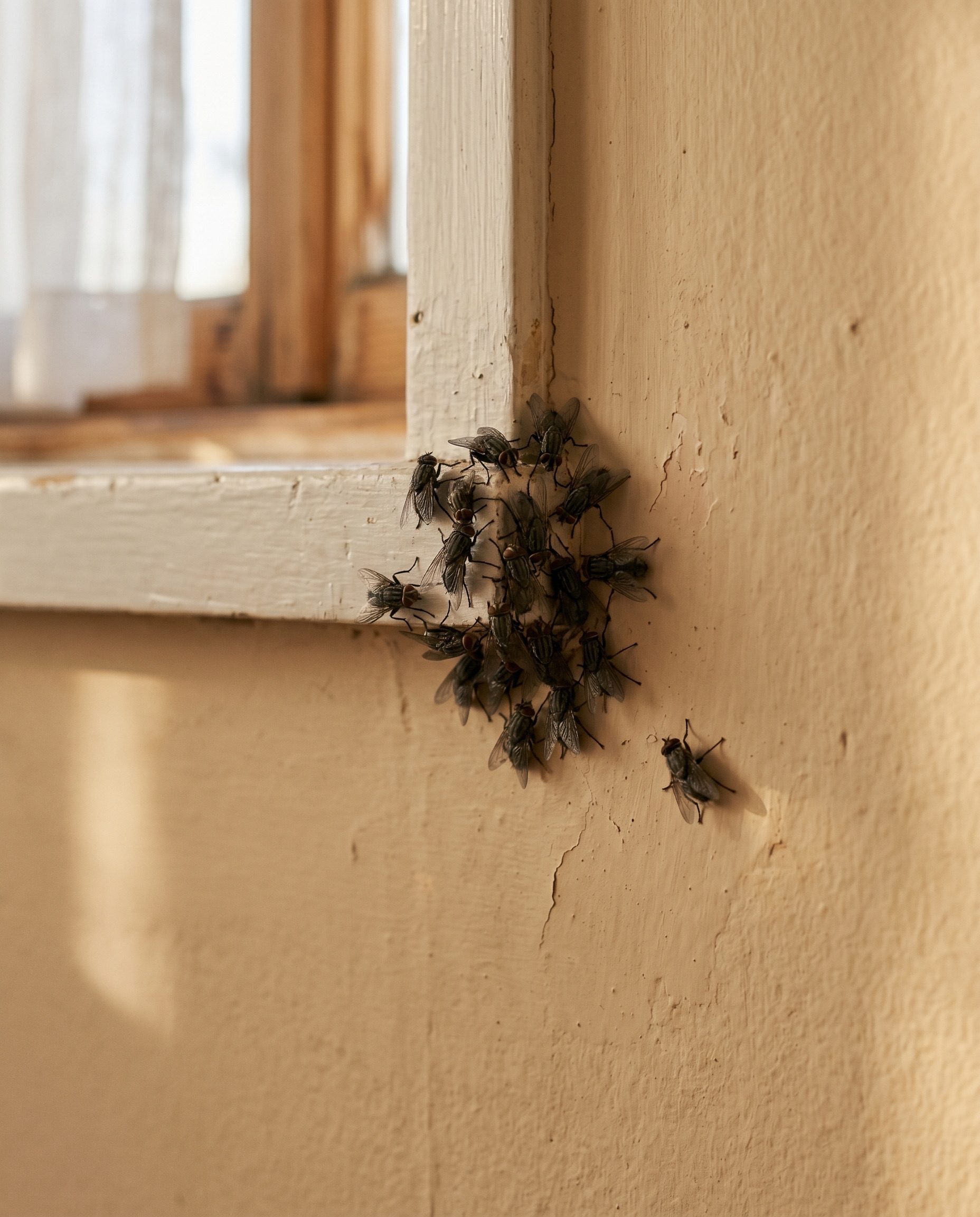
Cluster flies (Pollenia species) are a touch larger than a house fly, dull dark gray, and slow and clumsy when they are cold. The giveaway is golden hairs on the thorax that you can see up close, and the way they cluster, hence the name. In late summer the adults look for a warm, sheltered place to overwinter and drift toward the sunny side of buildings, then slip in through gaps around windows, under eaves, behind fascia, and around utility penetrations.
Through winter they stay dormant, but a warm spell or your furnace heat wakes some of them, and they head for the brightest spot in the room, which is almost always a window. That is why you find them droning at the glass on a mild January afternoon. If you are not certain these are cluster flies and not stink bugs, boxelder bugs, or lady beetles, our fall invader ID guide shows all four side by side so you can match yours before you spend a thing. The four behave alike enough that the same seal-it-out plan works for every one of them.
Seal them out before fall
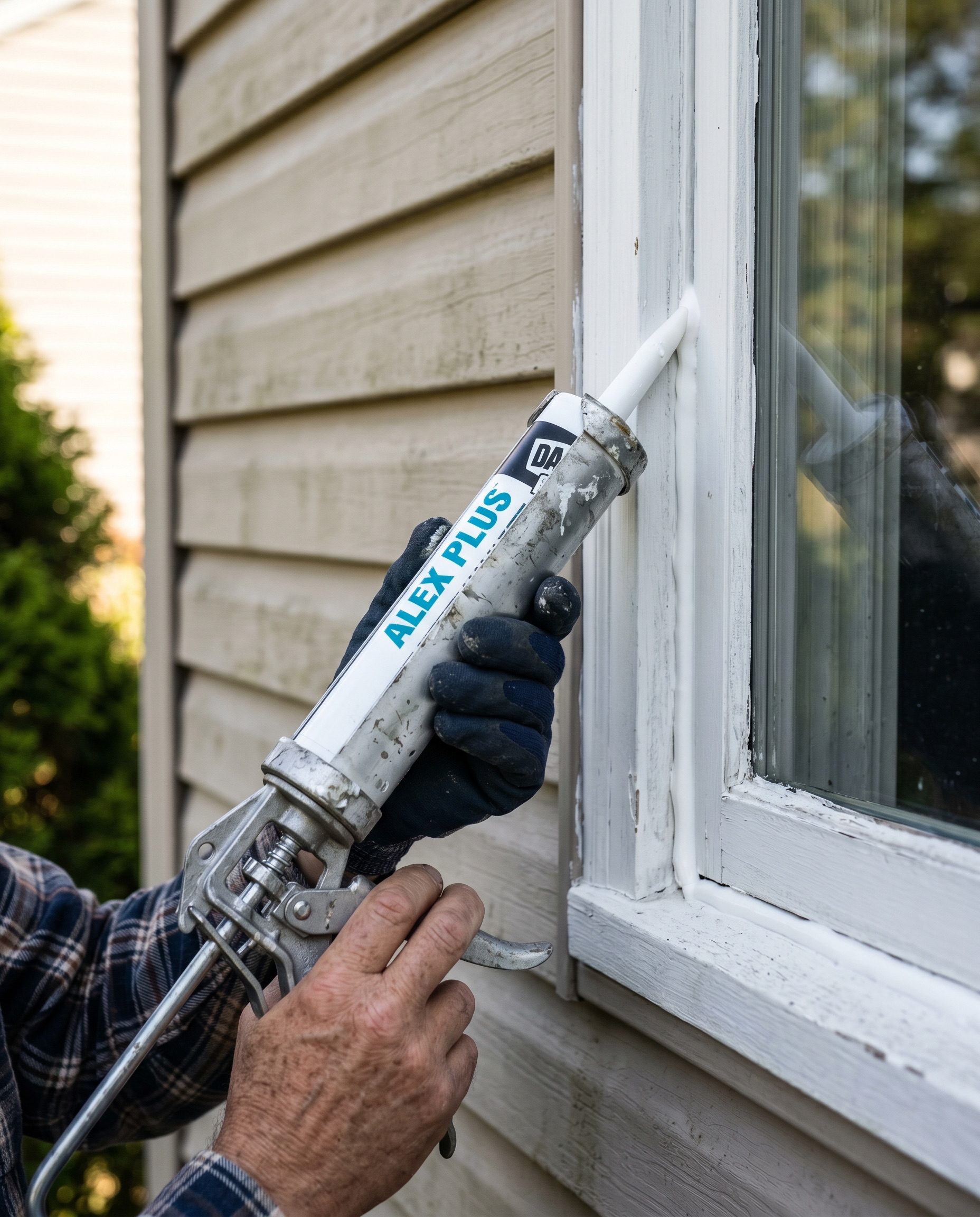
This is the move that actually solves the problem, and the timing is everything: it has to happen before the flies move in, which means late summer through early fall, not in the middle of winter when they are already inside. Walk the sunny south and west sides of the house and look for every place a fly-sized gap exists, because that is where they enter. The work mirrors University of Minnesota Extension’s guidance on overwintering boxelder bugs, which leads with sealing rather than spraying for the very same reason.
Caulk the gaps around window and door frames, where the trim meets the siding, and around any pipe, cable, or dryer vent that passes through an exterior wall. Add or repair screens on attic vents, gable vents, and soffit vents, because those are the highways into the attic. Fit door sweeps and replace torn weatherstripping. Check where the chimney meets the roofline and where dish or AC lines enter. This is patient, unglamorous work, but a house sealed in September has almost no flies in January. For a room-by-room checklist of every entry point, our fall pest-proofing walkthrough covers the order to do it in.
What to do once they are inside
If the flies are already in the wall this winter, you have missed the sealing window for this year, so the job now is cleanup, not extermination. The right tools are a vacuum and a trap, in that order.
| Situation | Best approach | Watch out for |
|---|---|---|
| Flies at the window now | Vacuum them off the glass and sill | Empty the canister outside so they do not crawl back |
| Steady trickle all winter | Window fly trap on the sunny panes | They are coming from the wall; do not spray indoors |
| Heavy yearly invasion | Exterior perimeter spray in early fall, then seal | Outside walls only, follow the label, never indoors |
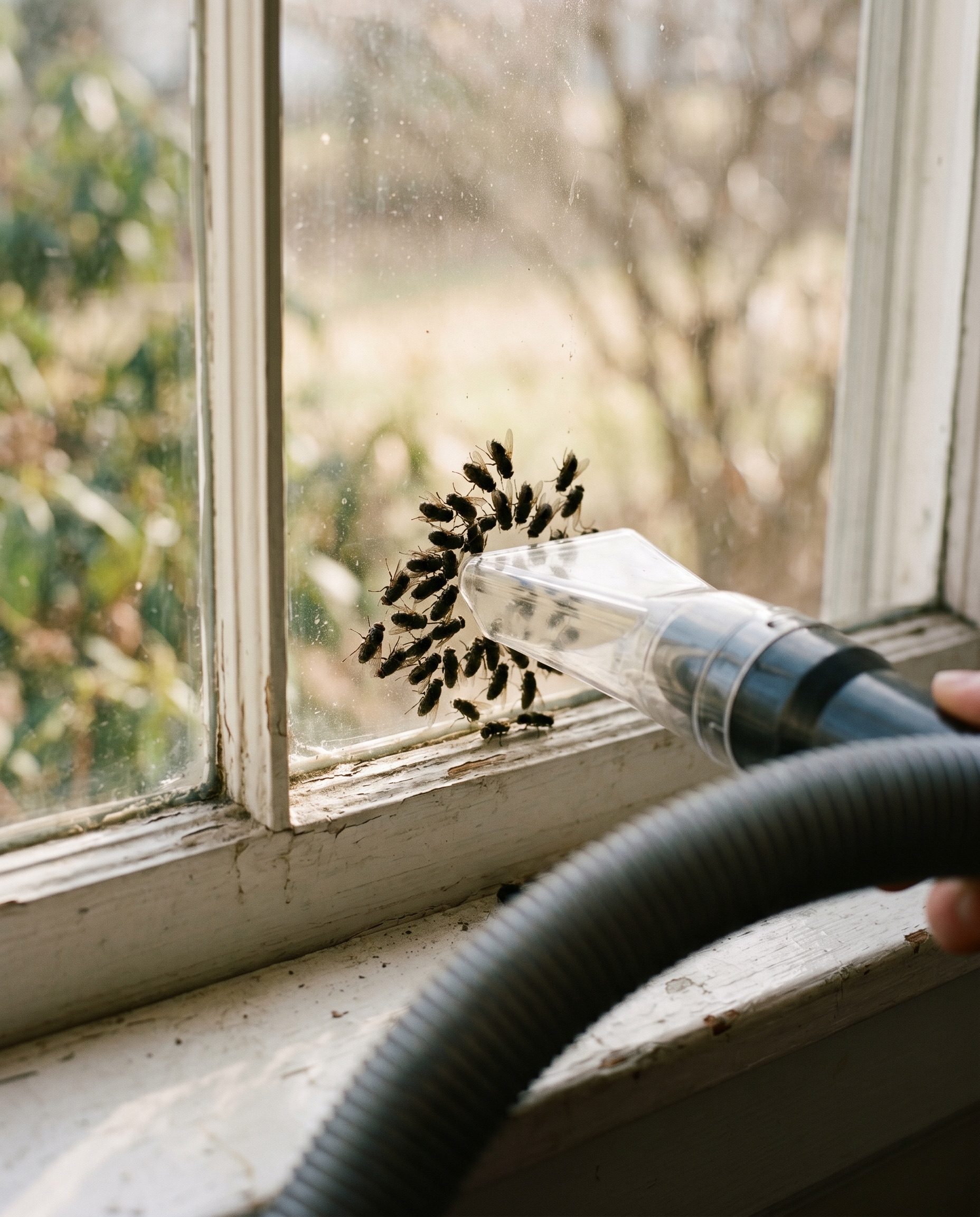
Vacuum the flies off the windows and sills as they appear, then empty the canister or bag outside so they cannot revive and crawl back. A vacuum is also why crushing is a mistake: the same reason vacuuming beats crushing for the lady beetles that invade the same way applies to cluster flies, because squashing them smears greasy spots and can stain paint and curtains. Set a window fly trap at the brightest pane to catch the steady trickle without lifting a finger, and our window and indoor fly trap picks cover what works at the glass for these slow winter fliers.
The one chemical step that earns its place is an exterior treatment of the sunny walls in early fall, timed for just before the flies move in. Use only a product labeled for exterior surfaces and overwintering pests, and follow the EPA’s guidance on safe, IPM-first pest control, since under federal law the product label is the law. Spray outside only, never indoors; keep children and pets off the treated walls until they are dry; and if anyone is exposed, contact a doctor or your local poison control center. For the lightest-touch version of this, the exclusion-first approach research consortiums recommend for fall invaders puts sealing ahead of any spray, and so should you.
When to call a pro
Most cluster fly problems are a homeowner job: seal in fall, vacuum and trap in winter. Call a licensed pest control professional when the invasion is severe year after year despite correct sealing, when the entry points are high on the structure or unsafe to reach, or when you want the early-fall exterior treatment applied by someone with the right equipment and a labeled professional product. A pro can also pinpoint entry routes you missed. There is no emergency here, so take your time choosing someone; these flies are a nuisance, not a hazard.
Common questions
What kills cluster flies instantly?
A vacuum is the fastest thing for the flies you can see, and it does not smear them the way swatting does. There is no spray that clears them for good, because the ones at the window are a fraction of the population sitting inside your walls. The lasting answer is sealing the house before fall, not a quick-kill product.
Do cluster flies bite or carry disease?
No. Cluster flies do not bite people or pets, do not sting, and are not known to spread disease. The larvae develop in earthworms outdoors, so they are not breeding in your trash or food. They are purely a nuisance when they gather at windows in winter.
Why do they keep coming back every winter?
Because they are emerging from inside your own walls and attic, not flying in fresh. The flies that got in last fall overwinter in the structure and reappear on warm days. Sealing entry points before the next fall is what finally breaks the cycle.
Should I spray inside my walls?
No. You cannot reach the flies effectively, and dead flies left in a wall void attract carpet beetles that then damage fabrics and stored goods. Keep the chemistry outside on the walls in early fall and handle the indoor strays with a vacuum and a trap.
When is it too late to seal?
Once the flies are already overwintering inside, sealing this winter will not evict them, though it still helps for next year. Plan the real sealing work for late summer through early fall, before they move in.
Final verdict
Cluster flies are a sealing problem dressed up as a spray problem. The population that matters is inside your wall voids and attic, where no indoor insecticide can reach it, so the flies droning at the window are just the few that woke up. Do the free work first: vacuum them off the glass, empty the canister outside, and seal every fly-sized gap around windows, vents, and eaves before fall arrives. Hang a window trap for the winter trickle, and if you get a heavy invasion every year, treat the sunny exterior walls once in early fall and skip the indoor spraying and the crushing entirely. Seal in September and your January windows stay quiet.
Next steps:
– Run the room-by-room sealing checklist in our fall pest-proofing walkthrough.
– Make sure you have the right bug with the fall invader ID guide.
– Pick a trap for the winter trickle from our window and indoor fly trap picks.