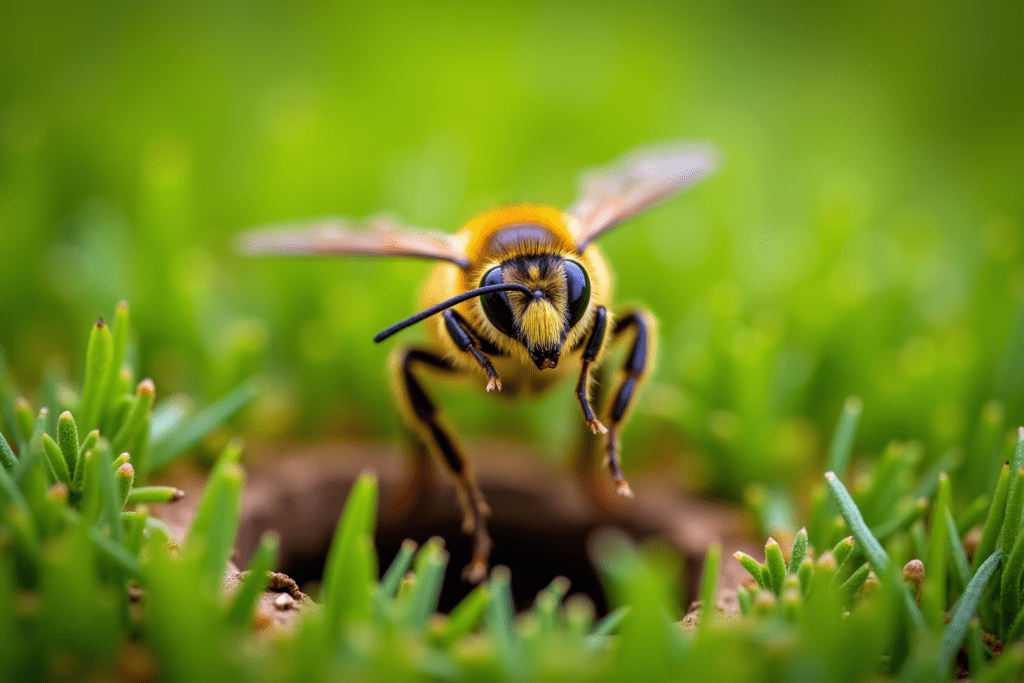
Finding yellow jackets around your patio, trash cans, or siding can turn a normal afternoon into a stressful one fast. To get rid of yellow jackets, you need two things: the right ID (they are wasps, not bees) and a plan that matches the nest location. This guide walks you through safe, practical yellow jacket control – from spotting flight paths and choosing the best treatment time to using traps, sanitation, and (when needed) professional removal.
Quick answer: how to get rid of yellow jackets (fast, safely)
Use this snippet-friendly checklist to get rid of yellow jackets with the least risk:
- Confirm it’s yellow jackets: smooth-bodied, bright yellow and black, fast direct flight, strongly attracted to meat and sugary drinks.
- Find the nest type:
- Ground nest (small soil hole with traffic)
- Aerial paper nest (hanging or attached under eaves/branches)
- Wall void nest (wasps entering a crack, vent, or siding gap)
- Treat at the safest time: dusk/dawn or late evening when most workers are inside, as recommended by the Oregon State University Extension yellowjacket guide.
- Match the product to the nest:
- Ground nests: labeled insecticidal dust (often most effective)
- Exposed aerial nests: long-range aerosol wasp spray
- Wall void nests: usually call a pro (risk of driving wasps indoors)
- Reduce attractants immediately: cover food, tighten trash lids, rinse cans, and remove fallen fruit.
Yellow jacket identification: don’t treat bees like wasps
Misidentification is the #1 reason DIY control fails. Yellow jackets are social wasps (family Vespidae), not bees, and they behave differently around food and nests. The Oregon State University Extension notes that yellow jacket colonies can build to hundreds to thousands of workers, which explains why a “small problem” can suddenly feel big in late summer.
Quick ID chart (yellow jacket vs bee vs paper wasp)
| Feature | Yellow jacket | Honey bee | Paper wasp |
|---|---|---|---|
| Body texture | Smooth, shiny | Fuzzy | Smooth, long-legged |
| Shape | Stocky with narrow waist | More rounded | Very slender |
| Flight | Fast, direct | Slower, “busy” | Floaty, legs dangle |
| Food interest | Meat, soda, sweets | Flowers/nectar | Some sweets, mostly insects |
| Nest style | Often underground or in voids | Wax comb in cavities | Open comb under eaves |
Why late summer feels worse
If yellow jackets seem “meaner” in August and September, you’re not imagining it. Colonies are near peak size, and natural foods often decline. Workers shift into aggressive scavenging mode, which is why they show up at grills, outdoor trash, and picnics. Think of it like a crowded restaurant running low on supplies – competition rises, and they take more risks.
Actionable takeaway
Before you spray anything, watch their behavior for 2-3 minutes. If they repeatedly land on meat, soda cans, or trash, and you see smooth-bodied wasps, you’re likely dealing with yellow jackets and not pollinating bees.
Find the nest first (it changes everything)
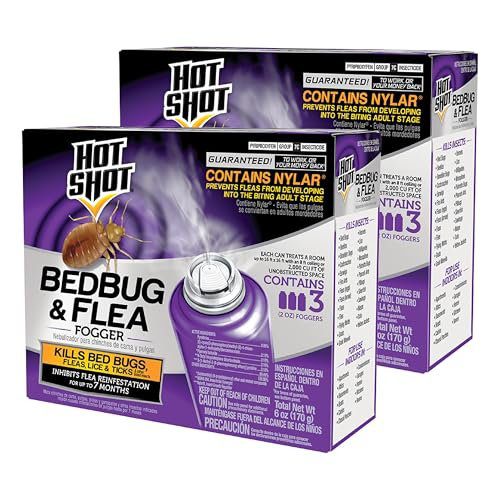
Hot Shot BedBug And Flea Fogger, Inhibits Flea Reinfestation, 2 Ounce Cans, 6 Count
This aerosol spray is effective for treating exposed aerial nests of yellow jackets, making it suitable for those looking to eliminate wasps safely from their outdoor spaces.
Most people try to solve yellow jacket problems where they see the insects – on the deck, near the pool, around the trash. But lasting control comes from locating the nest or at least identifying the nest type. Yellow jackets are efficient commuters. If you see several individuals in the same area, there’s often a nest within a few yards to a few hundred yards, depending on food availability.
A safe way to locate the entrance
Stand back 10-20 feet and look for a “flight lane” – a consistent in-and-out path. The Home Depot’s yellow jacket guidance describes this same approach: observe traffic and follow returning wasps from a safe distance.
Use this step-by-step:
- Pick a calm time (morning is often best for observation).
- Watch one wasp at a time until it flies straight to an entry point.
- Mark the spot with a small flag or rock – do not stand directly over it.
- Count traffic for 30 seconds:
- 1-5 entries: small or developing nest
- 6-15 entries: established nest
- 15+ entries: large, high-risk nest
Nest location clues (mini visual guide)
- Ground nest: pencil-sized hole in soil, mulch, or lawn; steady traffic; often near retaining walls, shrubs, or landscape timbers.
- Wall void nest: repeated entry into a siding gap, soffit seam, dryer vent area, or around utility penetrations; buzzing inside walls.
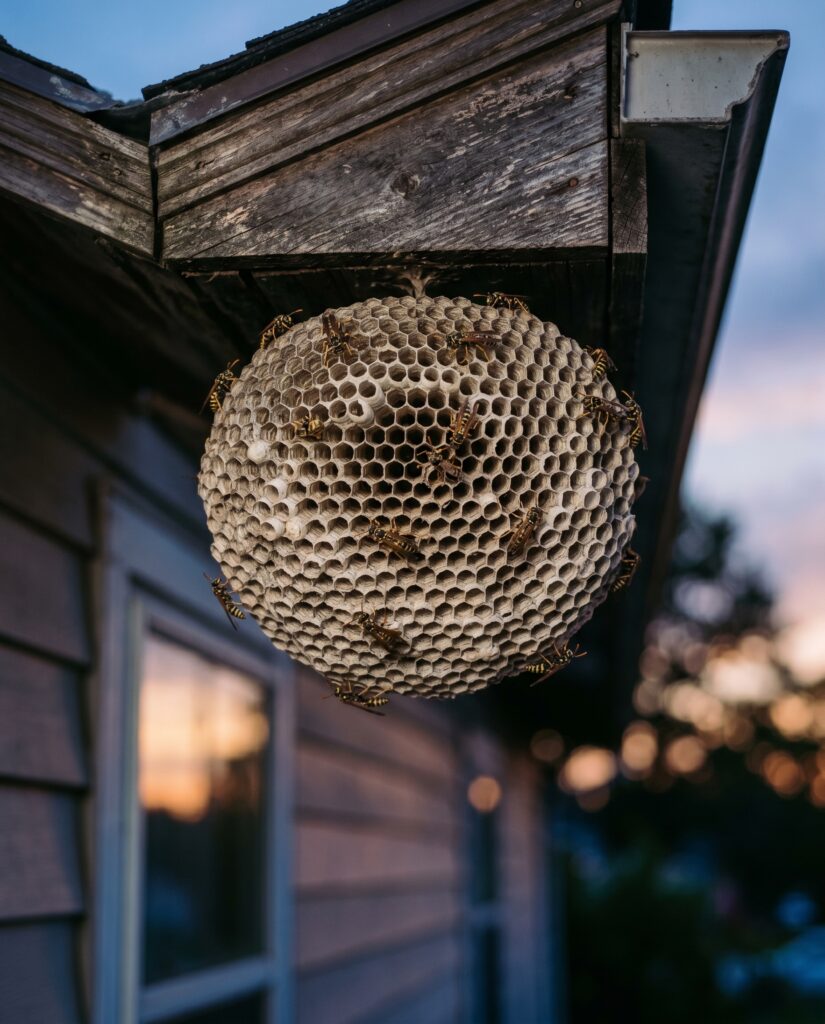
- Aerial nest: visible paper nest in a shrub, tree, under eaves, or in a shed corner (some yellow jackets do this, though many species prefer cavities).
Actionable takeaway
If you cannot clearly see or access the entrance, treat that as a “pro” situation. Hidden nests are where stings and indoor invasions happen most often.
How to get rid of yellow jackets: the safest methods by nest type
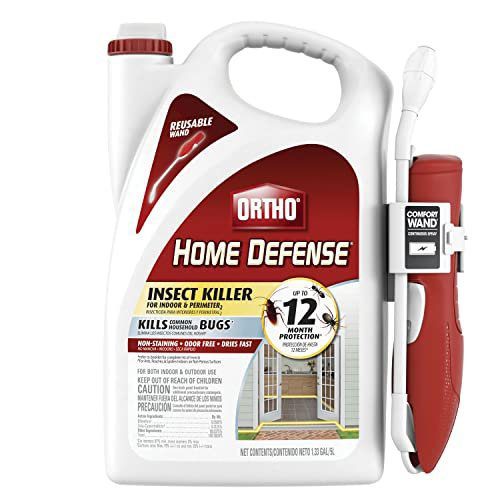
Ortho Home Defense Insect Killer for Indoor and Perimeter2 with Comfort Wand – Ready-To-Use Bug Spray, Kills Ants, Cockroaches & Spiders, 1.33 gal.
This insect killer can be used for various pest control needs, including yellow jackets, and is suitable for ground nests as well as other outdoor areas.
This is the point where strategy matters more than bravery. Entomologists and extension experts consistently recommend treating at dusk/dawn or late evening when activity is lower and more workers are inside the nest. The Oregon State University Extension and Ask Extension both emphasize timing, nest type, and following the label.
Before you treat: a short safety checklist
- Wear long sleeves, long pants, closed shoes, and gloves.
- Use eye protection. Stings near the eyes are a serious risk.
- Keep kids and pets indoors.
- Plan your exit route – treat, then calmly leave the area.
- Never block the entrance with your body. Treat from the side.
Ground nests (most common): dust is often the best tool
For underground nests, extension-style guidance often points to insecticidal dust/powder labeled for yellow jackets. Dust can be carried deeper by the wasps, reaching more of the colony than surface sprays.
Ground-nest treatment steps (visual checklist):
- Treat at dusk or very early morning.
- Stand off to the side of the entrance.
- Apply dust according to the product label (the label is the law).
- Leave the area immediately and avoid mowing nearby for 24-48 hours.
- Recheck activity the next day from a distance.
Common mistake: flooding the hole with liquid. That can cause wasps to boil out defensively and may not reach the nest chambers.
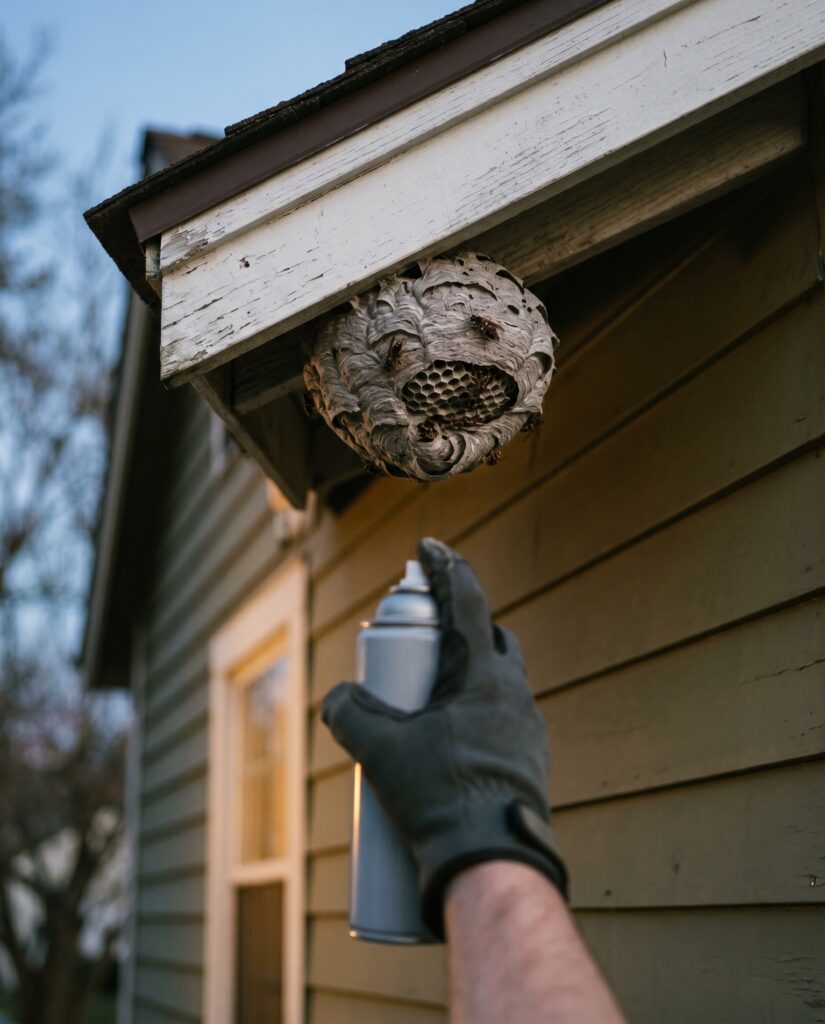
Exposed aerial nests: long-range spray can work
If you have an exposed paper nest on a branch or under an eave and you can maintain distance, a long-range aerosol labeled for wasps can be effective.
Use a product designed for stinging insects and apply it when most workers are home. For product-selection help, see our guide to Top Long-Range Wasp Sprays.
Aerial-nest spray steps (mini flow):
- Nighttime treatment
- Aim for the nest opening and surface
- Spray for the label-listed duration
- Leave and reassess the next day
Wall void nests: usually a professional job
Yellow jackets nesting inside wall cavities, attics, or soffits are a different category. Treating the wrong way can push wasps into living spaces or leave you with a lingering odor problem if the colony dies inside the wall.
Call a licensed professional if:
- The entry point is inside a wall void or near HVAC/vents
- You hear buzzing indoors
- The nest is near bedrooms, nurseries, or high-traffic areas
For broader safety guidance that applies to many wasps, read How to Safely Get Rid of a Wasp Nest.
Actionable takeaway
Match your method to the nest: dust for ground nests, spray for exposed nests, and professional removal for void nests. That one decision prevents most DIY failures.
Traps and baits: helpful, but not a magic switch
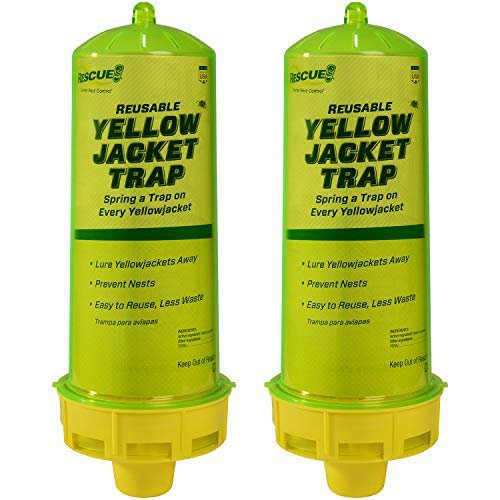
RESCUE! Reusable Yellowjacket Trap – 2 Pack
These traps are specifically designed to capture yellow jackets, making them a practical solution for reducing their population around your home.
Traps can reduce the number of foragers in a specific area, which is great for patios, pools, and outdoor dining. But traps rarely eliminate an established nest by themselves. The goal is pressure reduction: fewer workers harassing your space while you remove attractants and address the nest.
The key detail many people miss is that bait preference changes by season. Guidance summarized by Pesticide.org’s yellowjacket management article aligns with what many backyard observers notice:
- Spring and early summer: colonies need protein for larvae.
- Late summer and fall: workers seek sugars/carbohydrates.
Seasonal bait guide (quick visual)
| Season | What they want most | Trap bait idea |
|---|---|---|
| Spring to early summer | Protein | Tuna, chicken, deli meat (replace often) |
| Late summer to fall | Sugar | Fruit juice, jam water, soda-like sweet baits |
If you want a deeper comparison of trap styles and placement, see Best Wasp Traps for Your Yard.
Trap placement that actually helps
- Place traps 10-20 feet away from where people sit. Otherwise, you can pull wasps toward you.
- Put traps near trash areas or property edges, not next to the grill.
- Use multiple traps for larger yards, spaced apart.
Actionable takeaway
Use traps to lower day-to-day annoyance, especially at outdoor meals. If you still see a consistent flight path, focus on finding and treating the nest.
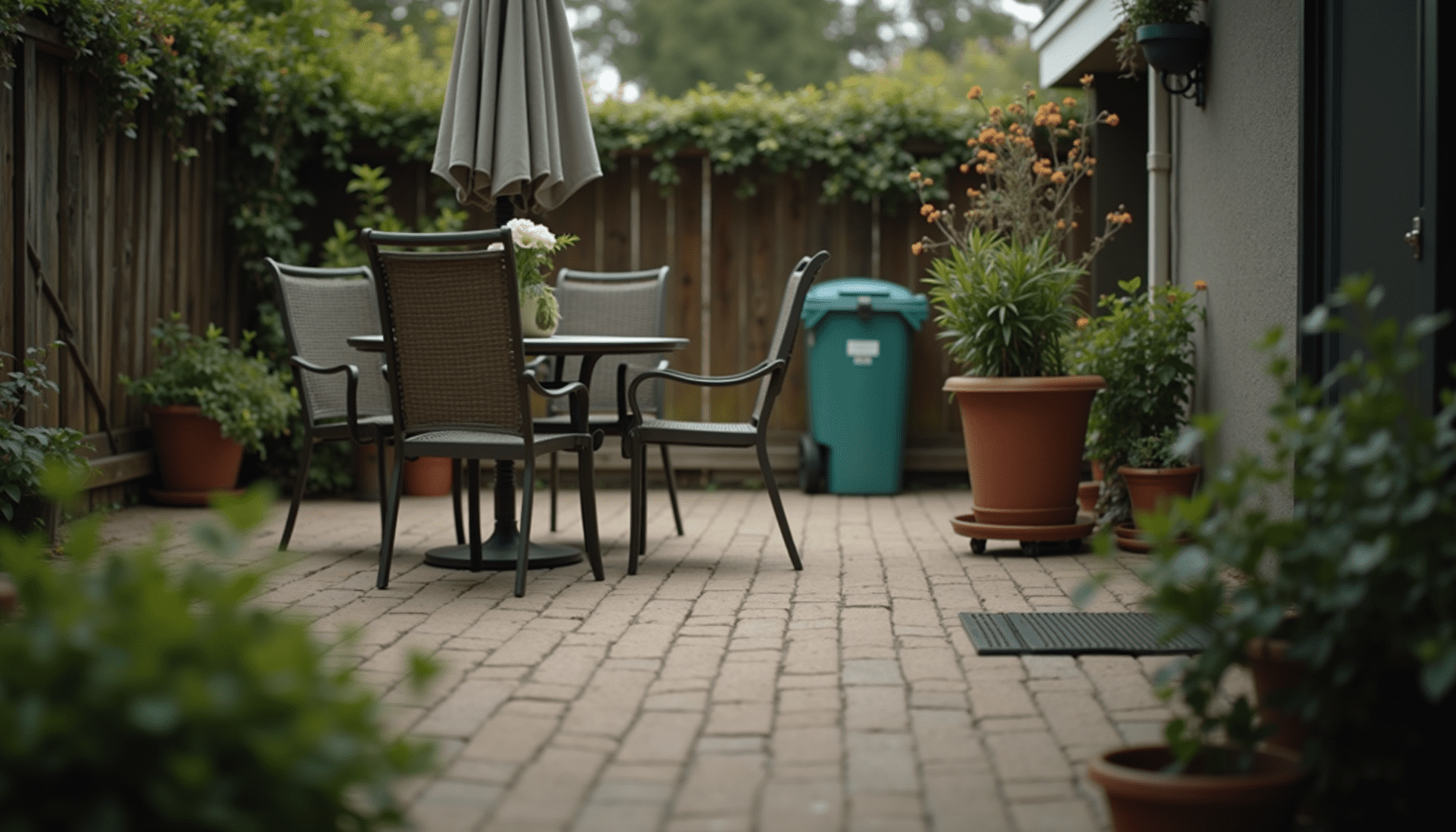
Prevention and yard sanitation (the part that keeps them from coming back)
Yellow jacket control is much easier when your yard is not offering easy calories. In late summer, a single open trash bag or recycling bin can feed a lot of workers. Prevention is also the most family-friendly approach when you want fewer stinging insects without immediately reaching for pesticides.
A “yellow jacket unattractive” checklist (visual)
- Trash: use tight lids, rinse cans, and clean sticky residue on bin rims.
- Food outdoors: keep plates covered; bring food inside quickly after eating.
- Drinks: use cups with lids; rinse bottles and cans before recycling.
- Pet food: feed indoors or pick bowls up immediately.
- Fallen fruit: collect daily under apples, pears, plums, and figs.
- Standing water: fix leaky spigots and empty shallow containers.
Pesticide.org emphasizes non-chemical tactics like sanitation and avoiding behaviors that trigger defensive responses (like swatting). Those steps sound simple, but they reduce conflict fast.
Exclusion: stop nests before they start
Yellow jackets often explore cavities and protected voids. A few simple repairs can prevent nesting in the first place:
- Seal small gaps with exterior-grade caulk (especially around utility lines).
- Repair damaged screens and vents.
- Check soffits, fascia boards, and shed corners for openings.
Tip: Do exclusion work in early spring when nests are not yet established. Sealing an active entry point can trap wasps inside and create indoor problems.
Actionable takeaway
If you do only one prevention step today, make it trash control. Clean bins and tight lids remove one of the strongest attractants in suburban yards.
Mistakes, myths, and when to call a professional
Yellow jackets are not “out to get you,” but they will defend the nest. Many stings happen because people accidentally stand on a ground entrance, bump a shrub nest, or try a risky home remedy. Avoiding a few common mistakes improves safety and results.
Common myths to ignore
Myth: Yellow jackets are bees.
They are wasps. They can sting repeatedly and often scavenge aggressively around food.
Myth: Traps alone eliminate a nest.
Traps help, but they usually do not destroy an established colony.
Myth: More spray is always better.
Overapplying increases exposure risk and does not guarantee better control. Correct timing and placement matter more, as emphasized in extension-style guidance like Ask Extension.
Myth: If you can’t see the nest, it isn’t serious.
Wall void and underground nests can be the most hazardous because you discover them by surprise.
When professional yellow jacket removal is the safest choice
Hire a licensed pest management professional if any of the following are true:
- The nest is inside a wall, attic, soffit, or roof void
- The nest is large or traffic is heavy (15+ entries per 30 seconds)
- The nest is in a high-risk location (near doors, play areas, or walkways)
- Anyone in the home has a history of severe allergic reactions
- You cannot confidently identify the insect or the nest type
A professional can also help prevent follow-up issues like wasps entering living spaces or repeated nesting in the same structural void.
Actionable takeaway
If you feel unsure at any point, stop. Yellow jacket control is one of the few common DIY pest tasks where “pushing through” can end badly.

FAQ: yellow jacket control questions homeowners ask most
What time of day is best to treat a yellow jacket nest?
Dusk, dawn, or late evening is best because fewer workers are flying and most are inside the nest. This timing is recommended by the Oregon State University Extension.
Will yellow jackets reuse an old nest next year?
Typically, no. Most yellow jacket colonies die off with cold weather, and new queens start new nests in spring. However, they may nest in the same general area again if conditions stay attractive.
How far will yellow jackets chase you?
It varies by species and how close you are to the nest. If you trigger defensive behavior, move away quickly and steadily to get distance from the nest area.
Should I plug a ground nest hole?
No. Plugging can force wasps to find another exit, sometimes closer to people, or increase defensive behavior. Treat appropriately or call a pro if the nest is in a risky spot.
Are “natural” home remedies reliable?
Some home remedies circulate online, but they are inconsistent and can increase sting risk. If you want lower-chemical options, focus on sanitation, exclusion, and properly placed traps as described by Pesticide.org.
Conclusion
To get rid of yellow jackets effectively, start by identifying the insect and locating the nest. Then match your approach to the nest type: dust for ground nests, long-range spray for exposed aerial nests, and professional help for wall void colonies. Combine that targeted treatment with traps and strong sanitation, especially in late summer when colonies peak and scavenging ramps up.
Next step: if you’re dealing with heavy patio activity, set up traps using our Best Wasp Traps for Your Yard guide. If you’re facing a visible nest, compare options in Top Long-Range Wasp Sprays.
As an Amazon Associate, I earn from qualifying purchases. Product recommendations are based on real reviews and independent research.