
Rodent gnawing leaves paired parallel grooves from the twin upper and lower incisors. Mouse grooves are fine and roughly 1 mm across; rat grooves are broader, deeper and around 2 to 4 mm. Squirrels remove material in larger pieces. The most useful thing about gnaw marks is not identification but dating: fresh gnawing exposes pale, clean material against a weathered surface, and it darkens within weeks.
- Paired grooves, not single scratches. Two teeth work together.
- Pale means recent. That single observation beats counting droppings.
- Gnawing at an opening means it is being enlarged and is in current use.
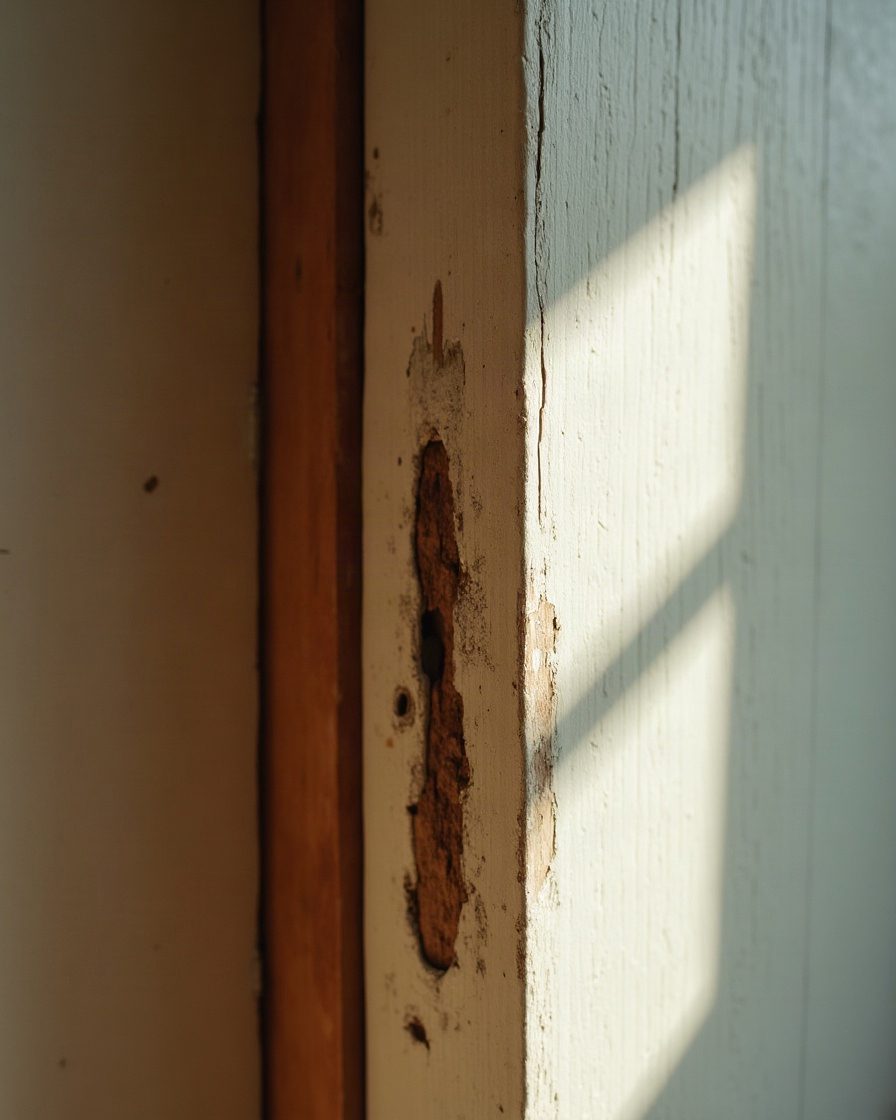
Gnaw marks are the most underused evidence in a rodent problem. Droppings tell you an animal was there. Gnawing tells you where it is getting in, what it is working on, and roughly when it was last active, and the last of those is the hardest thing to establish by any other means.
What the marks look like
Rodents have two upper and two lower incisors that meet and work as a pair, so the damage comes as two parallel grooves running alongside each other, not as a single scratch. On soft material such as cable insulation the grooves are clean channels; on hard plastic or seasoned timber they are shallower scrapes.
Groove separation scales with the animal.
| Animal | Groove width | Typical damage |
|---|---|---|
| House mouse | about 1 mm | fine, shallow, localised |
| Rat | 2 to 4 mm | deep, broad, material removed |
| Squirrel | broad, irregular | whole sections torn away |
UC IPM’s guides to the house mouse and to rats cover the behavioural differences that produce those patterns.
Dating the damage, which is the real value
This is the point of the article.
Fresh gnawing is pale. Cutting into timber, plastic or plasterboard exposes clean material that has not been touched by dust, light or handling. Against a surface that has weathered, been painted, or simply accumulated grime, new damage stands out as a bright patch.
Old gnawing has darkened. Exposed wood greys and takes on dust within a few weeks indoors, faster outdoors. Plastic dulls.
So a single glance separates activity from history, and it does so more reliably than droppings, which persist for years in a dry loft and look much the same throughout.
The confirming test is the same as everywhere else: photograph the damage, note the date, and look again in a week. Any extension of the mark means current activity.
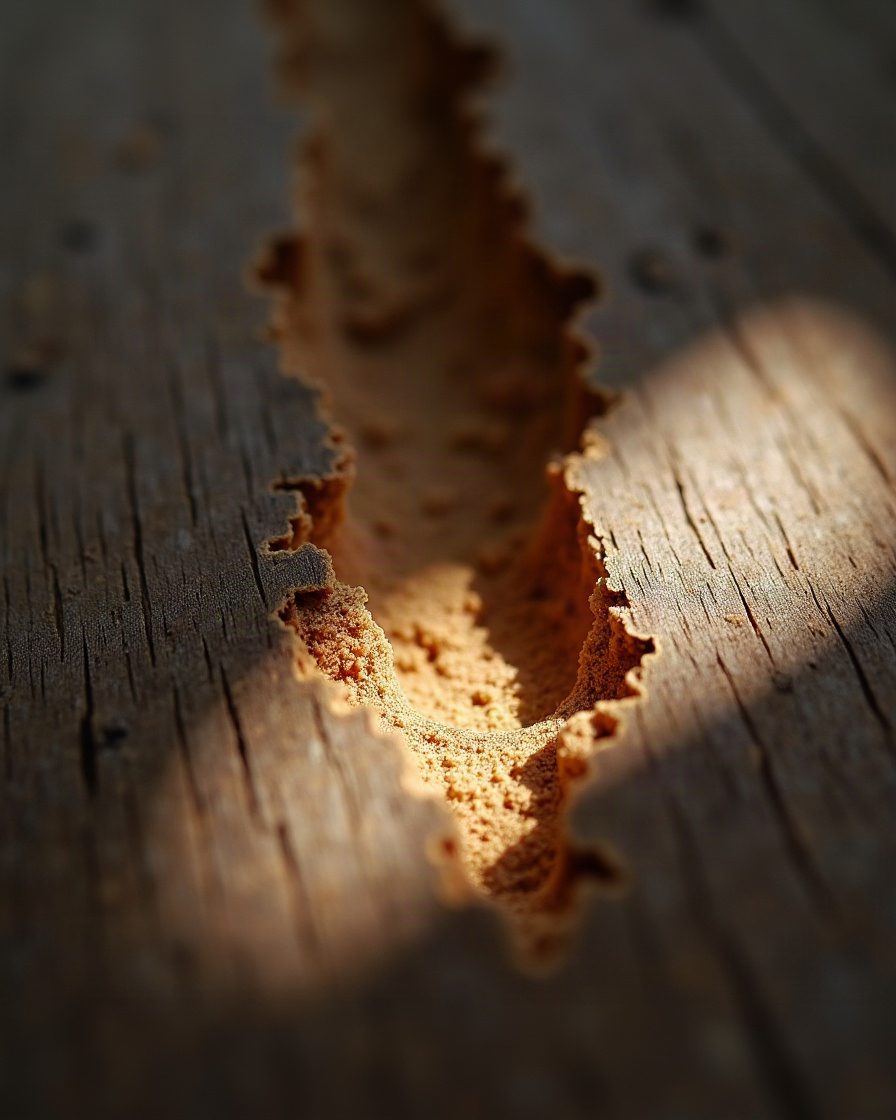
Where to look
Gnawing is not random. It concentrates in three situations.
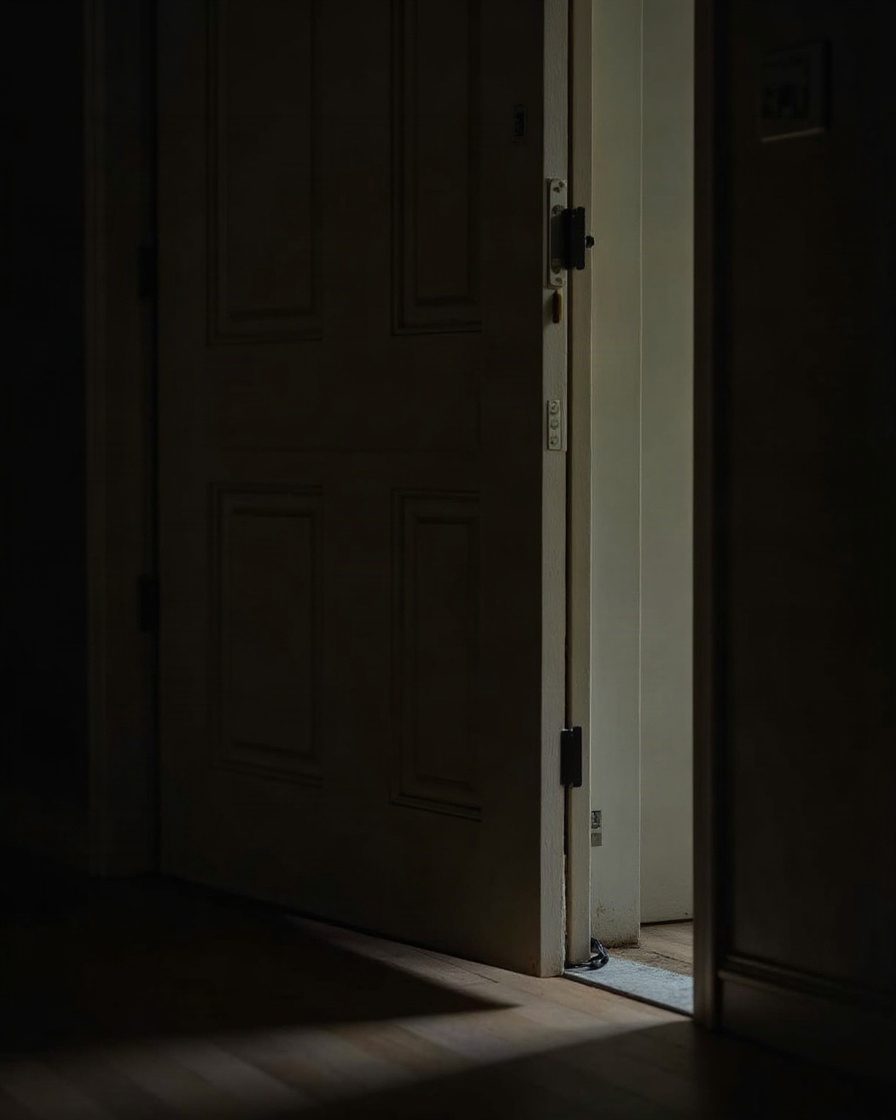
At openings being enlarged. A mouse can pass a gap around 6 mm and a rat around 20 mm, and both will work at anything slightly too small. Look at the bottom corners of door frames, at the edges of air bricks, where pipes and cables pass through walls, at the corners of vents, and at the joint where an extension meets the original building. Gnawing here is the most useful finding of all, because it identifies the entry point rather than merely proving occupancy.
Along travel routes. Wall junctions, joists, the tops of walls in a loft, behind stored goods.
On anything of the right hardness near a nest. Cable, pipework, stored plastic, timber, and packaging.
The last of those is why gnaw marks and other evidence usually appear together, and the droppings chart is the companion piece for identifying the animal from what else is present.
Why they gnaw at all
Rodent incisors grow continuously through life and must be worn down, which is a physiological requirement rather than a preference. The animal will gnaw whether or not it is hungry and whether or not it needs nesting material.
Two practical consequences follow. Removing food sources does not stop gnawing. And a repair made in soft filler will be gnawed through, so exclusion work has to use material the animal cannot cut: steel wool packed tight and sealed over, metal mesh, or sheet metal at vulnerable corners.
What else it damages
Cable, which is the serious one and is handled separately in chewed wires and what to do first. Damaged cable in a concealed space is a fire risk and takes priority over identification.
Structural timber, producing coarse, damp, pulpy debris rather than the dry powders and pellets that insects leave. Sawdust piles indoors separates the four textures.
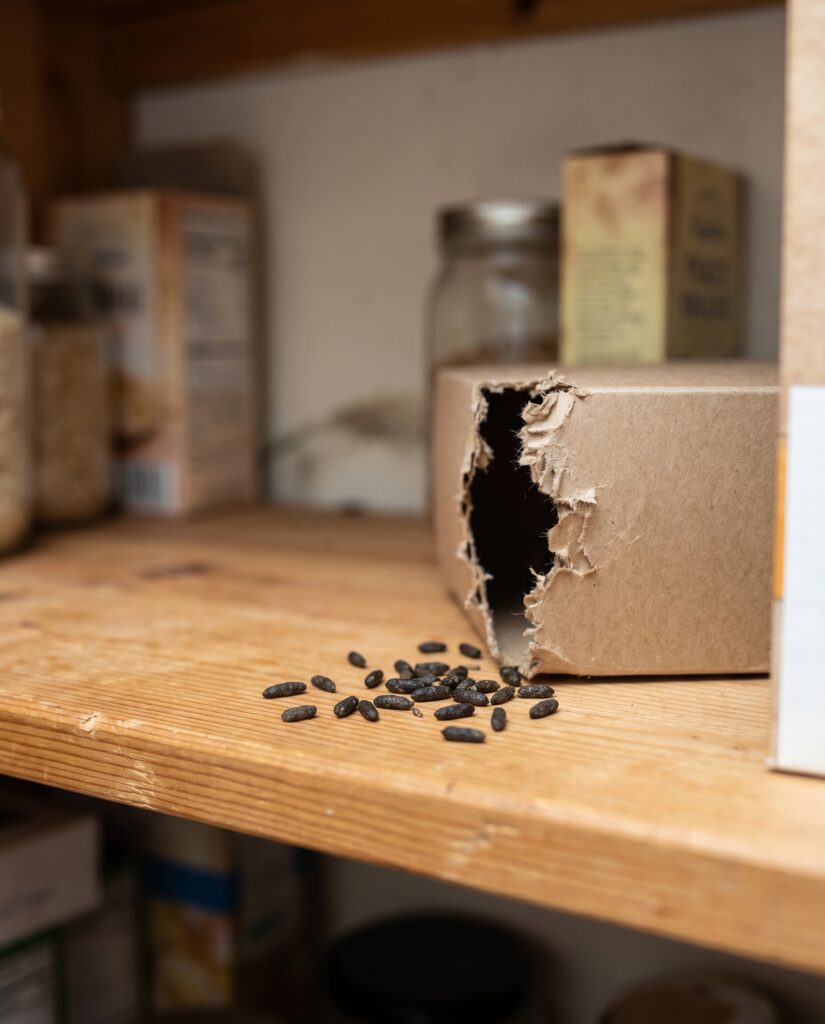
Food packaging, where the signature is a chewed-away corner rather than a pinhole. Damaged food packaging covers the difference between rodent and insect damage to a packet.
Pipework and insulation, both of which produce their own secondary problems.
What is not gnawing
Insect damage in wood produces round holes and dry debris, not grooves. See small holes in wood.
Wear and mechanical damage lacks the paired-groove pattern and usually sits where something rubs.
Pet damage is real and common, and produces broader, less regular marks, generally in accessible places rather than in voids and behind appliances. Location usually settles it.
Common questions
How old is this? Pale and clean is within weeks. Grey, dusty and dulled is older. The photograph-and-wait test converts a guess into an answer in seven days.
Marks but no droppings. Possible if the gnawing is at an entry the animal passes through without lingering. Check further along the route.
They gnawed through a metal-backed filler. Foam and lightweight filler are not barriers. Steel wool or mesh, compressed and sealed over, is.
Does gnawing tell me how many there are? No. One animal produces a great deal of it.
The bottom line
Look for paired grooves, measure the width to size the animal, and then read the colour, because pale material against a weathered surface is the clearest evidence of current activity you will find. Then follow the gnawing to the opening it is enlarging, since that is the thing worth fixing rather than the damage itself.
Pingback: Damaged Food Packaging: Pest Signs in a Pantry