\
\
\
\
You almost certainly cannot identify a hobo spider by looking at it, and neither can most professionals without a microscope. It is a plain brown funnel weaver of the Pacific Northwest, its flesh-rotting reputation is not supported by current evidence, and the funnel web in your basement most likely belongs to a harmless look-alike.
\
- \
- What is normal: Brown, fast-running spiders and funnel-shaped sheet webs in basements and window wells from late summer into fall.
- The red flag: Not the spider itself, but any bite wound that keeps getting worse, with spreading redness, growing pain, or fever. That is a job for a clinician.
- Best move: Skip the panic spraying. Vacuum the webs, set glue boards along the walls, and seal the entry gaps.
\
\
\
\
\
\
 \
\
\
Every August my inbox fills with the same photograph: a brown spider on a basement floor, taken from a respectful distance, with the subject line “hobo spider???” In two decades of looking at spiders professionally, I can count on one hand the confirmed hobos that came from a homeowner photo, and the medical story that made this animal famous has largely fallen apart under scrutiny. Here is what a hobo spider actually is, why eyeball identification is close to impossible, and what to do about basement funnel webs without the fear.
\
\
A related guide worth having to hand: Spider Egg Sac Identification: What’s in That White Ball.
What a hobo spider actually is
\
\
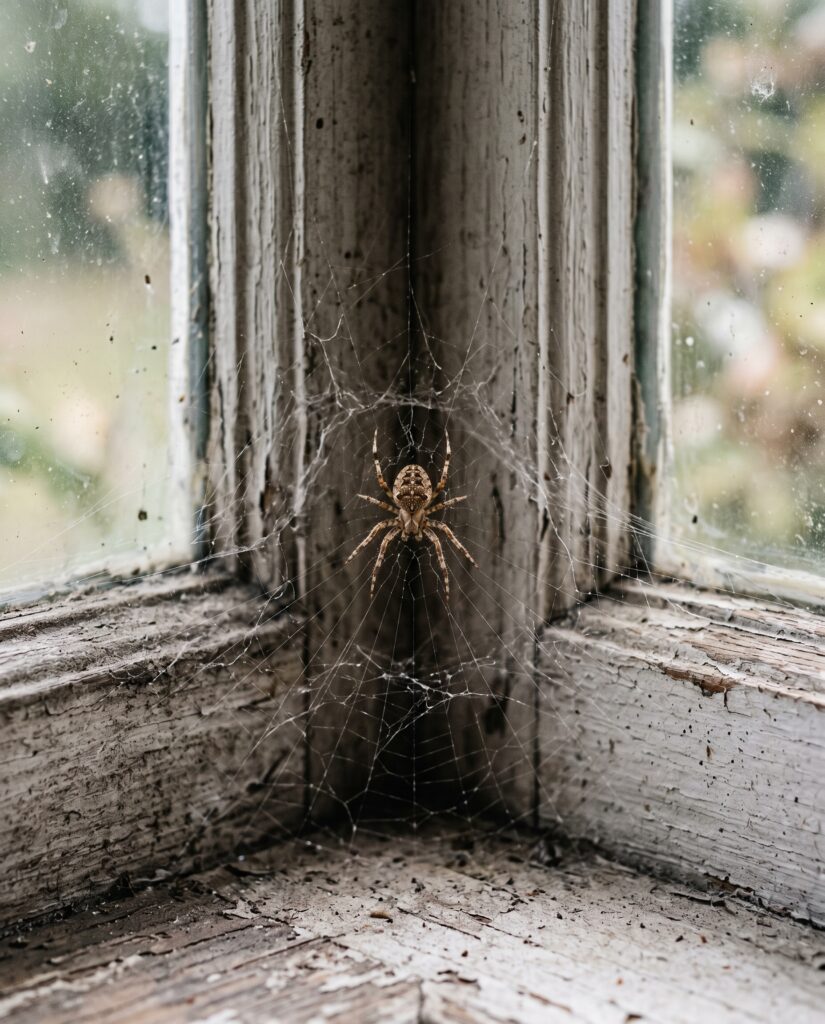
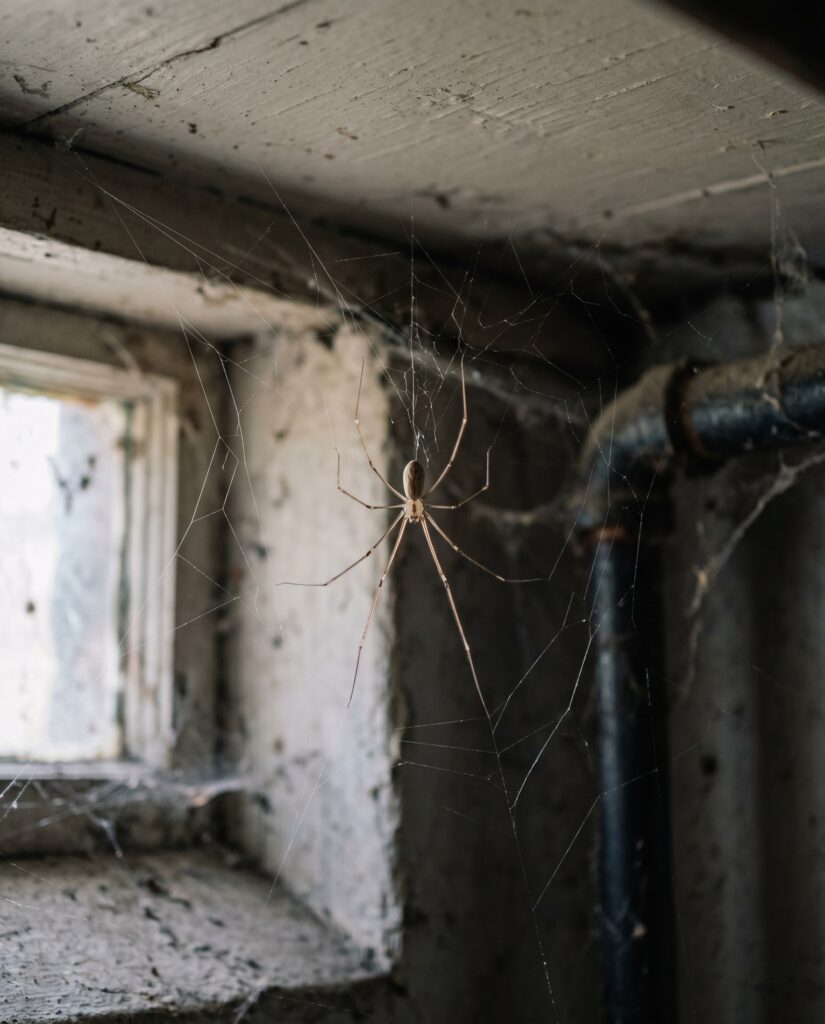
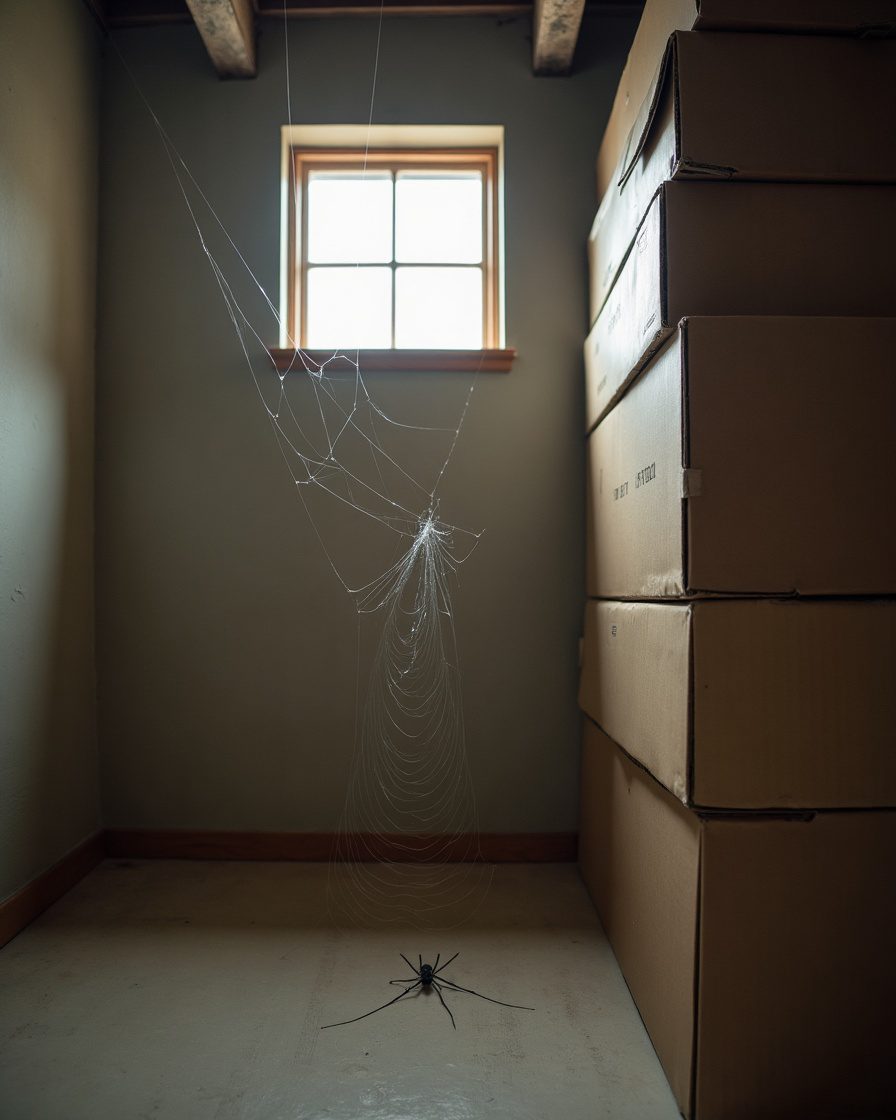
The hobo spider is a European funnel weaver that established itself in the Pacific Northwest, where it lives mostly at ground level: window wells, foundation edges, rock walls, wood piles, and the low corners of basements. It belongs to the family Agelenidae, the funnel weavers, which the University of California’s pest guidance describes as sit-and-wait predators that build funnel-shaped webs near ground level, feeling for the vibrations of insects that blunder onto the silk sheet. That architecture, a flat sheet with a tunnel retreat at one edge, is the most recognizable thing about the family.
\
\
Notice what that description does not include: aggression toward people. The “aggressive house spider” nickname came from the species name agrestis, which is Latin for “of the fields,” not “aggressive.” A hobo spider that runs toward you is a nearly blind ground hunter trying to reach cover. The name was a mistranslation, and it did remarkable damage to this animal’s reputation.
\
\
Geography matters too. Outside the Pacific Northwest and the northern Rockies, the odds that your basement spider is a hobo drop toward zero. The UC IPM Pest Note is explicit that the hobo spider has never been documented in California, despite decades of confident reports. Most of the continent is simply not hobo country.
\
\
Why identification by eye is nearly impossible
\
\
Here is the part that surprises people most. The hobo is a medium-to-large brown spider, roughly one to one and three quarter inches across with legs, with a muted abdominal pattern. That description also fits, almost word for word, several other funnel weavers that live in exactly the same places, plus assorted wandering ground spiders. There is no field mark you can trust. Not the chevrons, not the leg color, not the speed, not the size.
\
\
Reliable identification comes down to fine anatomy, above all the reproductive structures, examined under magnification by someone who knows the group. That is why diagnostic labs want the spider, not a photo, and why the great majority of homeowner “hobo” submissions turn out to be look-alikes. If a professional needs a microscope, a homeowner glancing at a fast brown spider on a basement wall is guessing.
\
\
The look-alikes you are probably actually seeing
\
\
Three groups account for most “hobo spider” sightings, and it helps to know them by behavior as much as by looks.
\
\
The first is the grass spider, the classic North American funnel weaver. The University of Kentucky’s guide to spiders around homes notes that funnel weavers resemble wolf spiders but carry a pair of long, distinctive silk-spinning tubes at the rear of the abdomen, and that they build their sheet webs in shrubbery, grass, and debris, seldom coming indoors. Those long spinnerets, trailing like two little tails, are one of the few useful at-a-glance clues in this whole story, and they point to grass spider, not hobo.
\
\
The second is the giant house spider, a larger cousin that thrives in the same Pacific Northwest basements and may actually crowd hobos out of houses, so a big dramatic funnel weaver indoors is, if anything, a point against the hobo diagnosis.
\
\
The third is the wolf spider, which builds no capture web at all. Missouri’s Department of Conservation describes wolf spiders as gray-to-brown athletic hunters that run their prey down rather than spinning webs, and it states plainly that their bites are harmless. A fast brown spider sprinting across an open floor with no web nearby is far more likely a wolf spider passing through. Our profile of the house centipede, that other alarming basement sprinter, covers a similar case of a scary-looking animal that is actually on your side.
\
\
| Spider | Web | Useful clue | Realistic risk |
|---|---|---|---|
| Hobo spider | Funnel-shaped sheet web at ground level | None by eye; needs examination under magnification | Bite evidence weak; not considered medically significant by current research |
| Grass spider | Funnel web in grass, shrubs, siding corners | Two long spinnerets trailing like tails | Harmless; rarely indoors |
| Giant house spider | Funnel web in basements, garages | Very large; common indoors in the Northwest | Harmless; may displace hobos |
| Wolf spider | No capture web | Runs prey down in the open | Harmless accidental invader |
\
\
The necrosis story, and what the evidence actually says
\
\
Through the 1990s and 2000s, the hobo spider was widely blamed for necrotic skin wounds in the Northwest on the strength of a few early studies. That reputation is now in serious doubt. The UC IPM Pest Note states that recent research is challenging the original data that elevated this spider to medical importance, and in its native Europe the same species has never been considered dangerous, which was always the awkward fact at the center of the story. The scary version rests on evidence that has not held up.
\
\
How did the myth get so big? Mostly through a diagnostic shortcut: a patient shows up with an ulcerating sore, no culprit in hand, and “spider bite” goes on the chart. The same UC IPM guidance points out that people and their physicians often blame spiders for skin lesions without any proof of spider involvement, when infections and other arthropod bites can produce similar wounds. Pinning a real wound on an unseen spider can delay the treatment that actually helps.
\
\
None of this means a hobo spider cannot bite; any spider large enough can, typically when trapped against skin. It means the evidence does not support treating it as a flesh-destroying menace. Our guide to spider bite identification and when to worry walks through the difference between a normal local reaction and the signs, like spreading redness, increasing pain, or fever, that mean it is time to see a clinician.
\
\
 \
\
\
Do spiders really “come in from the cold” in fall?
\
\
Late summer and early fall are when the calls start, and the usual explanation is that spiders are fleeing the cold. The truth is less dramatic. Indoor spiders in autumn are mostly two groups: species that already live in buildings year round, and wandering males on the move at the end of the season, looking for mates. The University of Kentucky’s spider guide describes indoor spiders as accidental invaders that entered around doors, windows, and other openings, not refugees pouring in from the yard, and notes that wolf spiders and their kin do not persist indoors. Your house is not filling with spiders in October; you are seeing the residents, plus a few lost travelers, at their most active.
\
\
That reframing changes the fix. Since the real traffic is a trickle of wanderers through physical gaps, the answer is the same one that works for every fall invader: close the gaps. Our overview of pest-proofing the home against fall invaders covers the whole cast, from lady beetles to crickets, and the same sealing work handles all of them at once.
\
\
What to actually do about funnel webs in the basement
\
\
Suppose you have found a sheet web with a funnel in a window well or basement corner. Whatever its owner turns out to be, the playbook is identical, and none of it involves fear.
\
\
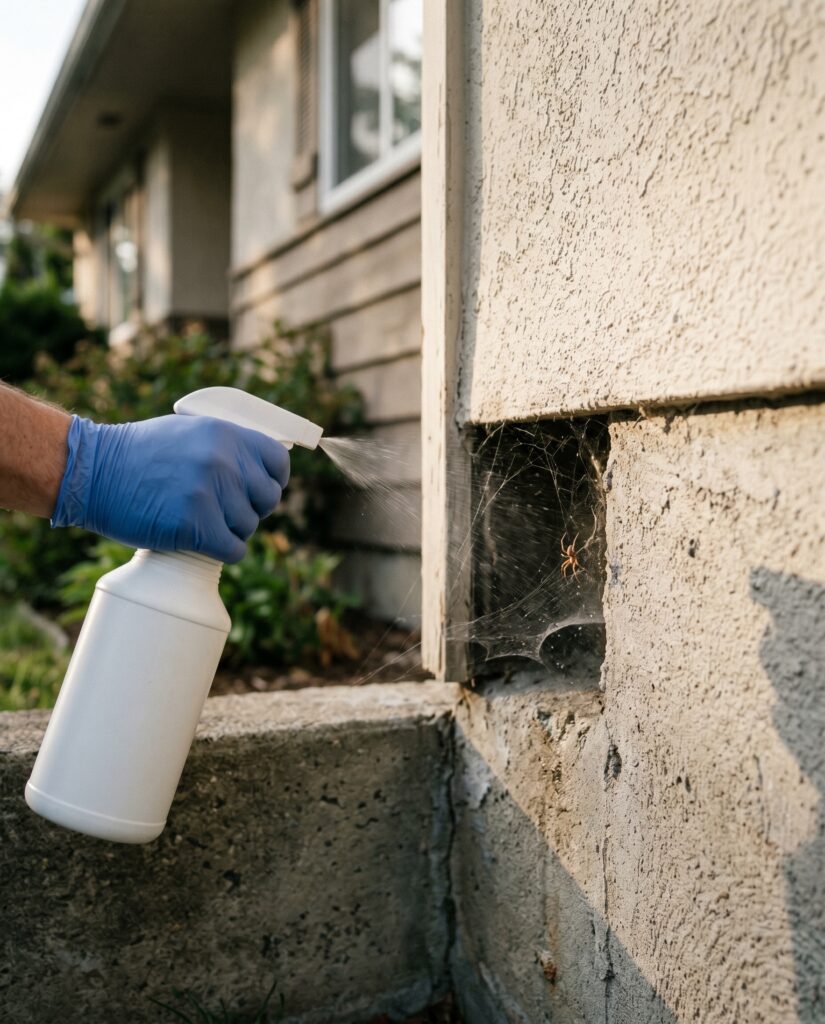
Start with removal. The University of Kentucky’s guidance on eliminating spiders is refreshingly unglamorous: a vacuum cleaner or broom effectively removes spiders, webs, and egg sacs, and destroying egg sacs matters because each can hold hundreds of spiderlings. Vacuuming kills most soft-bodied spiders outright, no chemicals required. Take down the webs, vacuum the corners, and reduce the clutter and cardboard that create the sheltered edges funnel weavers love. A tidy basement floor line is poor spider habitat, and it also removes cover for the camel crickets and other prey that make a basement worth hunting in.
\
\
Next, set glue boards. The same Kentucky guidance recommends placing them flush along the bottom of walls and in corners, exactly where ground-running spiders travel. Glue boards quietly remove wanderers and act as a census, telling you what species you actually have. If you truly need a hobo answer, a glue-board specimen is what a diagnostic lab wants anyway.
\
\
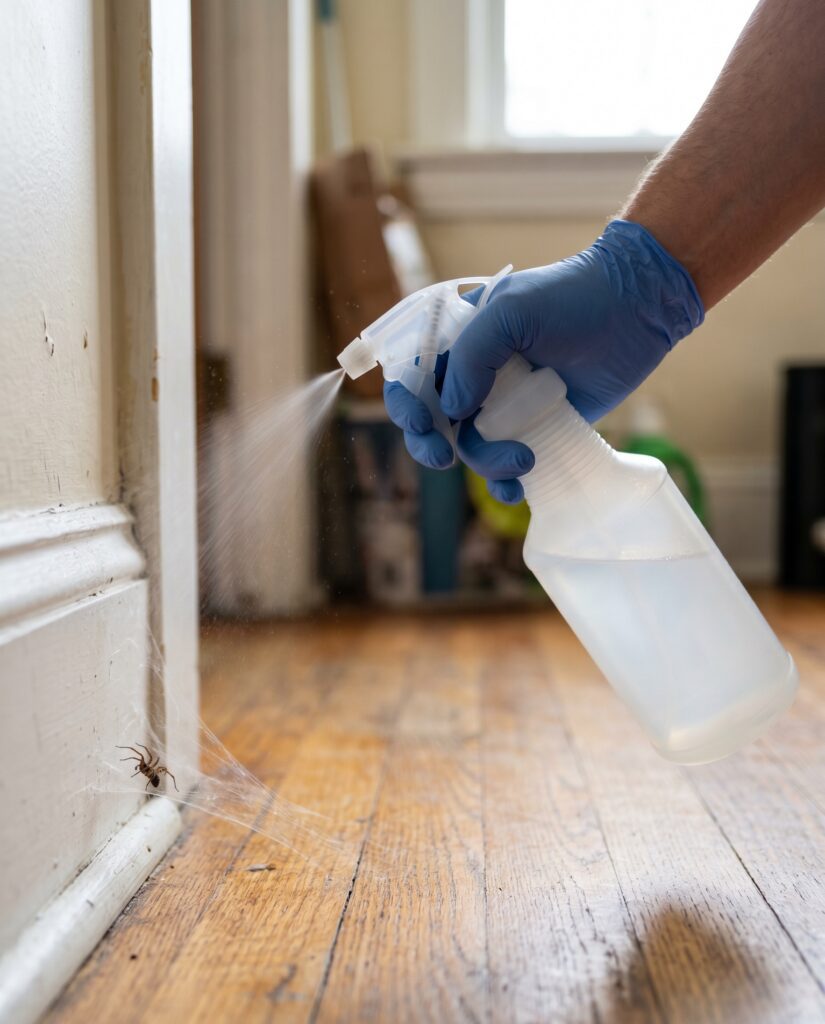
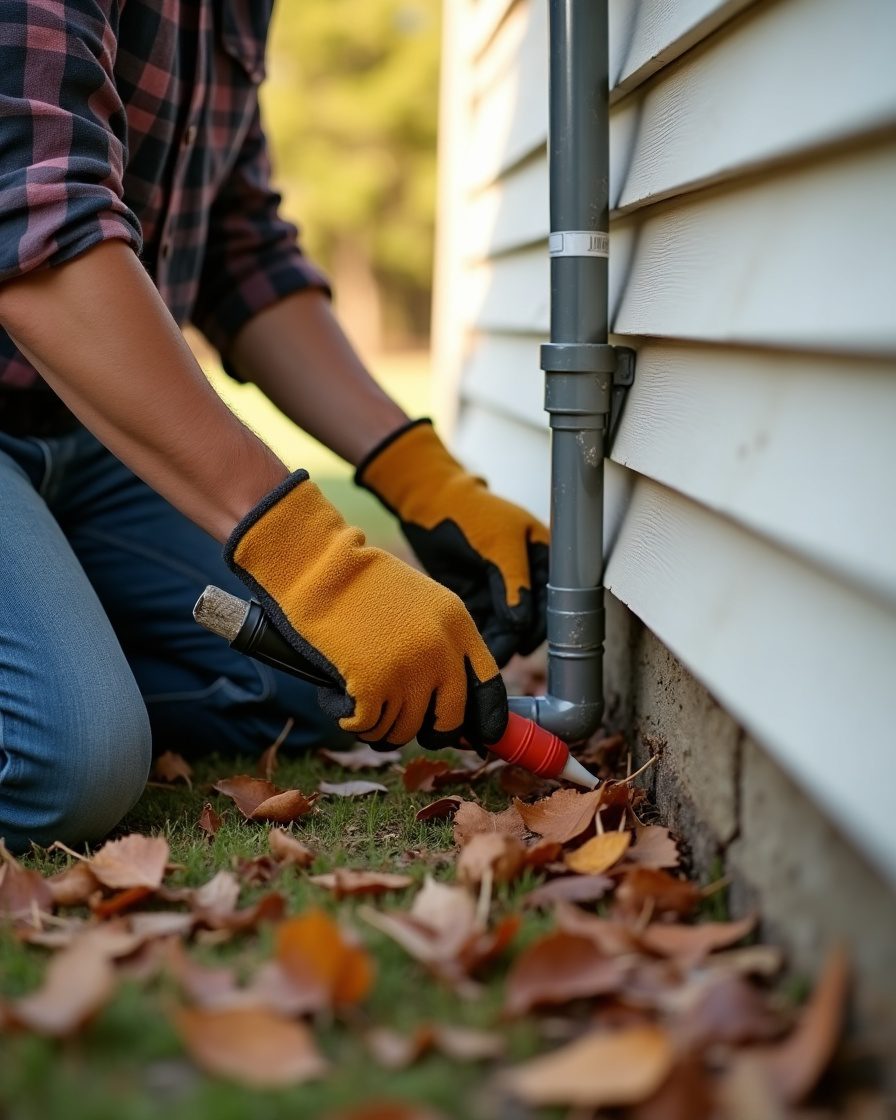
Then close the doors. The University of Kentucky’s pest-proofing guide notes that gaps of one sixteenth of an inch or less will permit entry of insects and spiders, and its core prescription is a short list of one-weekend jobs: door sweeps, silicone or latex caulk around windows and fascia, sealed openings where pipes and wires enter, intact screens, and hardware cloth over vents, done in late summer before the seasonal wanderers arrive. Our step-by-step fall pest-proofing walkthrough puts those jobs in order. Two finishing touches: swap bright white exterior bulbs for yellow bulbs that attract fewer night-flying insects, since fewer insects at the porch means fewer spiders hunting there, and treat broad spraying as the last and least useful tool. UC IPM calls sprays only temporary; exclusion, vacuuming, and prey reduction do the durable work.
\
\
 \
\
\
If you want the spider gone without touching it
\
\
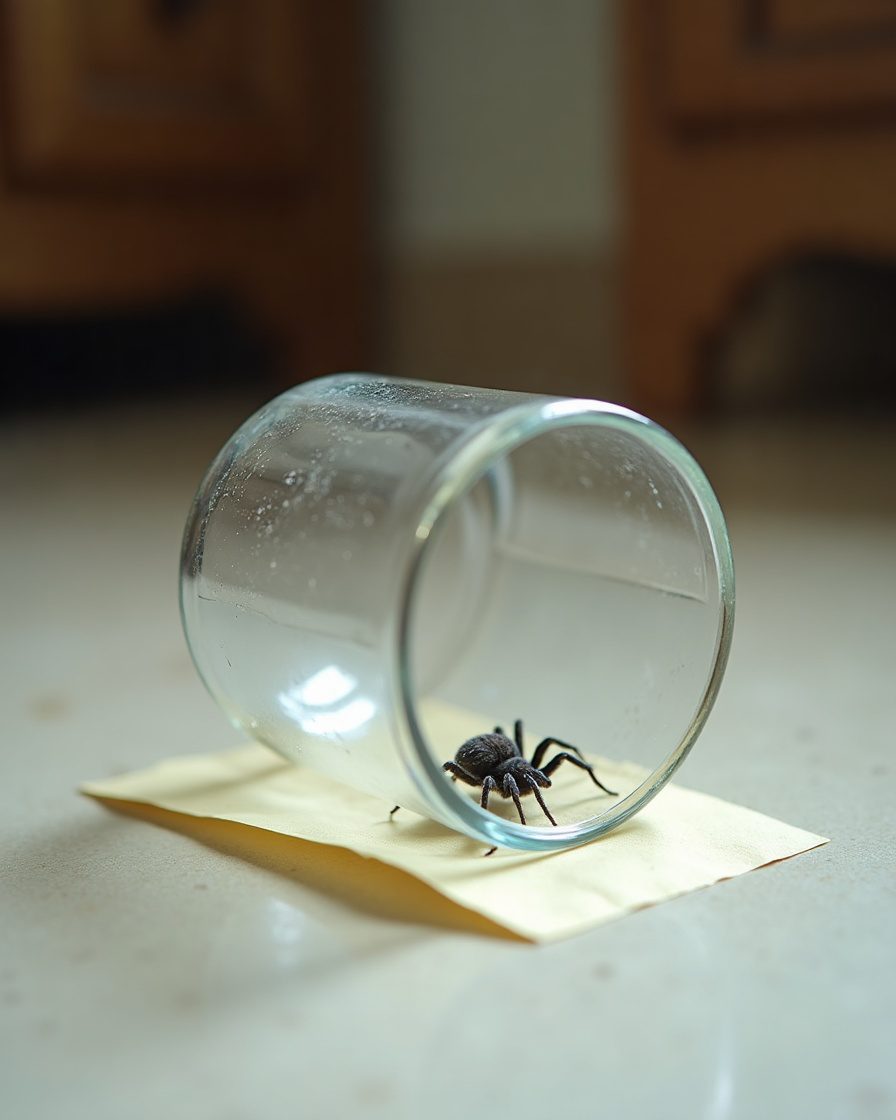
For a single spider, the glass-and-paper move beats any spray: lower a drinking glass over it, slide stiff paper underneath, and carry it outside. Funnel weavers cannot climb smooth vertical glass, which is why they end up trapped in sinks and bathtubs; they did not come up the drain. If handling any spider is more than you are willing to do, that is what glue boards are for, and a population that keeps rebounding despite sealing and cleanup is a reasonable time to bring in a licensed pest professional to inspect rather than fog blind.
\
\
Common questions
\
\
How can I tell a hobo spider from a grass spider?\
By eye, you mostly cannot. Grass spiders show two long spinnerets trailing behind the abdomen and usually keep their funnel webs outdoors. Confirming a hobo requires examining its fine anatomy under magnification, which is diagnostic lab work, not a photo comparison.
\
\
Are hobo spiders dangerous to humans?\
Current evidence says far less than their reputation. The research that tied hobo bites to necrotic wounds is now being challenged, and the species is not considered dangerous in its native Europe. Bites are possible, but a worsening wound deserves a clinician’s diagnosis.
\
\
Do hobo spiders chase people?\
No. The “aggressive house spider” label came from a mistranslation of the species name, which actually means “of the fields.” A hobo that runs toward you is a nearly blind spider heading for the nearest cover, which occasionally happens to be your shadow.
\
\
Why am I suddenly seeing big brown spiders in late summer?\
Late summer and fall are when mature male funnel weavers and other wanderers travel in search of mates, so the spiders already living in and around the building become visible. It is a seasonal activity peak, not an invasion, and sealing entry gaps is the fix that lasts.
\
\
Should I spray my basement for hobo spiders?\
It is the least effective option. Vacuuming webs and egg sacs, decluttering, glue boards along the wall lines, and sealing exterior gaps all outperform spraying, which extension guidance calls temporary at best.
\
\
Final verdict
\
\
The hobo spider is a plain brown funnel weaver with an unearned horror story attached. You cannot reliably identify one by sight, most “hobo” sightings are grass spiders, giant house spiders, or wolf spiders, and the necrotic bite reputation is not supported by current evidence. So retire the panic. Vacuum the webs and egg sacs, set glue boards along the walls to see what you are really hosting, seal the sixteenth-inch gaps that let wanderers in, and switch the porch light to yellow. Save your medical worry for wounds that actually worsen, and take those to a clinician. The spider in your window well is running a small, silent insect trap on your behalf, and the scariest thing about it is the name we gave it.
\
\
This article is for information only and is not medical advice.\