n
n
n
You moved a stack of firewood or reached into a dark garage corner and found a small, round, glossy black spider, and the first word that came to mind was widow. Here is the good news: a black widow is one of the easiest spiders in North America to confirm, because it carries a single, decisive mark. A glossy jet-black body with a red hourglass on the underside of the abdomen, sitting in a messy tangled web low to the ground, is the black widow and almost nothing else. That same mark identifies the one common US spider whose bite genuinely warrants prompt medical attention, which is exactly why getting the ID right matters more here than with any harmless house spider.
nn
n
If you see a glossy jet-black, round-bodied spider with a red hourglass on the underside of its abdomen, hanging in a messy tangled web low and hidden, it is a black widow (Latrodectus species) and not a harmless look-alike.
n
- n
- The confirming feature: A red or red-orange hourglass on the underside of a round, shiny black abdomen.
- Most-confused look-alike: The false widow, which is browner, less glossy, and has no clean hourglass.
- What it means: The one common US spider whose bite needs real caution; read our guide to spider bites and when to worry if you may have been bitten.
n
n
n
n
nn
nn
Quick answer
nn
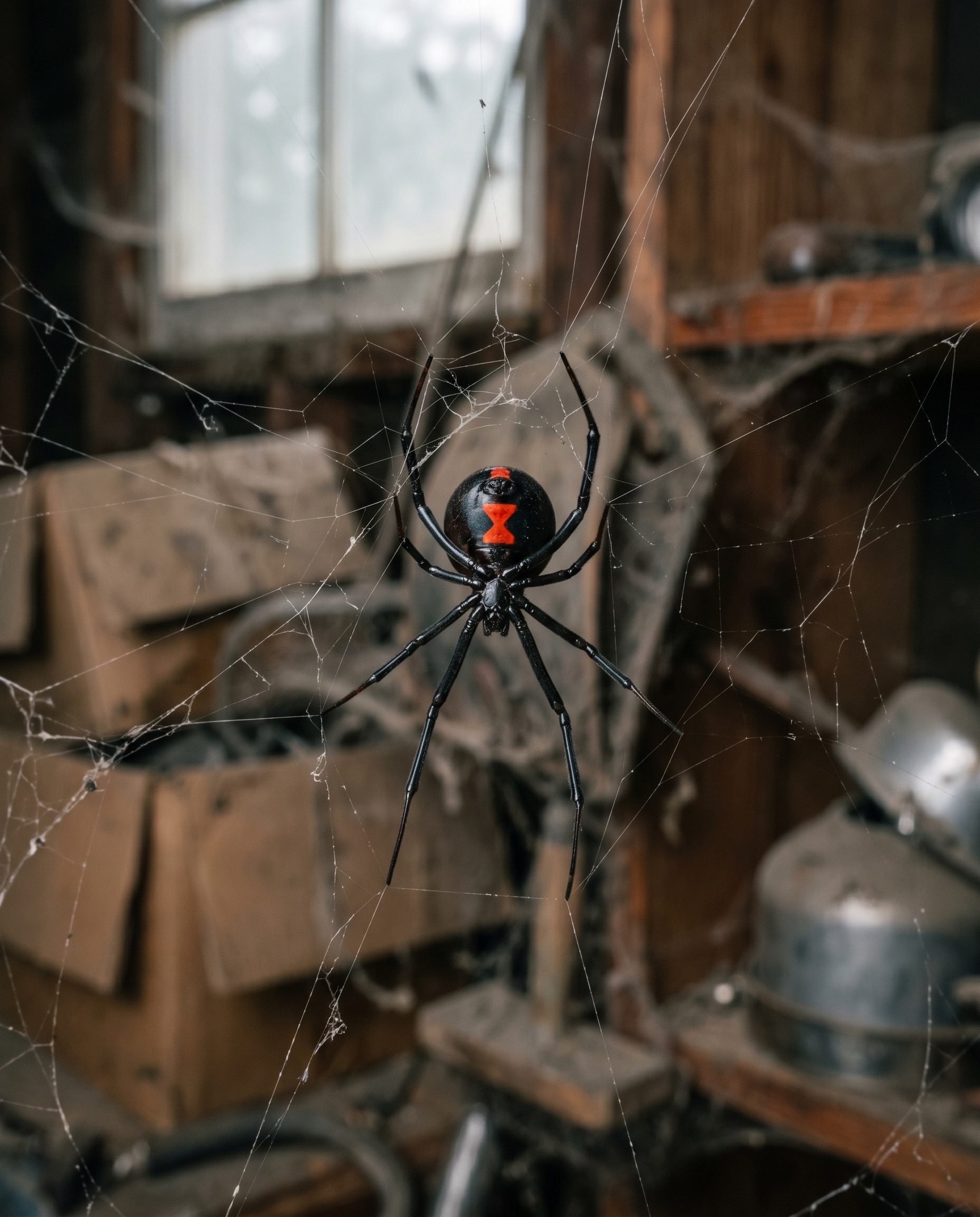
The black widow (genus Latrodectus) is a small spider with a body about the size of a pea, an oversized rounded abdomen, and a high-gloss black finish that looks almost lacquered. The mature female is the one people picture, and she is the one that carries the warning. Turn her over, or catch her hanging belly-up in her web, and you will see the red hourglass on the underside that confirms the ID on its own. The web is the second tell: not a tidy wheel but a strong, messy, three-dimensional tangle built low and out of sight.
nn
If a small dark spider has long legs and runs across your floor in the open, it is almost certainly not a widow. Widows are slow, web-bound, and stay hidden. According to the University of Kentucky’s profile of the black widow spider, the hourglass plus the irregular web are the two features that separate it from every common household look-alike.
nn
The hourglass is the one feature that confirms it
nn
Most spider IDs ask you to weigh several traits at once. The widow does not. The red hourglass on the belly is diagnostic, meaning it confirms the species by itself in a way no other US house spider can fake. On a mature female it sits dead center on the underside of the round abdomen, usually bright red or red-orange, sometimes split into two triangles that point at each other. You will see it cleanly because widows often rest upside down in their webs, abdomen facing out.
nn
Check it the safe way: never handle the spider. Look from a respectful distance, use a flashlight, and let her own upside-down posture show you the belly, or gently photograph her in the web and zoom in. The mark has limits worth knowing. Immature females and males look different, often with red or white streaks on top and a fainter or differently shaped marking, so a juvenile can be harder to call. Back the hourglass up with the body shape and the web, as Purdue Extension’s spider identification guidance recommends, rather than relying on a single faded mark on a young specimen.
nn
What a black widow actually looks like
nn
Run down the description the way an entomologist would. Size: the female’s body is roughly 8 to 13 mm, about the size of a pea, with legs spread maybe to the diameter of a quarter. Color and sheen: a uniform, glossy jet-black across the body, shiny enough that it catches light. Body shape: the abdomen is large, round, and almost bulbous, which gives the widow her unmistakable silhouette and sets her apart from leggier, flatter spiders. Legs: eight, of course, since this is an arachnid and not an insect, and they are long, slender, and often held tucked while she sits in the web.
nn
The southern black widow (Latrodectus mactans) is the classic glossy-black, red-hourglass form across the South and East. The western black widow (Latrodectus hesperus) looks much the same. There are also brown widow and red widow relatives, but the shiny black body plus a clean ventral hourglass is the combination that says widow without ambiguity. Males and juveniles are smaller, often paler or marked with stripes, and are not the ones that draw medical concern.
The detail on what a glossy shell rules out sits in shiny and metallic bugs indoors.
nn
nn
Look-alikes and the one feature that separates each
nn
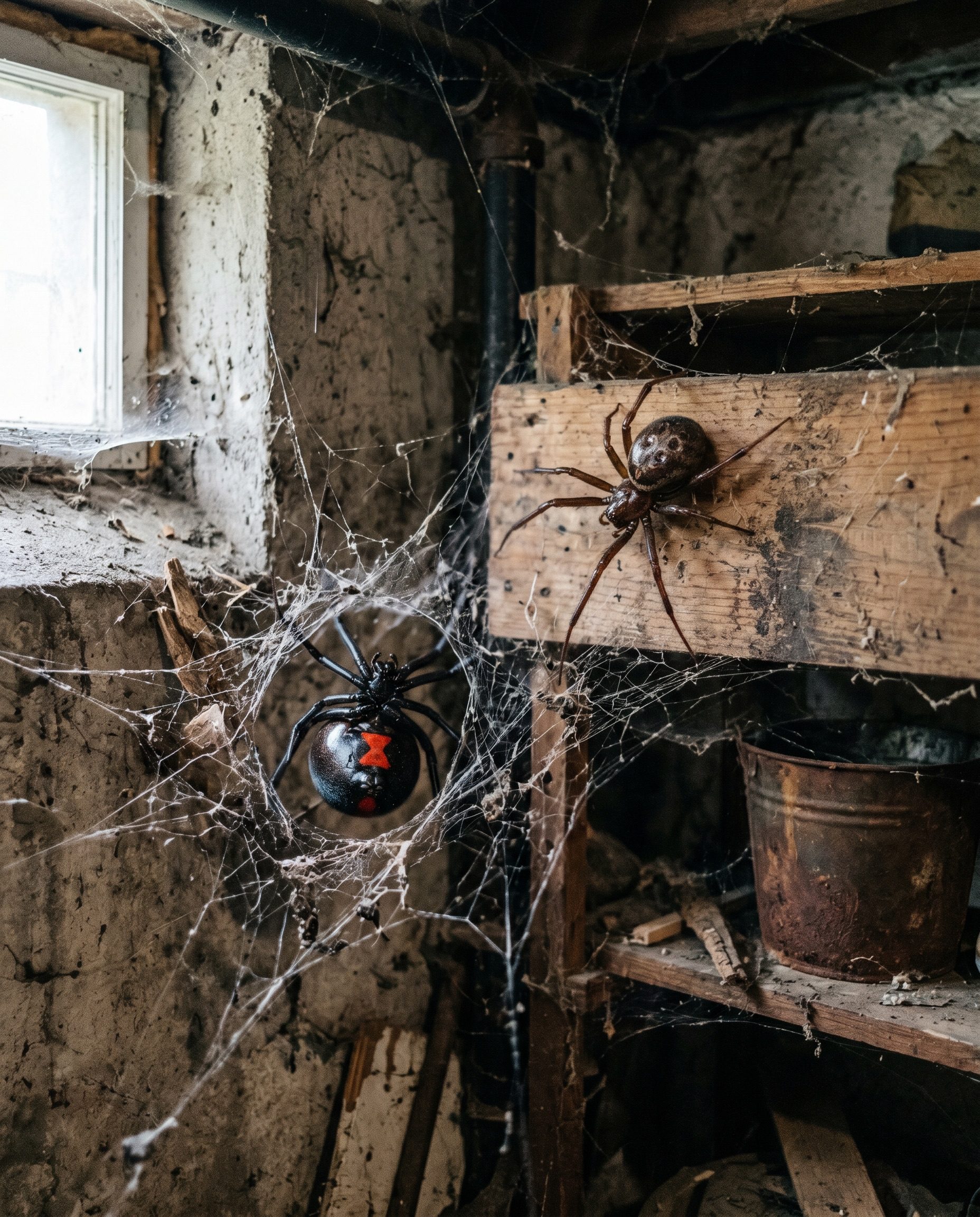
People misfire on widow IDs in two directions: they panic over a harmless lookalike, or they wave off a real widow as “just a black spider.” A few species cause most of the confusion, and each splits from the widow on a single feature. The false widow is the big one because the name alone scares people, but it is browner, less glossy, and lacks the clean red hourglass. UC IPM notes that the vast majority of spiders are harmless, so the default assumption for a random dark spider should be “not a widow” until the hourglass says otherwise.
nn
Use the underside and the web together, and the table below collapses the usual confusion pairs to the tell that actually settles each one.
nn
| Species | Key feature | Where found |
|---|---|---|
| Black widow | Glossy black, red hourglass on belly, messy low web | Woodpiles, garages, sheds across most of the US |
| False widow | Browner, less shiny, no clean hourglass | Sheds, walls, often indoors |
| Common house spider | Mottled brown or tan, leggier, tidier cobweb | Corners, ceilings, basements indoors |
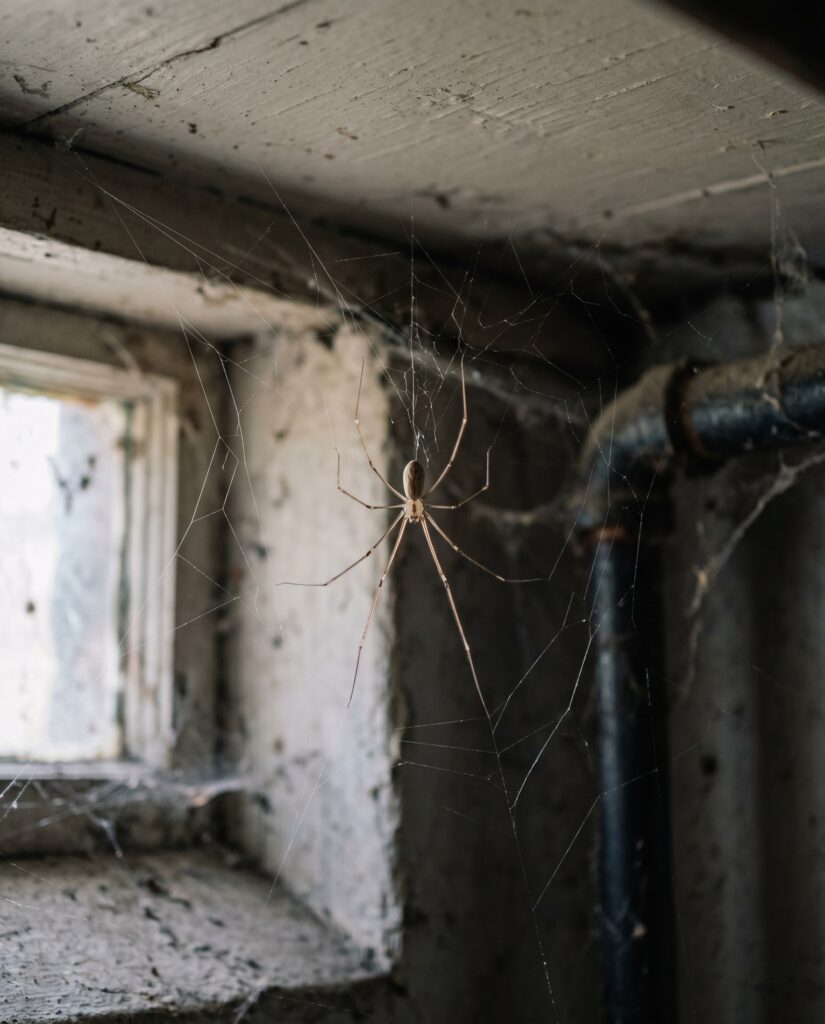
| Cellar (daddy long-legs) spider | Tiny pale body, very long thin legs | Damp basements, cellar corners |
nn
For the broader run of dark indoor spiders, our house spider identification guide walks through the common harmless ones so you can rule them out fast. The widow’s separating feature never changes: glossy black plus a belly hourglass.
nn
Where you will find one, and when
nn
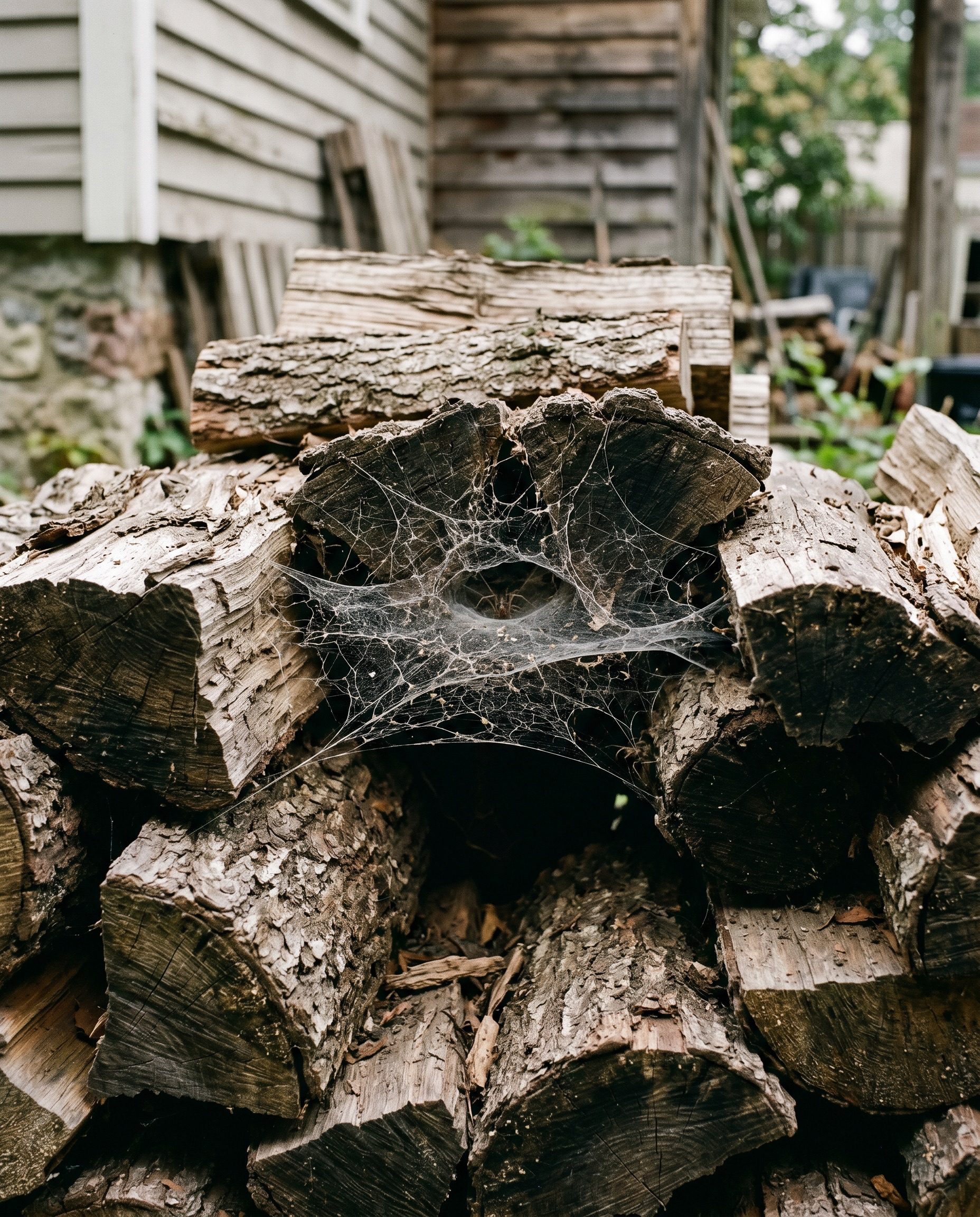
Habitat is itself an ID clue, because widows are predictable about where they set up. They want dark, dry, undisturbed shelter with an anchor point for the web. The University of Kentucky describes the red hourglass and the messy, irregular web it builds low to the ground, and that low, hidden placement is half the reason bites happen when a hand goes somewhere unseen. UC IPM adds that the spider favors undisturbed, sheltered spots like woodpiles and garage corners.
nn
In practice, that means stacked firewood, the underside of patio furniture, garage and shed corners, crawl spaces, meter boxes, and the rims of buckets or flowerpots left sitting. Widows occur across most of the continental US and are more active and more often encountered in the warm months, when you are also more likely to be moving wood, gardening, or cleaning out a shed. The simplest precaution is the most effective: wear gloves and look before you reach into any dark, undisturbed space outdoors.
nn
nn
Is it dangerous? Read this first
nn
Get emergency medical help right away for any sign of a severe reaction after a suspected bite, including trouble breathing, swelling of the throat or tongue, chest or severe abdominal pain, muscle cramping, dizziness, or fainting, and use an epinephrine auto-injector if one has been prescribed for you. A bite that worsens, spreads, or comes with those symptoms is a reason to contact a doctor or your local poison control center without delay.
nn
With that out of the way, the proportionate truth: the black widow is the one common US spider whose bite genuinely deserves caution, but bites are uncommon and rarely fatal, especially with prompt care. The venom is a neurotoxin, so a serious bite tends to cause muscle pain and cramping rather than the tissue damage people associate with a recluse. MedlinePlus describes what a black widow bite can feel like and when to seek care, and the responsible move is always to seek medical evaluation rather than self-diagnose. I identify spiders; I do not treat bites, so for symptoms and aftercare see our dedicated spider bites guide on when to worry.
nn
Common questions
nnDoes only the female black widow have the red hourglass?n
The bright, clean ventral hourglass is most reliably seen on the mature female, which is the one that matters for caution. Males and juveniles are smaller and often marked differently, sometimes with red or white streaks on top and a fainter belly mark, so a young spider can be harder to call from the hourglass alone.
nnAre black widows aggressive?n
No. They are shy, web-bound, and would rather retreat than confront you. Almost every bite happens defensively when a spider is pressed against skin, such as reaching into a glove, a boot, or a woodpile without looking. Give one space and it will not chase you.
nnWhat is the difference between a black widow and a false widow?n
The widow is glossy jet-black with a clean red hourglass on the belly; the false widow is browner, duller, and lacks that mark. If there is no shiny black body and no hourglass on the underside, you are almost certainly not looking at a true widow.
nnCould it be a brown recluse instead?n
Different spider entirely. A recluse is brown, not glossy black, and carries a violin-shaped mark on its back rather than a belly hourglass. If you are weighing the two, our brown recluse identification guide lays out that spider’s own decisive feature.
nnIs a black widow web easy to recognize?n
It helps. The web is strong but messy, an irregular three-dimensional tangle rather than a neat wheel, and it is built low and hidden in a corner, under furniture, or among logs. A tidy flat orb web stretched across an open doorway is not a widow’s work.
nn
Final verdict
nn
Black widow identification comes down to one feature you can check from a safe distance: a glossy jet-black, round-bodied spider with a red hourglass on the underside of its abdomen, sitting in a messy tangled web built low and out of sight. That combination confirms the species and separates it from the false widow, the common house spider, and every other dark spider people mistake for it. It is also the one common US spider whose bite warrants prompt medical attention, so the ID is not academic. Confirm with the hourglass, never handle the spider, and if a bite turns serious, treat it as a medical matter and not a guessing game.
nn
Next steps:
nn
– If you think you were bitten, check symptoms and timing in our spider bites guide on when to worry.
n
– Rule out the harmless dark spiders with our house spider identification guide.
n
– Weighing it against the other spider people fear? Compare with our brown recluse identification guide.
nn