
n
n
n
You spot a spider in the basement corner or skittering across the bathroom floor, and the first word that jumps to mind is usually one of two: widow or recluse. Here is the reassuring truth. Almost every spider you actually see indoors, the cellar spider, the common house spider, the wolf spider, the jumping spider, and the orb-weaver in the window, is harmless and genuinely useful, quietly eating the flies, mosquitoes, and roaches you do not want. The whole game is learning to separate that helpful crowd from the only two species that matter, the black widow and the brown recluse, and that separation comes down to a few features you can check in seconds.
nn
n
The common house spiders, cellar, house, wolf, jumping, and orb-weaver, are all harmless and beneficial; only the black widow (red hourglass) and brown recluse (violin mark, six eyes) need caution, and both are easy to rule out once you know the tells.
n
- n
- The two to know: Black widow, shiny black with a red hourglass underneath; brown recluse, uniform tan with a dark violin shape and six eyes.
- Everything else: Long legs in a basement, a furry jumper on the sill, a fast runner on the floor, almost certainly harmless and on your side.
- What it means: If it is not a widow or recluse, leave it or relocate it; for the rest, see how to get rid of spiders in the house.
n
n
n
n
nn
nn
Quick answer
nn
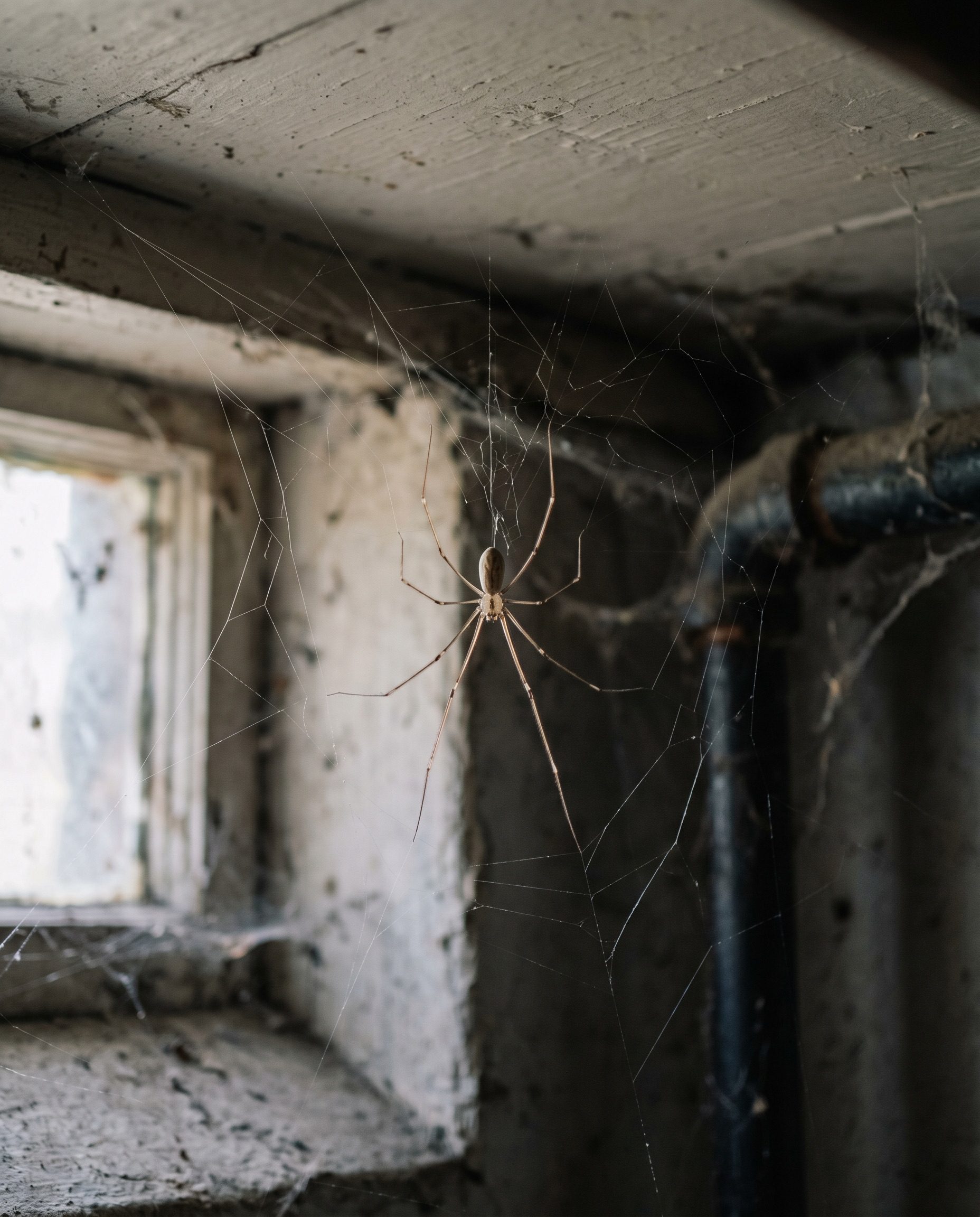
If you see long, thin legs holding up a flimsy tangle of web in a basement corner, you are looking at a cellar spider (Pholcus phalangioides), one of the most common indoor spiders in the country and completely harmless. The fastest way to settle any spider scare is to work by elimination, not imagination. A widow is glossy black with a red hourglass on its underside, and a brown recluse is a flat, uniform tan with a violin-shaped mark behind its eyes. If your spider has neither, and most do not, it belongs to the harmless majority. As most spiders found in and around homes are harmless and actually beneficial, the right reflex is curiosity, not a shoe.
nn
The features that confirm the harmless ones
nn
You do not need a microscope to ID a house spider. You need to know where it lives and how it hunts, because those two clues sort the common species fast. Spiders that build a web and wait, like the cellar spider and the common house spider, hang upside down in messy, irregular webs in undisturbed corners. Spiders that hunt on foot, like the wolf spider and the jumping spider, have no snare at all and rely on speed or eyesight.
nn
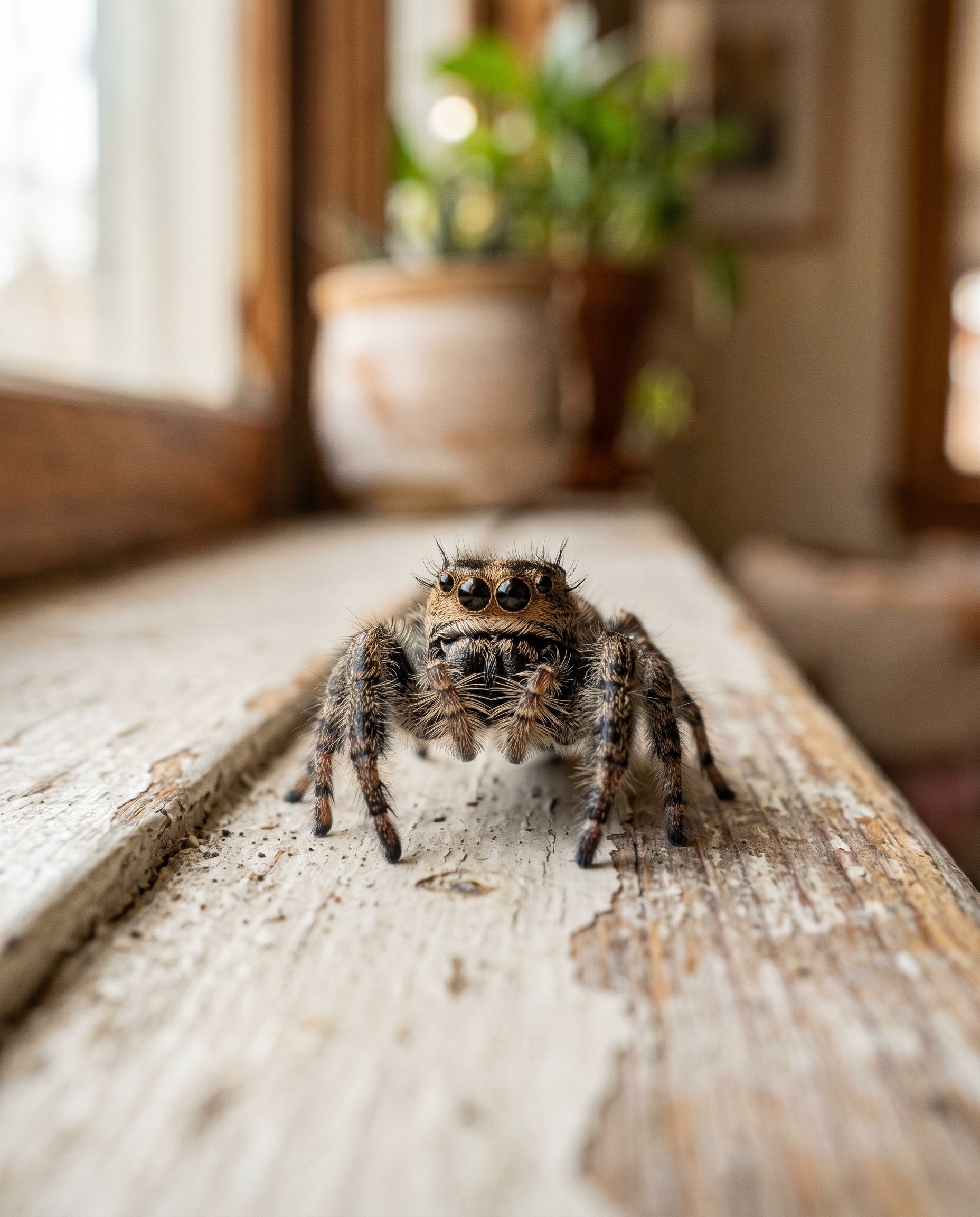
The cellar spider gives itself away with absurdly long, hair-thin legs and a tiny peanut of a body; people often mistake it for a daddy longlegs, which is a different creature entirely. The common house spider (Parasteatoda tepidariorum) is the small, drab brown spider behind the tangled cobweb you keep sweeping off the ceiling. The wolf spider is the big, fast, brown-and-gray ground hunter that bolts when the light comes on, which is exactly why it startles people. And the jumping spider is the small, compact, almost furry one with two oversized front eyes that swivels to look right at you. That curious, big-eyed stare is itself the ID, because no dangerous US house spider behaves that way. The Purdue Extension’s household spider guide walks through these same everyday species and confirms that none of them pose a meaningful threat to people.
nn
nn
A field guide to the five you’ll actually see
nn
Run down the common five and you will recognize almost anything that turns up indoors. Each one has a giveaway you can spot from a few feet away.
nn
The cellar spider is the long-legged web-hanger of basements, garages, and closet corners. It eats other spiders, including young widows, so it is arguably your best free pest control. The common house spider is smaller and stouter, the resident of the dusty cobweb, and it traps gnats and flies you would otherwise swat yourself. Neither one wants anything to do with you.
nn
The wolf spider is the one that looks alarming and is not. It is robust, brown, and patterned for camouflage, often the size of a quarter with legs spread, and it wanders indoors in fall chasing prey rather than building a web. Its speed reads as aggression, but it is just trying to get away from you. The jumping spider is the friendly-looking acrobat of windowsills and walls, hunting by daylight with the sharpest vision of any spider. Orb-weavers, the classic spiral-web spinners, mostly stay outdoors around porch lights and windows, where their webs intercept night-flying insects. All five are harmless and on your side, which is the whole point of learning their faces.
nn
The only two that deserve caution
nn
This is where careful ID earns its keep. The black widow (Latrodectus species) is unmistakable when you see the underside: a shiny, almost lacquered black body with a red hourglass mark on the belly. It builds a strong, messy web low and out of the way, in woodpiles, garages, crawl spaces, and under outdoor furniture, and it is not aggressive. According to University of Kentucky’s profile of the black widow, the spider bites defensively, usually only when trapped against skin, and it actively avoids contact.
Our guide to shiny and metallic bugs indoors goes further into what a glossy shell rules out.
The detail on the five dark ones and where each turns up sits in our guide to tiny black bugs in the house.
nn
The brown recluse (Loxosceles reclusa) is the more over-diagnosed of the two, because plenty of plain brown spiders get accused of being one. The real tells are specific: a uniform tan to brown body with no banding on the legs, a dark violin shape pointing back from the head, and, decisively, six eyes arranged in three pairs instead of the usual eight. The violin can fade on pale or young specimens, so the eye count is the feature that settles it. As Kentucky’s recluse profile notes, the violin marking and the six eyes arranged in pairs are what separate a true recluse from the look-alikes that get blamed for it. For the full workup on either species, our black widow identification guide and brown recluse identification guide show the marks up close.
nn
Telling them apart at a glance
nn
When a spider turns up, run it against the harmless majority first, then check the two danger species against their single decisive feature. This table is the cheat sheet.
nn
| Spider | Decisive feature | Where you’ll see it |
|---|---|---|
| Cellar spider | Very long thin legs, tiny body, loose web | Basement and closet corners |
| House spider | Small drab body in a messy cobweb | Ceiling corners, behind furniture |
| Wolf spider | Large, fast, no web, patterned brown | Floors and ground level, fall |
| Jumping spider | Compact, furry, two big front eyes | Sunny windowsills and walls |
| Black widow | Glossy black, red hourglass underneath | Woodpiles, garages, crawl spaces |
| Brown recluse | Violin mark, six eyes, no leg bands | Closets, boxes, undisturbed clutter |
nn
The pattern is clear once you see it laid out. Web in a corner or speed on the floor means harmless, and only the two bottom rows call for care. Region matters too: the brown recluse lives mainly in the south-central and midwestern states and is genuinely rare on the West Coast and in the Northeast, so a “recluse” sighting in Seattle or Boston is almost always a different, harmless spider.
nn
nn
What to do if it is a widow or recluse
nn
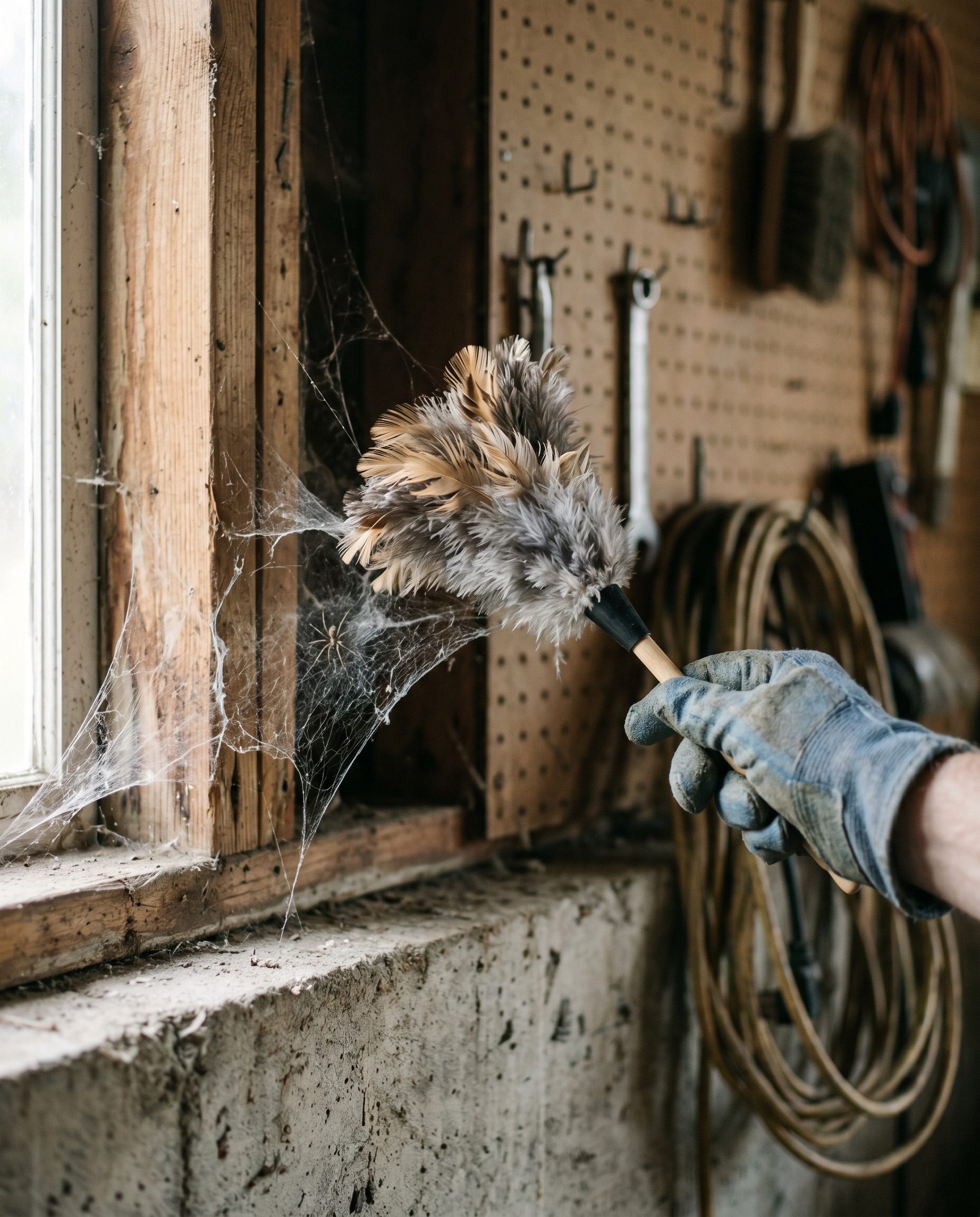
If you do confirm a widow or a recluse, the response is calm and physical, not panic. Capture it under a cup or vacuum it up, clear clutter and webbing from the spaces they like, and shake out shoes, gloves, and stored clothing in known-recluse regions before putting them on. Bites are uncommon and most are minor, but you should know the warning signs. Get emergency medical help right away for any sign of a severe reaction, trouble breathing, swelling of the face or throat, a racing heart, or worsening pain spreading from the bite, and contact a doctor if a bite develops an expanding sore, fever, or does not improve. I identify spiders; I do not treat bites, so for what a spider bite looks like and when to get medical care, lean on MedlinePlus and a clinician rather than guesswork.
nn
Common questions
nnAre house spiders dangerous?n
No. The everyday species, cellar, house, wolf, jumping, and orb-weaver spiders, are harmless to people and helpful around the home, eating flies, mosquitoes, and other pests. Only the black widow and brown recluse carry medically significant venom, and both are easy to rule out by their hourglass or violin-and-six-eyes markings.
nnIs a daddy longlegs the same as a cellar spider?n
Not quite. People use “daddy longlegs” for two different animals: the long-legged cellar spider that hangs in basement webs, and the harvestman, which is not a true spider at all and makes no web. Both are harmless, and the popular claim that either has deadly venom it cannot deliver is a myth.
nnHow can I tell a wolf spider from a brown recluse?n
A wolf spider is large, hairy, fast, and patterned, with eight eyes and banded legs, and it never builds a web indoors. A brown recluse is smaller, smooth, and uniform tan with no leg bands, a violin mark, and six eyes. The size and the leg banding alone usually settle it in your favor.
nnDo jumping spiders bite?n
Rarely, and the bite is minor, comparable to a mild bee sting at most. Jumping spiders are daytime hunters that would rather watch you than bother you, and their famous curiosity is harmless. They are one of the most beneficial spiders to have on a windowsill.
nnShould I kill every spider I find inside?n
Usually not. Most indoor spiders quietly reduce other pests, so relocating one outside is the better move. Reserve removal for confirmed widows or recluses, and if spiders are a constant presence, focus on sealing gaps and reducing the insects they feed on.
nn
Final verdict
nn
The spiders you meet indoors are, with two exceptions, harmless allies. Learn the long-legged cellar spider, the cobweb house spider, the fast wolf spider, the big-eyed jumper, and the porch-light orb-weaver, and you have named nearly everything that will ever cross your floor. Keep one rule in your pocket: a red hourglass underneath means widow, and a violin with six eyes means recluse. Anything without those marks is on your side, and the confident ID is what turns a startled jump into a shrug.
nn
Next steps:
nn
– Confirm a glossy black spider with our black widow identification guide.
n
– Rule in or out a tan spider with the brown recluse identification guide.
n
– If they are a constant presence, see how to get rid of spiders in the house.
If the thing you found is not on this page, our guide to working out what a bug is from what you saw starts from colour, place and movement instead.
nn
Pingback: Brown Recluse Spider Identification: Violin, Eyes and Range
Pingback: Bugs That Look Like Spiders: Count the Legs First