
If spiders keep turning up in your house, the thing to understand first is why they are there: they came in hunting the other bugs. That makes the lasting fix exclusion plus cutting their food supply, not a can of spray. Seal the gaps and screens they slip through, kill the exterior lights that pull insects to your walls at night, declutter the corners and basement boxes they hide in, and vacuum any webs and egg sacs you find. A spray kills the one spider you can see, but the prey it was eating keeps drawing more, so you end up reloading the can forever. Most house spiders are harmless and quietly working in your favor, so the goal is fewer entry points and less food, not a chemical war on a bug that mostly helps you.
Spiders come inside to hunt other bugs, so the fix is exclusion plus cutting their food: seal gaps and screens, kill bug-attracting exterior lights, declutter, and vacuum webs and egg sacs. Spraying kills the one you see while the prey keeps pulling in more.
- Do first (free): Vacuum every web, knock down egg sacs, and declutter basement and closet corners so they have nowhere to hide.
- Best for the common case: Seal gaps with caulk, fix torn screens and door sweeps, and switch porch bulbs to yellow so fewer insects gather for them to eat.
- Skip: Fogging the whole house; it misses the hidden bugs feeding the spiders and the population walks right back in.
Why they came inside
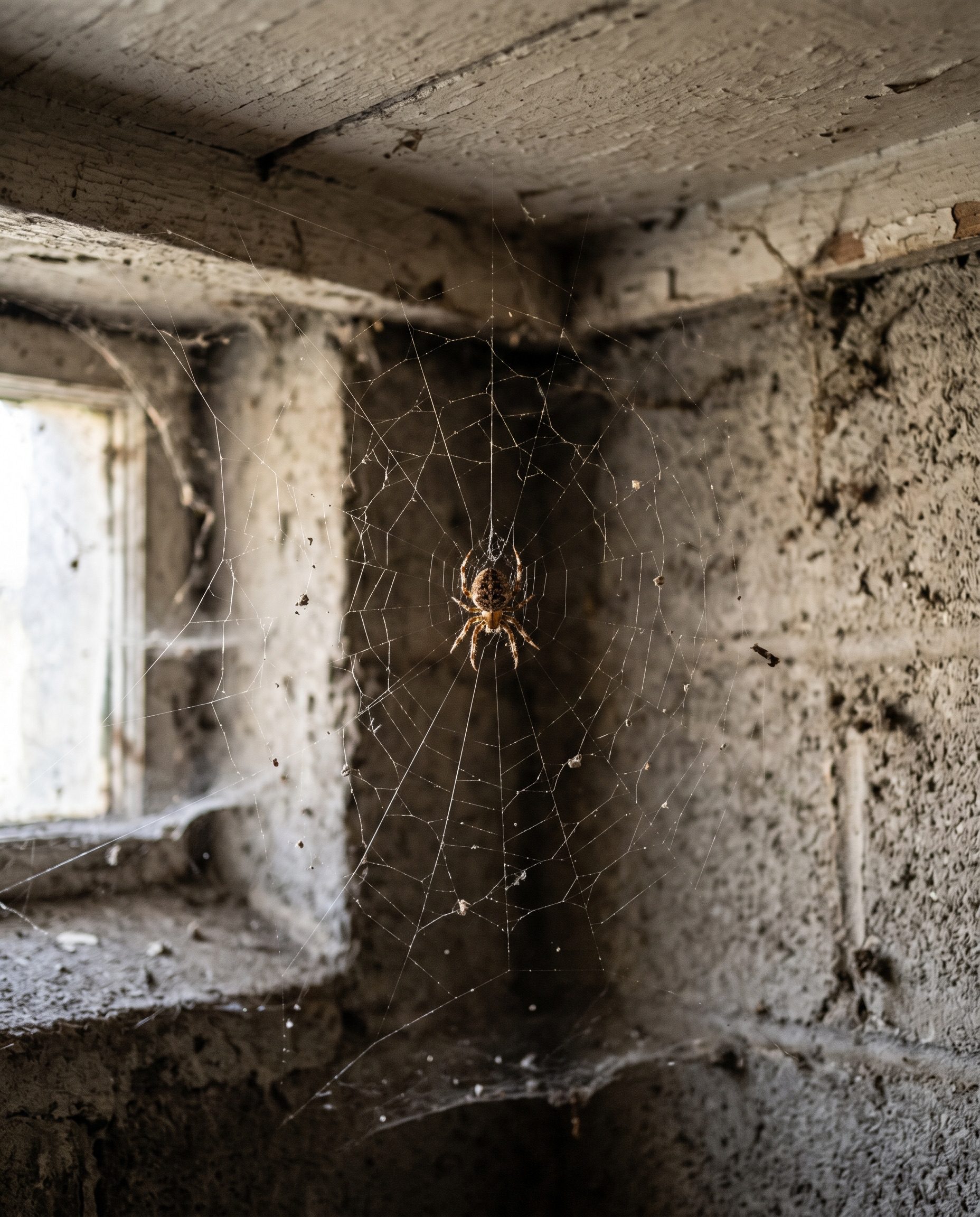
Spiders are predators, and they go where the food is. If you have spiders, you have something they are eating: gnats at the window, moths around a lamp, silverfish in the basement, flies in the kitchen. A spider does not eat your crumbs or your wood, so it has no reason to be in your house unless the menu is good. That is the single most useful fact in this whole guide, because it means the spider is a symptom of another bug problem, and treating the symptom alone never sticks.
According to UC IPM’s Pest Notes, most house spiders are harmless and actually beneficial because they eat the insects you actually do not want around. They drifted in through a gap under a door, a torn screen, a foundation crack, or a box you carried up from the garage. Some, like cellar spiders and common house spiders, are basically born indoors and live their whole lives in your basement corners. Others wandered in from the perimeter, especially in fall when cooler nights push them toward warmth. If you want the full picture of what is pulling them to your address, our guide on what attracts spiders to your house breaks down the food, light, and moisture cues that matter most.
Clean them out first, for free
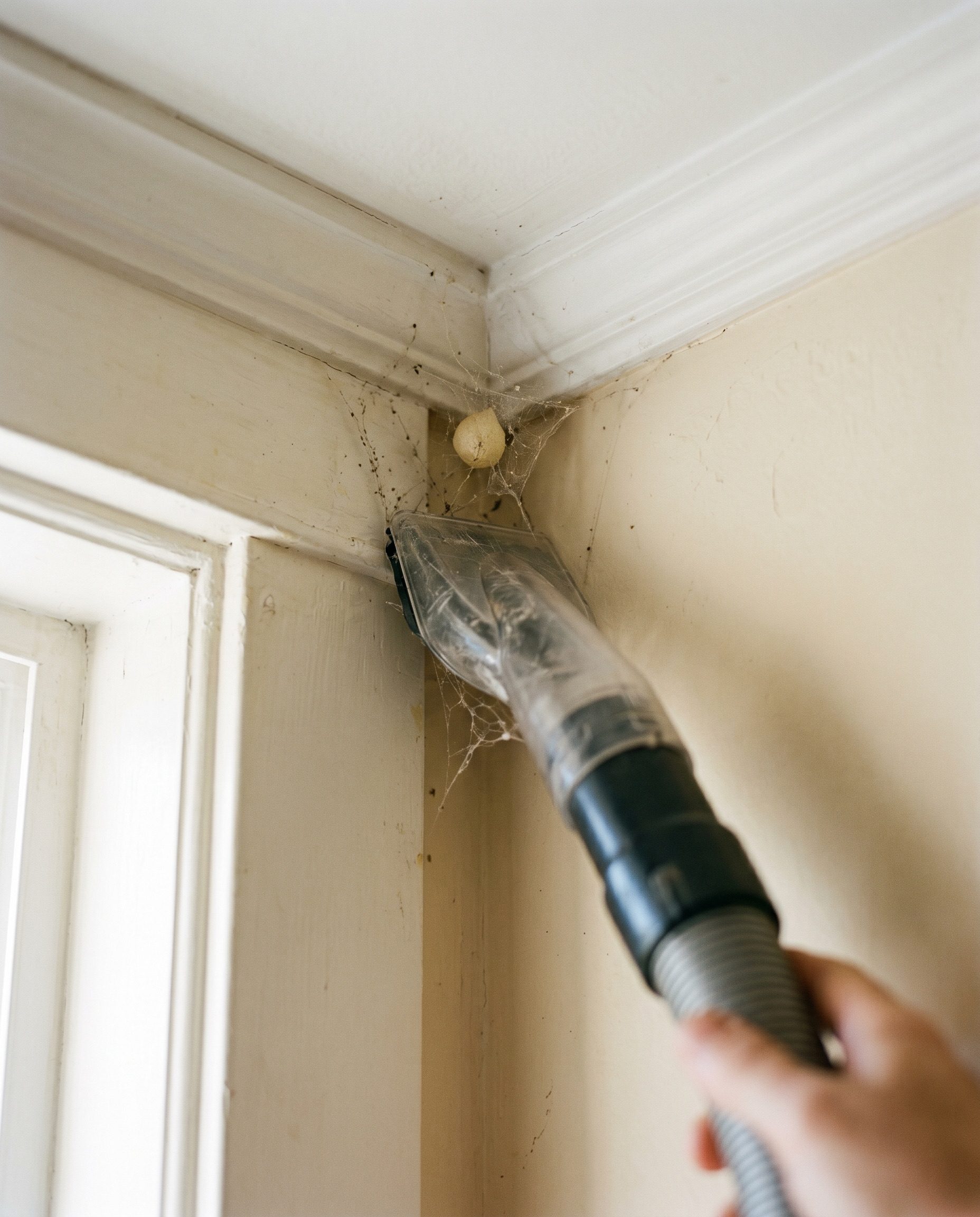
Before you spend a dollar, do the part that does the most work. Grab the vacuum with the hose attachment and walk every room, ceiling corners, window frames, behind furniture, the basement joists, the garage, under the deck eaves. Vacuum up the spiders, the webs, and the egg sacs you find, because a single egg sac can hold dozens of spiderlings and pulling it out now saves you a wave later. Empty the canister into an outdoor trash bag when you finish so nothing crawls back out.
Then declutter the harborage. Spiders love undisturbed dark spots: stacked cardboard, piled clothes, a corner of the garage no one touches. Swap cardboard storage for sealed plastic bins, pull boxes off the floor, and keep a few inches of clearance against the walls so corners stay open and easy to wipe. Purdue Extension’s guidance on household spiders and control makes the same point, that exclusion and reducing their prey beats spraying for long-term results, and routine vacuuming is the cheapest version of that. Do this once thoroughly, then once a week as upkeep, and you will already see fewer webs without touching a chemical.
Seal the gaps they use
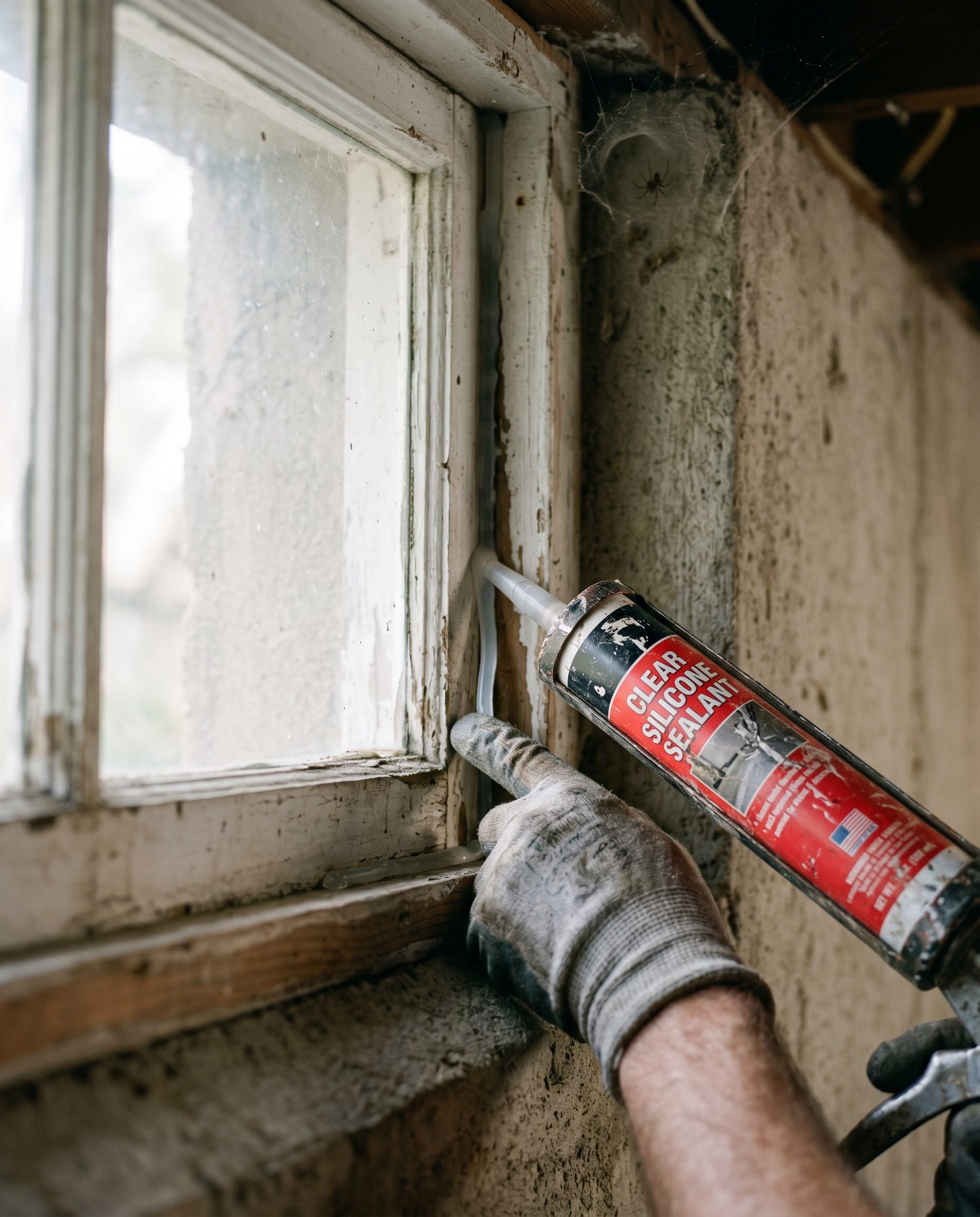
Cleaning removes what is already inside; sealing keeps the next ones out, and this is the step that actually changes your spider count for good. Walk the outside of the house in daylight and look for the small openings a spider can slip through. Caulk the gaps around windows, door frames, pipes, vents, and the foundation sill, because a crack you can barely see is a wide-open door to something that size. Use a clear or paintable silicone caulk and run a clean bead; you are not just blocking spiders, you are blocking the insects they hunt.
Then fix the rest of the envelope. Replace torn window screens, add or repair door sweeps so there is no daylight under the door, and screen any open vents or weep holes that lead inside. Purdue Extension’s guidance on household spiders and control treats this exclusion work as the backbone of real spider control, ahead of any pesticide. The honest part: this is the least fun step and the one most articles skip, but it is the only one that stops the supply at the source instead of dealing with arrivals one at a time.
Cut the food and the lights
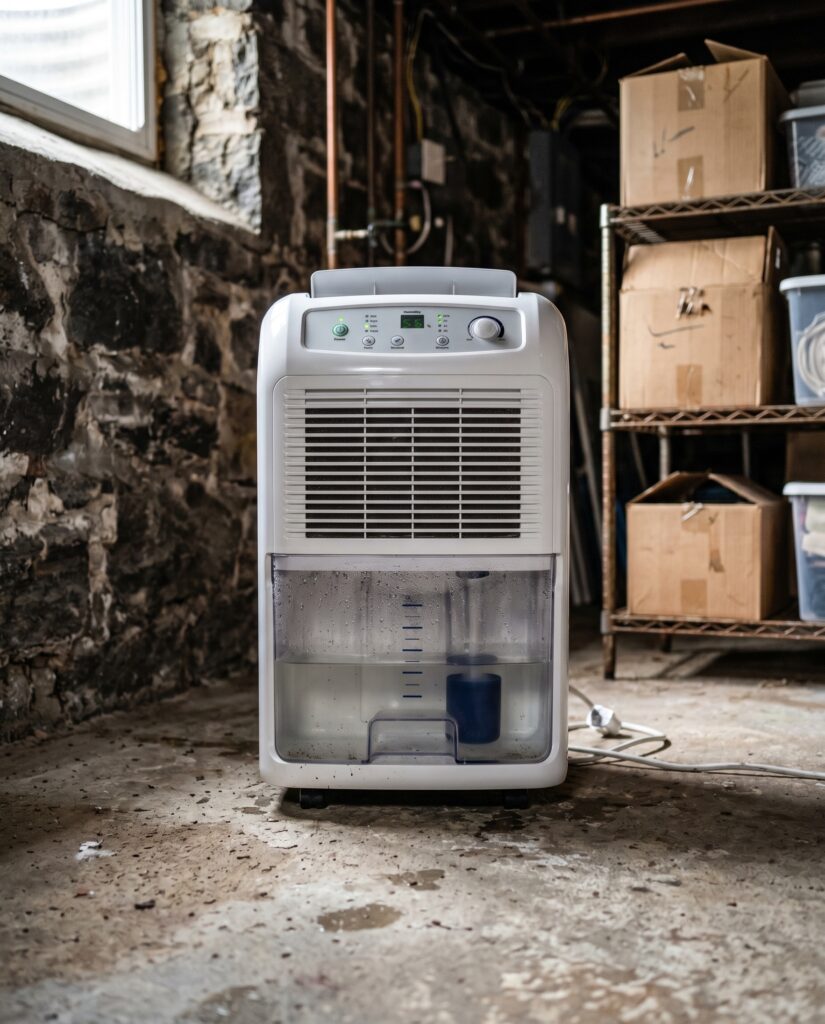
Now starve them out. Spiders stay where hunting is easy, so the move is to make your home a bad restaurant. Knock down the general bug population that feeds them: fix the leaky faucet and the damp basement that draw silverfish and moisture bugs, fit drains and dehumidify where it is musty, and keep the kitchen tight so flies and gnats have nothing to work with. Fewer prey insects means fewer spiders, full stop, because no predator stays where there is nothing to catch.
The biggest lever outdoors is light. White porch and security lights pull in clouds of moths, midges, and flying insects every night, and the spiders simply set up shop next to the buffet. Switch exterior bulbs to yellow “bug” bulbs or warm LEDs, point security lights away from doors, and keep blinds drawn at night so indoor light does not glow through the glass. Reducing the prey supply is exactly what UC IPM recommends over routine spraying, and it is why the spider you flatten gets replaced within a week if the food is still there. If you want to track the specific draws at your place, our breakdown of what attracts spiders to your house lists the fixes in priority order.
Where each tool belongs
Spiders are not all the same problem, so the right move changes with the situation. This is the quick map for the common cases in a home.
| Situation | Best approach | Watch out for |
|---|---|---|
| Webs in corners and basement | Vacuum webs, sacs, and spiders, then declutter | Empty the canister outside right away |
| Spiders slipping in at edges | Caulk gaps, fix screens and door sweeps | Seal the insect entry points too |
| Recurring arrivals near doors | Switch to yellow bulbs, cut the prey supply | Bright white light pulls in their food |
| Wandering spiders, monitoring | Glue boards along walls and behind furniture | Keep boards away from pets and kids |
A few targeted tools earn a place once the basics are done. Sticky glue boards set flat along baseboards and behind furniture catch the wandering hunting spiders and double as a monitor, so you can see whether your numbers are dropping; our roundup of the best spider traps and glue boards covers placement and which formats actually hold. If you decide a perimeter spray makes sense for a heavy season, treat it as a backstop to exclusion, not a substitute, and read and follow the product’s EPA label, because under federal law the label is the law and it tells you where the product is legal to use. Keep any pesticide off food-prep surfaces and out of reach of children and pets, and keep them off treated areas until everything is dry; for category logic, our guide to spider killer sprays sorts the contact products from the residuals. For an exposure question, contact a doctor or your local poison control center. A spray can help reduce activity when used as directed, but it will not keep spiders out on its own if the gaps and the food are still there.
Know the two you should not handle
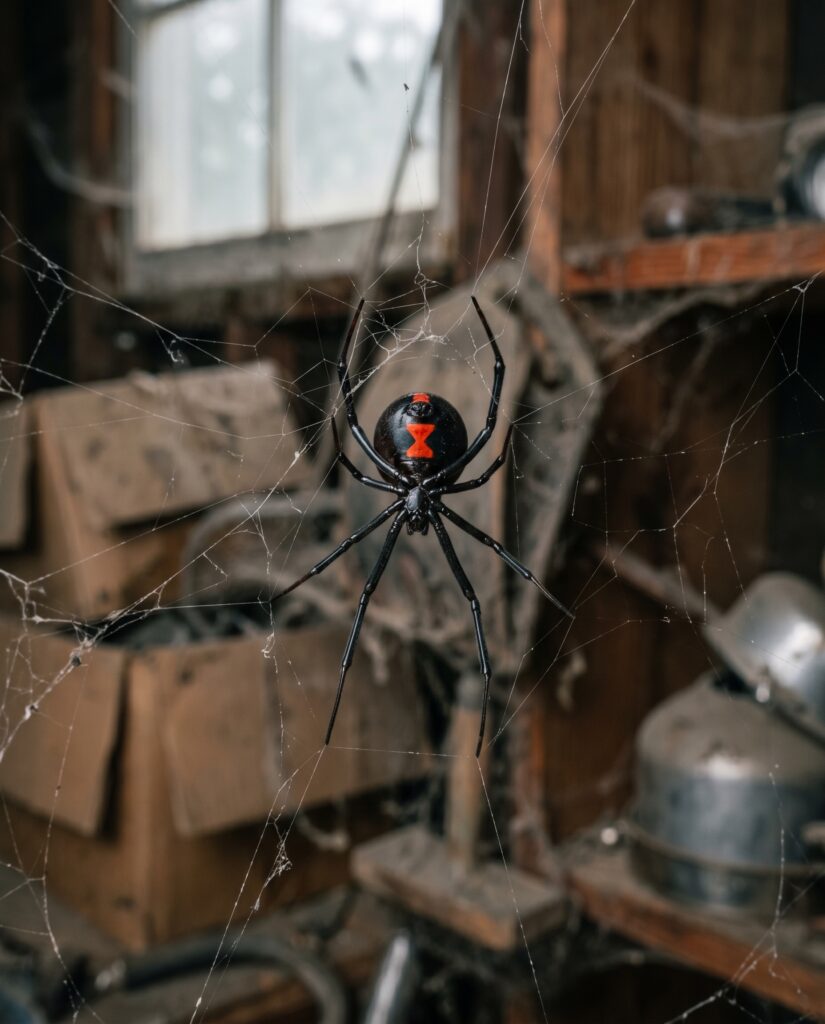
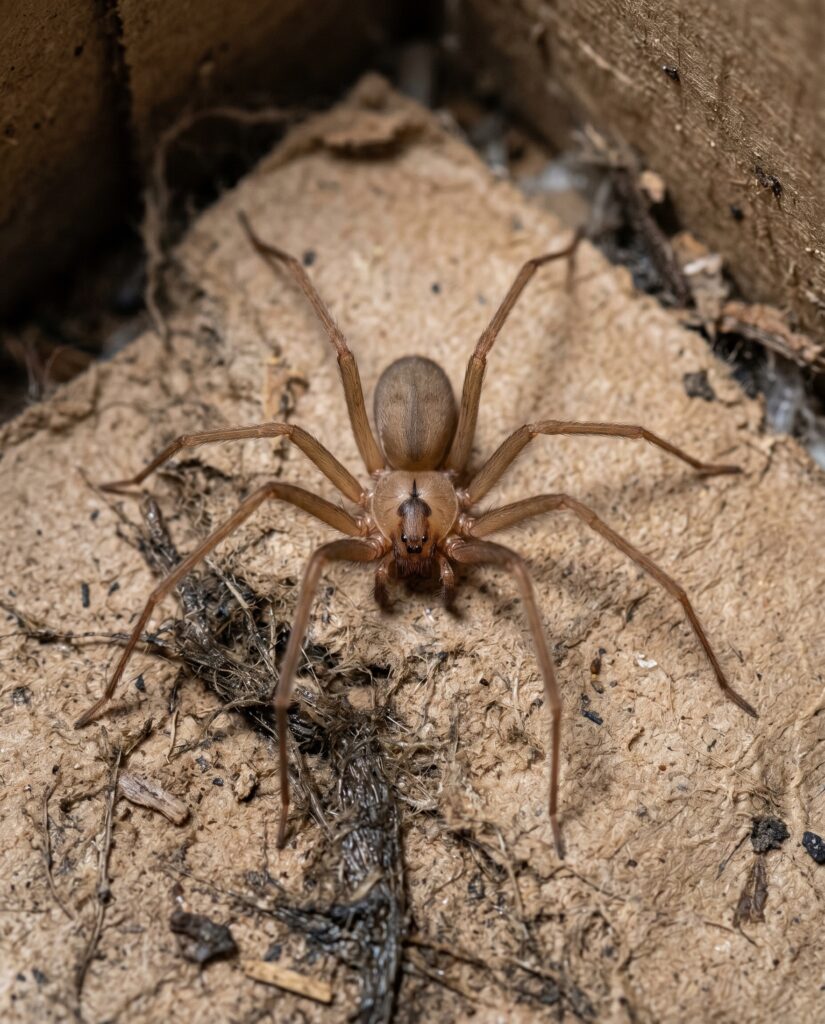
Almost every spider in a US home is harmless, but two are worth respecting: the black widow and the brown recluse. You do not need to fear the rest, and you should not. The University of Kentucky Entomology fact sheets show how to identify a black widow by its red hourglass on a glossy black body, usually in undisturbed spots like garages, woodpiles, and crawl spaces. The same program covers the violin marking and six eyes that identify a brown recluse, which hides in boxes, closets, and clutter mostly across the central and southern states.
For these two, the strategy is the same exclusion and decluttering, just with more caution: wear gloves, shake out stored clothing and shoes, and do not reach blindly into boxes or dark corners. If you are bitten and develop severe pain, muscle cramps, a spreading wound, fever, or any trouble breathing, get emergency medical help right away, and MedlinePlus explains when a spider bite needs medical attention. If you find an established widow or recluse population you cannot clear, that is the point to call a licensed pest-control professional rather than push your luck. To tell the dangerous ones from the harmless majority, our house spider identification guide lines them up side by side.
Common questions
What kills spiders instantly?
Direct contact with a vacuum, a shoe, or a contact spray takes out the spider in front of you, and that is fine for a one-off. The catch is that “instant” only solves the single spider you can see; it does nothing about the bugs feeding the rest or the gaps letting them in. That is why the durable fix is exclusion and cutting the food supply, not chasing individuals.
Does killing spiders just bring more?
In a sense, yes. Spiders are territorial about hunting ground, so an established web actually keeps other spiders away from that spot. Clear it and a new one often moves into the vacated, prey-rich corner. As long as the insects they eat are still around, the address stays attractive, which is why reducing the prey matters more than the body count.
Are house spiders dangerous?
The vast majority are not. Common house spiders, cellar spiders, and jumping spiders are harmless and even helpful, since they eat the pests you do want gone. The two to handle with care are the black widow and the brown recluse, and even those are not aggressive; bites usually happen when a spider is trapped against skin in clothing or bedding.
Do ultrasonic spider repellers work?
There is no reliable evidence they do, and Extension programs do not recommend them. Spiders do not navigate by the frequencies these gadgets emit, so the device runs, the spiders ignore it, and the bugs they hunt keep arriving. Skip the plug-in repeller and put the effort into sealing gaps and swapping the porch bulb instead.
Will they come back after I clean?
They will if the entry points and the food are still there, which is the whole reason cleaning alone is not enough. Vacuuming removes today’s spiders; sealing gaps and cutting the prey supply is what stops next month’s. Keep up the weekly vacuum, keep the screens and sweeps in good shape, and the numbers stay low.
Final verdict
Getting rid of spiders is about the conditions, not the spider. Start with the free work: vacuum every web, knock down egg sacs, and declutter the dark corners so they have nowhere to set up. Then close the house, caulk the gaps, fix the screens and door sweeps, and switch the exterior lights to yellow so you are not running a nightly insect buffet on your walls. Cut the prey, fix the moisture, and the spiders lose their reason to stay. Use glue boards to monitor and catch wanderers, and treat any spray as a backstop to exclusion rather than the plan. Skip the foggers and the ultrasonic gadgets; they miss the hidden bugs doing the recruiting. And remember most house spiders are on your side, so the win is fewer of them, not a sterile house.
Next steps:
– Pin down what is drawing them with our guide on what attracts spiders to your house.
– Tell the harmless majority from the two to respect in our house spider identification guide.
– Set up monitoring and catch wanderers with the best spider traps and glue boards.
Pingback: Best Natural Spider Repellents (Peppermint and More)
Pingback: What Attracts Spiders to Your House (and How to Stop It)
Pingback: Spider Bites: How to Identify Them and When to Worry