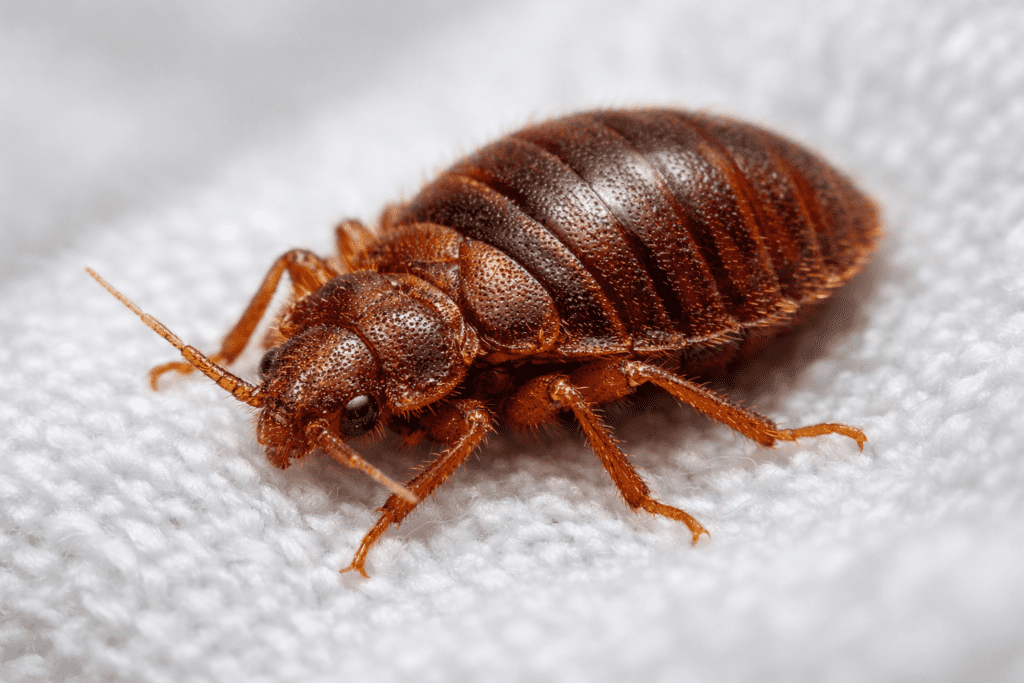
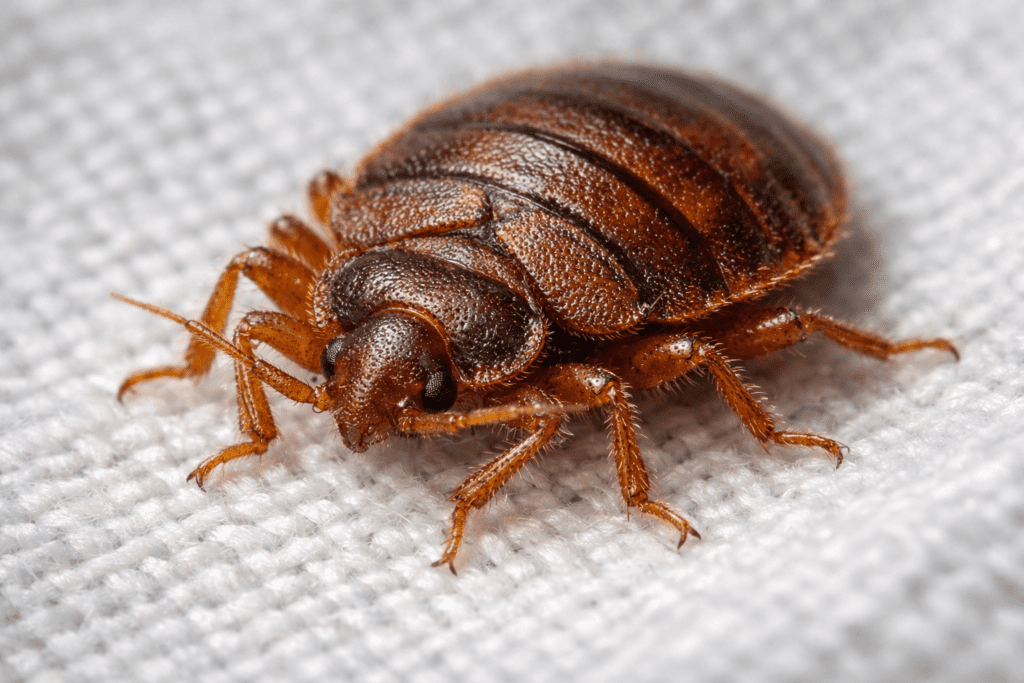
Bed bugs pass through five nymphal stages and shed a skin at each one, so the skins come in five sizes from about 1.5 mm to 4.5 mm. They are amber, translucent and completely hollow, keeping the shape of the insect including the legs. Finding several sizes in one place is the strongest single piece of evidence available to a homeowner, because it shows a population growing through stages rather than one insect carried in on a bag.
- Hollow and amber, not solid and dark. A corpse looks different at a glance.
- A range of sizes means breeding, which a dropping or a bite never establishes.
- They persist for years, so skins alone do not prove the problem is current.

Of the three things a person can find without seeing a live insect, shed skins are the most informative. Bites prove very little, because reactions vary enormously and many people show none. Faecal marks prove feeding happened. Skins prove growth, and growth in one place means residence. The pest evidence chart places them against the other traces a household finds.
What they look like
Shape. A complete bed bug, flat and oval, with legs and antennae present. The outline is exact, because the cuticle comes off in one piece.
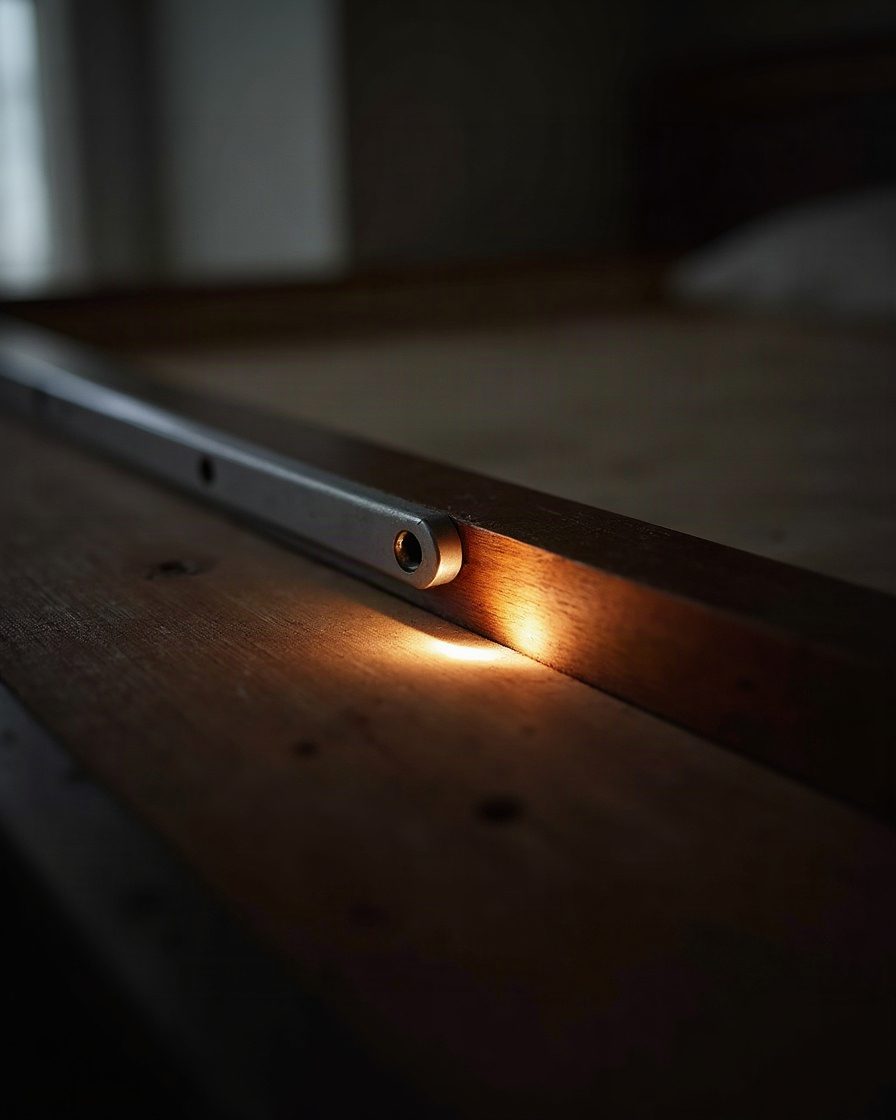
Colour. Pale amber to straw, translucent. Against white paper they read as almost transparent; against dark fabric they are pale and obvious. On a mid-brown wooden frame they are very easy to miss, which is why a torch at a low angle matters.
Hollow. Nothing inside. This is the test that separates a skin from a dead insect, which is solid, darker and usually damaged.
Size. Five distinct stages:
| Stage | Approximate length |
|---|---|
| First instar | 1.5 mm |
| Second instar | 2 mm |
| Third instar | 2.5 mm |
| Fourth instar | 3 mm |
| Fifth instar | 4.5 mm |
Each nymph must take a blood meal before it can moult to the next stage, which is the biological fact that makes the skins so informative. UC IPM’s guide to bed bugs covers the life cycle.
Why a range of sizes matters
A single insect introduced on luggage leaves no skins unless it survives, feeds repeatedly and grows. Several sizes in one location means several individuals at different stages, fed repeatedly, over a period of weeks at minimum.
That is a substantially stronger finding than a few dark dots, which could be left by one insect on one night. The University of Kentucky’s bed bugs guidance is direct about the evidence hierarchy: live insects, eggs and cast skins establish an infestation; bites do not.
Where to look, in order
The search is the hard part, not the identification. A negative result in the wrong place means nothing at all.
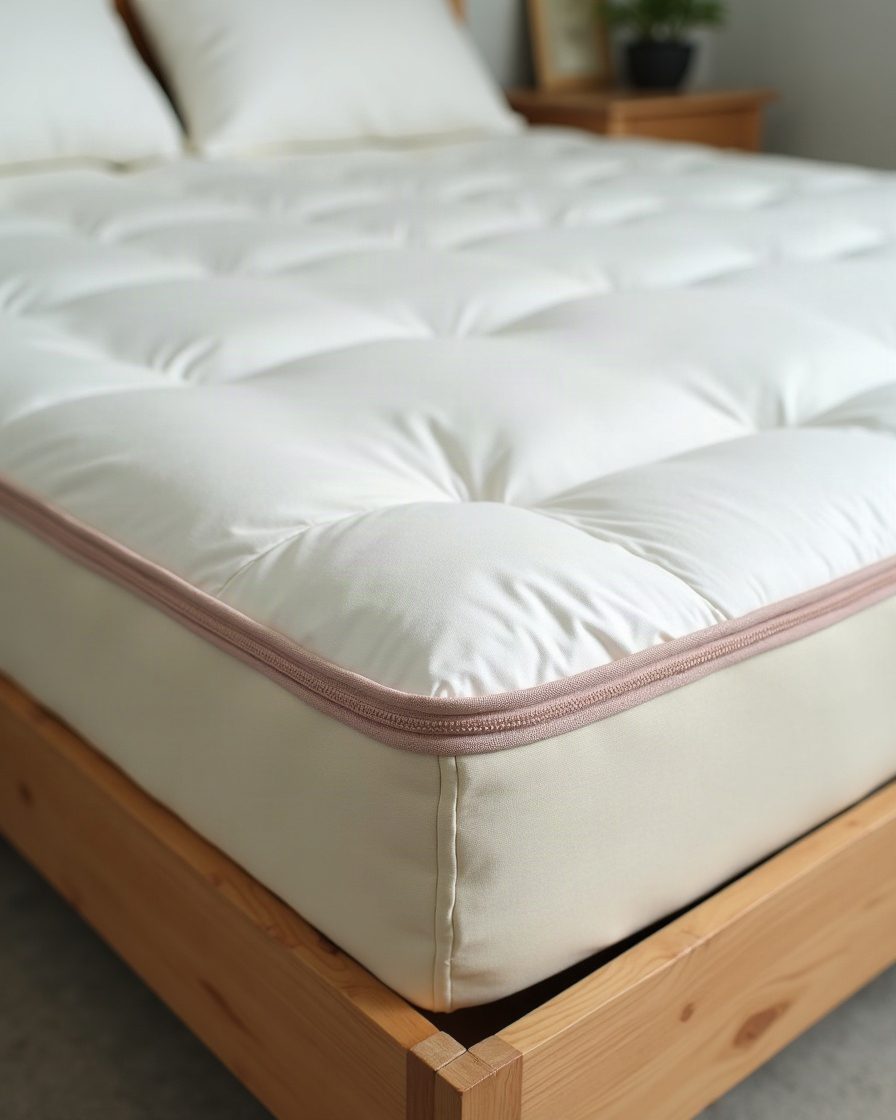
1. The piped seam of the mattress, all four sides, top and bottom. Open the piping slightly with a fingernail and run a torch along it.
2. The divan base or box spring, especially the underside and the stapled dust cover. This is frequently more productive than the mattress itself.
3. The bed frame: every joint, bolt hole, screw recess and the underside of every rail. Wooden frames with fixings are the classic harbourage.
4. The headboard, front and back, and the wall behind it.
5. Within about two metres of the bed: the drawer runners of a bedside table, a skirting board joint, the edge of the carpet, the back of a picture frame.
Alongside the skins expect dark faecal dots that bleed rusty brown into a damp cloth, covered on bed bug droppings on a mattress. Eggs are pearly white, about 1 mm, and cemented into crevices.
What gets mistaken for them
Carpet beetle skins. Bristly, brown, and found along skirting and in wardrobes rather than in bed frames. See shed insect skins in the house.
Dead insects of other species. Solid and opaque rather than hollow.
Fabric and packaging debris. Irregular, and lacking legs and antennae.
Other insects entirely. Several species are flat, brown and oval. Bugs that look like bed bugs covers the lookalikes, which include bat bugs, spider beetles and carpet beetle adults.
The limitation, stated clearly
Cast skins are made of chitin and they last. A skin found today could be from this month or from three years ago, and a room that was treated successfully will still contain skins afterwards.
So skins establish that there was an infestation. They do not by themselves establish that there is one now. What does: live insects, fresh faecal marking that is still tacky, or eggs.
If the room has been treated before, clear every skin you can find, note the date, fit an encasement, and re-inspect in two weeks. Anything new is current.
What to do next
Two things not to do first, because both make things worse.
Do not throw the mattress out. It moves the problem rather than solving it, and frequently spreads it through a building on the way to the skip. It also does nothing about the frame, which is usually the real harbourage.
Do not spray a consumer aerosol into the harbourage. Repellent products scatter a localised population into wall voids and adjacent rooms, converting one bedroom into a whole flat.
What genuinely helps immediately: strip the bed and wash and tumble dry all bedding on the hottest setting the fabric allows, since heat kills every life stage. The University of Kentucky covers the parameters in thermal deinfestation of household items. Vacuum the seams, joints and recesses thoroughly, then seal and dispose of the contents outside the building. Fit properly rated mattress and base encasements, which trap anything already inside and make future inspection trivial.
Then get a professional assessment. This is one of the few household pests where amateur treatment reliably underperforms and where a partial treatment makes the next one harder.
Common questions
I found one skin and nothing else. Search the frame and base properly before concluding anything. One skin still means something moulted there.
Can they be from a previous tenant? Yes, and this is common. The clear-and-wait test is what separates that from a live problem.
Are the skins a health risk? They are not infectious. Accumulated insect fragments are a recognised allergen in heavy infestations, which is a reason to vacuum rather than a reason for alarm.
No bites but I found skins. Bites are not required. A substantial proportion of people show no visible reaction at all.
The bottom line
Hollow, amber and in a range of sizes means a breeding population rather than a single hitchhiker, and that is the finding worth acting on. Search the seam, the base and the frame joints rather than the sheets. Then wash hot, encase, and get it assessed, because this is the pest where the common first instincts spread the problem.