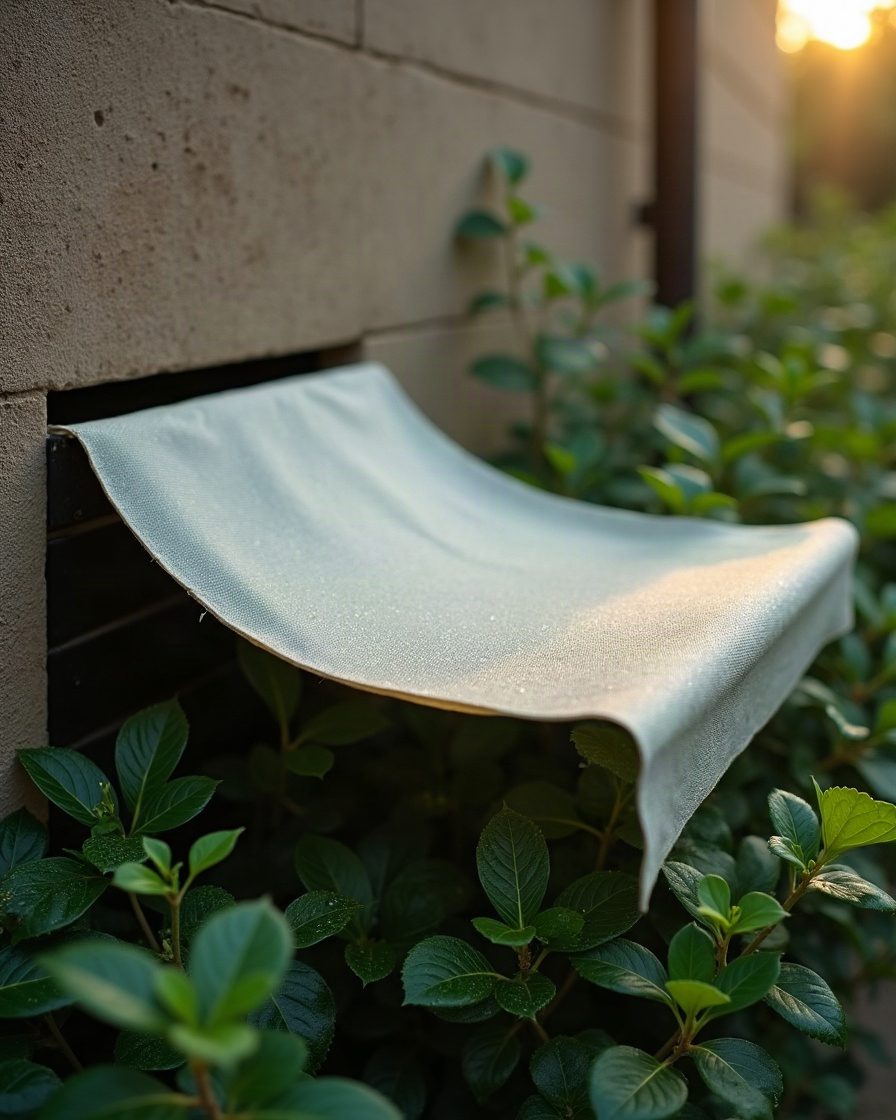
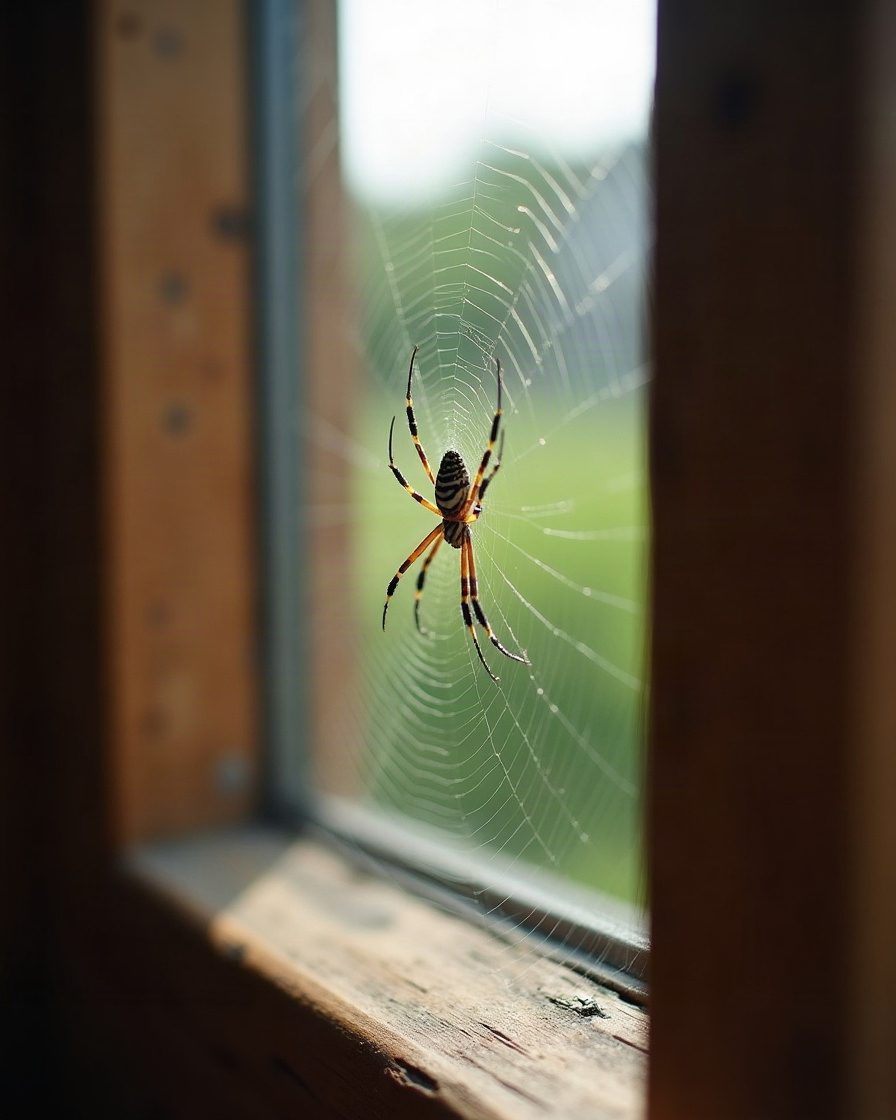
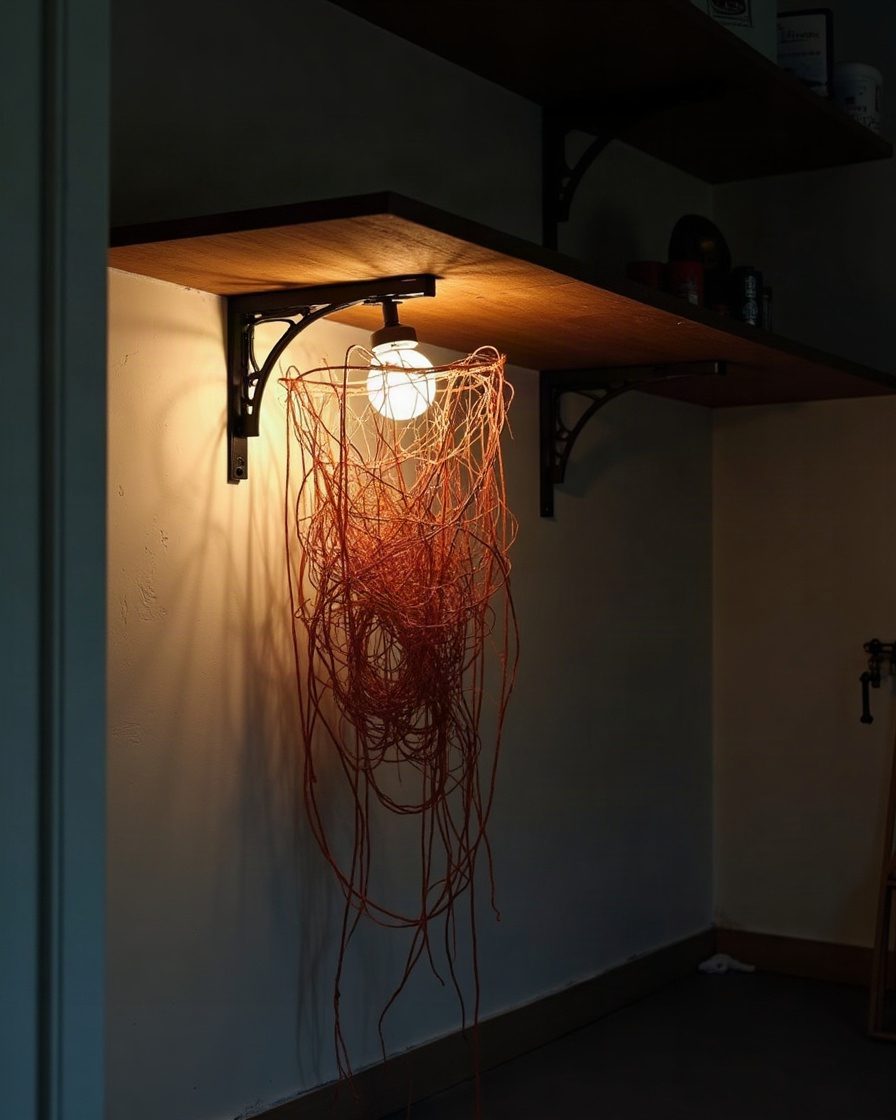
A flat horizontal sheet with a tube at one edge is a funnel weaver, which waits in the tube and runs out onto the sheet. A vertical wheel with radiating spokes and a spiral is an orb weaver, which rebuilds it almost daily. A tangled three-dimensional mesh with no discernible pattern is a cobweb spider. The architecture reflects how each hunts, so it identifies the family reliably even when the spider is nowhere to be seen, which it usually is not.
- Sheet plus funnel: an ambush hunter waiting in a retreat.
- Wheel: an interception trap, rebuilt so often that a crisp one is occupied.
- Tangle: a snare, and the commonest web indoors.
Spiders are hard to see and easy to misremember. Webs sit still and can be photographed. Since web architecture is largely determined by family, the structure is usually a better identification than a glimpse of the animal.
The three main forms
The sheet web with a funnel retreat. A dense, flat, roughly horizontal sheet of silk, often slung across low vegetation, in the angle of a wall, over a gap in brickwork, or in the corner of a garage or shed. At one edge the sheet narrows into a tube leading back into a crevice.
The spider waits inside the tube. The sheet is not sticky; it works as a trip surface, and the spider detects vibration, runs out, bites and carries the prey back. Funnel weavers are fast, which is what people notice about them, and they are not aggressive.
Outdoors these become conspicuous on dewy autumn mornings when every sheet in a hedge shows up at once.
The orb web. The classic wheel: a frame, radiating spokes and a sticky capture spiral. Built vertically to intercept flying insects, so it appears across window reveals, doorways, between plants, and very often around outdoor lights where the insects are.
Orb weavers are the most industrious builders. Many consume and rebuild the entire web daily, which has a useful consequence: a crisp, clean, well-formed orb is in use. If it is dusty and broken it was abandoned.
The cobweb, or tangle web. No visible geometry: an irregular three-dimensional mesh of threads running in all directions. This is what accumulates in ceiling corners, under furniture, behind appliances, in cellars and garages.
The lack of pattern is not a sign of a poorly made web. Tangle webs work as snares, often with sticky gum lines anchored to the floor beneath them that catch walking insects and lift them. These are the commonest webs indoors.
UC IPM’s guide to spiders and the University of Kentucky’s common spiders found around homes and buildings cover the families in more detail.
The comparison
| Sheet and funnel | Orb | Tangle | |
|---|---|---|---|
| Shape | Flat sheet, tube at edge | Vertical wheel | Irregular 3D mesh |
| Sticky | No | Yes, the spiral | Partly, gum lines |
| Spider position | In the funnel | Centre or a nearby retreat | Within the tangle |
| Rebuilt | Extended over time | Often daily | Extended over time |
| Typical site | Grass, walls, garages | Windows, doorways, lights | Ceiling corners, cellars |
| Indoors | Sometimes | Around doors and windows | Very common |
Two more forms worth knowing
Mesh or dome webs, a small hammock of fine silk slung under leaves or in low vegetation, with the spider hanging beneath it. Common in gardens, rarely indoors.
No catching web at all. A substantial share of spiders build only a silk retreat and hunt actively. Jumping spiders, wolf spiders and sac spiders all fall into this group, and a wolf spider found indoors has not lost its web because it never had one. What you may find instead is a dense little silk sleeping bag under a sill, along a skirting board or beneath furniture.
This is worth knowing because “no web” is not evidence against a spider. Webs in corners covers the indoor case, and bugs that look like spiders covers the animals that get mistaken for them, which include harvestmen and several mites.
Silk that is not a spider
Three exceptions that matter more than any of the above, because they are actual problems where a web is not.
Fine dusty webbing on plant leaves with pale stippling: spider mites. Not spiders, and a sap-feeding problem. See webbing on garden plants.
Silk binding grains inside a food packet: pantry moth larvae. See moth webbing in a pantry.
A small silk tube, sometimes moving: a case-bearing clothes moth larva. See silk tubes and tunnels indoors.
Reading the site
Where a web is tells you what the spider is catching, and that is usually the more useful information.
Around an outdoor light: flying insects drawn to the lamp. The web is a symptom of the lighting, and changing a cool white bulb for a warm one reduces both. See bugs attracted to light at night.
Across a doorway or a window reveal: insects moving in and out of the building.
Low in a garage, cellar or under furniture: walking insects, which means there are walking insects.
Multiplying quickly indoors: an increase in the prey population rather than a spider problem as such.
Common questions
Which of these is dangerous? In most regions, none. Web architecture does not correlate with medical significance in a way that is useful to a homeowner. Where species of concern occur they are associated with undisturbed clutter, and the brown recluse guidance covers one such case.
There is a web but no spider. Normal for every form above. Look for a retreat at the edge, in a crack, or behind an adjacent object.
Sheets all over the hedge one morning. Funnel weavers, made visible by dew. They were there the day before.
How old is a web? Dust is the clock. Silk picks it up within days.
The bottom line
Sheet plus funnel, wheel, or formless tangle: three architectures, three ways of hunting, and enough to name the family without finding the animal. Then check for dust to see whether it is in use, and check that it is spider silk at all, because the webbing on a plant or inside a food packet is a different problem entirely.