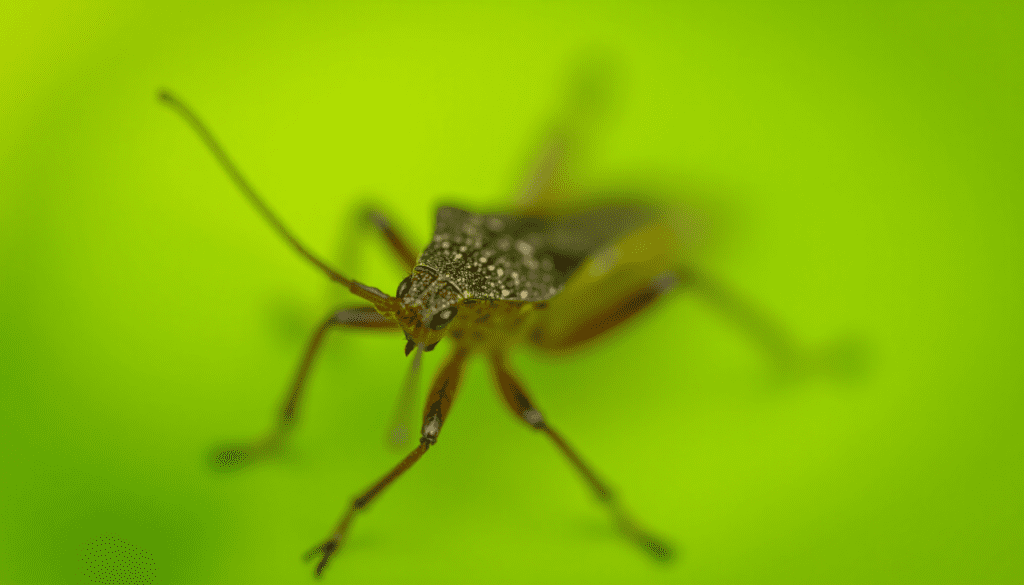
Fine, dusty webbing on leaf undersides and at stem junctions, with the leaf surface finely stippled pale, is spider mites. Coarse, dense webbing binding whole shoots or leaves into a shelter, with chewed leaf tissue and frass, is caterpillars. Tap the foliage over a sheet of white paper: mites appear as slowly moving specks, caterpillars are visible without help. The two need entirely different responses, and one of them often needs none.
- Stippled leaves plus fine webbing: mites. The webbing is incidental to sap feeding.
- Chewed leaves plus coarse webbing: caterpillars, building a shelter.
- Mites thrive in hot, dry, dusty conditions, which is often the actual cause.
Webbing on a plant reads as a spider problem to most people and almost never is. Two quite different animals produce it, and the leaf tells you which within a few seconds. The pest evidence chart covers the other traces that get read the same way.
Spider mites
The webbing. Very fine, and it looks dusty rather than structural. It concentrates on leaf undersides, in the angles where leaf meets stem, and over growing tips. In a heavy infestation it can cover a whole shoot in a hazy film.
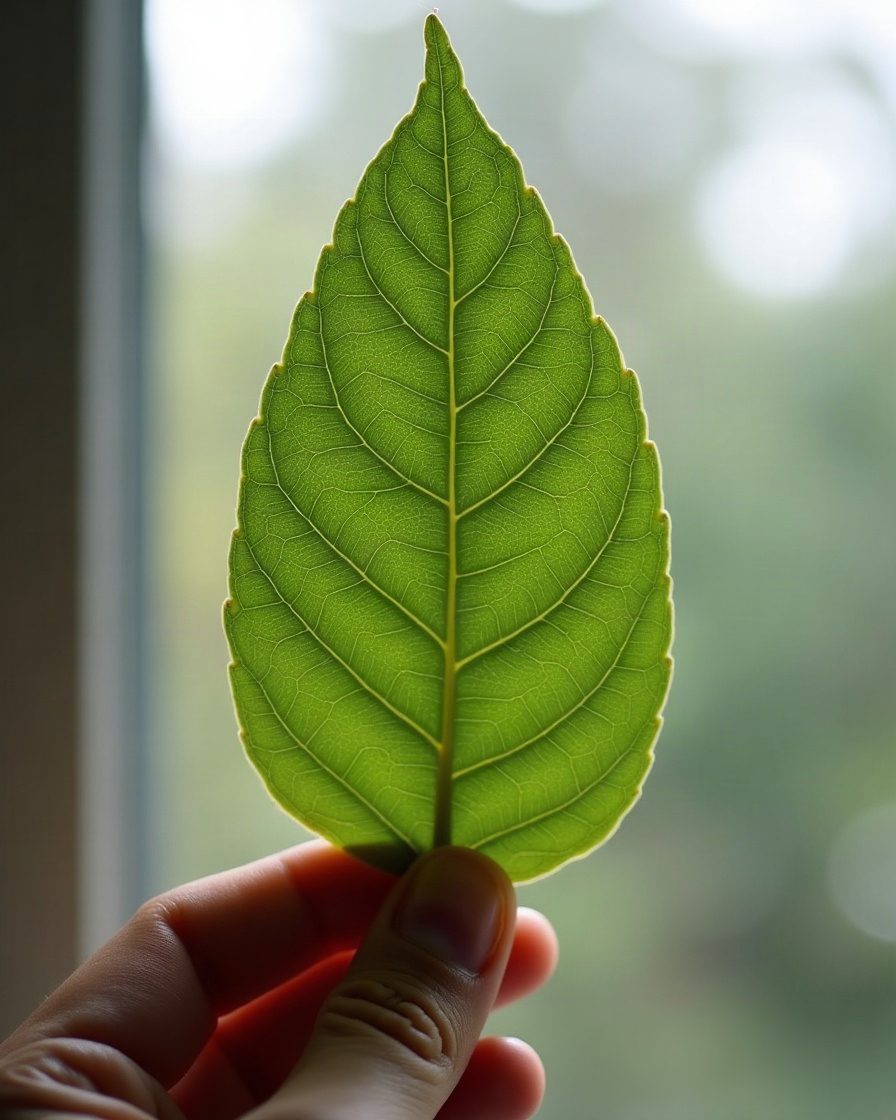
The leaf. This is the diagnosis. Sap-feeding mites empty individual cells, producing a fine pale stippling across the leaf surface, like the faintest possible spray of dots. As it progresses the leaf goes bronze or grey, then dries and drops. The stippling is visible before the webbing is.
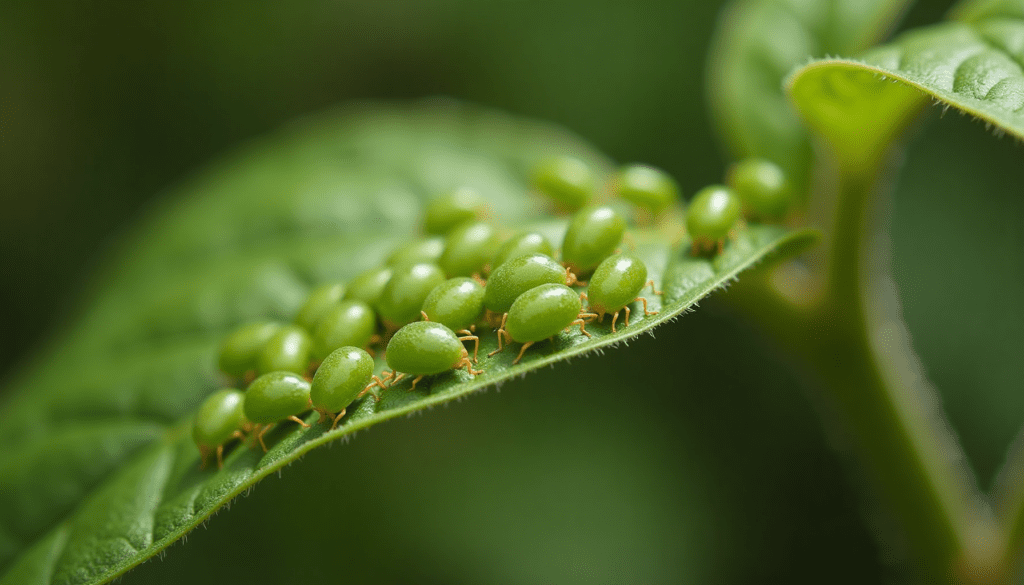
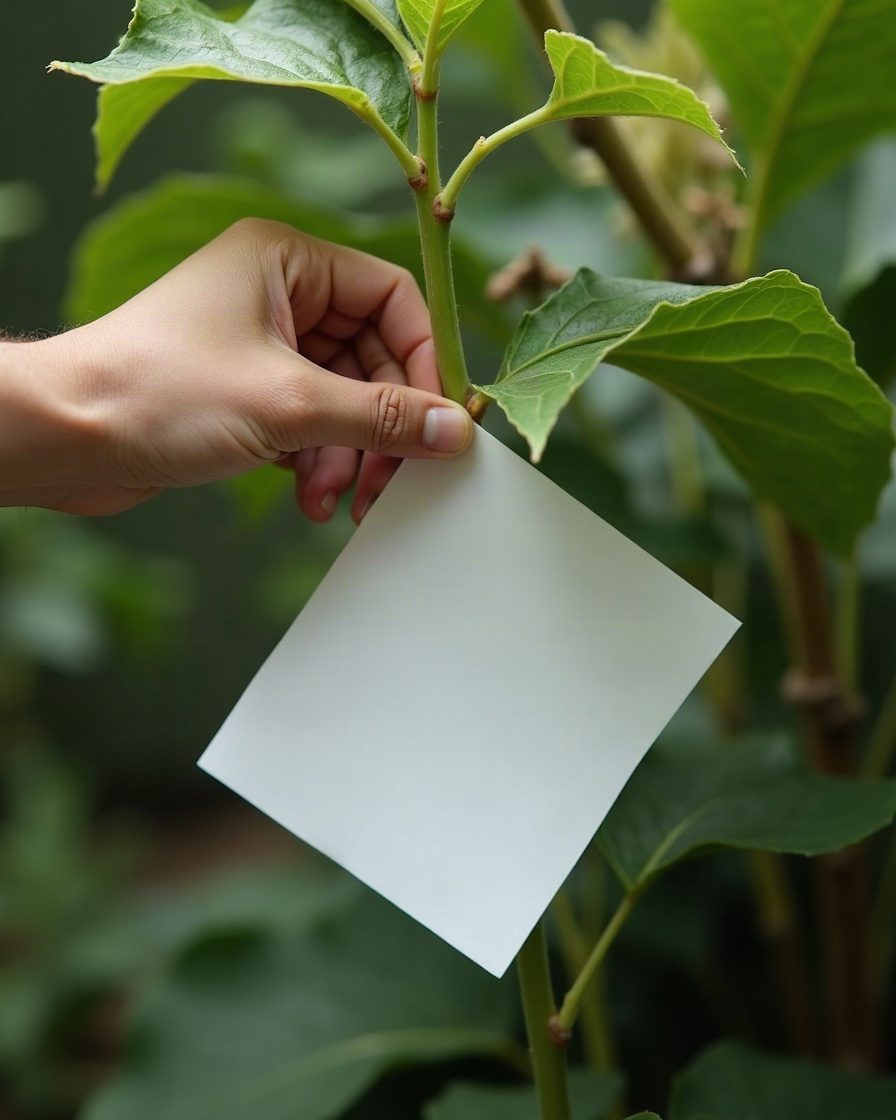
The animals. Under 0.5 mm, so effectively invisible individually. The way to confirm is to hold a sheet of white paper under a leaf and tap the stem: mites fall onto it and can be seen moving slowly.
Conditions. Spider mites thrive in hot, dry, dusty conditions, and outbreaks are frequently a symptom of those rather than an invasion. Plants under water stress, plants beside a dusty path, and houseplants next to a radiator are the classic cases. Broad-spectrum insecticide makes it worse rather than better, because it kills the predatory mites and small beetles that normally hold the population down.
UC IPM’s guide to aphids covers the neighbouring sap-feeding group, whose sticky honeydew is a different but often co-occurring finding.
Caterpillars
The webbing. Coarse, dense and structural. It binds leaves together, encloses the tip of a shoot, or forms a visible tent in a branch fork. You can see individual strands.
The leaf. Chewed. Holes, missing edges, or leaves skeletonised down to the veins, with green or dark frass pellets caught in the webbing and on the foliage below.
The animals. Visible without help, inside the shelter. Opening a tied leaf or a tent finds them.
Common cases. Web-forming caterpillars of several families make communal tents in trees and shrubs. Leaf rollers tie individual leaves with silk and feed inside. Both are conspicuous and both are seasonal.
Caterpillar frass in the garden covers reading the pellets, which fall straight down and so locate the feeder, and types of caterpillars covers the animals.
The comparison
| Spider mites | Caterpillars | |
|---|---|---|
| Webbing | Fine, dusty, hazy | Coarse, structural, binding |
| Leaf damage | Pale stippling, then bronzing | Holes, chewing, skeletonising |
| Frass | None visible | Green or dark pellets |
| Animal visible | No, tap onto paper | Yes, inside the shelter |
| Worsened by | Heat, drought, dust, spraying | Season |
| Usual response | Water, hose down, wait | Prune out or hand remove |
What else spins on a plant
Actual spiders, which build a recognisable web with a pattern and are catching insects rather than eating the plant. They are beneficial and should be left. Funnel webs compared with sheet and orb webs covers telling a real web from these two.
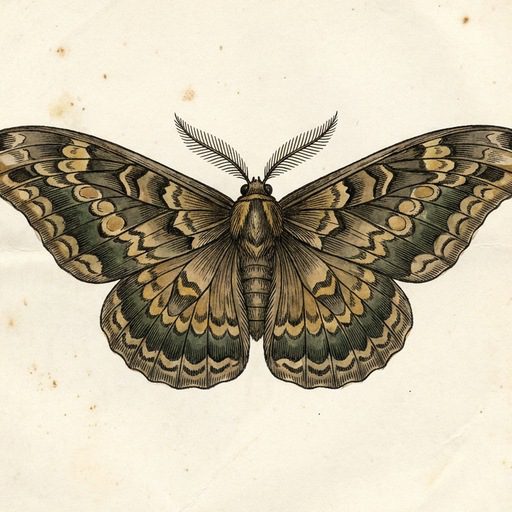
Ermine moth larvae, which in some years cover an entire hedge or small tree in dense silk. Spectacular, alarming, and the plant almost always recovers fully.
Woolly aphids and mealybugs, which produce white waxy fluff rather than webbing. It looks superficially similar and pulls apart differently: wax crumbles, silk stretches.
What to do
For mites, address the conditions first. Water the plant properly. Hose the foliage, undersides included, with a firm spray of water, and repeat every few days; this alone knocks populations down substantially and washes off the dust they favour. Keep foliage clear of dust. Avoid broad-spectrum insecticide entirely, since it removes the natural enemies and mite populations rebound faster than predators do. On houseplants, raising humidity and wiping leaves is usually sufficient.
For caterpillars, decide whether it matters. On an established tree or shrub, defoliation of a few branches is cosmetic and the plant will regrow. Prune out a tent or a bound shoot and dispose of it, which is quick and complete. On a food crop or a young tree, hand removal at night is effective, and the frass will have told you where to look.
Both cases sit squarely within the EPA’s point about whether a pesticide is needed at all: the mite case is often made worse by spraying, and the caterpillar case is usually solved with secateurs.
One exception on handling: some hairy caterpillars, including processionary species in parts of Europe, carry irritant hairs and are a genuine health matter. Do not handle a hairy communal nest, and in regions where those occur, do not attempt removal yourself.
Common questions
The webbing appeared in a heatwave. Consistent with mites, which build up fast in hot dry weather.
It is on a houseplant next to a radiator. The classic spider mite situation. Move the plant, raise humidity, and wash the leaves.
Whole hedge covered in silk. Usually ermine moth larvae. Unsightly for a few weeks and rarely harmful.
Can I tell without a magnifier? Yes. The stippling on the leaf and the white-paper tap test are both enough.
The bottom line
Look at the leaf, not the webbing. Fine pale stippling means mites and usually means the plant is hot, dry and dusty. Chewing and frass mean caterpillars and usually mean secateurs. And in both cases reaching for a broad-spectrum spray is the response most likely to make next month worse.