
Three things live in carpet and they are easy to separate once you know what to look at. Carpet beetle larvae are bristly and slow and eat the fibres. Fleas are shiny, jump hard, and only appear where an animal has been. Dust mites are microscopic, so anything you can actually see is not one. Of the three, only fleas bite people.
- Bristly, slow, leaves shed skins: carpet beetle larva. Damages wool and natural fibres, does not bite.
- Jumps out of reach, bites at ankle height: flea. Check the pet before treating the room.
- You cannot see it at all: dust mites, which are an allergy question rather than a pest one.
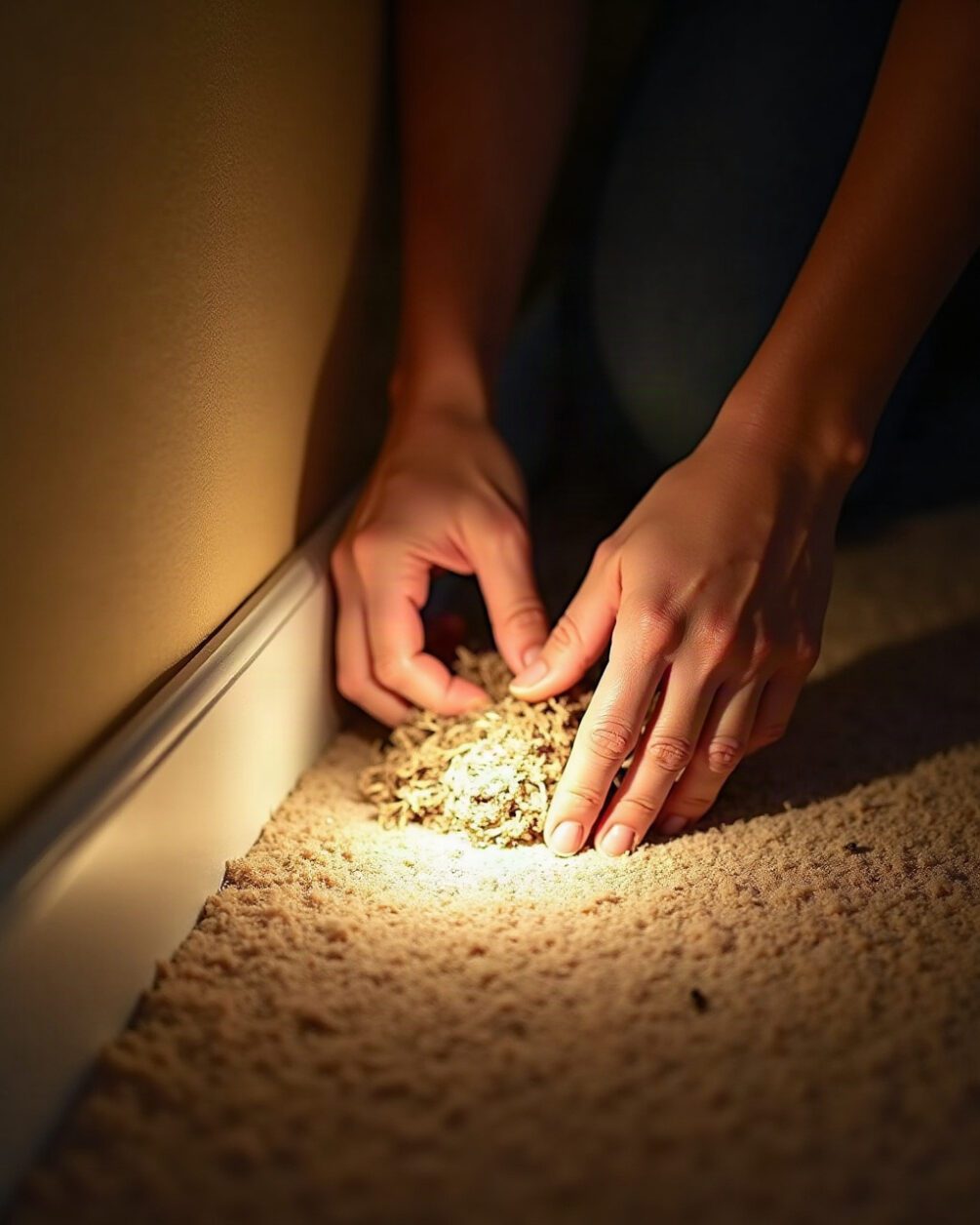
Carpet is a habitat. It holds warmth, fibre, skin flakes, hair and dropped food, and it is rarely disturbed at the edges. Almost everything found in it belongs to one of three groups, and the three are far easier to separate by behaviour than by appearance.
Check one: does it jump?
This single question resolves most cases in a second.
A flea jumps, and it jumps a long way relative to its size, disappearing before you can look properly. It is dark, shiny, and flattened side to side, which lets it move through hair. Fleas concentrate where an animal rests, so the highest densities are around a pet bed, a favourite sofa spot, or the base of a chair.
Kentucky’s guidance is unambiguous that flea control works through treating the pet, with the environment as a secondary target. Treating a carpet while the animal remains untreated does not work, because the animal keeps reseeding it. Our complete flea guide covers the sequence, and the flea life cycle guide explains why the problem often seems to return two weeks after it looked solved.
A carpet beetle larva does not jump. It creeps, and it often curls when touched.
Check two: is it bristly or smooth?
Carpet beetle larvae are three to five millimetres, tapered, and covered in short stiff bristles, which give them a banded or fuzzy look under a phone camera. They are the most common thing in a carpet by a wide margin.
Kentucky notes that carpet beetle larvae feed on wool, felt, fur, feathers and other animal products. That explains where they concentrate. They are found at the edges, not in the middle of a room: along skirting boards, under heavy furniture that never moves, beneath rugs, in wardrobes, and around air vents where lint collects. Open floor gets vacuumed. Edges do not.
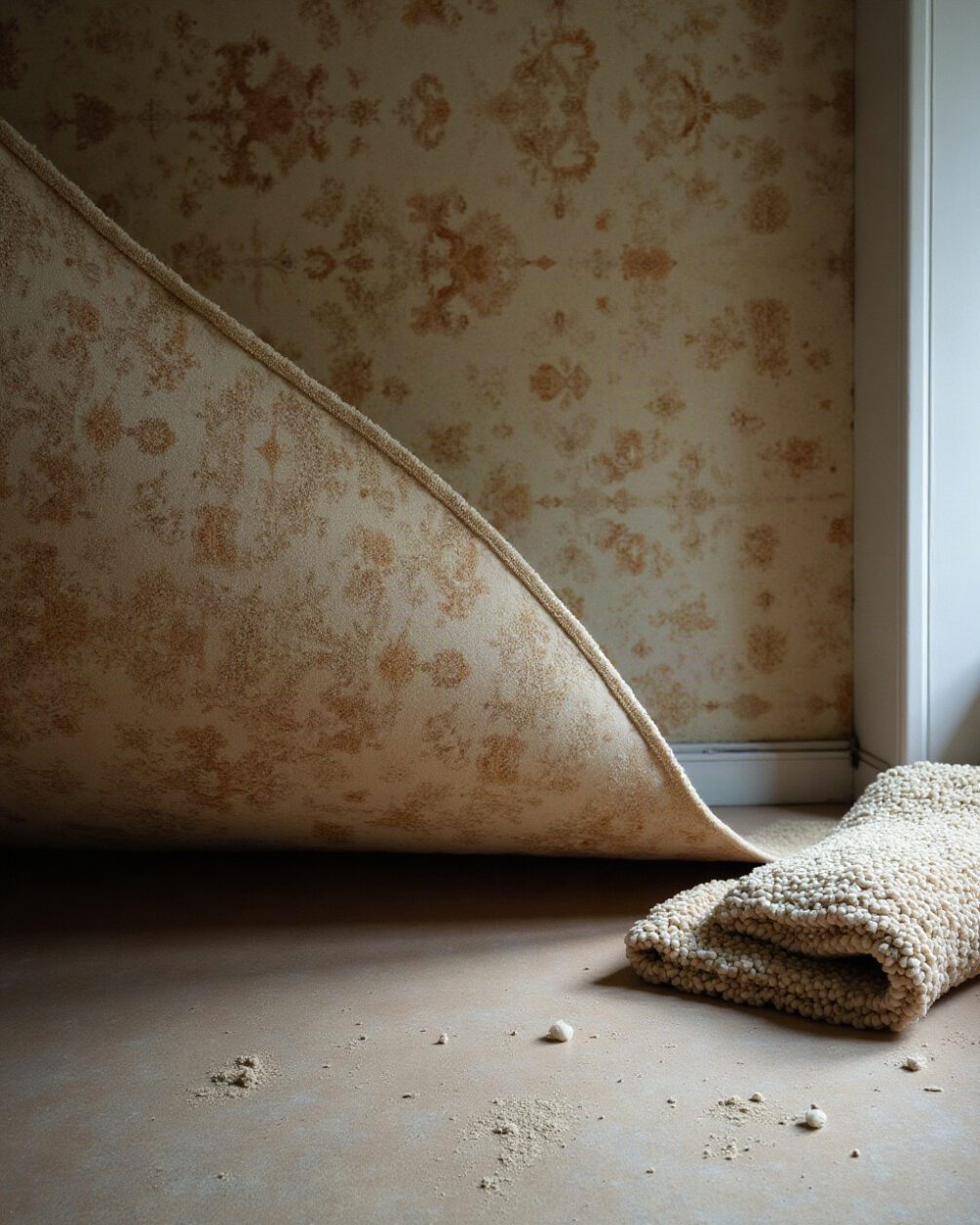
They leave two things behind that are often easier to find than the larvae. Shed skins, which look like empty bristly husks, and irregular bare patches or thinning in wool carpet and rugs. A pattern of damage under a sofa that nobody has moved in three years is a classic finding. Our carpet beetle identification guide covers the species, and getting rid of carpet beetles covers the treatment, which is mostly thorough vacuuming and dealing with the fibre source.
Check three: can you see it at all?
Dust mites are around a fifth of a millimetre and effectively invisible to the naked eye. So if you are looking at something and can describe its shape, it is not a dust mite, whatever a search result suggested.
That matters because the management is completely different. Dust mites are not a pest control problem. They are an allergen source, controlled through humidity, bedding covers, washing at high temperature and vacuuming with good filtration. Our dust mite allergy guide covers that properly, and dust mites versus bed bugs settles the other common mix-up.
The bites question, answered honestly
People usually arrive at this topic because something is biting, and the honest answer is that carpet beetles do not bite. What they can do is cause a contact rash: the larval bristles irritate skin, producing itchy red bumps that look enough like bites to be misdiagnosed for months. We cover this specifically in our guide to carpet beetle rashes.
Flea bites are real bites, and their signature is location: small itchy bumps clustered around the ankles and lower legs, because that is the height a flea reaches from the floor. Our flea bites guide covers what they look like and how to treat them.
If the bites are on the upper body and appear overnight, carpet is the wrong place to be looking. Kentucky describes bed bugs biting exposed skin while people sleep, and the check belongs in the mattress seams rather than the floor. Our bite identification chart lays out the patterns, with the standing caveat that no one can reliably name a culprit from a welt alone.
What actually works on carpet
Vacuum the edges, not the room. The middle of a floor is not where any of these live. Skirting board junctions, under and behind furniture, along the edges of rugs, and under wardrobes are where the population is. Move the furniture.
Empty the vacuum outside. Flea eggs and beetle larvae survive in a bag or canister perfectly well.
Find the fibre source for carpet beetles. A forgotten wool jumper, an old rug rolled up in a loft, a taxidermy piece, a wool underlay, or a bird or wasp nest in a soffit feeding larvae into the room below. Vacuuming without removing the source treats the symptom.
Treat the animal for fleas, in the right order. The pet first, then the environment, then persistence for several weeks while pupae in the carpet hatch out. Our guide to flea eggs explains why the timeline runs long.
Common questions
I vacuum constantly and they keep coming back.
For carpet beetles, that means a source you have not found, usually outside the vacuum’s reach. For fleas, it usually means the pupal stage, which is resistant and hatches over weeks, or an untreated animal.
Are they in the carpet or the underlay?
Carpet beetle larvae will use the underlay and the fibres beneath a fitted carpet, which is one reason edge treatment matters more than surface cleaning.
Do I need to replace the carpet?
Almost never. Damage is usually localised to edges and under furniture. Removing the food source and vacuuming thoroughly resolves the great majority of cases.
Final verdict
Ask whether it jumps. If yes, it is a flea and the work starts with the animal, not the floor. If no and it is bristly, it is a carpet beetle larva and the work is finding the wool or feather source it is feeding on. If you cannot see it at all, you are thinking about dust mites, which is an allergy question about humidity and bedding rather than a pest question. Only the flea bites, and the rash people blame on carpet beetles is contact irritation rather than feeding.
Pingback: What Do Flea Larvae Look Like? The Stage in Your Carpet