If your backyard is unlivable by dusk, the fix is not a stronger spray, it is finding the water. A mosquito yard is a standing-water problem, full stop. A female only needs a bottle cap of still water and about a week to turn it into a new batch of biting adults, so the whole game is removing that water. Walk the yard once a week and tip and toss every container that has collected rain, then drop a Bti dunk into the water you genuinely cannot drain, like a rain barrel or a pond. Adult foggers and yard sprays only knock down what is flying today; pull the water and there is nothing left to replace them tomorrow.
Mosquitoes in your yard are a standing-water problem. Tip and toss every container that holds water once a week, treat the water you cannot drain with Bti, and you starve the next generation before it can fly; sprays alone never do that.
- Free first: Walk the yard weekly and dump every saucer, bucket, toy, tarp fold, and clogged gutter that holds rain.
- For water you cannot drain: Drop a Bti dunk or granules in rain barrels, ponds, and low spots that stay wet.
- Skip: Bug zappers and ultrasonic gadgets; they kill the wrong insects and barely touch biting mosquitoes.
Why the water is the whole story
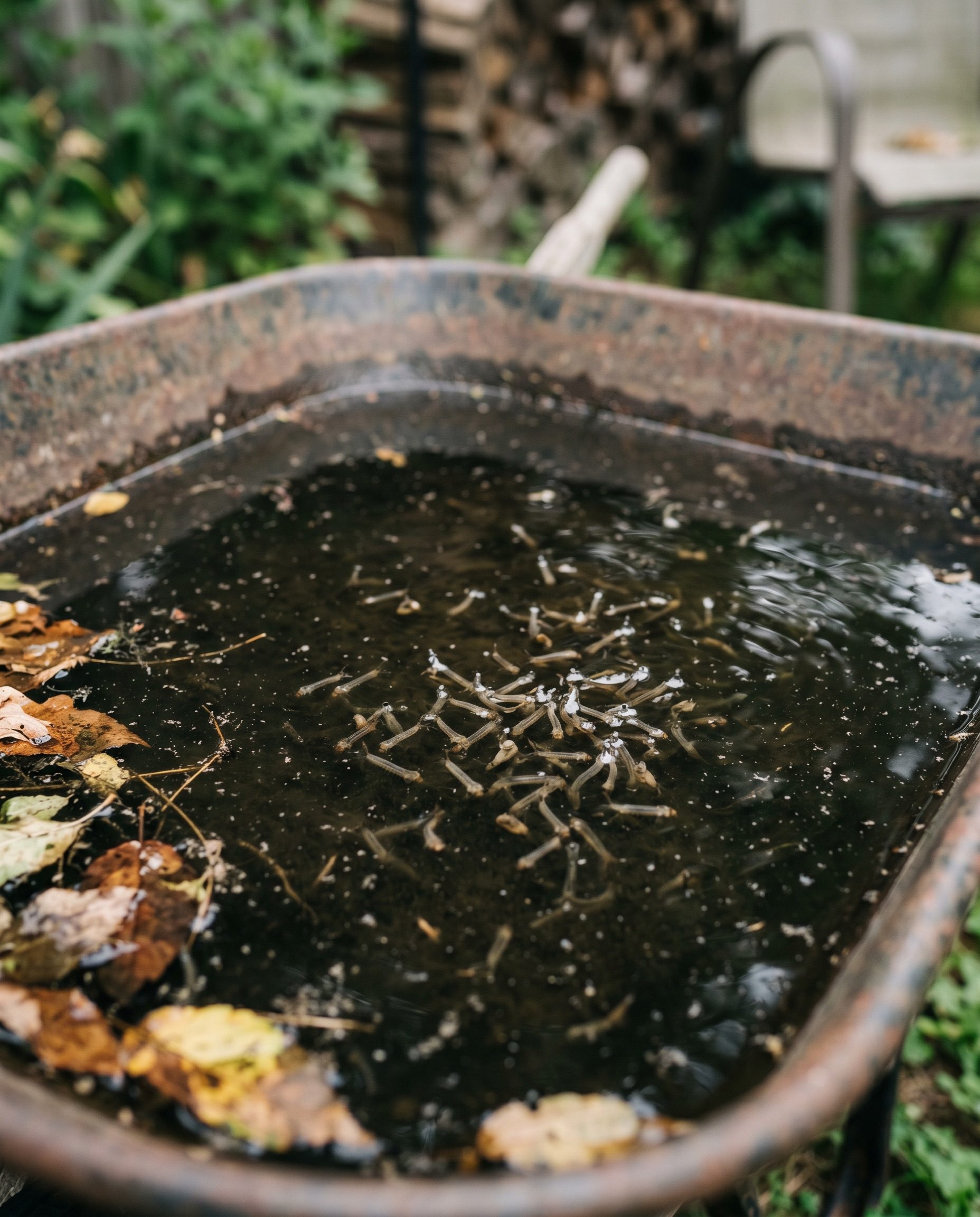
Most yard mosquito advice starts with what to spray, and that is exactly backwards. Mosquitoes are tied to water in a way almost no other backyard pest is, because the first three stages of their life happen in it. A female lays her eggs on or near still water, the eggs hatch into the wriggling larvae you have probably seen in a forgotten bucket, and only the final adult stage leaves the water to bite. The CDC’s overview of where mosquitoes breed and how fast their life cycle runs puts that full cycle at roughly a week to ten days in warm weather. That speed is the bad news and the good news at once.
It is bad news because a wet weekend can hand you a fresh swarm by the following one. It is good news because the breeding sites are right there in your yard, not drifting in from the county. The most common backyard biter in much of the US, the southern house mosquito, is a small-water specialist that loves the gunk in clogged gutters and the green water in a neglected bird bath. That is also the mosquito that matters most for health, since it is the main carrier of West Nile virus, the most common mosquito-borne disease in the US. Find and empty the water and you have cut the problem off at its root, no chemistry required.
Walk the yard and tip the water
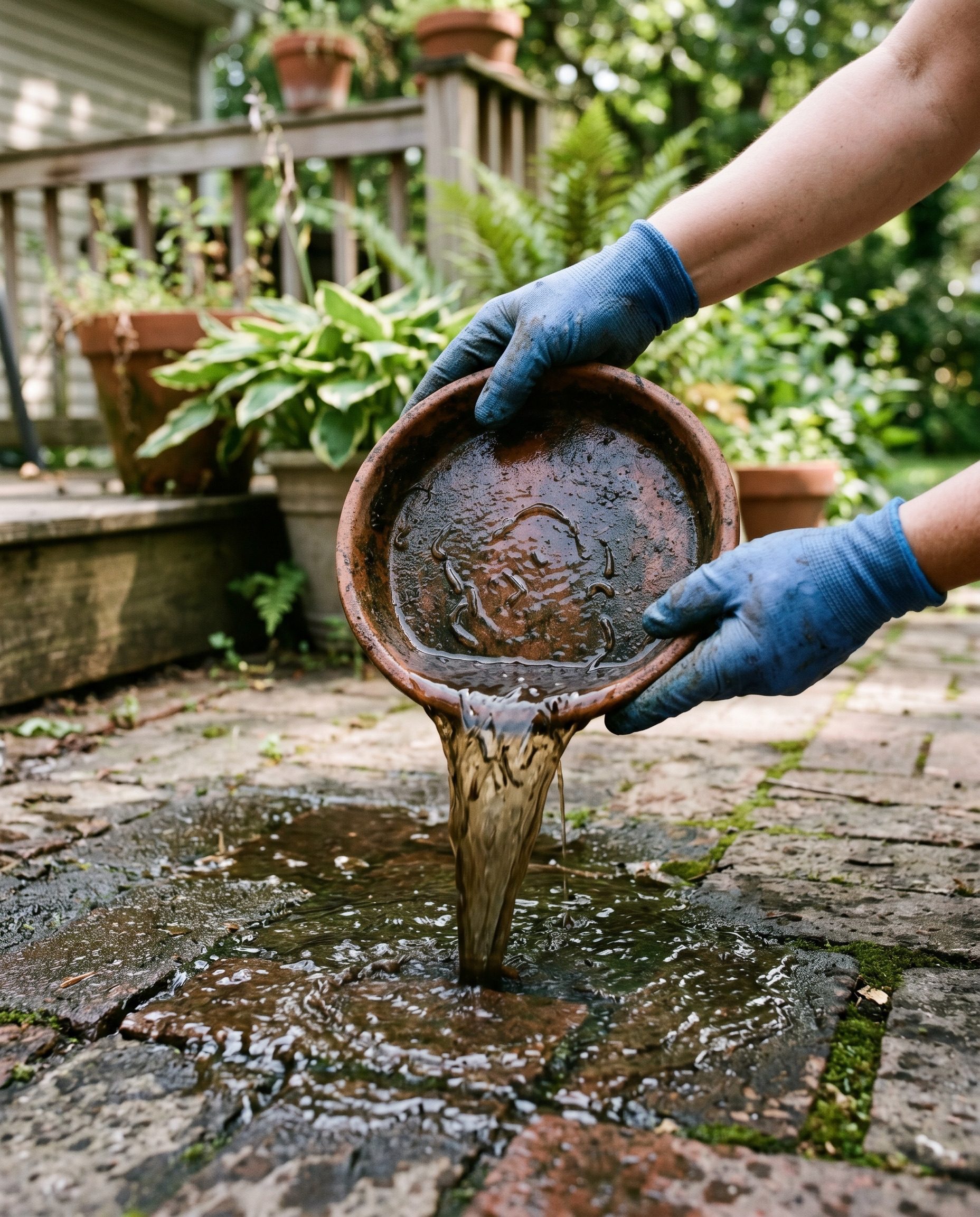
This is the step that does the heavy lifting, and it costs nothing but ten minutes a week. The rule from the CDC is to tip and toss any container that holds water once a week, and “once a week” is not arbitrary; it beats the egg-to-adult clock so nothing in your yard ever finishes developing. Make it a Saturday habit and you will be amazed how much water hides in plain sight.
Walk a slow loop and hit the usual suspects in order. Plant saucers under pots are the number one offender, so dump every one and consider tossing the saucers entirely. Empty and scrub the bird bath, then refill it so the inside film is gone, because eggs cling to that film. Tip out kids’ toys, wheelbarrows, buckets, watering cans, and the dog’s spare water dish. Check the folds and dips in a pool cover or a tarp, where a surprising amount can pool. Then look up: a clogged gutter is a long, hidden mosquito nursery, so clear the leaves so it drains. Pinhole-punch the bottom of any recycling that sits outside, flip anything you store outdoors so it cannot fill, and walk the low spots in the lawn after a storm to see where water lingers.
Treat the water you cannot drain
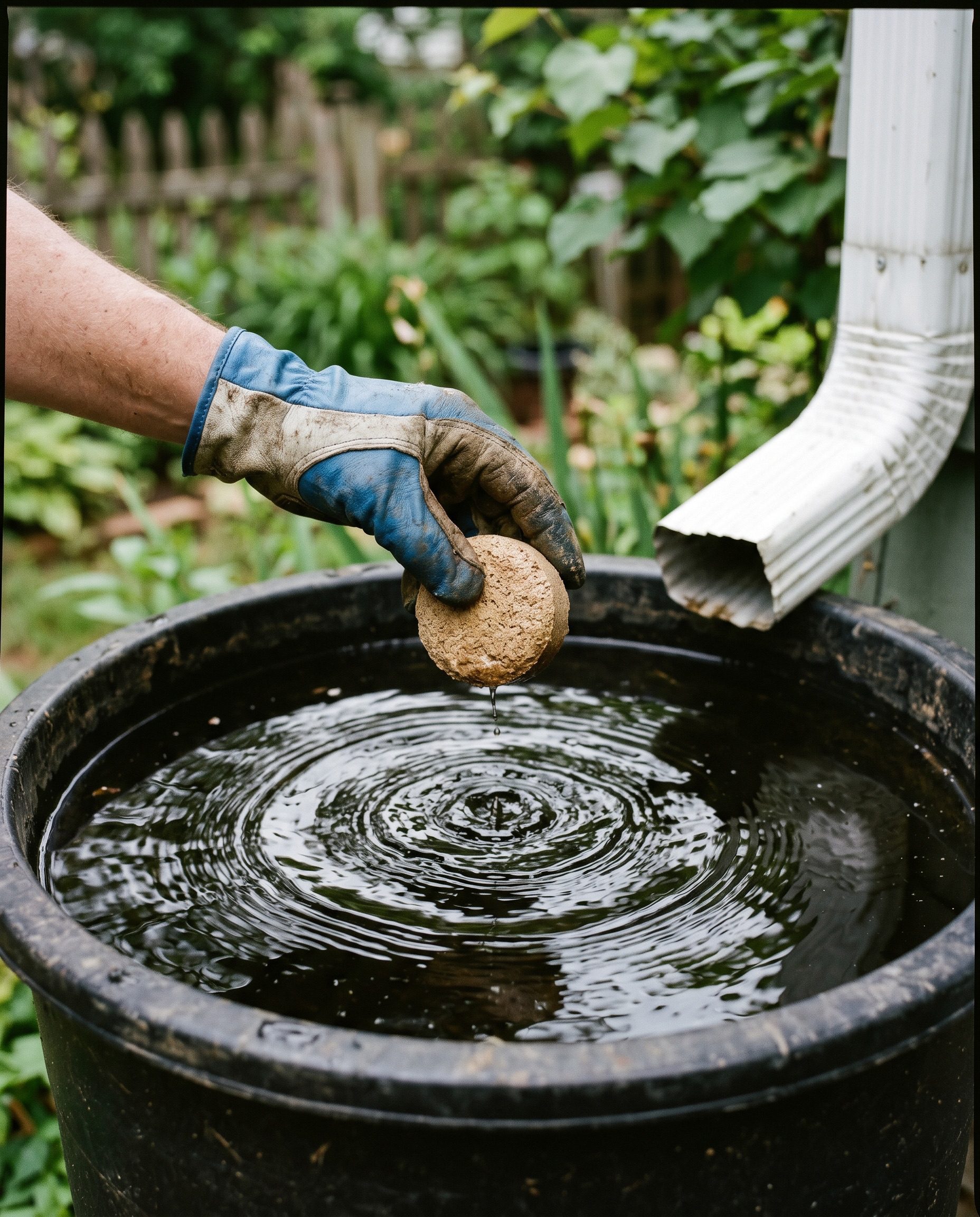
Some water is not going anywhere, and that is fine, because you can make it lethal to larvae without touching the adults or the good bugs. This is where a larvicide earns its place. The active ingredient to ask for is Bti, short for Bacillus thuringiensis israelensis, a naturally occurring soil bacterium that larvae eat and that kills them in the water before they ever take flight. The EPA’s guidance on larvicides like Bti that kill mosquitoes in standing water before they can fly is the clearest reason to reach for it first: you are stopping the next generation, not chasing this one.
What makes Bti the right tool for a garden is how narrow it is. It targets mosquito, black fly, and fungus gnat larvae and leaves bees, butterflies, ladybugs, fish, frogs, pets, and people alone, which is exactly the kind of targeted, beneficial-safe step I want before anyone reaches for a broadcast spray. Drop a floating dunk in a rain barrel, an ornamental pond, a livestock trough, or a low spot that stays wet, and one dunk typically protects the water for about a month. For the sizing differences between dunks, bits, and granules, our guide to mosquito dunks and larvicides for standing water breaks down which form fits which container.
One honest caveat: read and follow the product label, because under federal law the label is the law, and the label tells you the right dose for your water volume and whether it is cleared for water that holds fish or that animals drink. Keep dunks out of reach of small children and pets, and if anyone swallows one, contact a doctor or your local poison control center rather than waiting to see what happens.
Match the fix to the spot
Not every wet thing in a yard gets the same treatment, so here is the quick map from the kind of water to the move that actually fits it. Drain what you can; treat what you cannot; spray almost never.
| Where the water is | Best move | Watch out for |
|---|---|---|
| Saucers, buckets, toys, tarps | Tip and toss weekly, or remove the container | Refill bird baths, do not just top them up |
| Rain barrel or pond you keep | Drop a Bti dunk, replace about monthly | Check the label for fish and drinking water |
| Clogged gutters, low lawn spots | Clear and regrade so they drain | Standing water again within a week |
| Adults already biting at dusk | Repellent on skin, screens, a fan on the patio | Foggers and zappers are mostly theater |
That last row is where most money gets wasted. A propane or pesticide fogger drops the adult count for an evening, but it does nothing to the larvae multiplying in the water you never found, so you are renting a few quiet hours at a steep price. The American Mosquito Control Association’s rundown of what actually works versus the gadgets to skip is blunt about the gimmicks, and the research backs it: bug zappers kill mostly harmless and beneficial insects, almost no biting mosquitoes. If you want a yard device worth the outlay, a CO2 trap that lures and captures host-seeking females is a different animal from a zapper, and our tested mosquito traps for the yard and patio sorts the ones that pull their weight from the ones that just hum.
Protect yourself while the count drops
Source reduction is the durable win, but you still have to get through the next few evenings, so cover the adults that are already out. The single most reliable move is a repellent on exposed skin, and here is the part people get wrong: only EPA-registered repellents are proven to work, meaning DEET, picaridin, oil of lemon eucalyptus, or IR3535, matched to how long you will be outside. A higher number is not a stronger product, since DEET concentration relates to how long it lasts, not how strong it is, so a lower percentage is plenty for a quick evening on the deck.
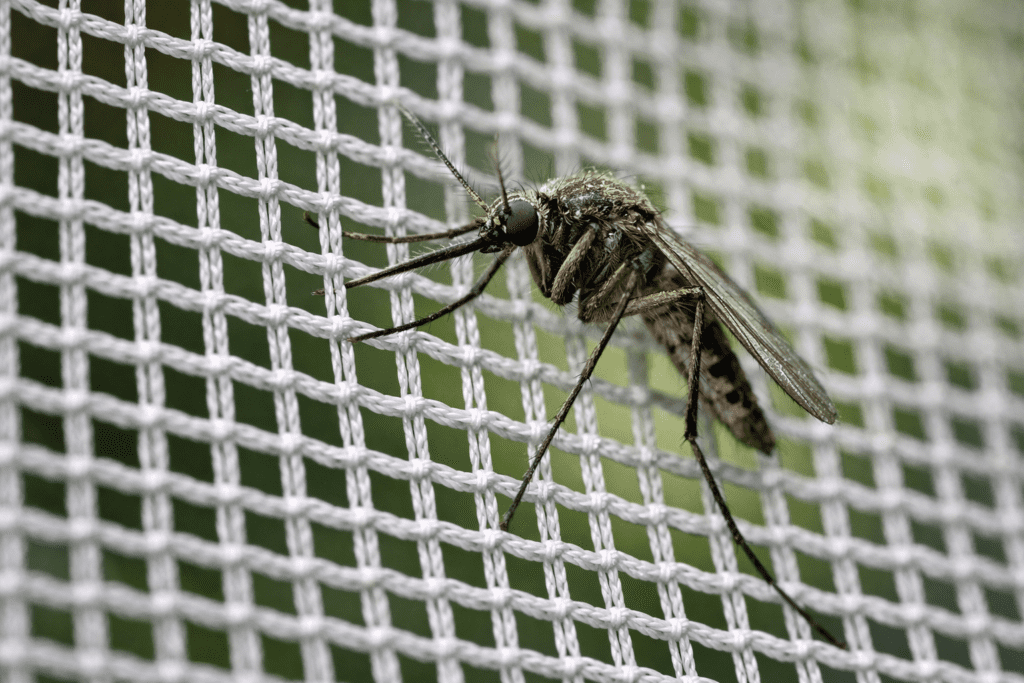
Then make the patio less inviting. Mosquitoes are weak fliers, so a simple oscillating fan on the deck genuinely keeps them off you. Repair the gaps in window and door screens so the ones outside stay outside, and if they are already finding their way indoors, our guide to getting rid of mosquitoes inside the house covers the entry points to seal.
Time it to your season
Mosquitoes are seasonal, so the calendar is your friend. They become active once nights hold above roughly 50 degrees and surge through the warm, wet months, which means the cheapest win is doing the first water sweep in early spring before the population ever builds. Get ahead of it and you are managing a trickle instead of fighting a wave. The EPA’s framework for integrated mosquito management that puts source reduction first is built on exactly that order: drain and treat the water first, every season, before anyone talks about spraying adults.
After every heavy rain, do a quick extra loop, because storms refill everything you emptied and create new puddles overnight. In the South and the Gulf states the season runs nearly year-round, while northern yards get a hard winter reset, so adjust the cadence to where you live. If you are not sure which biters you actually have, our mosquito species identification guide helps you tell a container-breeding backyard mosquito from a floodwater species that drifts in from elsewhere.
Common questions
What actually gets rid of mosquitoes in the yard?
Removing standing water does, more than anything you can spray. Tip and toss every container weekly and drop Bti in the water you cannot drain, and you stop the larvae before they become biting adults. Sprays only clear the ones flying right now, so without the water step they refill within days.
Does spraying my yard for mosquitoes work?
A barrier or fogger spray can lower the adult count for a short window, but it is the least durable step and the hardest on beneficial insects. It does nothing to the breeding water, so the population rebuilds fast. Treat it as a one-evening assist for an event, never the main plan.
Are mosquito dunks safe for pets, fish, and bees?
Bti dunks are about as targeted as it gets; they kill mosquito and gnat larvae and leave fish, frogs, bees, pets, and people alone when used as directed. Follow the label for your water type and dose, and keep the dunks themselves out of reach of curious pets and kids.
Do bug zappers and ultrasonic repellers help?
Not for mosquitoes. Zappers electrocute mostly moths and harmless beetles while barely catching biting females, and ultrasonic repellers have no real effect. Put that money toward draining water, a CO2 trap, and a patio fan instead.
How long until the mosquitoes are gone?
Once you break the breeding cycle, you usually see a real drop inside a week or two, since you are aging out the last generation without letting a new one finish. Keep the weekly water sweep going, because one wet, ignored corner can restart the whole thing.
Final verdict
A mosquito backyard is a standing-water problem, and once you accept that, the fix gets simple and cheap. Walk the yard once a week and tip out every saucer, bucket, toy, and clogged gutter that holds rain, because that ten-minute habit starves the next generation for free. Drop a Bti dunk into the water you cannot drain, like the rain barrel or the pond, so even your standing water stops producing biters. Cover the adults that are already out with an EPA-registered repellent, a fan, and good screens, and skip the zapper and the fogger, which burn money on the wrong insects and never touch the water. Do the water first, every season, and the spray you were about to buy turns out to be the part you never needed.
Next steps:
– Treat the water you keep with the right form using our mosquito dunks and larvicides guide.
– If you want a yard device that earns its keep, compare our tested mosquito traps for the yard and patio.
– Confirm which biters you have with our mosquito species identification guide.