
If mosquitoes keep finding you indoors, stop reaching for the aerosol can. Indoor mosquitoes are a find-the-source and exclude problem, not a spray-the-air problem. They are breeding in the standing water you forget about, a plant saucer, the drip tray under the fridge, a slow drain, a vase of cut flowers, and they slip in through torn screens and the gaps around doors and windows. Dump every bit of standing water, seal the entry points, and run a fan, and you starve and block them faster than any fog you can spray into the air.
Indoor mosquitoes come from forgotten standing water and gaps in your screens, so dump every saucer, tray, and vase, seal the entry points, and run a fan; that starves and blocks them faster than spraying the air.
- Do first (free): Walk the house and empty every bit of standing water, then point a box fan at where you sit.
- Best for the common case: Repair or replace torn screens and seal door and window gaps so new ones cannot get in.
- Skip: Aerosol foggers and bug zappers; the fog settles in seconds and zappers barely touch mosquitoes.

Why air spray fails indoors
The reason a can of fog disappoints is simple physics. A spray hangs in the air for a few seconds, drifts down, and settles, while the mosquito that bit you last night is resting on a wall in another room or hatching from water you have not found yet. You knock down the one insect you can see and feel like you won, but the supply behind it never stops. Killing adults one at a time loses to a source that keeps producing them.
The fix that lasts works the way the pros work, by going after where they breed instead of where they fly. The EPA’s integrated mosquito management approach, which puts source reduction first, is built on this exact order: remove the water, block the entry, and only then reach for anything in a bottle. A mosquito needs standing water to complete its life cycle, so no water means no next generation, no matter how badly you aim a spray can.
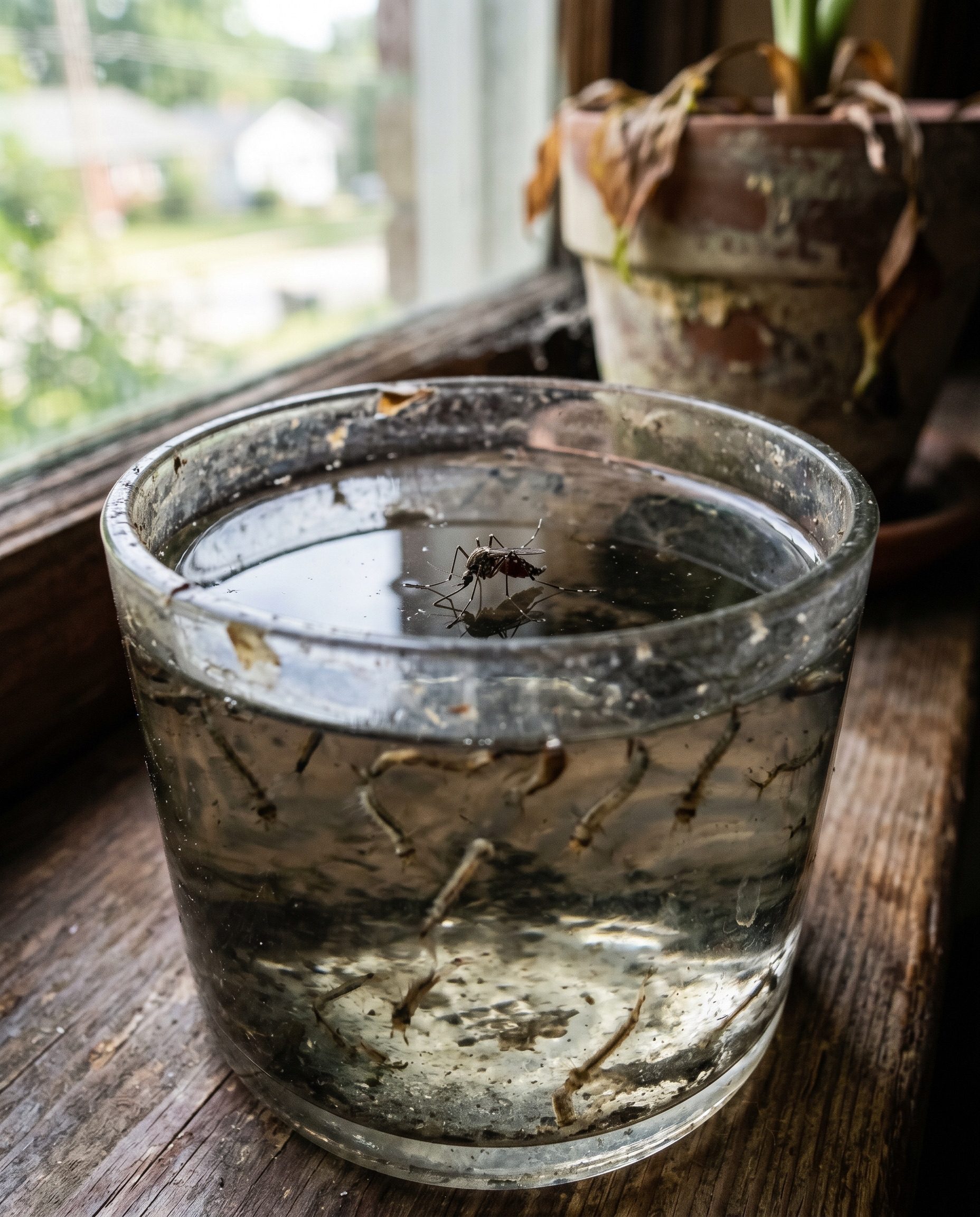
Find the standing water first
This is the step that actually clears the problem, and it costs nothing but a walk through your own house. Mosquitoes that live indoors are usually breeding indoors, in water you stopped noticing. Check these in order: the saucer under every houseplant, the drip tray beneath the refrigerator, the catch pan under a window AC unit, a vase of cut flowers, a pet’s water bowl that sits for days, the bottom of a recycling bin, a clogged sink overflow, and a slow floor drain in the basement or laundry room.
Dump each one, scrub it so you remove the eggs stuck to the sides, and dry it. The CDC’s advice to tip and toss the standing water around your home is the whole game in three words, and it works because of how the bug develops. As the CDC explains in its overview of where mosquitoes breed and how their life cycle works, eggs hatch into larvae that live in the water, so removing the water removes the entire pipeline. A spoonful of water is enough for a mosquito to breed, which is why a forgotten saucer matters more than it looks.
If you have a source you genuinely cannot drain, like a basement sump or a rain barrel just outside a leaky door, drop in a larvicide instead of dumping it. Mosquito dunks are the common one, and the EPA notes that larvicides like Bti kill larvae in standing water before they ever fly. Bti is a naturally occurring bacterium that targets mosquito larvae and is safe around people and pets when used as directed, so it is the right call for water that has to stay put. Read and follow the product label, because under federal law the label is the law, and keep any pesticide away from food-prep surfaces, pet bowls, and out of reach of children.
Seal the screens and door gaps
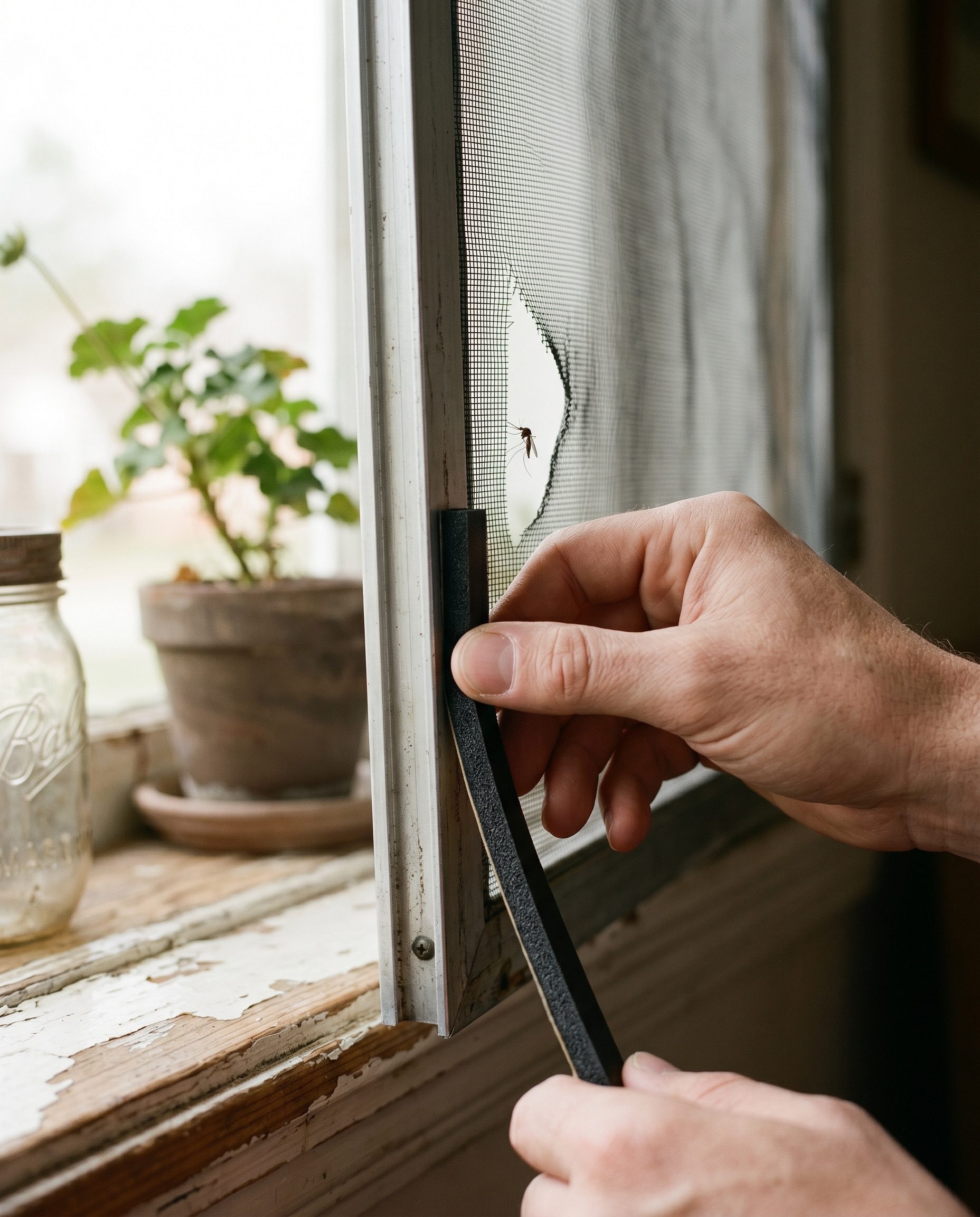
Some of your indoor mosquitoes are not breeding inside, they are walking in. A torn screen or a quarter-inch gap under the door is an open invitation. Hold a screen up to the light and you will usually find the pinholes and the spot where the frame has pulled away from the spline. Patch small tears with a screen repair kit or replace the mesh outright; it is a ten-dollar fix that keeps paying off all season.
Then work the openings. Add or replace weatherstripping around doors and windows, fit a door sweep on any exterior door that shows daylight at the bottom, and make sure window screens actually seat in their tracks. Mosquitoes are most active at dawn and dusk, so keep doors from hanging open during those windows, and if you like fresh air, run a window fan blowing out to push them back. A box fan matters more than people expect, because mosquitoes are weak fliers and a steady breeze keeps them off you and away from the room entirely. For the outdoor side of this same job, our mosquito-proof backyard guide covers cutting down the population before it ever reaches your screens.
Match the tool to the room
Once the water is gone and the gaps are sealed, the right finishing move depends on the room and who is in it. This is the quick map.
| Situation | Best approach | Watch out for |
|---|---|---|
| Bedroom at night | Box fan on you plus a sealed screen | No aerosol where you sleep |
| Kitchen or food area | Find and dump the water source | Never spray on food surfaces |
| Pets or kids present | Fan and exclusion, Bti for water that stays | Keep any product off bowls and toys |
| Patio or doorway | EPA-registered repellent on skin | Follow the label, reapply as directed |
For the few mosquitoes that get through while you are on the porch or coming and going, skin protection is the honest answer. Only EPA-registered repellents are proven to work, and the active ingredient you pick (DEET, picaridin, oil of lemon eucalyptus, or IR3535) should match how long you will be exposed rather than how strong it sounds. Our guide to DEET, picaridin, and natural repellents breaks down which one fits a quick dash to the car versus an evening outside. Indoors, the fan and the sealed screen do more than any spray, so save the repellent for the doorway and the patio.
What to skip indoors
Two products eat a lot of money for almost no result. The first is the electric bug zapper, which feels productive because it crackles all evening, but Michigan State research found bug zappers kill mostly harmless and beneficial insects, not the mosquitoes biting you. Mosquitoes track the carbon dioxide and warmth of a person, not a blue light, so the zapper electrocutes moths and beetles while the mosquito flies past it to you.
The second is the ultrasonic repeller that plugs into the wall and claims to drive mosquitoes off with sound. The American Mosquito Control Association is blunt about it; in their rundown of what actually works versus the gadgets to skip, ultrasonic devices and wearable sonic bracelets do not repel mosquitoes in any meaningful way. Skip both, put the money toward a screen repair kit and a good fan, and you will get a result the gadgets never deliver. A standing-water-targeting trap belongs outdoors, not in your living room, and our tested mosquito traps for the yard and patio covers where they earn their place.
Common questions
What gets rid of mosquitoes in the house fast?
The fastest real fix is finding and dumping their water source, then turning on a fan where you sit. A spray knocks down the one mosquito you see, but a fan keeps the rest off you immediately and the empty saucer stops new ones from hatching. Speed comes from cutting the supply, not from a bigger can.
Where are the mosquitoes in my house coming from?
Almost always from standing water you forgot about, a plant saucer, a drip tray, a vase, or a slow drain, or from a torn screen and gaps around doors and windows. Walk the house and check every spot that can hold even a spoonful of water, then check your screens against the light.
Does spraying the air actually work?
Not for long. An aerosol settles out of the air within seconds and never reaches the resting spots and the breeding water, so the population behind the one bug you killed keeps replacing it. Source removal and exclusion do the job that spraying the air only pretends to.
Do bug zappers and ultrasonic plug-ins help indoors?
No. Zappers kill mostly harmless insects and barely touch mosquitoes, which home in on your breath and body heat instead of light, and ultrasonic devices have no real effect on them. A box fan and a sealed screen beat both every time.
Will a fan really keep mosquitoes away?
Yes, more than people expect. Mosquitoes are weak fliers, so a steady breeze from a box fan keeps them from landing on you and disrupts the carbon dioxide trail they follow to find you. Point it at where you sit or sleep and you cut bites without any chemical at all.
Final verdict
Getting rid of mosquitoes inside is about the source and the doorway, not the air. Walk the whole house and dump every bit of standing water, scrub the saucers and trays so the eggs go with the water, and drop a larvicide in anything you cannot drain. Patch the screens, seal the door and window gaps, and run a fan where you spend your evenings. Save an EPA-registered repellent for the porch and the patio, and skip the bug zapper and the ultrasonic plug-in entirely, because both take your money and leave the mosquitoes. Do the free steps first, and most indoor mosquito problems are gone in a day or two without a single can of fog.
Next steps:
– Cut the population before it reaches your screens with our mosquito-proof backyard guide.
– Pick the right skin protection for the doorway in our DEET, picaridin, and natural repellents guide.
– For outdoor numbers, weigh the tested mosquito traps for the yard and patio.

Pingback: Best Mosquito Dunks and Larvicides for Standing Water