You slapped your ankle in the yard and now you want a name, not a panic. Here is the shortcut entomologists use: in the United States, three genera do nearly all the biting that matters medically, and the genus tells you both when it bites and what it can carry. Aedes are the daytime biters with sharp black-and-white markings, the ones tied to Zika, dengue, and chikungunya. Culex are the plain brown house mosquitoes that work from dusk to dawn and carry West Nile. Anopheles rest at a giveaway tail-up angle and are the malaria genus. Read the genus and you read the risk.
Three genera do nearly all the biting that matters in the US, and each one announces itself: Aedes bite by day and wear black-and-white stripes (Zika, dengue, chikungunya), Culex bite dusk-to-dawn and are plain brown (West Nile), and Anopheles rest tail-up (malaria). Read the genus and you read the risk.
- The confirming feature: When it bit you plus its markings and resting posture place it in a genus faster than counting wing scales.
- Most-confused pair: Aedes versus Culex, separated by daytime-and-striped versus dusk-and-plain-brown.
- What it means: Most bites are a nuisance, not an emergency, so focus on prevention and read our mosquito bite relief guide.
n
For the questions either side of this one, see How to Kill Mosquito Larvae in Standing Water and The History of Mosquitoes: Evolution, Dinosaurs & Their Role in Human History.
n
This page sits in our mosquito section, which indexes every guide on the subject.
Quick answer by genus
Forget species-level keys for a moment. For a homeowner, the genus is the unit that carries the meaning, because it predicts the biting clock and the disease lane at the same time. There are roughly 200 mosquito species in the US, but the three you actually need to recognize are Aedes, Culex, and Anopheles.
The fastest read is the clock on your phone. A mosquito biting you in bright daylight, especially in the morning or late afternoon, is almost always Aedes, and Aedes wears crisp white bands on black legs and body. A mosquito that finds you after sunset and through the night, plain dull brown with no flashy markings, is almost always Culex. And if you find one resting on a wall with its rear end tipped up into the air like a tiny dart stuck at an angle, that posture is the Anopheles signature. Per the CDC’s overview of mosquito biology and where they breed, all three start life in water, which is the real lever for control.
The one feature that confirms it
If you only learn one diagnostic move, learn this: pair the biting time with the resting posture. Those two cues together separate the genera more reliably than any single marking, because lighting in a backyard rarely lets you see scale patterns clearly, but you always know what time it is, and a mosquito at rest holds its body in a telling line.
Aedes and Culex both rest with the body roughly parallel to the surface, hunched, abdomen down. Anopheles is the odd one out: head down, abdomen angled up off the wall, so the whole insect tilts like a pencil propped at forty-five degrees. That tail-up stance is the Anopheles tell, and it is visible from across a room. Between Aedes and Culex, the marking does the rest of the work. The yellow fever mosquito (Aedes aegypti) and the Asian tiger mosquito (Aedes albopictus) show bold black-and-white banding on the legs, while Culex looks washed-out brown by comparison. The American Mosquito Control Association keeps a plain-language reference on these groups, and the American Mosquito Control Association on what actually works is a good gut-check before you spend money on gadgets.
Aedes, Culex, Anopheles up close
Take them one at a time, because the full description is where the look-alikes finally separate.
Aedes mosquitoes are the daytime aggressors. The Asian tiger mosquito (Aedes albopictus) is the one most US backyards meet now: a single bright white stripe runs down the center of its back, and the legs are banded white. They are aggressive ankle-biters, they breed in tiny containers, and they rarely fly far from where they hatched. That short flight range is a clue in itself: if Aedes is biting you, the water source is in your own yard, usually within a hundred feet.
Culex mosquitoes, the northern and southern house mosquitoes (Culex pipiens and Culex quinquefasciatus), are the drab brown ones that whine around your ears at night. They favor stagnant, organically rich water such as a neglected birdbath, a clogged gutter, or a forgotten bucket. They are the primary vector behind West Nile, and West Nile is the most common mosquito-borne disease in the continental US, spread chiefly by Culex feeding from dusk through the night.
Anopheles mosquitoes carry the malaria parasite. Local transmission in the US is now rare, but the genus is present coast to coast, and that tail-up resting posture remains the clean field mark. Across all three, only the females bite, because they need a blood meal to develop eggs; the males feed on nectar and never touch you.

How to tell the look-alikes apart
People mix up the three genera constantly, and they also mistake harmless flies for mosquitoes. Two confusions come up the most: Aedes versus Culex (the genuine medical question), and the crane fly versus a real mosquito (the harmless giant that scares people for no reason). Here is the quick separator for each.
| What you saw | The decisive tell | When and where |
|---|---|---|
| Aedes (tiger mosquito) | Black-and-white banded legs, bites by day | Daytime, near small containers in the yard |
| Culex (house mosquito) | Plain dull brown, bites dusk to dawn | Evening and night, near stagnant water |
| Anopheles | Rests with abdomen tilted up off the surface | On walls, mostly at night |
The crane fly is the other one worth settling. People send Extension offices photos of a leggy inch-long insect convinced it is a “giant mosquito,” but a crane fly has no biting mouthparts at all and cannot bite anyone. A real mosquito is small, with a long needle-like proboscis and a single pair of wings held over a slim body. If it is the size of your thumbnail with absurdly long dangling legs, it is a harmless crane fly, and you can let it be.
Where each genus breeds and bites
Range and habitat are part of the ID, because where you met the mosquito narrows the genus. Aedes is the container specialist: it lays eggs just above the waterline in anything that holds a cupful, from a plant saucer to a bottle cap to a crumpled tarp, and the eggs can survive drying out for months before a rain wakes them. That is why dumping standing water is the single highest-leverage move you can make. The EPA is blunt that source reduction comes first in integrated mosquito management, ahead of any spray.
Culex prefers bigger, dirtier, more permanent water: storm drains, ditches, birdbaths, and water that has gone green and stagnant. Because that water is slower to drain, larviciding matters more for Culex, and the EPA explains how to kill the larvae in standing water before they ever fly using a Bacillus thuringiensis (Bti) product in water you cannot tip out. Seasonally, all three peak in warm, wet months and go quiet in the cold, which is why a hot, rainy week is when complaints spike. For a full walkthrough of draining, screening, and treating the water that stays, our mosquito-proof backyard guide maps it room by room around a typical lot.

Does the genus change what to do?
Mostly, no, and that is the reassuring part. The defense is the same regardless of genus: take away the water, then protect your skin for the hours that genus is active. Tip and toss anything holding water once a week, screen the windows, and treat permanent water with Bti. Then use a repellent, but only one that has been shown to work, because only EPA-registered active ingredients are proven to work, namely DEET, picaridin, oil of lemon eucalyptus, and IR3535. The CDC’s guidance on preventing mosquito bites lines up with that: EPA-registered repellents, screens, and tip-and-toss are the proven layers, and concentration relates to how long protection lasts, not how strong it is.
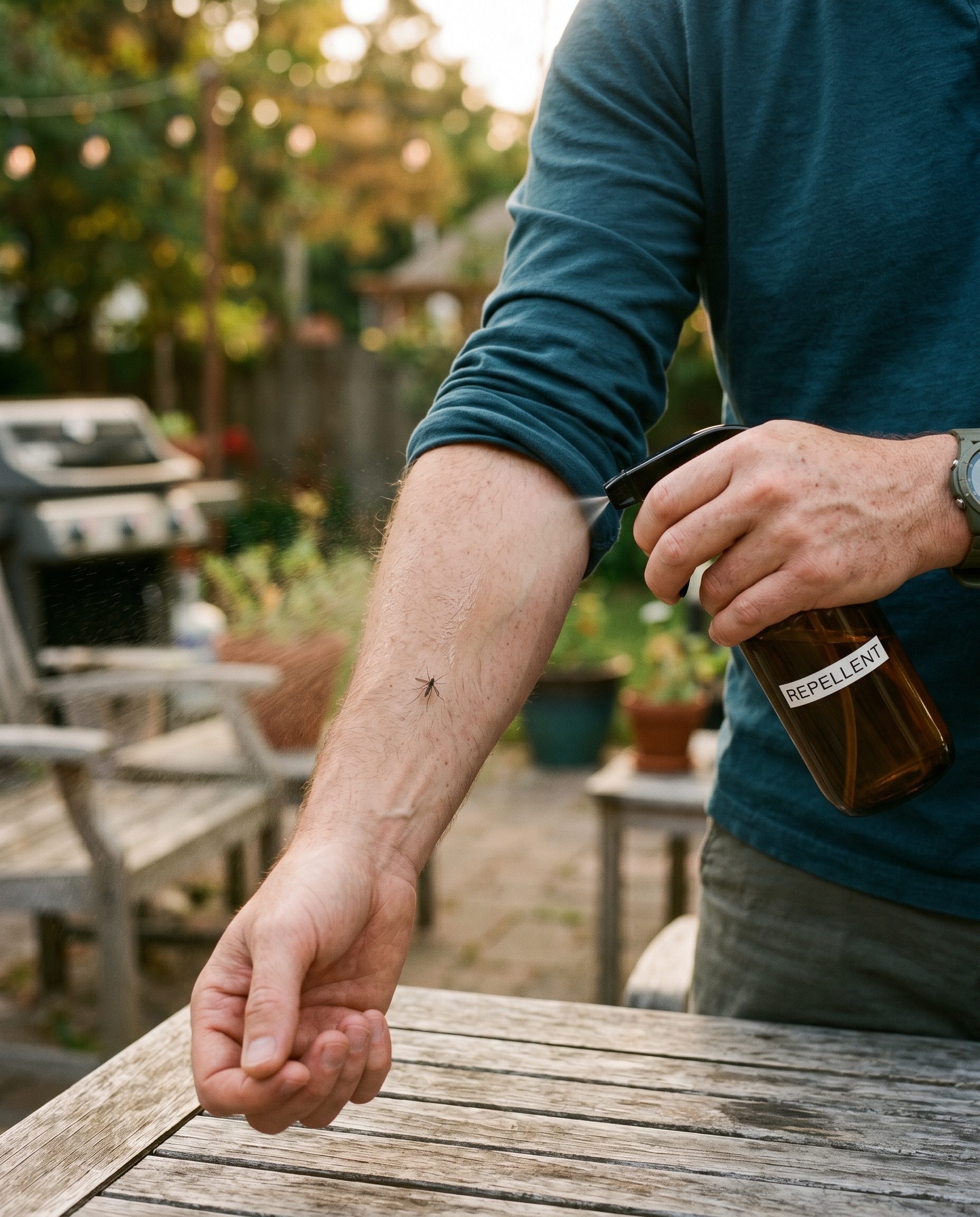
Where the genus does change your timing is the clock. For an Aedes yard, you need daytime protection, because that is when they hunt. For a Culex yard, the dusk-to-dawn window is what matters, so an evening on the patio is when to spray your forearms before, not after, you sit down. If you want help choosing an active that fits how long you will be outside, our guide to DEET, picaridin, and natural repellents breaks the options down by exposure time.
Common questions
Which mosquito is the most dangerous in the US?
By sheer case count, Culex is the one to respect, because it spreads West Nile, the most common mosquito-borne disease in the continental US. Aedes gets more headlines for Zika and dengue, but those are far less common here outside of localized outbreaks. Either way, the prevention is identical: remove water and protect your skin during that genus’s active hours.
Do all mosquitoes bite?
No. Only female mosquitoes bite, because they need a blood meal to produce eggs. Males live on flower nectar and plant juices and never bite anyone. So the cloud of mosquitoes you walk through is roughly half harmless, but you cannot sex them in the air, so treat them all as biters.
What is the difference between Aedes and Culex?
Aedes bite during the day and wear bold black-and-white bands; Culex bite from dusk through the night and are plain dull brown. That timing-plus-marking pair is the cleanest separator, and it also tells you which disease lane to think about, Zika and dengue for Aedes, West Nile for Culex.
Do bug zappers control mosquitoes?
Not in any meaningful way. Research from Michigan State is clear that bug zappers kill mostly harmless and beneficial insects and catch very few biting mosquitoes, because mosquitoes track carbon dioxide and body heat far more than the ultraviolet light a zapper uses. Spend the money on draining water and a good repellent instead.
Is a crane fly a giant mosquito?
No, and it cannot bite. Crane flies look like oversized mosquitoes with very long dangling legs, but they have no biting mouthparts and feed (if at all) on nectar. They are harmless, so you can ignore the one bumping around your porch light.
Final verdict
For mosquito identification at home, skip the species-level key and read the genus, because the genus is what carries the meaning. Pair the biting time with the resting posture and you have your answer in seconds: daytime plus black-and-white bands is Aedes (Zika, dengue, chikungunya), dusk-to-dawn plus plain brown is Culex (West Nile), and a tail-up resting tilt is Anopheles (malaria). Most bites are a nuisance rather than an emergency, so the genus mainly tells you when to put on a proven, EPA-registered repellent. The defense underneath all of it never changes: take away the standing water first, protect your skin during the active hours, and ignore the zapper.
Next steps:
– Drain, screen, and treat the water on your lot with our mosquito-proof backyard guide.
– Pick a proven active for how long you will be outside in our DEET, picaridin, and natural repellent guide.
– If you already got bitten, calm the itch the right way with our mosquito bite relief guide.
If the thing you found is not on this page, our guide to working out what a bug is from what you saw starts from colour, place and movement instead.