
\
\
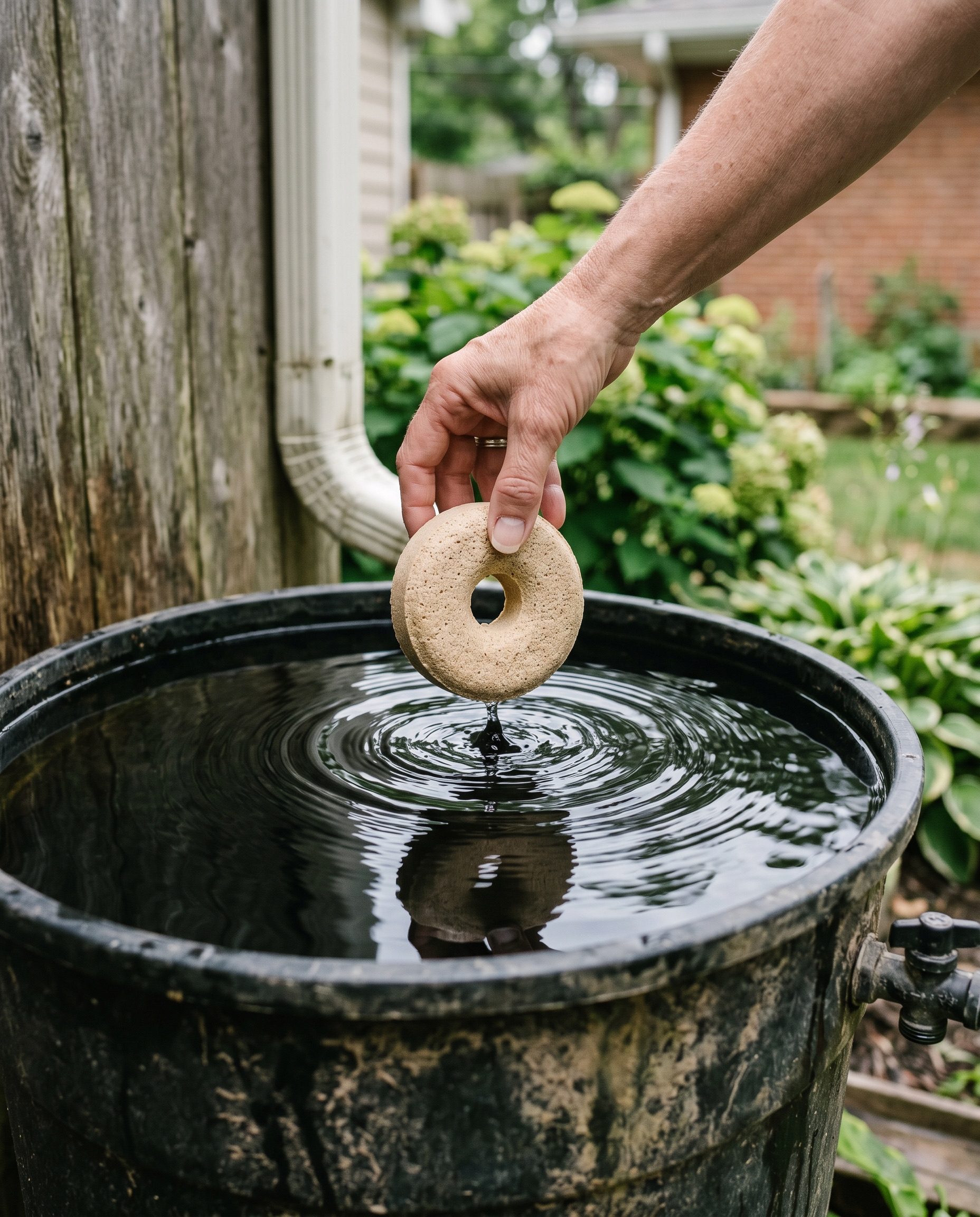
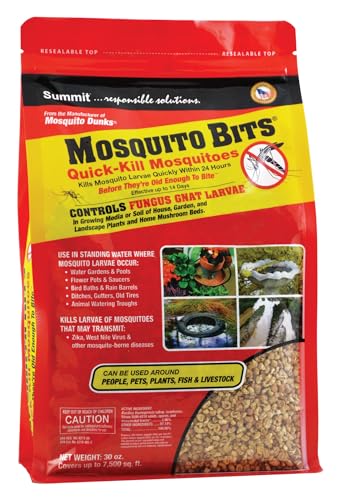
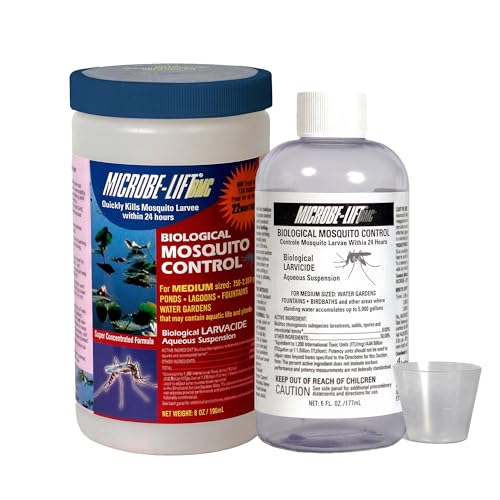
If you have standing water on your property, you are running a mosquito nursery, and the cheapest fix is to poison the nursery instead of the swarm. The active ingredient in dunks and bits is Bti, a soil bacterium that mosquito larvae eat and adults never do, which is why it wipes out wrigglers while leaving pets, fish, birds, and people alone. Kill them in the water and they never grow up to bite you. The only real decision is format: a dunk for slow release in water that stays put, bits for a fast hit, or a liquid Bti when there are fish in the picture.
\
\
\
The best mosquito dunks work because of Bti, a bacteria that targets only mosquito larvae and is harmless to pets, fish, birds, and people. Drop one in any standing water and it kills the wrigglers before they can fly, which beats chasing biting adults around the yard with spray. Pick by format: a 30-day dunk for water that sits still like a rain barrel, fast-acting bits for quick knockdown in containers, and a liquid Bti for ponds and water features with fish.
\
\
\
\
\
Why killing larvae beats spraying adults
\
\
A mosquito spends the first part of its life as a larva, the little comma-shaped wriggler you see twitching just under the surface of stagnant water. That stage is a sitting target. It can’t fly, it can’t hide in your shrubs, and it has to come up to breathe. Once it hatches into an adult, it scatters across the neighborhood and you are stuck fogging the air and hoping. The EPA’s own guidance on killing larvae in standing water before they fly puts larvicides like Bti near the top of any sane control plan for exactly this reason.
\
\
The math is simple. A single forgotten bucket can pump out hundreds of adults in a week. Mosquitoes don’t need a pond, either; the CDC notes they can breed in a bottle cap of water, which is why source reduction has to come first. The official integrated mosquito management approach starts with getting rid of standing water, and a larvicide is what you reach for when you can’t dump it.
\
\
What Bti actually is, and why it’s safe
\
\
Bti is short for Bacillus thuringiensis israelensis. It’s a naturally occurring bacterium, and when a larva eats it, a protein crystal in its gut ruptures the gut lining and it stops feeding. The thing that makes it useful around a home is how narrow that effect is. It only works in the specific gut chemistry of mosquito, black fly, and fungus gnat larvae. Mammals, fish, birds, bees, and adult mosquitoes don’t have the receptors, so they pass it right through.
\
\
That’s not marketing language; it’s why public-health crews use it in drinking-water containers overseas. For a homeowner it means you can treat a rain barrel you water the garden from, or a pond with goldfish in it, without losing sleep. The CDC’s home control hierarchy leans on this kind of targeted larviciding precisely because it doesn’t carpet-bomb the whole ecosystem. Bti is still a pesticide, though, so the label is the law. Read the dose, don’t eyeball it, and don’t assume more is better.
\
\
\
\
Match the format to your water
\
\
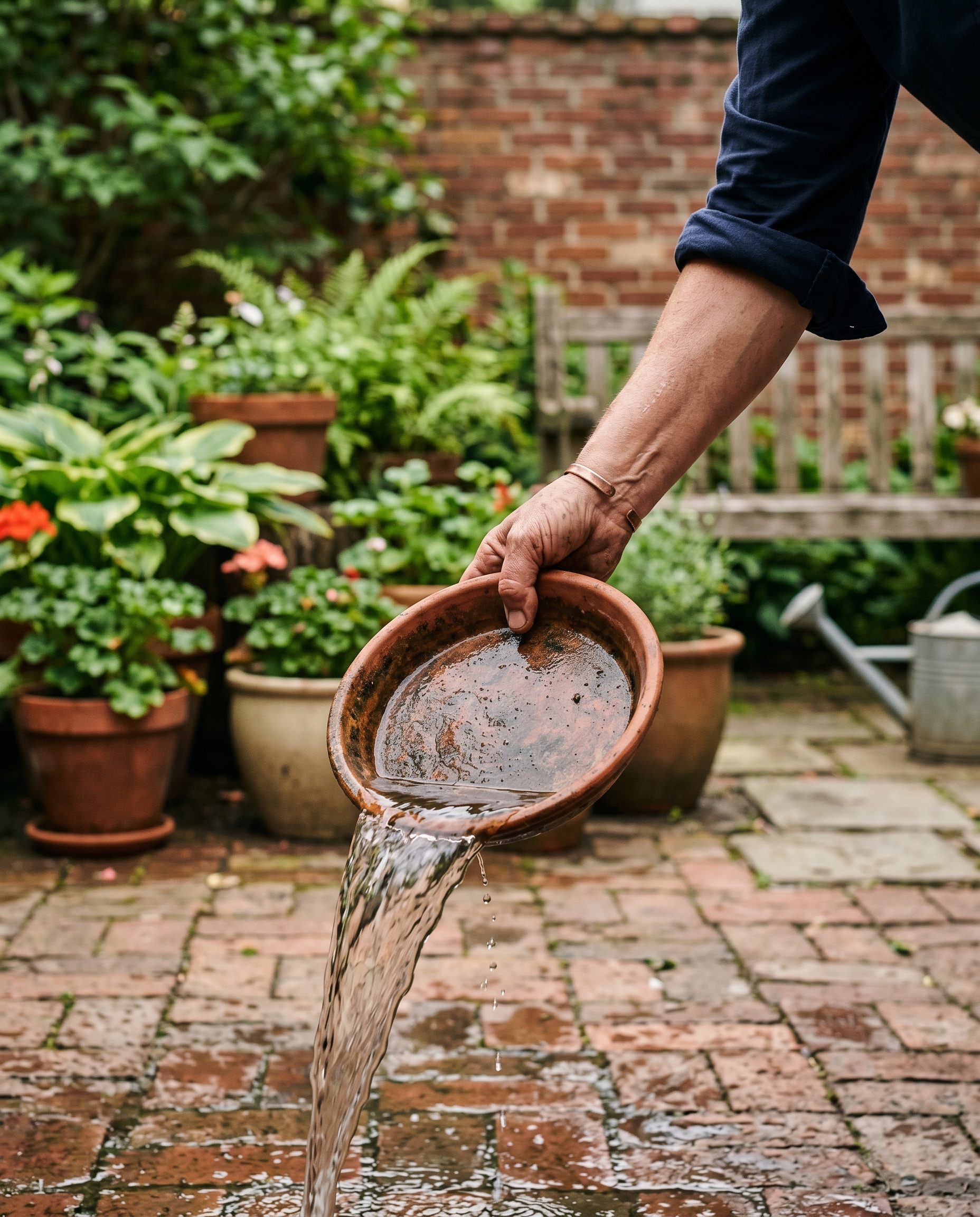
This is where most people go wrong. They buy a six-pack of dunks, toss one in a fast-draining flowerpot, and wonder why it did nothing. The format has to match the water.
\
\
| Water type | Best format | Why |
\
|—|—|—|
\
| Rain barrel, ditch, low spot that stays wet | 30-day dunk | Slow release rides out a month of sitting water |
\
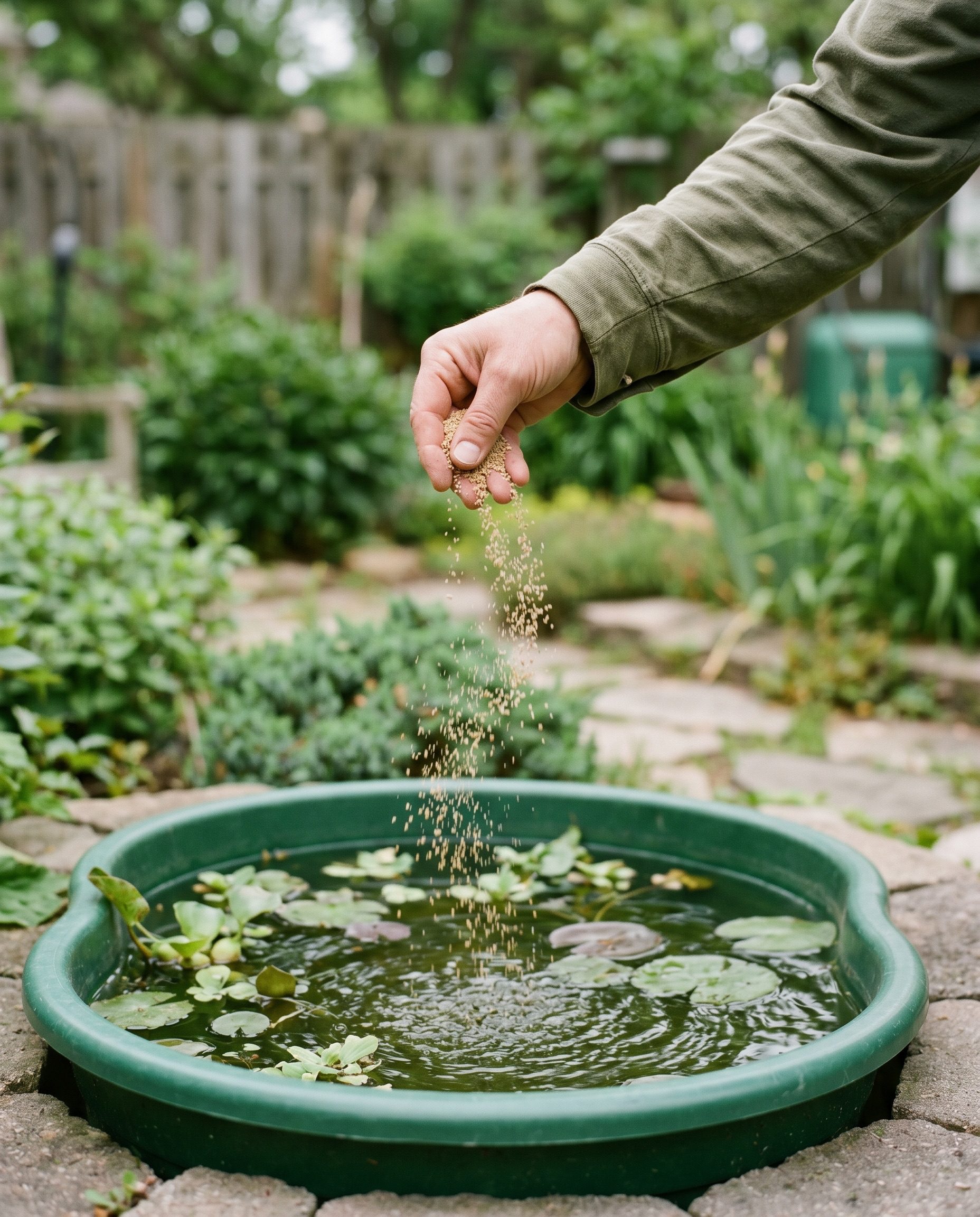
| Buckets, saucers, container gardens | Bits | Fast knockdown, easy to sprinkle a small dose |
\
| Ornamental pond or fountain with fish | Liquid Bti | Spreads through the whole water column, fish-safe |
\
\
A dunk is a slow-dissolving doughnut. It floats or sinks, leaching Bti for around 30 days, which makes it the right call for water that genuinely stays put. A dunk does almost nothing in water that drains in a day, because it never gets the time to release. Bits are granules; they hit fast and you can scale the dose down for a small container, but they fade quicker. Liquid Bti is the one for ponds because it disperses below the surface where larvae actually live, and it’s formulated to be safe alongside fish and aquatic plants.
\
\
A practical note from my own yard: I keep dunks in the rain barrel and a jar of bits on the potting bench for the random catch-basins that show up after a storm. The two formats cover most situations between them. If you want the bigger picture on draining, screening, and trapping, our mosquito-proof backyard guide walks through the whole sequence.
\
\
Best Larvicide Products
| Product | Active Ingredient | Lasts | Safe for Fish/Pets? | Best For |
|---|---|---|---|---|
| Mosquito Dunks | BTI bacteria | 30 days | Yes | Ponds, rain barrels, birdbaths |
| Mosquito Bits | BTI bacteria (granular) | 7-14 days | Yes | Puddles, tree holes, flower pots |
| Bonide Mosquito Beater | BTI + BS bacteria | 14 days | Yes | Large standing water areas |
| Vegetable oil | Physical suffocant | Until disturbed | No (blocks oxygen) | Small containers you’ll discard |
What these will not do
\
\
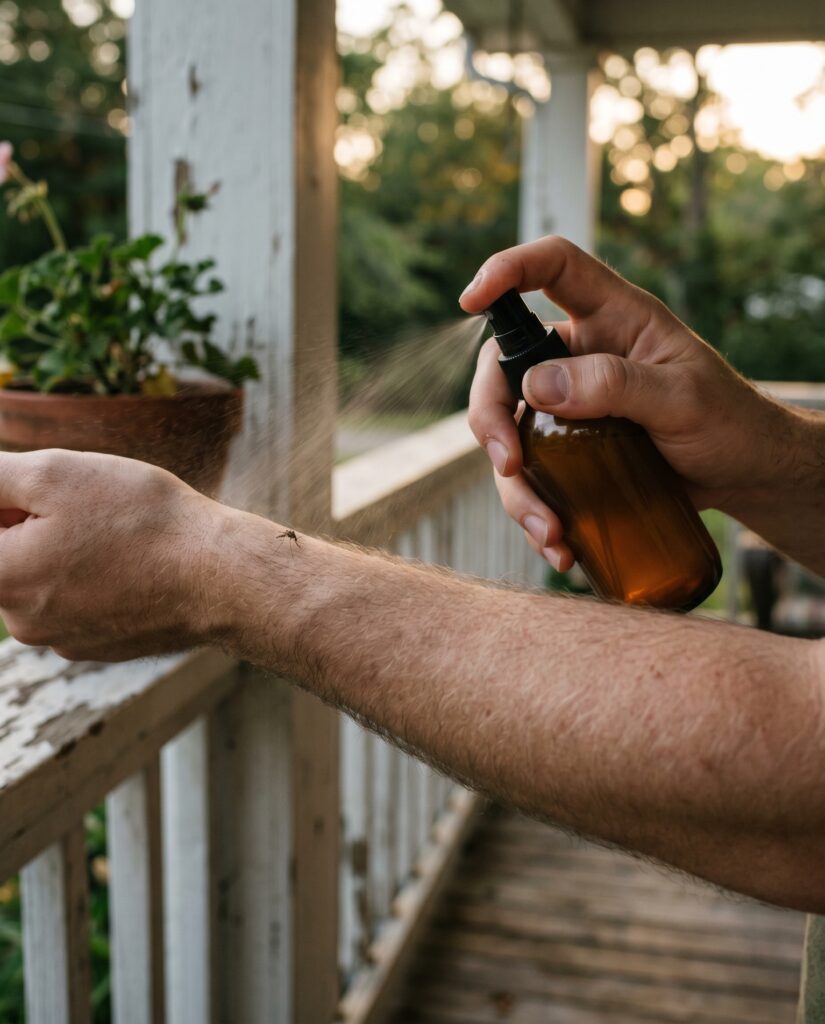
Larvicides are not bite protection. They shrink the population that hatches near your house, but a treated rain barrel does nothing about mosquitoes drifting in from the woods or a neighbor’s clogged gutter. For the adults that do find you, you still want an EPA-registered repellent matched to your exposure time on your skin, and screens on the windows.
\
\
Skip the gadgets that promise to replace all of this. The American Mosquito Control Association has a blunt rundown of what works versus what to skip, and ultrasonic apps and wearable bracelets land in the skip column. Bug zappers are worse than useless for this job; Michigan State Extension found that zappers kill mostly harmless and beneficial insects and barely any biting mosquitoes. If a real trap fits your setup better than larvicide, see the traps worth running on a yard or patio separately. And if they’re already getting inside, that’s a different problem with a different fix.
\
\
\
\
The picks
\
\
InsectoGuide is reader-supported. As an Amazon Associate we earn from qualifying purchases at no extra cost to you.
\
\
\
 \
\
\
\
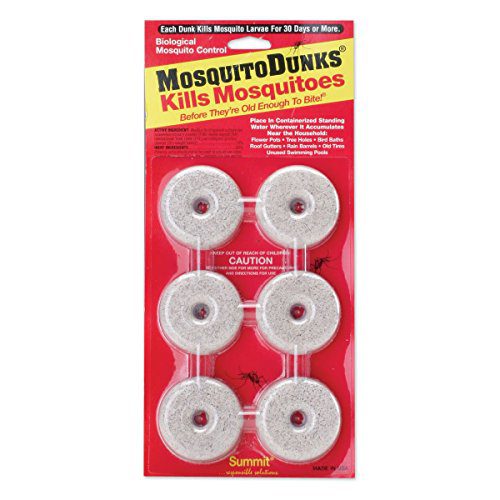
For rain barrels, ditches, and any low spot that stays wet for weeks.
\
\
\
\
\
 \
\
\
\
For buckets, saucers, and containers where you want larvae gone quickly.
\
\
\
\
\
 \
\
\
\
For ornamental ponds and water features where fish and plants live.
\
\
\
\
Common questions
\
\
Are mosquito dunks safe for my dog to drink around?\
Yes. Bti targets the gut of mosquito larvae specifically, and dogs, cats, birds, and people don’t have the receptors it acts on. It’s one of the reasons larvicides feature in the CDC’s home control guidance. Still follow the label dose; “safe” is not the same as “pour in extra.”
\
\
How long does a mosquito dunk last?\
A standard dunk releases Bti for about 30 days in water that stays put. If the water dries out and refills, the dunk can keep working once it’s wet again, but you’ll generally swap it monthly during mosquito season.
\
\
Can I use dunks in my fish pond?\
Bti itself is fish-safe, but for ponds I’d reach for the liquid Bti instead of a floating dunk because it disperses through the whole water column where larvae actually feed. The dunk is built for still containers, not a moving, planted pond.
\
\
Will a dunk stop mosquitoes from biting me?\
No. It only kills larvae in the water you treat. Mosquitoes from elsewhere still show up, so pair larviciding with screens and an EPA-registered repellent for the adults.
\
\
Do I really need this if I just dump my standing water?\
Dumping is better, and it should always come first. Larvicide is for the water you can’t dump: a rain barrel you rely on, a low spot in the yard, a pond. If you can tip it, tip it.
\
\
Why do dunks matter for disease, not just itching?\
The mosquitoes breeding in suburban standing water include Culex, the main carrier of West Nile virus in the US. Knocking down local larvae is a small but real part of reducing that risk around your home.
\
\
Final verdict
\
\
If you have water that sits, treat it. The format is the whole decision: the Summit Mosquito Dunks for rain barrels and any spot that stays wet for weeks, Mosquito Bits when you want a fast hit in a bucket or saucer, and the Microbe-Lift liquid for a pond with fish in it. All three run on the same safe, narrow-spectrum Bti, so you’re killing wrigglers before they ever take flight and leaving everything else in your yard alone. Dump what you can, dose what you can’t, and you’ve cut the problem off at the source.
\
\
Pingback: Best Mosquito Traps for Yards and Patios, Tested by Type