Finding bites or tiny black specks on sheets can make anyone wonder, “Is this bed bugs?” The fastest way to get a clear answer is to use bed bug detectors that turn a hidden problem into visible proof you can act on. In this guide, you’ll learn which monitors actually work, how to place them for accurate results, and how to interpret what you catch. You’ll also see when DIY monitoring is enough and when it’s time to call a professional.
Quick Answer: What are the best bed bug detectors for most homes?
For most apartments and houses, the best bed bug detectors are pitfall-style interceptors placed under every bed leg. They are low-cost, reusable, and supported by field research for detection and bite reduction.
Use this quick decision guide:
- Best all-around (low cost, reliable): Pitfall interceptors (under bed and sofa legs)
- Fastest for very low-level infestations: CO2-baited traps (dry ice or yeast-sugar CO2)
- Best for “set-and-check” convenience: Sticky/lure monitors that run for weeks (replaceable cartridges)
- Not a substitute for treatment: Any monitor – they confirm activity; they don’t eliminate an infestation
What to buy and how many (rule of thumb):
- 4 interceptors for one bed (one per leg)
- Add 4 more for a couch or upholstered chair
- In multi-room checks, plan for 12+ units so you don’t miss a hotspot
How bed bug detectors work (and what they can’t do)
Bed bugs (Cimex lectularius) are experts at staying out of sight. They wedge into seams, cracks, and screw holes, then come out mainly at night to feed. Detectors work by exploiting predictable behaviors: bed bugs follow carbon dioxide (your breath), warmth, and body odors, and they often climb furniture legs to reach a sleeping host.
The key is understanding the difference between monitoring and control. A detector tells you whether bed bugs are present and where activity is concentrated. It can also reduce bites by trapping some bugs. But it will not wipe out an established infestation on its own.
The three main detector types (with a simple comparison)
Here’s a practical breakdown you can use before buying anything:
| Detector type | What it targets | Best use case | Typical upkeep |
|---|---|---|---|
| Pitfall interceptors | Climbing behavior (bed legs) | Most homes, routine monitoring | Minimal; clean and re-dust if needed |
| CO2-baited traps | CO2 attraction (breath mimic) | Quick checks, low populations | Requires CO2 source and setup |
| Sticky + lure monitors | Odor/pheromone + glue capture | Long-duration monitoring | Replace glue/lure cartridges |
What detectors can and can’t tell you
Detectors can:
- Confirm active bed bugs when you capture one
- Show which bed, room, or furniture piece is most active
- Help verify whether treatments are working (captures should drop over time)
Detectors can’t:
- Prove you have zero bed bugs after one “clean” night
- Replace a full inspection of seams, baseboards, and furniture joints
- Fix the cause of bites that aren’t bed bugs (mosquitoes, fleas, mites)
If you’re still unsure whether your skin reactions match bed bugs, compare patterns and timing using Mosquito Bites vs Bed Bugs, Fleas, Spiders & Ticks. Bite look-alikes are common, and detectors help settle the question with evidence.
Bed bug detectors and monitors that work best: interceptors vs active traps
Hot Shot Bed Bug and Flea Killer with Egg Kill, 1-Quart
This product is relevant as it provides an effective solution for treating bed bug infestations after detection.
If you only buy one type of monitor, choose pitfall interceptors. They’re the simplest, most affordable tool with strong real-world performance when used correctly. Research summarized by the Rutgers New Jersey Agricultural Experiment Station shows interceptor-style monitors can detect bed bugs and also reduce bites by trapping bugs that attempt to climb up to the bed.
1) Pitfall interceptors (the go-to choice for most bedrooms)
Pitfall interceptors sit under each leg of a bed or couch. They use textured outer surfaces that bed bugs can climb and a slick inner “moat” that prevents escape once they fall in.
Why they work well:
- Bed bugs are not great at climbing smooth, slick surfaces
- Many infestations concentrate around beds and sofas
- Interceptors give you a physical specimen to identify
Field-proven placement checklist (most people miss one of these):
- Put interceptors under all legs – not just two.
- Pull the bed 6 inches (15 cm) away from the wall.
- Make sure sheets, blankets, and skirts do not touch the floor.
- Remove clutter stored under the bed (it creates alternate “bridges”).
- Check weekly with a flashlight.
Visual: best interceptor setup
- Bed isolated from wall
- No bedding touching floor
- One interceptor under each leg
- Optional: mattress encasement to reduce hiding spots
2) CO2-baited traps (fast detection, more setup)
CO2 traps mimic a sleeping human. Some use dry ice, and others use yeast-sugar fermentation to generate carbon dioxide. In apartment testing, CO2-baited designs can detect low-level infestations quickly, sometimes in a single night, and may outperform passive pitfall traps for speed in certain scenarios, according to the Rutgers bed bug monitoring guidance.
When CO2 traps make sense:
- You suspect bed bugs but interceptors stay empty for weeks
- You need a fast answer in a room with minimal furniture legs
- You’re checking a space that isn’t slept in nightly (guest room)
Tradeoffs:
- More moving parts (bait, timing, placement)
- Can attract bugs from nearby hiding spots, which is useful for detection but can complicate “where are they coming from?” conclusions
3) Sticky and lure-based monitors (convenient, but read the fine print)
Some monitors use glue boards plus lures that mimic human scent or bed bug aggregation cues. These can be practical for long-term monitoring, but performance varies widely by product and conditions.
What to look for:
- Replaceable lures with clear lifespan (weeks or months)
- A design that prevents dust and pet hair from fouling the glue
- Clear instructions for placement near sleeping areas
If you want a simple “buy and place” option, sticky monitors can be helpful, but interceptors still tend to be the best first step for most households.

How to place bed bug detectors for accurate results (step-by-step)
Bed Bug Interceptor Traps – 8 Pack
These pitfall interceptors are specifically designed to detect bed bugs and are recommended for routine monitoring.
Katchy Indoor Insect Trap – Catcher for Flies, Mosquitoes, and Bed Bugs
This sticky trap can help monitor and catch bed bugs, making it a practical choice for long-duration monitoring.
Bed Bug Detection Kit – 2 Pack
No Amazon product page for ‘Bed Bug Detection Kit – 2 Pack by Bed Bug Alert’ was identified in search results, preventing verification of ASIN, ratings, reviews, or pricing. Similar bed bug traps exist on other sites like Ubuy (ASIN B0719SJK6N for a different pack size) and Shein, but exact match unavailable; not recommended without direct Amazon data.
Most “detectors don’t work” complaints come down to placement. Bed bugs are small, secretive, and opportunistic. If you accidentally give them a shortcut to the bed, they’ll bypass your monitor like it isn’t there.
Step-by-step: interceptor placement that produces clean data
Use this routine for the most reliable monitoring:
- Choose the right furniture first. Start with the bed you sleep in most often. Add the couch if people nap there.
- Isolate the bed. Pull it away from walls and nightstands by about 6 inches (15 cm).
- Remove bridges. Ensure no bedding touches the floor. Keep backpacks, laundry, and pet beds off the bed.
- Install one interceptor under each leg. If your frame has 6 legs, you need 6 interceptors.
- Create a “ring” of monitoring. In higher-risk rooms, add monitors under nearby upholstered chairs.
- Check weekly, not daily. Weekly checks reduce missed captures and keep your routine realistic.
Visual: weekly check routine (2 minutes)
- Use a flashlight
- Look in the inner well first (bugs trying to reach you)
- Then check the outer ring (bugs leaving the bed area)
- Record counts by date (notes app works fine)
How long until you can trust the results?
- If you capture a bed bug: you have confirmation immediately.
- If you capture nothing: keep monitoring for at least 2 to 4 weeks in a slept-in room, longer if the room is rarely used.
Bed bugs can feed every few days, but activity varies with temperature, host availability, and how recently they fed. Cooler rooms often mean slower movement and fewer trap encounters.
Common placement mistakes (and the quick fix)
- Bed touches the wall: move it out; even a small contact point can bypass traps.
- Comforter drapes to the floor: pin it up or switch to shorter bedding.
- Only one or two traps used: install under every leg to avoid blind spots.
- Traps placed on carpet wrong: ensure the interceptor sits flat and stable; use a hard coaster if needed.
Monitoring is part of an IPM approach. For broader “what actually works” thinking, it can help to see how trapping compares in other pests, too, like in Mosquito Fogger vs Spray vs Trap: What Works Best?. The same lesson applies: tools work best when matched to behavior and used correctly.
How to read what you catch (and what it means for your next step)
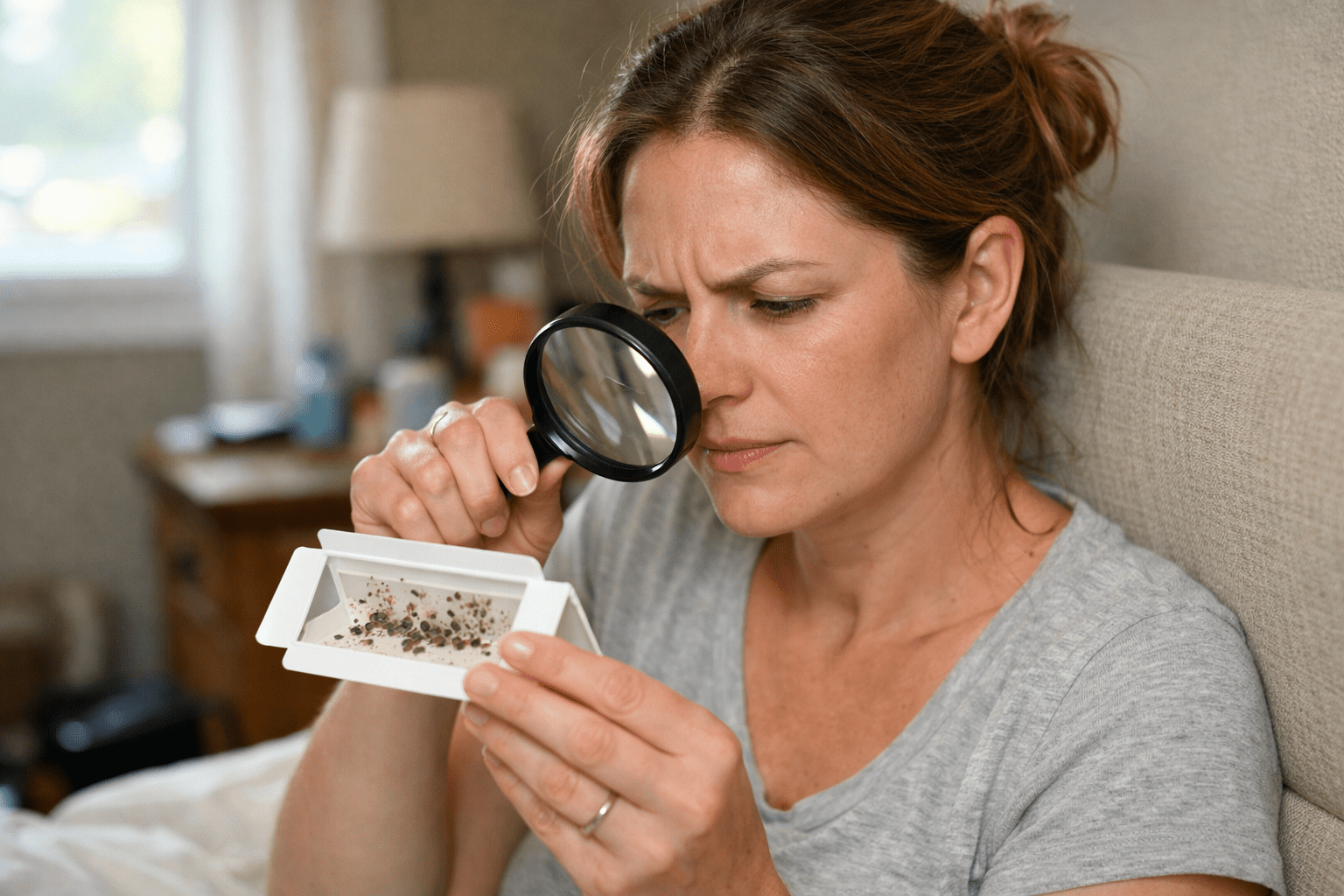
Seeing an insect in a trap is only helpful if you can interpret it. Bed bugs are often confused with small beetles, booklice, carpet beetle larvae, or even cockroach nymphs. The good news is that bed bug captures in monitors are usually in good condition for identification.
Visual: quick ID checklist for trapped bed bugs
Use these features to confirm:
- Size: adults about 5 to 7 mm (roughly apple seed sized); nymphs smaller
- Shape: flat, oval body; wide abdomen
- Color: tan to reddish-brown; darker after feeding
- Movement: quick scuttle, but they don’t jump or fly
- Where found: inside interceptor wells near beds or couches
If you’re uncertain, take a clear photo next to a coin and compare with reputable extension resources. The Rutgers bed bug fact sheet includes images and monitoring guidance that aligns well with what pest professionals use.
What the capture location tells you
Interceptors often have two zones: an outer ring and an inner well.
- Outer ring captures can suggest bugs are moving from the room toward the bed.
- Inner well captures often indicate bugs are climbing up the bed legs to reach a host.
This isn’t perfect detective work, but it’s better than guessing. If one bed has repeated captures and another doesn’t, you’ve learned where to concentrate inspection and treatment.
What capture numbers suggest (rule-of-thumb guidance)
Use this as a practical way to decide your next step:
- 1 bug captured: treat it as real. Start a targeted inspection immediately.
- 2 to 10 over a week: likely established activity near that sleeping area.
- Dozens: infestation is likely larger or widely distributed, and professional help becomes more cost-effective.
When to call a professional
DIY monitoring is smart. DIY elimination is harder.
Consider professional treatment if:
- You keep capturing bed bugs for 2+ weeks despite isolation and cleaning
- Multiple rooms show activity
- You live in a multi-unit building (neighboring units can reintroduce bugs)
- Someone in the home can’t tolerate bites or allergic reactions
A reputable company should use monitoring as part of a plan, not as the whole plan.
Buying guide: what to look for in bed bug detectors (and what to avoid)
Shopping for monitors can feel like sorting through gadget claims. A good buying decision comes down to three questions: How sensitive is it, how much upkeep does it require, and can you deploy enough units to cover the room?
A practical “buy this, not that” checklist
Look for:
- A design that works without electricity (for passive monitoring)
- Durable plastic that won’t crack under bed legs
- Textured outer surface plus slick inner well (for interceptors)
- Clear replacement schedule for lures (if you choose active monitors)
- Enough units to cover all legs of beds and sofas
Be cautious with:
- Single-device solutions marketed as “whole room detection”
- Expensive systems with frequent lure refills if your budget is tight
- Devices that promise elimination without treatment
Cost expectations (so you can plan coverage)
Monitoring fails when people buy too few units. Budget for full coverage:
- Interceptors: typically low cost per unit, reusable for long periods
- Sticky/lure monitors: moderate upfront cost, plus replacements every 1 to 3 months depending on the product
- CO2 systems: higher ongoing effort and sometimes higher cost
A useful point from professional and extension guidance is that multiple monitors placed simultaneously give the most accurate picture. One trap can miss activity simply because bed bugs took a different path that night.
Travel and secondhand furniture: smart preventive monitoring
Bed bugs often hitchhike in luggage and used furniture. If you travel frequently or buy secondhand items, consider a small monitoring routine:
- At hotels: keep luggage on a rack away from the bed and wall
- At home after travel: monitor near where luggage was opened for 2 to 3 weeks
- For used furniture: isolate in a garage or spare room and monitor before bringing it into bedrooms
If you’re building a broader “trap strategy” mindset, it helps to compare how trap placement and lure types matter across pests. For example, Best Mosquito Traps for Yard and Patio shows how attractants and placement determine results outdoors. Indoors with bed bugs, interceptors and isolation play that same role.
Key takeaways (and a simple next step)
Bed bug detectors work best when they match bed bug behavior and you deploy enough of them to remove guesswork.
Remember:
- Pitfall interceptors under every bed leg are the best starting point for most homes.
- CO2-baited traps can detect very low populations faster, but require more setup.
- Placement matters as much as the device – isolate the bed, remove bridges, check weekly.
- Capturing even one bed bug is confirmation. Don’t wait for bites to worsen.
- Monitors support control efforts, but they don’t replace treatment in established infestations.
Next step: Install interceptors under all bed legs tonight, then schedule a weekly check for the next month. If you’re still unsure whether bites match bed bugs, use Mosquito Bites vs Bed Bugs, Fleas, Spiders & Ticks to narrow the cause while your monitors collect real evidence.
As an Amazon Associate, I earn from qualifying purchases. Product recommendations are based on real reviews and independent research.