Travel can be stressful enough without wondering what might be riding home on your suitcase. If you are searching for bed bug proof luggage, here’s the honest answer: no suitcase is truly “bug-proof,” but the right bag plus the right routine can make hitchhiking bed bugs very unlikely. This guide explains what science says about where bed bugs cling on luggage, what features actually help, and the fastest post-trip steps to keep them out of your home – without panic or tossing expensive gear.
Quick answer: What is the best “bed bug proof luggage” approach?
The best bed bug proof luggage strategy is not a single product – it’s a combination of a smooth, easy-to-clean suitcase and a heat-based cleanup routine after travel.
Use this checklist as your quick decision tool:
- Best luggage type: Hard-sided, smooth shell with minimal seams and exterior pockets
- Best add-on protection: Large sealable plastic bags or packing cubes that keep clothing isolated
- Best “kill step” after travel: Heat
- Clothing: 30+ minutes in a dryer on medium-high (when fabric allows)
- Suitcase exterior: targeted heat or careful cleaning of seams and zippers
- Most important habit: Keep luggage off beds and upholstered furniture in hotels and at home
- Reality check: “Bed bug resistant” is a more accurate label than “bed bug proof”
Snippet-friendly takeaway: Choose a hard-shell bag, isolate clothes inside, and use dryer heat plus seam cleaning after trips.
Bed bugs and luggage: where they really hide (and why it matters)
Most travelers picture bed bugs crawling into the middle of a suitcase like it’s a closet. In real life, bed bugs behave more like skilled hitchhikers grabbing the nearest handhold. That usually means seams, zippers, piping, handles, and the textured exterior of soft-sided bags.
Research from the University of California, Irvine found something that surprises many people: bed bugs were far more likely to remain on the outside of luggage than move deep inside. In their tests, only a tiny fraction made it into the interior. That is good news because the exterior is easier to treat quickly and effectively.
Why the outside of your suitcase is “prime real estate” for bed bugs
Bed bugs (Cimex lectularius) prefer tight spaces that press against their bodies. Luggage exteriors offer plenty of those:
- Zipper tracks and zipper garages
- Stitching lines, piping, and folded seams
- Handle mounts and wheel housings
- Exterior pockets (especially soft-sided bags)
Actionable takeaway: When you inspect a suitcase, spend 80 percent of your attention on seams, zippers, and hardware.
Quick inspection map (use this every hotel stay)
Use a phone flashlight and check these areas in under 2 minutes:
- Zippers: run the light along both sides of the zipper teeth
- Seams and piping: look for tiny dark specks or shed skins
- Handles: especially where fabric meets plastic
- Wheels and base: bed bugs can cling under the bag after it rests near beds
Visual: “Where to look first” table
| Suitcase area | How to check fast | Why it matters |
|---|---|---|
| Zippers | Shine light, open and close slowly | Tight crevice, high contact |
| Seams/piping | Pinch seam and look into fold | Classic hiding zone |
| Handles | Inspect attachment points | Warm, sheltered gaps |
| Wheels/base | Flip bag, inspect corners | Picks up bugs from floors |
If you come home with unexplained bites, it helps to compare patterns and likely culprits. This quick reference on Mosquito Bites vs Bed Bugs, Fleas, Spiders & Ticks can help you decide whether to focus on travel exposure or something else.
Hotel placement matters more than most gear
The EPA travel tips for bed bugs emphasize simple behaviors that prevent most hitchhiking events. The biggest one is keeping bags away from beds and upholstered furniture.
Best places for luggage in a hotel:
- A hard-surface bathroom (tub or tile floor)
- A closet shelf, if it’s not near the bed
- A metal luggage rack pulled away from the wall and bed
Worst places:
- On the bed “just for a second”
- On upholstered chairs or sofas
- On carpet right next to the bed
Bed bug proof luggage features that actually help (and marketing that doesn’t)
Samsonite Omni PC Hardside Luggage with Spinner Wheels
This hard-sided luggage features a smooth shell with minimal seams, making it less likely for bed bugs to cling to it.
If you have ever shopped for travel gear after hearing a bed bug story, you have seen bold claims. The problem is that bed bugs do not respect labels. They respect physics: smooth surfaces, fewer hiding places, and easy cleaning.
So what should you look for in luggage if your goal is “bed bug proof” in the practical sense?
The best suitcase design: smooth, hard-sided, minimal seams
Hard-shell luggage does not magically repel bed bugs, but it gives them fewer gripping points and makes inspection and cleaning faster.
Prioritize these features:
- Hard-sided shell (polycarbonate or ABS) with a smooth finish
- Minimal exterior pockets (pockets add seams and folds)
- Simple zipper path with fewer fabric flaps
- Light-colored interior lining (easier to spot specks or shed skins)
- Sturdy wheels and base that are easy to wipe
Avoid if possible:
- Deep quilting, heavy fabric texture, or lots of piping
- Multiple exterior compartments
- Decorative straps and stitched overlays
“Bed bug resistant” accessories that do real work
The best protection often comes from how you pack, not just what you pack in.
High-impact add-ons:
- Sealable plastic bags for clothing separation (clean vs worn)
- Packing cubes that reduce loose fabric contact with the suitcase interior
- A small flashlight for inspections
- A lint roller to help pick up and trap a visible bug quickly
The idea is simple: even if a bed bug gets onto the suitcase exterior, it has fewer chances to reach clothing and follow you into drawers at home.
Visual: packing plan that reduces risk
| Item type | Pack it how? | Why it helps |
|---|---|---|
| Clean clothes | Sealed bags or cubes | Limits exposure and sorting time |
| Dirty laundry | Separate sealed bag | Prevents mixing and spread |
| Shoes | Bagged | Shoes have crevices and collect debris |
| Toiletries | Separate pouch | Keeps spills from complicating heat steps |
Heat-kill luggage options: what the evidence supports
Heat is the most reliable non-chemical tool for bed bugs and eggs when done correctly. According to the University of California, Irvine, short bursts of high heat targeted to luggage exteriors can kill bed bugs hiding in seams and zipper areas.
There are also suitcases marketed with built-in heating. Travel media testing has highlighted options like the ThermalStrike heated suitcase concept, which aims to raise internal temperatures to bed-bug-lethal levels when plugged in. One overview is available from SmarterTravel’s review of a heat-treating suitcase.
Practical takeaway: Treat “heated luggage” as a convenience tool, not a permission slip to skip inspection and isolation.
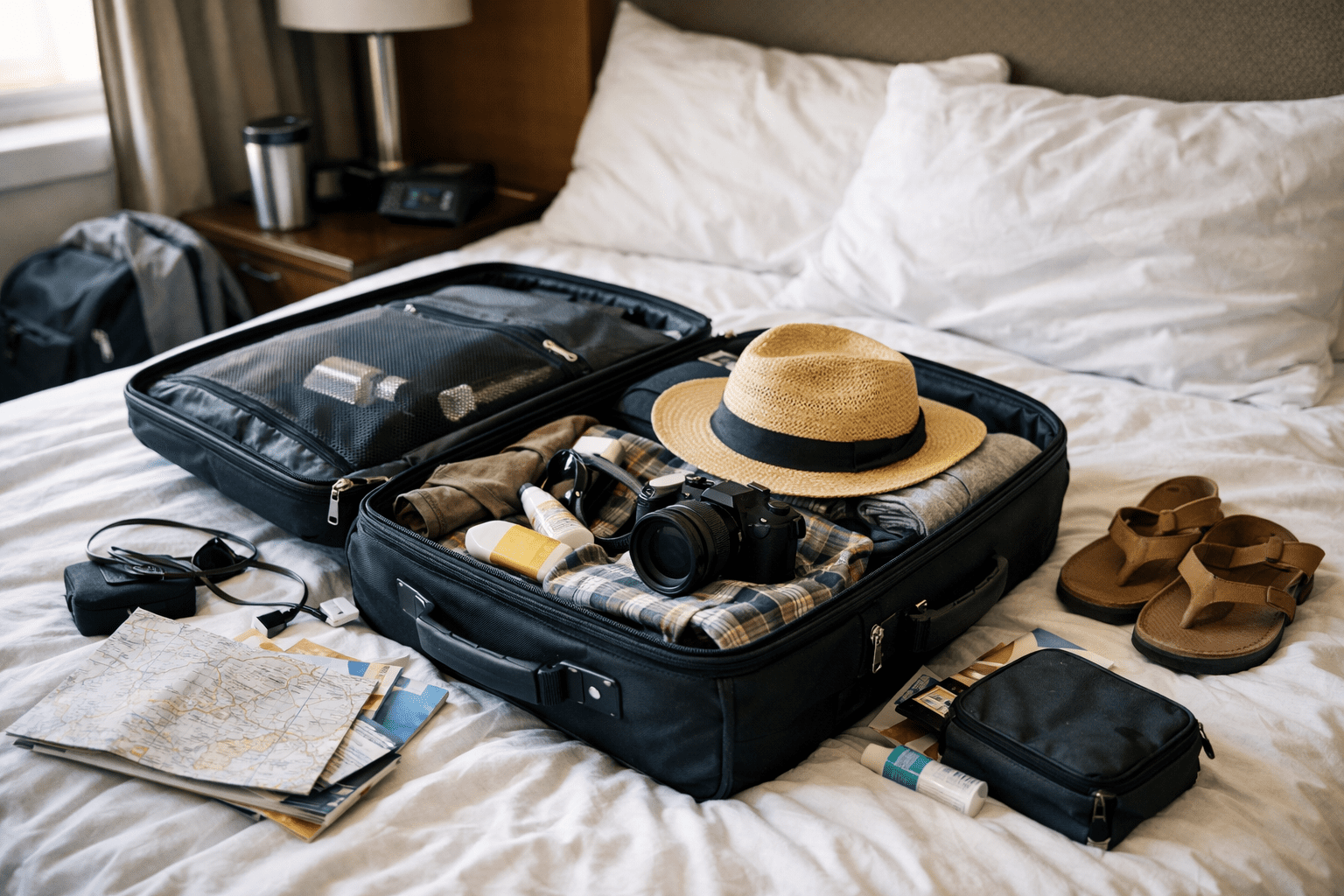
Travel routine that prevents bed bugs from hitchhiking (hotel to airport)
eBags Packing Cubes – 3pc Set
These packing cubes help isolate clothing inside your luggage, providing an additional layer of protection against bed bugs.
Most infestations linked to travel happen because one small step got skipped at the wrong time. Think of bed bug prevention like airport security: you do a few repeatable checks, every trip, and your odds improve dramatically.
Step 1: Do a 60-second room check before you unpack
You do not need to dismantle the bed. You are looking for obvious signs in the highest-risk zones.
Use a flashlight and check:
- Mattress seams near the head of the bed
- The headboard edge and wall junction
- The luggage rack seams and straps
- Nightstand corners
For a clear, traveler-focused checklist, the Northeast Integrated Pest Management Center’s guidance on encountering bed bugs while traveling is a solid reference.
Actionable takeaway: If you see live bugs or multiple suspicious signs, request a different room far from the original. Do not move next door.
Step 2: Keep your suitcase “isolated” during the stay
Even in clean hotels, isolation is smart because bed bugs can be introduced by other guests.
Good isolation habits:
- Keep luggage on a rack, away from the bed and wall
- Keep clothing in bags or cubes, not in hotel drawers
- Hang coats and backpacks rather than placing them on upholstered furniture
The EPA’s bed bug travel recommendations align with this approach and emphasize reducing contact with common harborages.
Step 3: Use simple “capture tools” if you spot something
If you see a suspicious bug on your bag, avoid smashing it on fabric. Capture it so you can identify it later.
Quick capture kit:
- Clear tape or a lint roller
- A zip-top bag
- A photo with your phone for later ID
If you are also dealing with mosquitoes on trips, it helps to separate bite concerns. For prevention while sleeping, see Best Mosquito Nets for Beds, Travel & Camping so you can reduce bites without assuming bed bugs are the cause.
Visual: “hotel stay” checklist
- Inspect bed seams and headboard
- Park luggage on rack or in bathroom
- Keep clothes sealed
- Avoid upholstered surfaces for bags
- Capture and photograph any suspect insect
What to do when you get home: a no-drama decontamination plan
Ziploc Big Bags, Extra Large, 3 Count
No Amazon product page or ASIN found for Ziploc Big Bags Extra Large 3 Count despite searching; available retailer descriptions highlight versatile storage with handles and moisture protection, but lacks ratings, reviews, or pricing from Amazon for affiliate recommendation[1][2][3].
Conair Turbo ExtremeSteam Handheld Fabric Steamer
The Conair Turbo ExtremeSteam Handheld Fabric Steamer offers powerful 1875W turbo steam, quick 45-second heat-up, and versatility for de-wrinkling fabrics and killing bacteria, making it a solid choice for home or travel based on manufacturer specs and retailer feedback, though Amazon-specific ratings and pricing unavailable here.
The first hour after travel is when people accidentally give bed bugs a new address. The goal is simple: unpack in a controlled area, heat-treat what you can, and clean the suitcase where bed bugs are most likely to be.
Michigan State University Extension advises practical post-travel steps to keep bed bugs from moving in, including heat and careful unpacking. Their guidance is summarized in Michigan State University Extension’s bed bug travel advice.
Step-by-step: the 20-minute “arrival routine”
Choose a hard-surface area like a garage, mudroom, laundry room, or bathroom.
- Do not bring the suitcase into bedrooms.
- Place it on tile, concrete, or inside a bathtub.
- Remove clothes directly into the washer or sealed bags.
- Dry first when possible. A dryer is often more reliable than a washer for killing bed bugs.
- Inspect and vacuum luggage seams using a crevice tool.
- Seal and discard vacuum contents immediately.
Actionable takeaway: You are trying to break the chain of contact: suitcase exterior -> carpet -> bedroom -> bed.
Heat: the most dependable kill step for fabrics
Heat works because bed bugs and eggs cannot survive sustained high temperatures. For most travel clothing, a dryer cycle is the easiest option.
General dryer guidance travelers use:
- Dry on medium-high heat for at least 30 minutes (if the fabric allows)
- Items that cannot be washed can often be dried safely – check labels
- If you cannot dry an item, isolate it in a sealed bag until you can treat it
This aligns with extension recommendations like those from Michigan State University Extension.
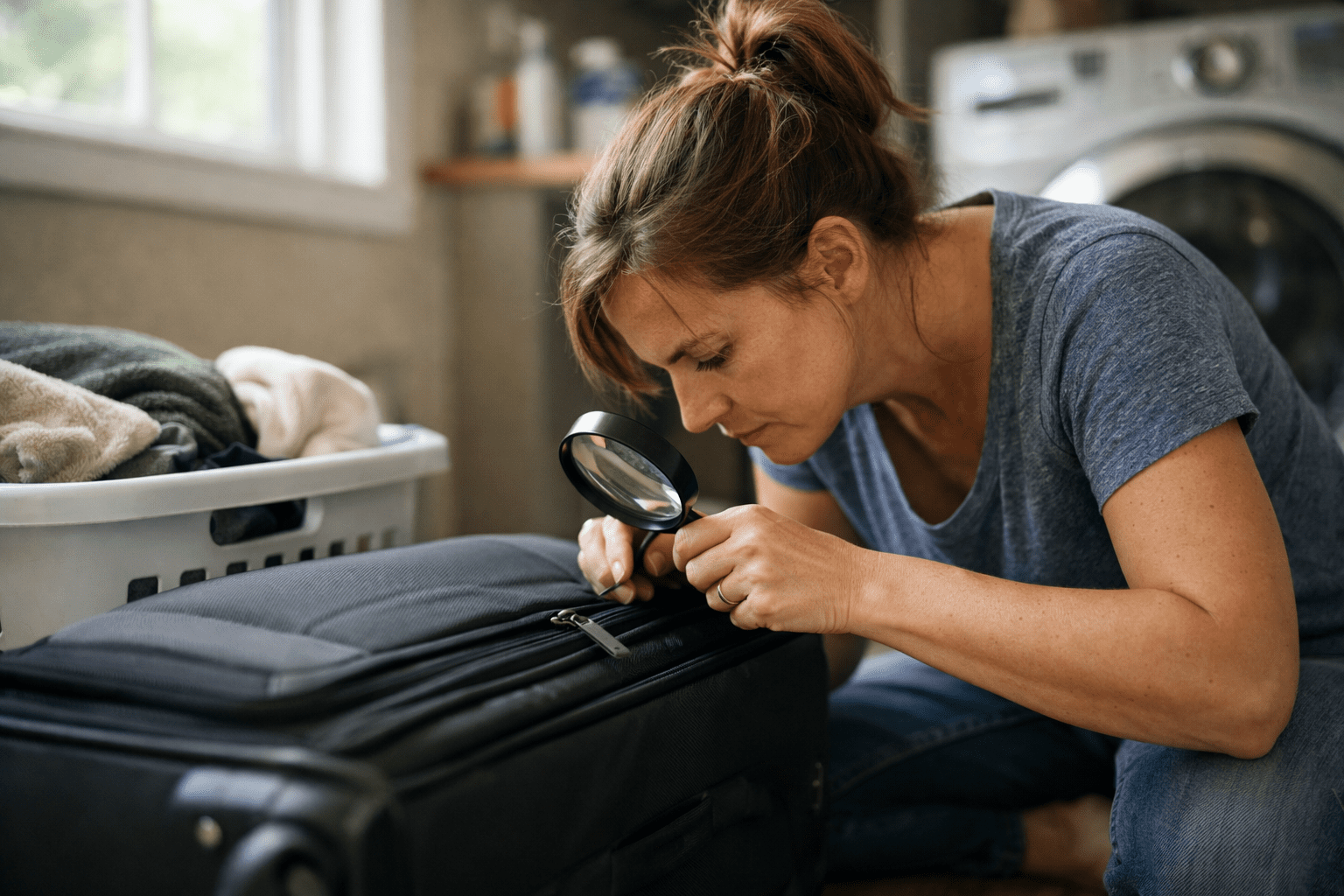
Cleaning the suitcase: focus on seams, zippers, and the base
Even if bed bugs rarely go deep inside a suitcase, you should still treat it like it might have picked up a hitchhiker.
Best cleaning options (choose what fits your bag):
- Vacuum seams and zipper tracks thoroughly
- Steam seams and folds carefully (steamers can help when used correctly)
- Wipe hard shells with hot, soapy water
- Inspect wheel wells and the base where the bag touched floors
Visual: suitcase cleanup checklist
| Task | Best for | Notes |
|---|---|---|
| Crevice vacuum | Seams, zippers, folds | Dispose contents in sealed bag |
| Steam seams | Soft-sided bags | Move slowly, avoid soaking |
| Soap-and-water wipe | Hard shells | Focus on handles and base |
| Bright-light inspection | Any luggage | Look for specks, shed skins |
When to call a professional
Most travel-related hitchhikers can be handled with isolation and heat. But professional help is smart if:
- You find multiple live bed bugs at home after travel
- Bites continue for more than a week with new signs (spots, shed skins)
- You live in a multi-unit building where spread is easier
A licensed pest management professional can confirm the insect and use an integrated approach rather than relying on sprays alone.
Myths about “bed bug proof” travel gear (and what to do instead)
Bad advice spreads bed bugs faster than travel does. Let’s clear up the most common misconceptions and replace them with steps that work.
Myth 1: “If I buy the right suitcase, I’m protected”
Reality: No luggage is truly impervious. Bed bugs can cling to many surfaces and hide in tiny gaps. The goal is to reduce hiding spots and make treatment easy.
Do instead:
- Choose a hard-sided suitcase with fewer seams
- Pack clothes in sealed bags or cubes
- Use a post-trip dryer routine
Myth 2: “Bed bugs always crawl inside the suitcase”
Reality: Evidence suggests they are much more likely to stay on the exterior and in seam areas. The University of California, Irvine research on short heat treatments supports focusing attention on the outside and typical harborages.
Do instead:
- Inspect and treat zippers, seams, handles, and the base first
- Keep luggage off beds and upholstered furniture
Myth 3: “I should throw away luggage if I suspect bed bugs”
Reality: Disposal is often unnecessary and can spread bugs if you drag items through hallways. Heat and careful cleaning usually solve the problem.
Do instead:
- Isolate the suitcase
- Vacuum and steam seams
- Consider a targeted heat treatment method where available
Myth 4: “Spraying chemicals on luggage is the best fix”
Reality: Bed bug resistance to many insecticides is well documented, and sprays can be misused. Many authorities prefer non-chemical steps first.
Do instead:
- Use heat, isolation, and inspection as your core strategy
- Follow public guidance like the EPA’s bed bug travel tips
If your bigger concern is bite prevention outdoors rather than indoor pests, you may also like How to Mosquito-Proof Your Backyard: Complete Guide for practical, non-alarmist prevention strategies.
Conclusion
The most reliable way to shop for bed bug proof luggage is to ignore the promise of “proof” and build a system: pick a smooth, hard-sided suitcase with fewer seams, keep clothing isolated inside, and use heat plus seam-focused cleaning when you get home. Bed bugs are persistent hitchhikers, but they are also predictable – they like tight crevices, and they cannot survive proper heat.
Next step: set up a simple post-travel station (laundry room or garage) with sealable bags, a flashlight, and a plan to dry clothing immediately. If you need help interpreting bites after a trip, use Mosquito Bites vs Bed Bugs, Fleas, Spiders & Ticks to narrow down the cause before you treat the wrong problem.
As an Amazon Associate, I earn from qualifying purchases. Product recommendations are based on real reviews and independent research.