Finding ants inside house walls, along baseboards, or marching across the kitchen counter usually means one simple thing: your home is offering something they want. It might be a few crumbs you cannot see, a drip under the sink, or a warm, protected void behind drywall. The tricky part is that ants do not wander randomly. One scout can locate a resource, lay a chemical trail, and recruit a crowd fast. This guide explains why ants come indoors, where they get in, and what actually stops them long term.
Quick Answer: Why you’re getting ants inside house (and what to do first)
Ants show up indoors for the same reasons any animal approaches a shelter – food, water, and a safe place to nest. When you see ants inside house spaces, you’re usually seeing foragers from an outdoor colony, not a “random” indoor swarm.
Most common causes (ranked):
- Food scent trails: sugar, grease, pet food, trash residue
- Moisture: leaky plumbing, condensation, damp wood, wet sponges
- Weather pressure: heavy rain flooding nests, cold snaps, heat waves
- Easy entry points: tiny cracks, door gaps, utility penetrations
Do this in the next 10 minutes:
- Wipe the trail with soapy water or vinegar solution (removes pheromone cues).
- Put all food (including pet food) into sealed containers.
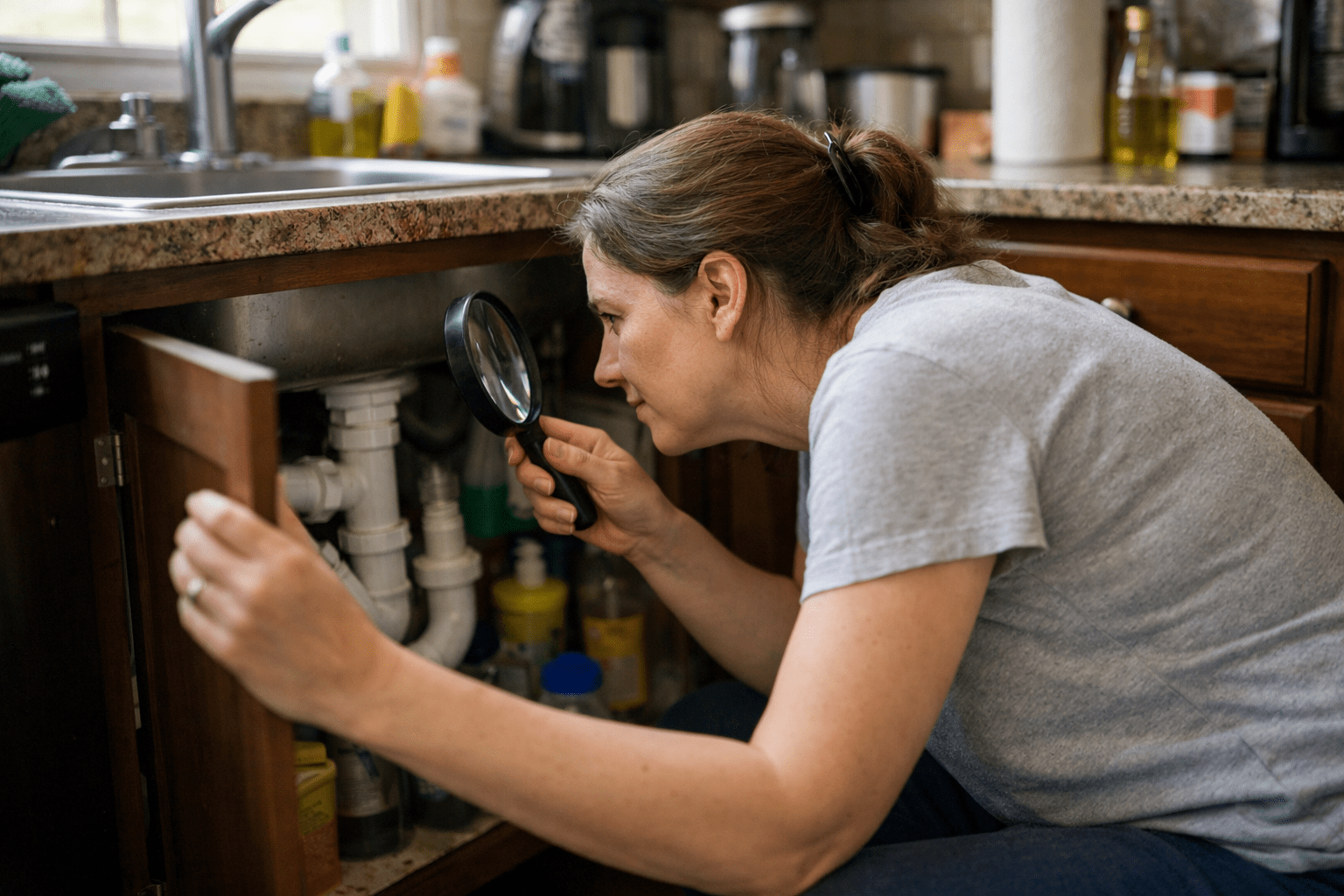
- Check under sinks and behind toilets for dampness.
- Place a slow-acting bait along the trail (avoid spraying the trail first).
If you want product-style recommendations, see our guide to best ant killers and baits.
Why ants come inside: food, water, shelter, and weather triggers
Picture an ant colony as a small city with thousands of workers running errands all day. Most of those errands involve scouting for calories and moisture. When your home offers either, ants treat it like a dependable supply stop.
1) Food: tiny crumbs, big signal
Ants do not need a visible mess. A smear of jam on a cabinet handle or a few grains of pet kibble under a bowl can be enough. Many house-invading species prefer sweets, while others lean toward fats and proteins.
Once a scout finds food, it lays a pheromone trail back to the nest. That trail works like a temporary “GPS route,” guiding nestmates to the same spot. This is why you can go from one ant to a line of ants in a short time.
A practical way to break the cycle:
- Clean the exact trail with soapy water (soap helps remove the chemical residue).
- Follow with a dry wipe so the surface is not left damp.
2) Water: the hidden driver most people miss
In many homes, moisture is the real magnet. Ants can drink from:
- Leaky sink traps and shutoff valves
- Condensation on cold pipes
- Wet dishcloths and sponges
- Pet water bowls
- Shower corners and bathroom baseboards
Some species are especially tied to moisture and may forage widely for it. Research summarized in a North Carolina State Extension ant control guide highlights how different house-invading ants vary in nesting and moisture needs, which is why “one-size” fixes often disappoint.
3) Shelter and nesting: sometimes the colony is already in the structure
Not all ants you see are just visiting. Some can nest in wall voids, under slabs, or in damp wood. Moisture-loving ants, including acrobat ants, often indicate a water issue such as a leak or rotting wood.
Use this quick “nest suspicion” checklist:
| Sign | What it often means | What to do |
|---|---|---|
| Ants appear in the same spot daily | Established foraging route | Bait + seal entry after activity drops |
| Ants emerge from a wall crack or outlet | Nest may be in wall void | Reduce moisture, consider pro inspection |
| Sawdust-like debris (frass) nearby | Possible carpenter ants | See carpenter ant treatments |
| Ants show up mostly at night | Foraging pattern of some species | Place baits in evening along trails |
4) Temperature and storms: seasonal “pressure” pushes ants indoors
Ant activity shifts with the weather. Cold snaps can drive ants toward warmer indoor voids. Heat waves can send them searching for cooler, more humid microclimates. Heavy rain can flood outdoor nests and force colonies to relocate.
If ants appear suddenly after a storm, it’s often a displacement event rather than a “new infestation.” That’s good news, because sealing and sanitation can solve it quickly once the weather stabilizes.
How ants get into your home (even upper floors)
Raid Ant and Roach Killer, 17.5 oz
Raid Ant and Roach Killer 17.5 oz earns a strong 4.6-star rating from over 25,000 Amazon reviews for its reliable effectiveness against ants and roaches on contact with residual protection up to 12 weeks. Users praise its quick action and ease of use, though the potent odor and need for pet/child precautions are common drawbacks. At around $10, it’s a solid, affordable choice for household pest control, but ensure proper ventilation during application.
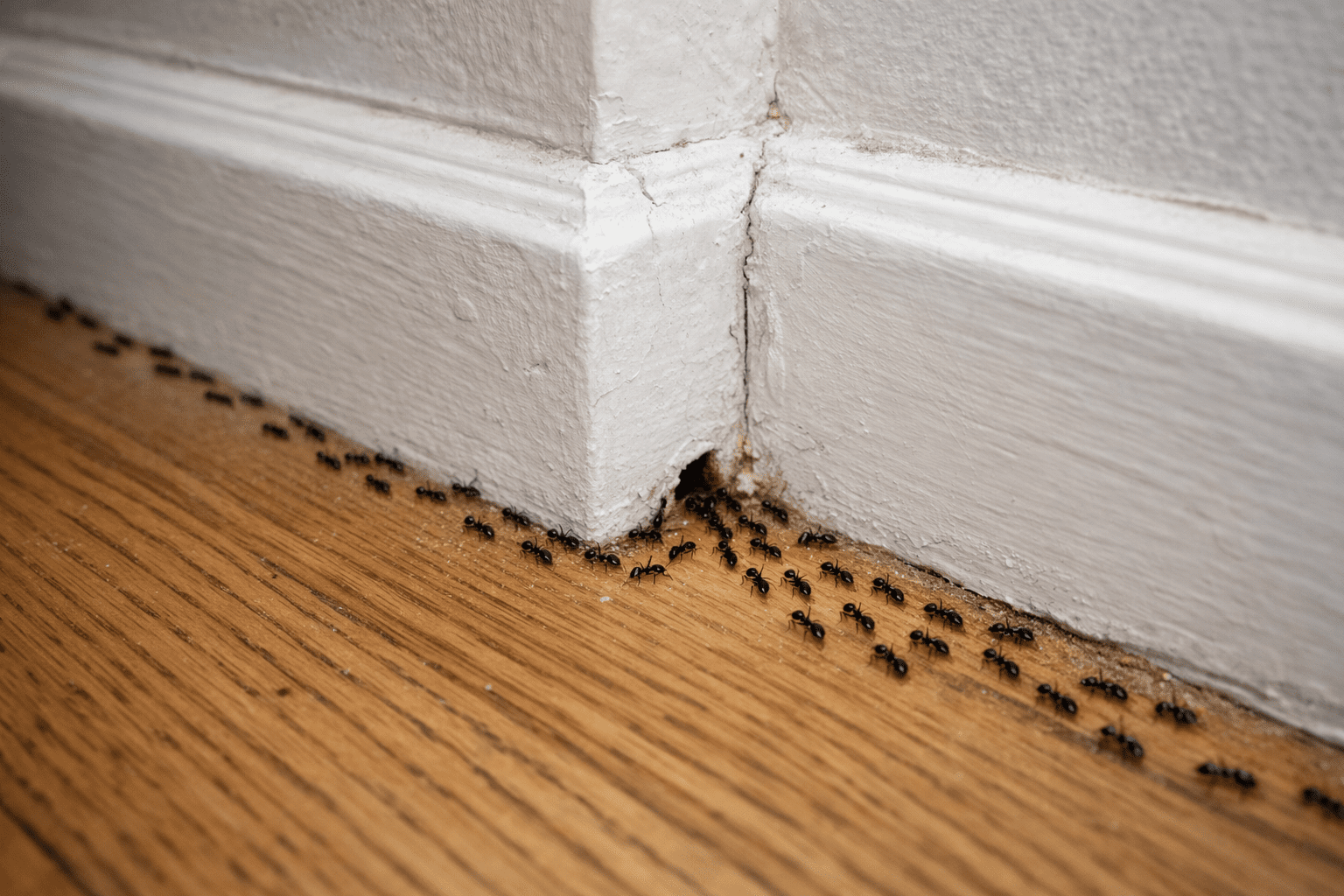
Most ants do not need an open door. Many can squeeze through gaps as small as 1 mm to 2 mm – about the thickness of a credit card edge. And yes, ants can reach upper apartments. Many species climb extremely well thanks to adhesive pads and tiny hairs on their feet, allowing them to scale siding, brick, and utility lines.
Here are the most common entry routes to inspect, starting with the highest payoff.
High-probability entry points checklist
- Door thresholds and side seals: worn weather stripping, daylight under the door
- Window frames: gaps in caulk, damaged screens, rotted wood
- Foundation cracks: where slab meets wall, or where siding meets masonry
- Utility penetrations: plumbing, electrical conduit, cable lines
- Vents and weep holes: especially near kitchens and bathrooms
- Garage transitions: gaps where drywall meets slab, door corners
A quick “follow-the-ant” method works well:
- Watch where the line disappears.
- Mark the spot with painter’s tape.
- Check the exterior directly opposite that point if possible.
Accidental transport: the sneaky way ants move in
Some infestations begin with a hitchhiker event:
- Potted plants brought indoors
- Used furniture with hidden voids
- Cardboard boxes stored in garages or basements
- Outdoor toys with hollow sections
If you see ants appear around a new item, isolate it in a garage or on a hard floor, then inspect seams and cavities.
Visual: 2-minute home “seal scan”
Walk this route once a month:
- Front door and back door sweep
- Kitchen window frames
- Under-sink plumbing holes
- Bathroom baseboards
- Garage-to-house entry door
Small fixes here prevent big problems later.
Ant prevention that actually works (without living in a sterile house)
Terro T300B Liquid Ant Baits, 12 Baits
This product is a slow-acting bait that is effective for ant control, aligning with the article’s advice on placing bait along ant trails.
Prevention is not about perfection. It’s about removing the easy wins that keep ants coming back. Entomologists typically recommend an integrated pest management approach: reduce attractants, block entry, and use targeted controls when needed.
Step 1: Remove the resources ants are recruiting to
Focus on the spots that create repeat traffic.
Kitchen and dining habits that matter most:
- Wipe counters and table edges nightly (especially around toaster and coffee area).
- Rinse recyclables before placing them in bins.
- Store sugar, cereal, and snacks in sealed containers.
- Do not leave pet food out overnight during active ant season.
Moisture fixes with the biggest impact:
- Repair dripping faucets and sweating pipes.
- Replace water-damaged caulk around sinks and tubs.
- Run the bathroom fan for 20 minutes after showers.
- Empty drip trays under houseplants.
If you’re dealing with multiple indoor invaders at once, you may also like our broader guide on how to get rid of indoor pests, which uses the same “remove what they need” logic.
Step 2: Seal entry points the right way (timing matters)
Sealing works best after you reduce active foraging. If you seal too early while ants are still heavily trailing, they may simply reroute to a new gap.
Use:
- Silicone or acrylic latex caulk for cracks along baseboards and window trim
- Weather stripping and door sweeps for exterior doors
- Expanding foam only for larger utility gaps (use sparingly and trim cleanly)
Seal priority list:
- Under-sink pipe penetrations
- Door thresholds
- Window frame corners
- Foundation-to-siding seam
Step 3: Use repellents carefully (they can backfire)
Many strong-smelling sprays repel ants temporarily, but they can also split trails and scatter foragers into new areas. If your goal is colony-level control, baits usually outperform repellents.
That said, repellents have a place for short-term boundary protection. For options that fit a lower-tox approach, see our roundup of natural ant repellents.
Visual: Prevention scorecard (aim for 8/10)
Give yourself 1 point for each “yes”:
- Food stored in sealed containers
- Trash has a tight lid and is emptied regularly
- No standing water under sinks
- Bathroom fan works and gets used
- Door sweeps block visible gaps
- Window screens intact
- Utility line gaps sealed
- Outdoor vegetation not touching siding
- Pet food not left out overnight
- Counters wiped nightly during ant activity
If you score under 6, prevention alone often will not hold.
Ant control options: baits vs sprays, plus when to call a pro
Hot Shot Bed Bug and Flea Killer, 1 Gallon
Hot Shot Bed Bug and Flea Killer 1 Gallon receives no Amazon ASIN or rating data from search results but is described across retailers as an effective, non-staining, odor-free ready-to-use spray that kills bed bugs, eggs, fleas, and ticks with long-lasting protection; recommend for pest control needs where available, though Amazon-specific verification unavailable.
When ants are already inside, the goal is to stop recruitment and eliminate the source colony. That usually means choosing tools that match ant biology, not just the urge to “kill what you see.”
Why baits often beat sprays
Sprays kill on contact, but they rarely reach the colony. Baits work by letting foragers carry a slow-acting toxicant back to nestmates, including queens in many cases. This is why you may see more ants for a day or two after bait placement – it can be a sign that recruitment is happening.
Best bait placement rules:
- Place bait directly along the trail, not in the middle of open floors.
- Use multiple small placements rather than one big blob.
- Keep baits away from where you just used cleaners or repellents.
- Do not spray over bait stations.
For a deeper breakdown by bait type and use case, our best ant killers and baits guide compares common options and what they’re designed to do.
When sprays make sense
Use targeted sprays only when:
- You need immediate relief in a specific area (like a doorway).
- You are treating exterior entry points after sealing.
- You are not trying to preserve a bait trail.
If you do spray indoors, keep it limited and follow the label exactly. More product is not better.
Health and food safety: are ants “dirty”?
Ants can mechanically move microbes from one surface to another, especially when they forage around sinks, trash, and pet areas. A review in the National Library of Medicine (PMC) on ants and pathogen carriage discusses how ants can transport bacteria in human environments. The practical takeaway is simple: treat ant trails on counters as a sanitation issue and clean those surfaces before food prep.
When professional help is the smart move
Call a licensed pest professional if:
- Ants are emerging from walls, ceilings, or electrical outlets.
- You suspect carpenter ants (often tied to moisture-damaged wood).
- You have repeated re-infestations despite baiting and sealing.
- You cannot locate entry points in multi-unit housing.
Pros can identify species, locate satellite nests, and use non-repellent treatments that homeowners often cannot access.
Visual: Quick decision chart
| Situation | Best first move |
|---|---|
| A few ants near a window | Clean trail + seal gap + small bait |
| A steady line to pantry | Remove food source + bait along trail |
| Ants in bathroom daily | Fix moisture + bait near entry |
| Sawdust/frass or hollow-sounding wood | Inspect for carpenter ants + consider pro |
| Multiple rooms, recurring | Species ID + exterior inspection + pro |
What most people get wrong about ants indoors (and the science that explains it)
A common myth is that ants show up only in “dirty” homes. In reality, ants are persistent foragers. Even very clean homes can have the two things ants need most: a water source and a tiny entry gap.
Misconception 1: “They’re just wandering”
Ants are organized. Foragers constantly sample the environment, and successful scouts recruit others using pheromones. That is why wiping trails matters. You are not just cleaning – you are removing directions.
Misconception 2: “If I kill the ants I see, the problem is solved”
The ants you see are usually a small fraction of the colony. Killing visible workers can reduce annoyance, but it does not address the nest. Baits and exclusion do.
Misconception 3: “Ants can’t reach my upstairs unit”
They can. Ants readily travel up exterior walls, along pipes, and through shared utility chases. Reports of ants reaching tall structures align with how well they climb and how they exploit building pathways.
A fascinating side note: ants are adaptive builders
Ant colonies do more than forage. They adjust nest structure based on risks, including disease. A paper in the journal Science describes “architectural immunity,” where ants change nest layout to reduce pathogen spread. You can read that work in Science magazine’s coverage of ant nest defenses. The homeowner takeaway: ants are flexible. If one route fails, they search for another, which is why prevention must be layered.
Visual: “Ant-proofing” is a system, not a single trick
Think in three layers:
- Attractant control (food and moisture)
- Exclusion (seal and repair)
- Targeted control (baits, limited spray, pro help)
Skip one layer and ants often return.
Key takeaways (and your next step)
Ants come indoors because your home offers food, moisture, shelter, or weather refuge. Once a scout finds a resource, pheromone trails can bring in many more quickly. The fastest wins are trail cleanup, moisture fixes, and smart baiting, followed by sealing the entry points that made the problem possible.
Next step: choose one track today.
- If you need fast control, start with best ant killers and baits and place bait along active trails.
- If you prefer lower-tox options, use these natural ant repellents as a short-term boundary tool while you seal and dry out problem areas.
With a little detective work and the right sequence, most ant problems stop – and stay stopped.
As an Amazon Associate, I earn from qualifying purchases. Product recommendations are based on real reviews and independent research.