
If ants keep streaming across your counter, a natural spray will scatter the line you can see, but it will not touch the nest those ants came from. Start with what costs nothing: wipe the trail with soapy water, then seal where they get in. If they keep coming back within a week or two, the natural option that actually works is not a scented spray, it is diatomaceous earth on dry crawl paths or a borax bait the foragers carry home. For our own kitchen we keep food-grade DE and one borax bait, and reach for a peppermint spray only to keep a clean baseboard clean.
Essential-oil sprays only disrupt trails and repel, so use diatomaceous earth or a borax bait to reach the colony, and treat the scented spray as a supplement, not the fix.
- Do first (free): Wipe trails with soapy water and seal entry gaps so fewer ants get in.
- Natural option that works: Food-grade diatomaceous earth on dry paths, or a borax bait foragers carry to the nest.
- Skip as a cure: Peppermint, vinegar, and cinnamon sprays; they repel for a day, the colony stays.
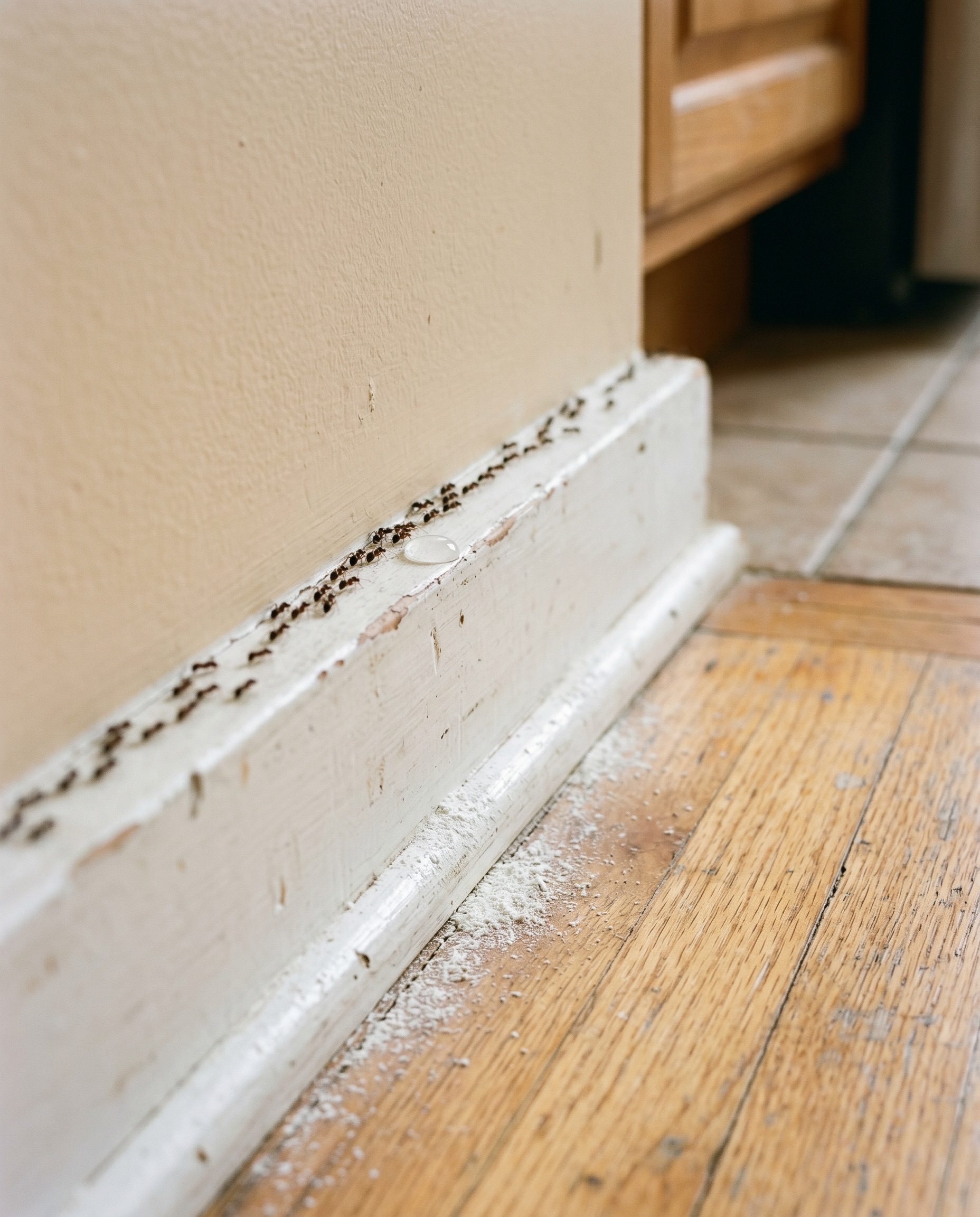
What to do first
Before you spray anything, take away what the ants came for. A trail is a chemical road the scouts laid down, and you can erase it. The NPIC guidance on ants tells homeowners to clean up spilled food and drink, seal cracks and crevices, and wipe ant trails with soapy water to remove the pheromone trail. Wiping the trail and sealing the gap is the single highest-value step, and it is free.
Do it in this order. Wipe the visible line with warm soapy water or a vinegar-water rag, dry the surface, then run a bead of caulk along the gap by the baseboard, pipe, or window frame where the line disappeared. The EPA’s do’s and don’ts of pest control puts prevention first for the same reason, removing food, water, and entry points before reaching for any product. Most light kitchen invasions quiet down within a few days of this alone.
Give it about two weeks. If ants keep finding a new route in, the nest is established and you need something that reaches it. That is where the natural choices split into the ones that work and the ones that mostly smell nice.
Why sprays repel but do not kill
Here is the part most natural-ant lists skip. A spray that smells strong to you, peppermint, citrus, vinegar, clove, works by masking or disrupting the scent trail. The ants lose the road and scatter. They do not die in the nest, and the queen never gets the message. According to the UC IPM Pest Notes on Argentine ants, spraying around the foundation will not give lasting control because it kills only foraging ants without killing the colony and the queens. A repellent buys you a quiet counter, not an empty nest.
The catch is timing. Once the scent fades, scouts re-lay the trail and the line is back, often in a day or two. So a peppermint spray is a maintenance tool, good for holding a clean baseboard, useless as the whole plan. Treat scented sprays as upkeep, never as the cure.
There is one more trap worth knowing. A repellent spray and a bait fight each other. The NC State Extension tips for effective ant baiting warn that spraying the area you baited will contaminate the bait and likely repel the ants away from it. If you are baiting, do not spray near the bait, or you sabotage the only thing reaching the colony.
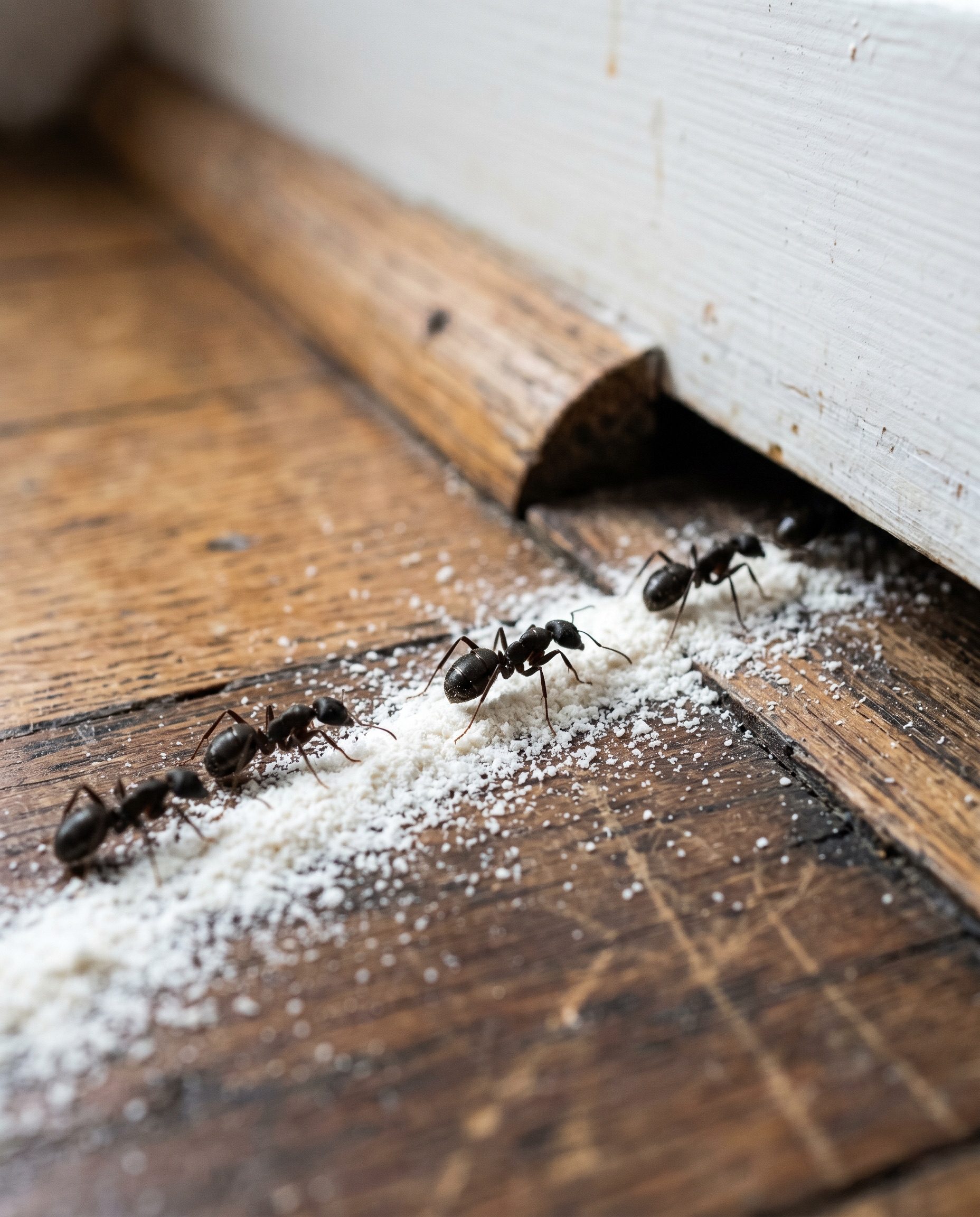
The natural fixes that work
Two natural options actually reach the colony, and they do it without a synthetic perimeter spray.
The first is food-grade diatomaceous earth, a fine fossil powder. The NPIC diatomaceous earth fact sheet explains that DE dries insects out by absorbing the oils and fats from the cuticle of their exoskeleton, and its sharp edges abrade them, so ants that crawl through it die. It is mechanical, not a poison they can shrug off. DE works only while it stays dry, so dust thin lines along dry crawl paths, behind appliances, and into wall gaps, not in damp spots or where it gets wiped away.
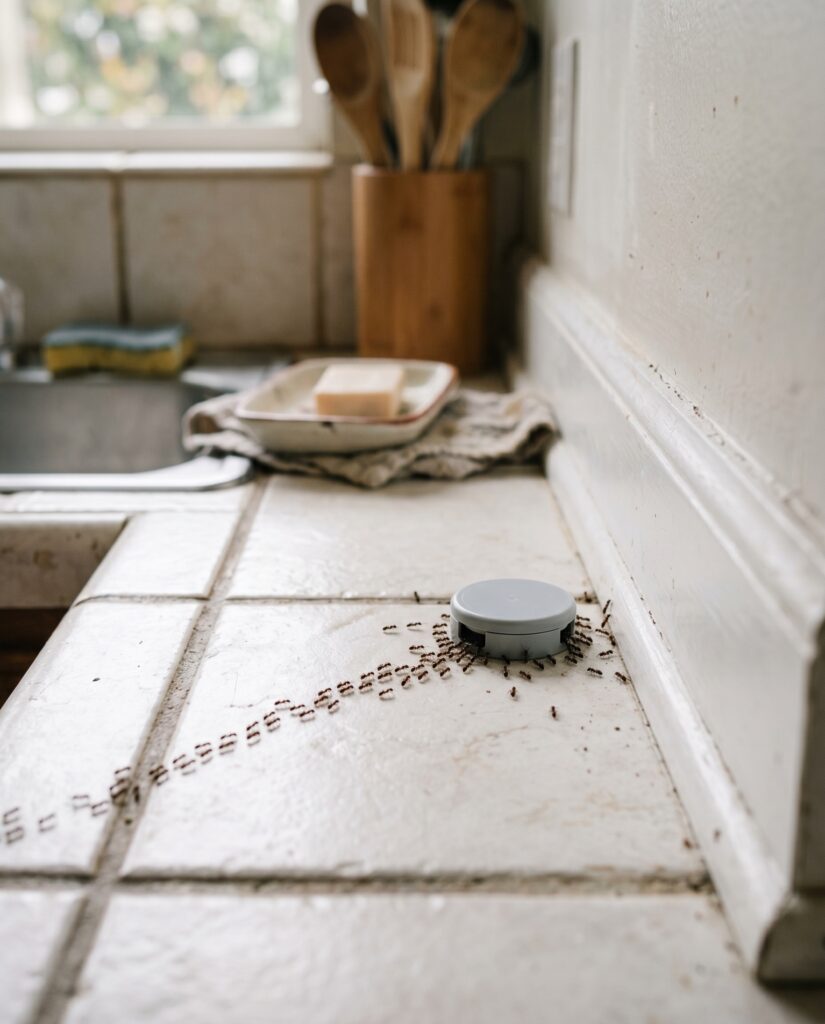
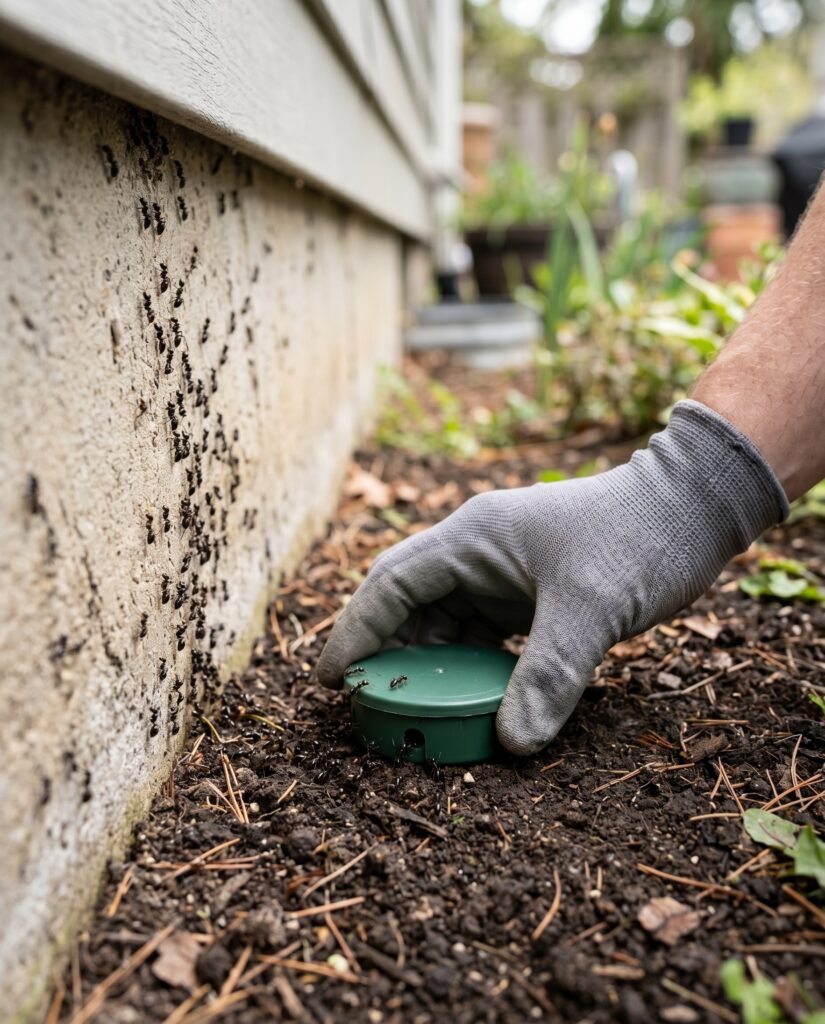
The second is a borax (sodium borate) bait. Borax is the active behind many products sold as natural or low-toxicity ant control. The UC IPM ants hub calls baits more effective and safer than sprays, and notes that borate-based baits are among the most effective baits available to consumers for sweet-feeding ants. The mechanism is the whole point: foragers carry the slow-acting bait back to the nest where it passes mouth to mouth to workers, larvae, and the queens. A borax bait is the one natural-leaning tool that treats the colony, not the symptom. Place it on the active trail and leave it undisturbed; do not wipe the trail you are baiting, or the foragers cannot find their way to it.
Compare your natural options
Match the tool to your situation rather than the biggest claim on the bottle. A spray keeps an already-clean surface clean. DE goes in the dry hidden runs ants use. A bait is what you reach for once a colony is established and coming back.
| Option | Best for | Watch-out |
|---|---|---|
| Essential-oil spray | Holding a clean baseboard, quick scatter | Repels only; colony survives; reapply often |
| Diatomaceous earth | Dry crawl paths, behind appliances, wall gaps | Stops working when damp; keep off food areas and away from breathing |
| Borax bait | An active colony reached through the trail | Slow by design; keep away from kids, pets, food; follow the label |
A glue-board monitor is worth adding to any plan, not to clear ants but to show you where they cross so you place the bait correctly. Use a monitor to find the trail, then bait it.
How to place each one
Placement decides whether these work. For diatomaceous earth, apply a thin, barely visible film, not a heaped line, into dry cracks, under the sink, behind the fridge, and along garage walls. Reapply if it gets damp or vacuumed up. Choose a product labeled for pest use and follow it; the NPIC sheet notes you should follow label instructions and take steps to minimize exposure, since breathing fine dust irritates the lungs. Wear a dust mask and keep DE off counters, food, and pet bowls.
For a borax bait, set it directly on the active trail, between the entry point and wherever they are headed, and leave it for one to two weeks. You will keep seeing ants at first; that is the bait being shared, not a failure. Do not spray, wipe, or move it. Both the UC IPM and NC State guidance stress that baits are slow-acting and that disturbing or spraying the baited area defeats them. Patience is the bait’s main ingredient.
For a peppermint or citrus spray, use it on a clean, dry baseboard as a holding measure after you have wiped and sealed, not as your colony plan. Indoors, keep any spray and any dust off food-prep surfaces and away from kids and pets until dry, and link your safety questions to the NPIC pesticide-safety resources rather than guessing. Outdoors, do not treat open blooms or flowering plants where bees forage; if you dust or spray outside near flowers, do it at dusk when pollinators are not active and avoid drift, as the EPA’s pollinator-protection guidance advises. Natural does not mean harmless to good bugs.
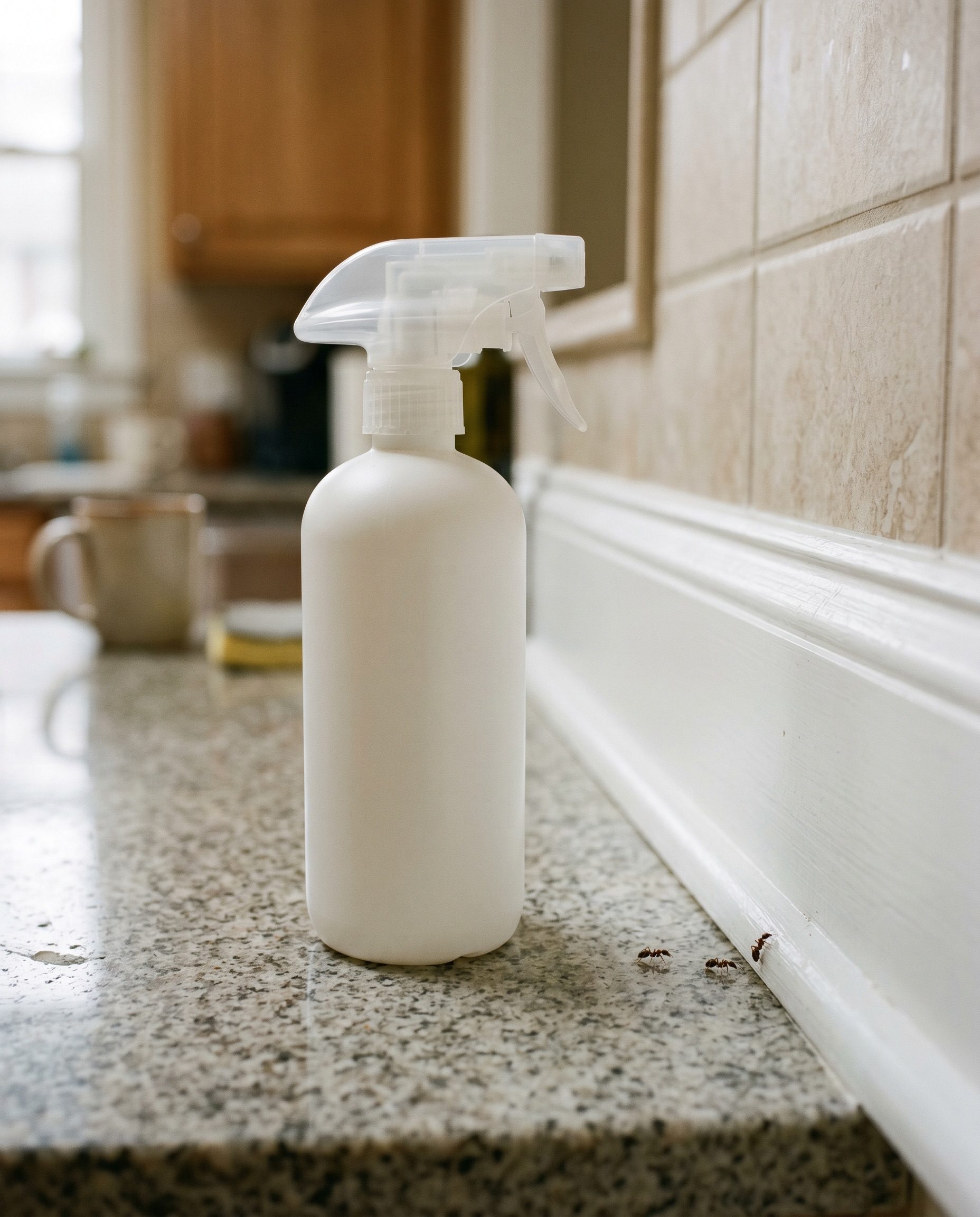
Two notes on timing and limits. Ant pressure indoors runs year-round, but foraging usually peaks from spring through late summer when colonies are growing, so a spring sweep of sealing and baiting heads off the worst of it. And if you are dealing with carpenter ants in structural wood, a large outdoor mound, or repeat invasions you cannot trace, that is past DIY; bring in a licensed pest-control professional rather than dumping more product.
The picks
These three cover the honest plan: a natural spray for upkeep, a natural powder that actually kills crawlers, and the borax bait that treats the colony. The natural spray is here for what it is good at, not as the fix.
InsectoGuide is reader-supported. As an Amazon Associate we earn from qualifying purchases at no extra cost to you.
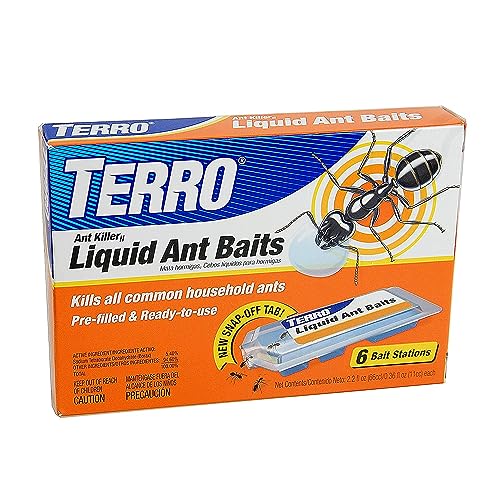
Borax bait foragers carry back to the nest, the one natural-leaning tool that reaches the colony.
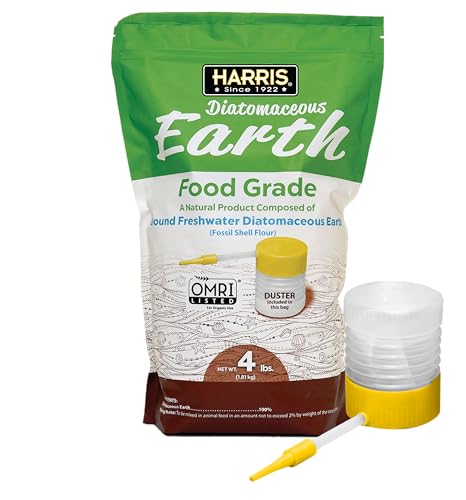
A dry fossil powder that kills ants crawling through it, with a duster for tight gaps.
Pingback: DIY Ant Bait Recipes: Borax Traps That Work