\\n
\\n
\\n
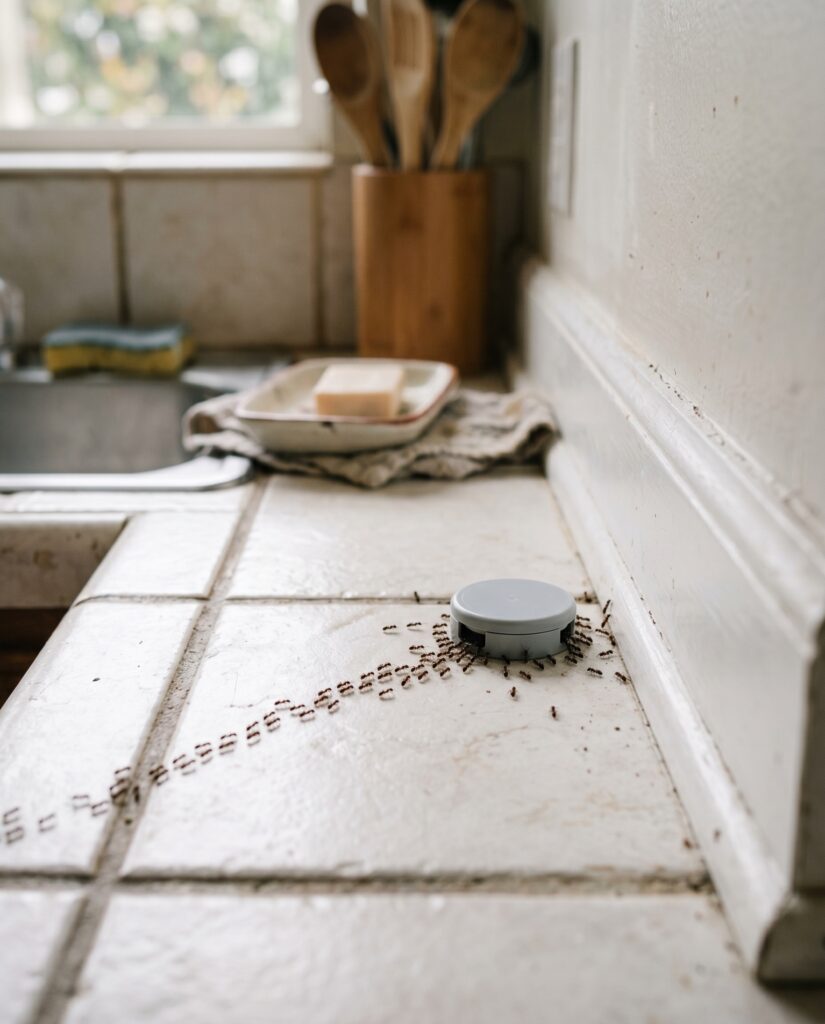
If ants own your lawn and garden beds, the honest answer is that there is no single “best outdoor ant killer.” There are three different jobs, and they take three different tools: a granular bait broadcast over the lawn, a liquid bait station placed where ants enter, and a mound drench for fire ants. Match the tool to the problem and you win; grab one all-purpose can and you mostly waste it. For our own yard we keep a bag of broadcast bait, a few outdoor liquid stations, and a mound treatment on the shelf, and we never spray open flowers.
\\n\\n
There is no single best outdoor ant killer: use broadcast bait for the lawn, a liquid station at entry points, and a mound drench for fire ants, and keep all of it off open blooms.
- Do first (free): Cut food and water at the source, then follow a trail to find where ants enter or nest.
- Best for the common case: Slow-acting bait that foragers carry home, not a contact spray that kills only what you see.
- Skip: Blanket-spraying the yard with a contact insecticide; it kills foragers, misses the queen, and harms bees.
\\n\\n
\\n\\n\n
For the neighbouring question, see Why Do Ants Come Inside? Causes and Prevention.
\n
Why baits beat sprays
\\n\\n
A contact spray kills the ants you can see. The colony underground, including the queen who lays the eggs, never touches it, so a new wave of foragers shows up in a few days. That is the core reason most yard-spraying fails against ants.
\\n\\n
Baits flip the logic. According to UC IPM’s guidance on ant management in gardens and landscapes, foraging ants collect the slow-acting insecticide and spread it through the colony during food sharing, which poisons the ants underground and the queen. Slow is the feature, not the flaw. A bait that kills too fast never makes it back to the nest.
\\n\\n
That is why our default outdoor tool is bait, not a sprayer. The trade-off is patience: expect days, sometimes a couple of weeks, before a colony collapses. If you need a single mound gone fast, that is the one case where a drench earns its place, and we will get to it.
\\n\\n
Find the trail first
\\n\\n
Before you buy anything, do the free step: take away what the ants came for. Most yard ants are after food, water, or the honeydew that aphids leave on plants. The EPA’s advice on whether you really need a pesticide is to try non-chemical fixes first, which here means rinsing aphid honeydew off shrubs, fixing a dripping spigot, and clearing fallen fruit.
\\n\\n
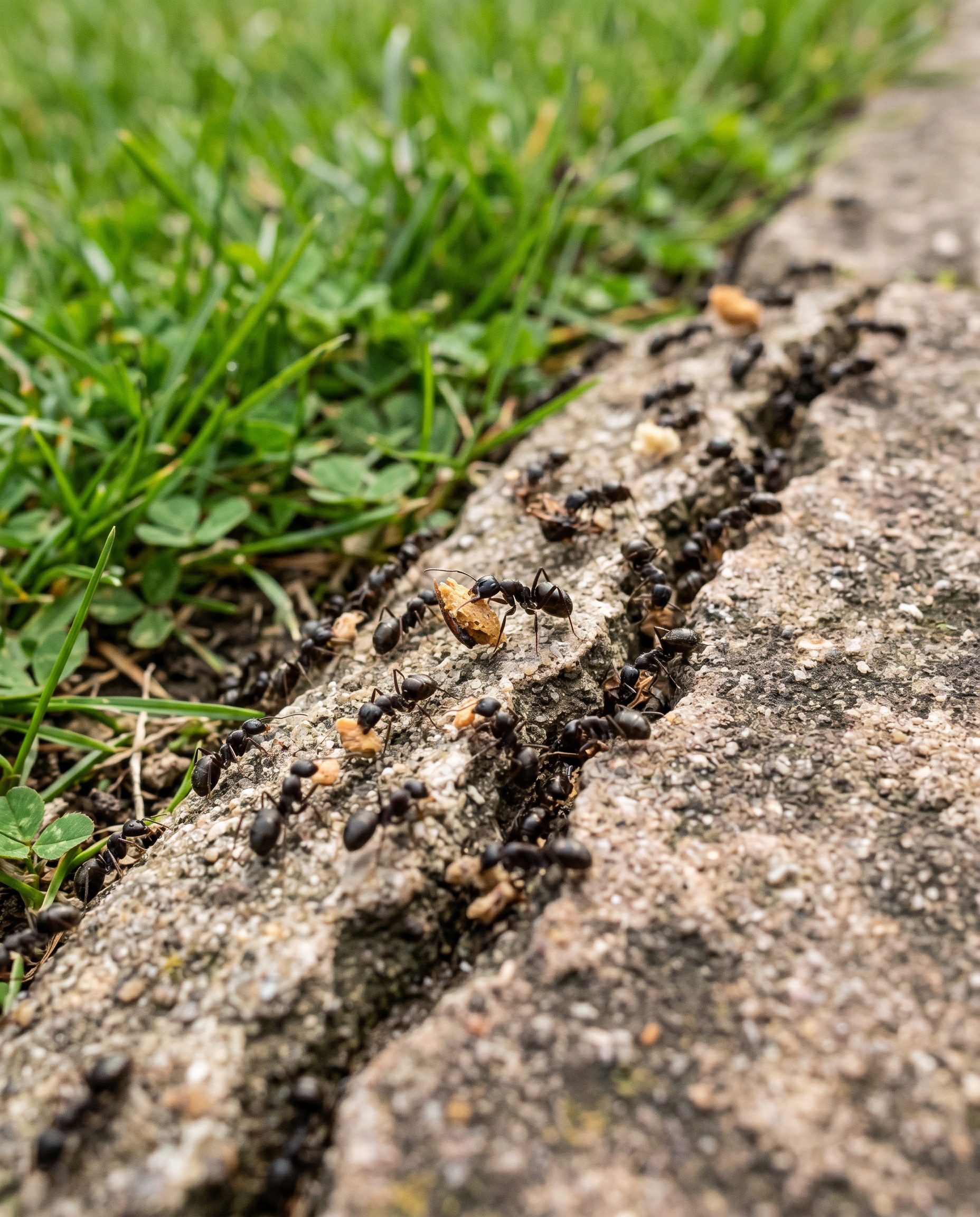
Then follow a trail. Ants march in lines, and a line leads to either a nest or an entry crack. Place bait on the trail, not at random. UC IPM notes that liquid sugar baits are highly attractive to common yard ants like Argentine ants, but its Argentine-ant baiting notes add that baits alone usually will not finish the job, so pair them with sealing the gaps they use.
\\n\\n
Identifying the pest also tells you which tool to reach for, which is the whole point of the EPA’s integrated pest management principles: identify, then choose the least-risk control that fits. A scattering of small black ants on the patio is a different problem from a fire ant mound, and they do not take the same product.
\\n\\n
\\n\\n
Three tools, three problems
\\n\\n
Here is the part most roundups skip. “Outdoor ant killer” is not one category, and the right pick depends entirely on where the ants are and which species you have.
\\n\\n
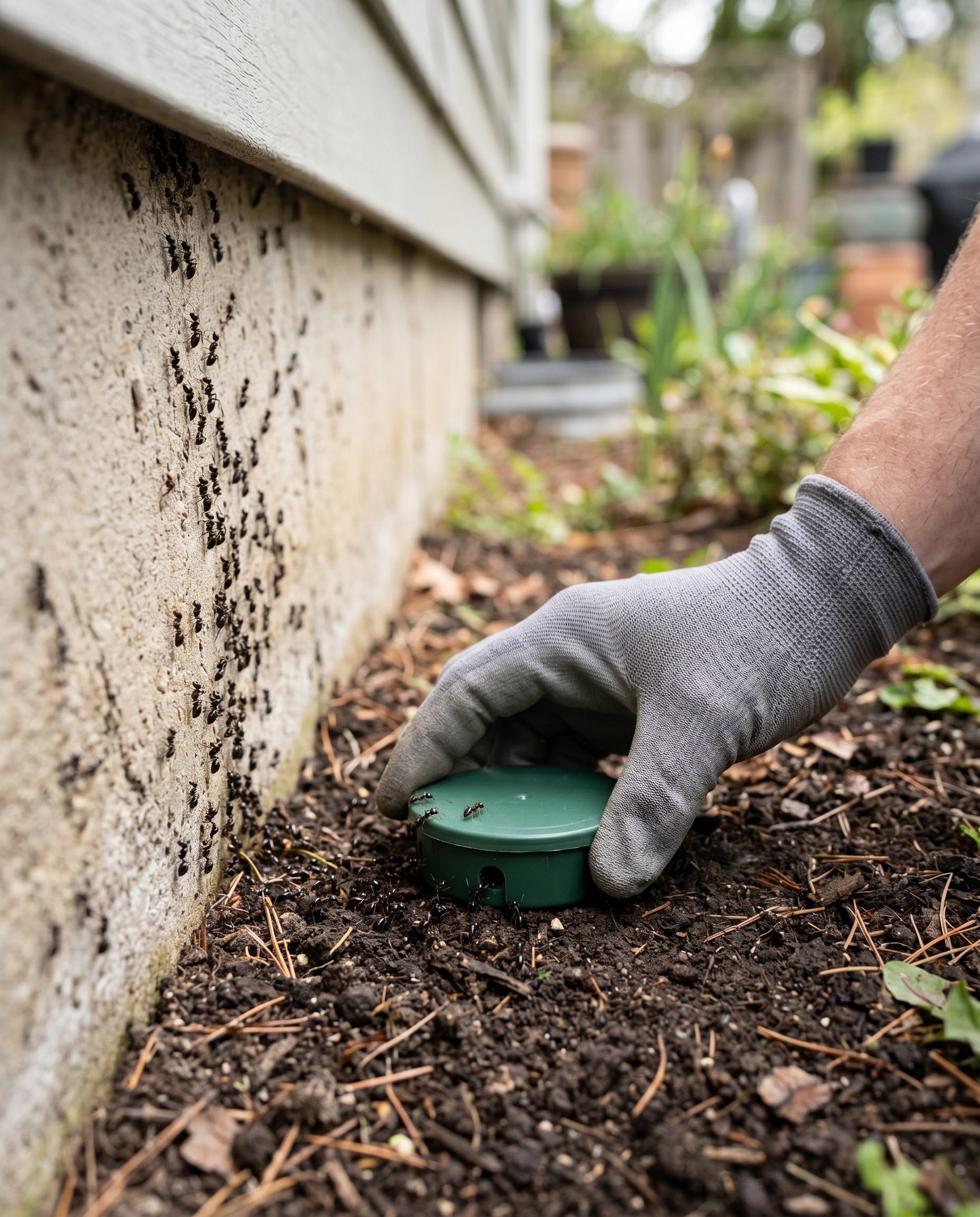
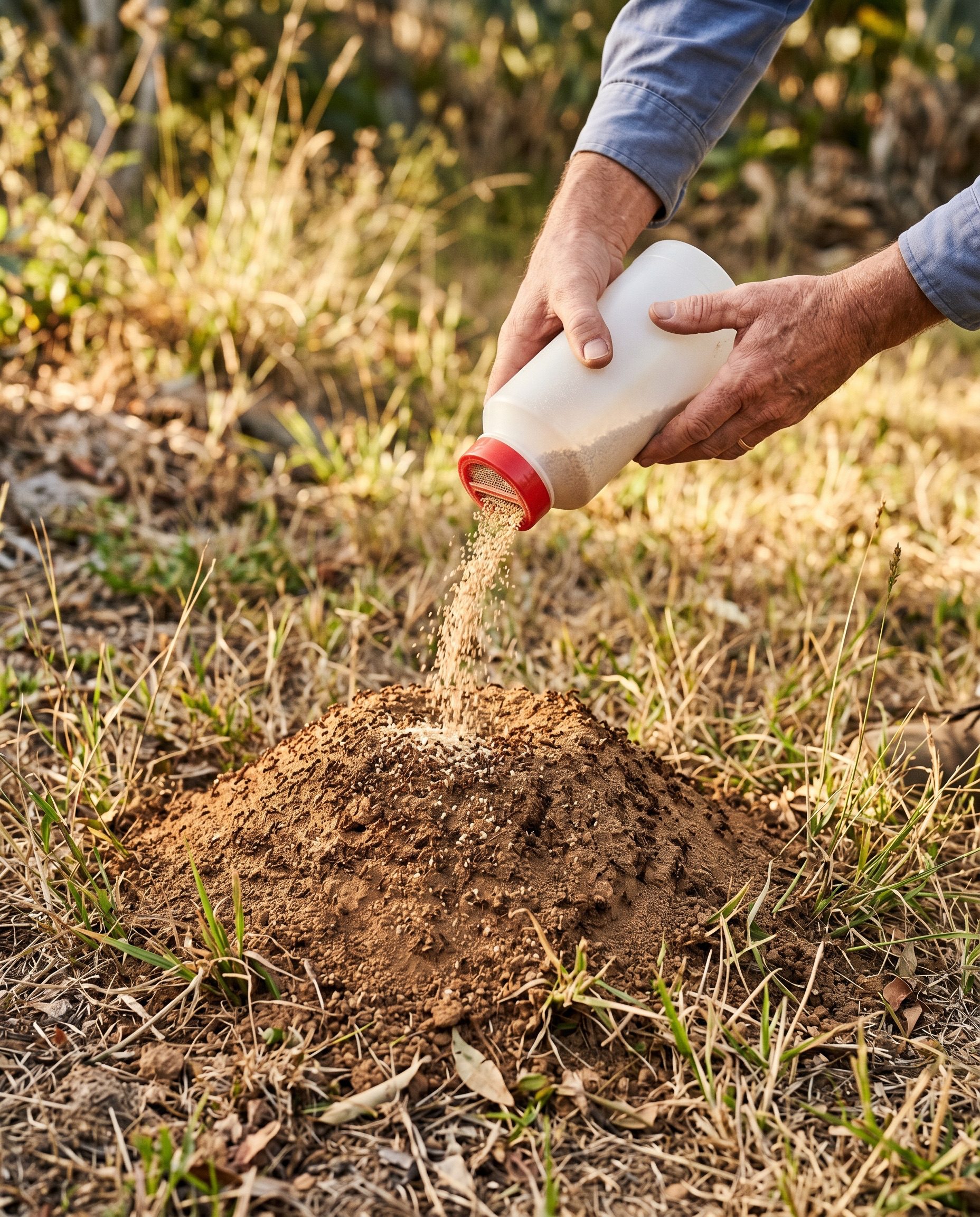
A granular broadcast bait is for a lawn dotted with ants and small mounds across a wide area; you spread it dry, and foragers carry it down. A liquid bait station is for a defined trail at the foundation, patio, or garden bed where ants are entering; it sits in one spot and drains a specific colony. A mound drench or treatment is for a single fire ant mound you want dead today, because waiting on bait is not an option when kids and pets share that yard.
\\n\\n
| Tool | Best for | Watch-out |
|---|---|---|
| Granular broadcast bait | Ants and small mounds spread across a lawn | Apply to dry turf; rain before pickup wastes it |
| Liquid bait station | A defined trail at entry points or garden beds | Slow; leave it undisturbed for a week or two |
| Mound drench or treatment | A single fire ant mound you need gone fast | Follow the label water volume; keep kids and pets off until dry |
\\n\\n
For fire ants specifically, Texas A&M built the playbook. Texas A&M AgriLife’s Two-Step Method is to broadcast a fire ant bait across the whole yard, then treat individual problem mounds with a drench, granule, or dust. Bait the area, drench the problem. It is the cleanest example of matching two different tools to one pest, and it is why a yard with fire ants usually needs both a broadcast product and a mound treatment, not one or the other.
\\n\\n
Apply it without poisoning bees
\\n\\n
Timing and placement decide whether bait works. For a granular broadcast, put it down on dry turf when no rain is coming for a day or two, because rain washes the granules off before ants pick them up. For a liquid station, set it directly on the trail and resist the urge to move or wipe it; ants need a steady supply to drain the colony, which takes a week or two.
\\n\\n
Whatever you use outdoors, read and follow the product label, because under federal law the label is the legal rule for where, when, and how much you can apply. Do not use an indoor-only product in the yard or an outdoor concentrate near a vegetable bed unless the label clears it.
\\n\\n
The bees matter here too. They forage on clover, dandelions, and any blooming plant, so never broadcast bait or spray onto open flowers. The EPA’s pollinator-protection guidance describes bloom-time and time-of-day limits, which in plain terms means mow off blooming weeds first, keep product off flowering plants, and apply in the evening when bees are not flying. If you have an exposure scare with a child, a pet, or yourself, contact a doctor, your vet, or your local poison control center right away; you can also read the safety guidance on the National Pesticide Information Center site.
\\n\\n
\\n\\n
The picks
\\n\\n
These are the three tools, one solid pick for each job. None of them is “the best ant killer” on its own; each is the best fit for one of the three problems above.
\\n\\n
InsectoGuide is reader-supported. As an Amazon Associate we earn from qualifying purchases at no extra cost to you.
\\n\\n
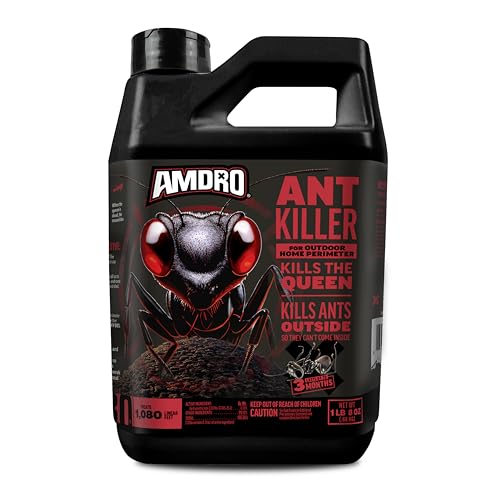
Broadcast bait granules foragers carry back, for ants spread across a yard or perimeter.
\\n\\n
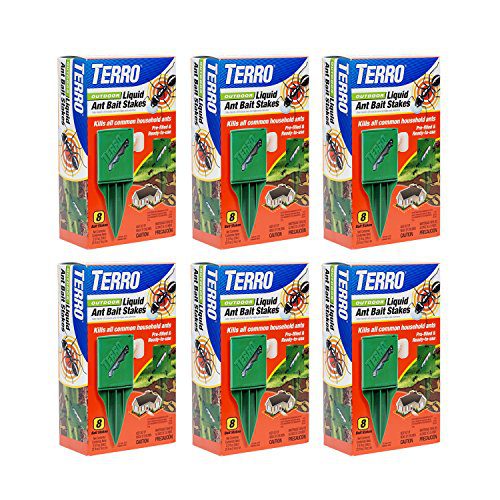
Ready-to-use liquid stations you set on a trail at the foundation or in a bed.
\\n\\n
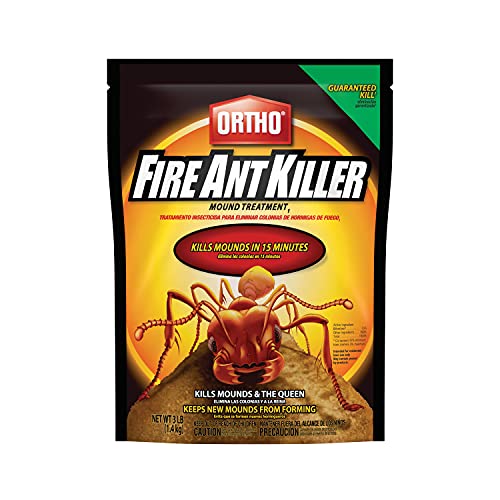
A mound treatment for the one fire ant nest you need handled fast.
\\n\\n
Common questions
\\n\\n
Does outdoor ant killer work in the rain?
\\n
Granular baits do not. Rain washes the granules off the turf before foragers carry them down, so put bait on dry ground when no rain is expected for a day or two. Liquid stations are more weather-tolerant because the bait sits inside the housing.
\\n\\n
Is outdoor ant bait safe around pets and kids?
\\n
Read the label for the re-entry rule, which usually means keeping kids and pets off treated areas until dry, and never placing bait on food-prep surfaces. Enclosed liquid stations are easier to keep out of reach than loose granules. For any exposure concern, contact a doctor, your vet, or your local poison control center.
\\n\\n
Should I spray the whole yard for ants?
\\n
Usually no. Blanket contact spraying kills foragers, misses the queen, and harms bees and other beneficial insects. UC IPM and the EPA both point to baiting and targeting where ants actually are, which works better and uses far less product.
\\n\\n
How is fire ant control different?
\\n
Fire ants need both tools. Texas A&M’s approach is to broadcast bait across the yard, then drench individual problem mounds, because bait alone is slow for a mound right where people walk. Our fire ant killers and mound treatments guide covers that in detail.
\\n\\n
Why do the ants keep coming back?
\\n
Because bait alone leaves the door open. Pair it with exclusion: seal cracks, trim plants away from the house, and clear honeydew-producing aphids. If they are getting indoors, our guide to getting rid of ants in the house covers sealing entry points.
\\n\\n
Final verdict
\\n\\n
Stop shopping for the one best outdoor ant killer, because it does not exist. Look at the problem first: ants scattered across the lawn call for a broadcast bait, a single trail at the foundation calls for a liquid station, and a fire ant mound calls for a drench. Do the free step before any of them, which is cutting food and water and following the trail to the source. Whatever you choose, keep it off open blooms and apply in the evening to spare the bees. Owning all three tools and picking the right one each time will clear ants faster than any single can you empty on the whole yard.
\\n\\n\\n
Once the yard is under control, keep ants from moving indoors with the steps in our complete guide to getting rid of ants, and compare indoor options in our best ant killers and baits guide.
\\n\\n