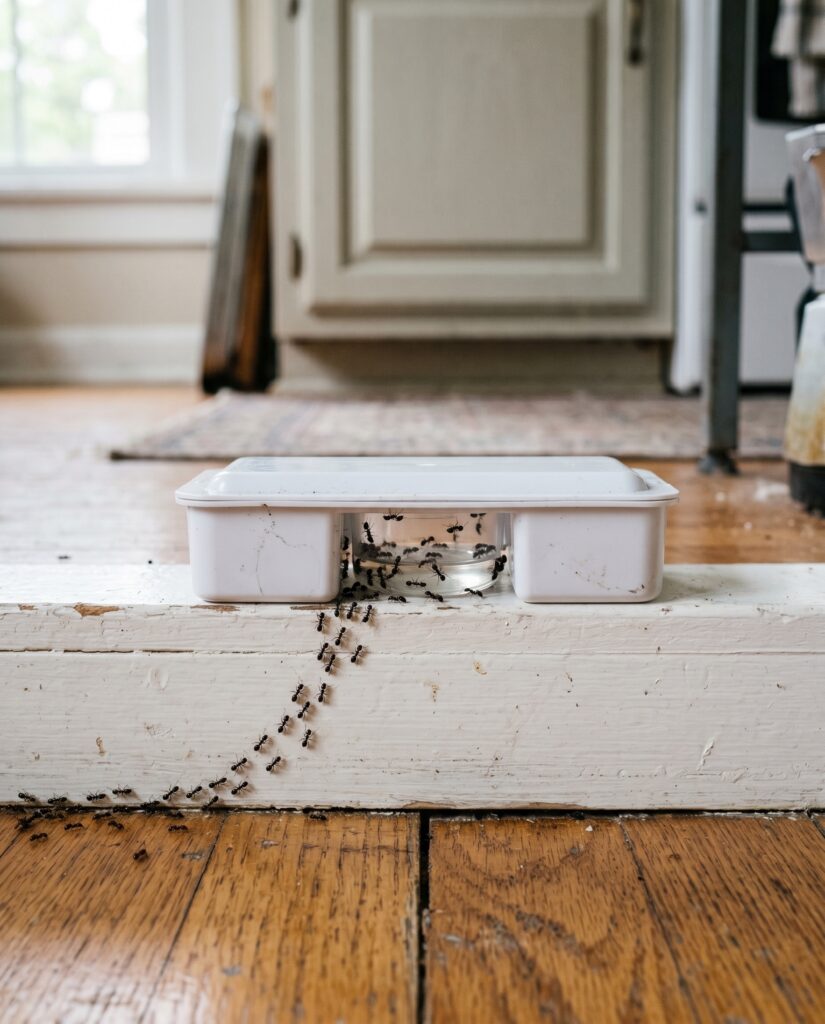
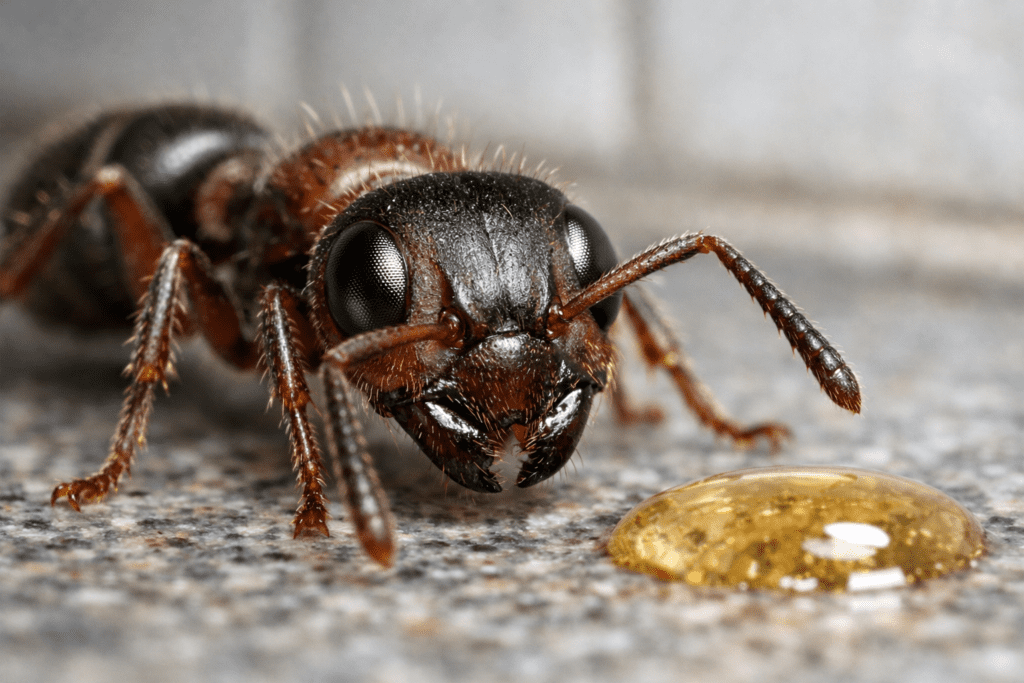
Finding ants in the kitchen often leads to one question: sugar ants vs grease ants – which one do you have, and does it change how you treat them? In most homes, those labels describe what the ants are eating, not a separate “type” of ant. That’s why one week they swarm the cookie jar, and the next they show up under the stove. This guide shows how to tell what’s driving the infestation, how to run a quick at-home food test, and how to choose baits that actually get carried back to the colony.
Quick answer: sugar ants vs grease ants (what’s the real difference?)
Direct answer: In everyday pest talk, sugar ants and grease ants usually refer to ants with different food preferences, not two clearly separate species. Many common indoor ants switch between sweets and proteins/fats depending on season and colony needs.
Here’s the fastest way to interpret what you’re seeing:
| What they go for first | “Common name” people use | What it suggests | Best bait type (starting point) |
|---|---|---|---|
| Syrup, honey, fruit, soda | Sugar ants | Carbohydrate foraging | Liquid sweet bait (slow-acting) |
| Peanut butter, meat scraps, pet food, cooking oil | Grease ants | Protein/fat foraging | Protein/grease bait or gel (slow-acting) |
What to do next: Run a 2-food test (honey vs peanut butter). Then place the matching bait directly on the foraging trail and avoid fast-kill sprays that stop ants from sharing bait with the colony.
Sugar ants vs grease ants: why the names are confusing (and what pros mean)
If you’ve ever heard “sugar ants” and “grease ants” described as two different pests, you’re not alone. The confusion happens because these names are behavior labels, not reliable species IDs. Homeowners name the problem after the food the ants seem to “love” most.
In reality, many household ants are omnivores. Colonies balance quick energy (carbs) with growth needs (proteins and fats). Think of it like grocery shopping for a family – sometimes the priority is snacks, other times it’s dinner ingredients. When a colony has lots of developing larvae, protein demand often rises. When energy is needed fast, sugar can dominate.
Entomologists also point out that season and weather shift foraging. In cooler periods, ants may focus more on carbohydrates. In warmer months, you may see stronger interest in proteins and greasy residues. That’s one reason a bait that worked last spring suddenly gets ignored in late summer.
What about the claim that they’re “the same ant”? Pest companies often use that phrase to explain the practical reality: you can’t solve the problem by relying on the label alone. You solve it by matching control to what the colony is currently collecting. For a solid baseline on household ant behavior and identification, the University of Minnesota Extension ant guide is a reliable reference.
Actionable takeaway: Don’t pick a bait because the internet called them sugar ants or grease ants. Pick a bait because you confirmed what they’re feeding on today.
Visual checklist: what the labels usually mean
- “Sugar ants” = ants actively recruiting to sweets (juice, jam, fruit, syrup, honeydew outdoors)
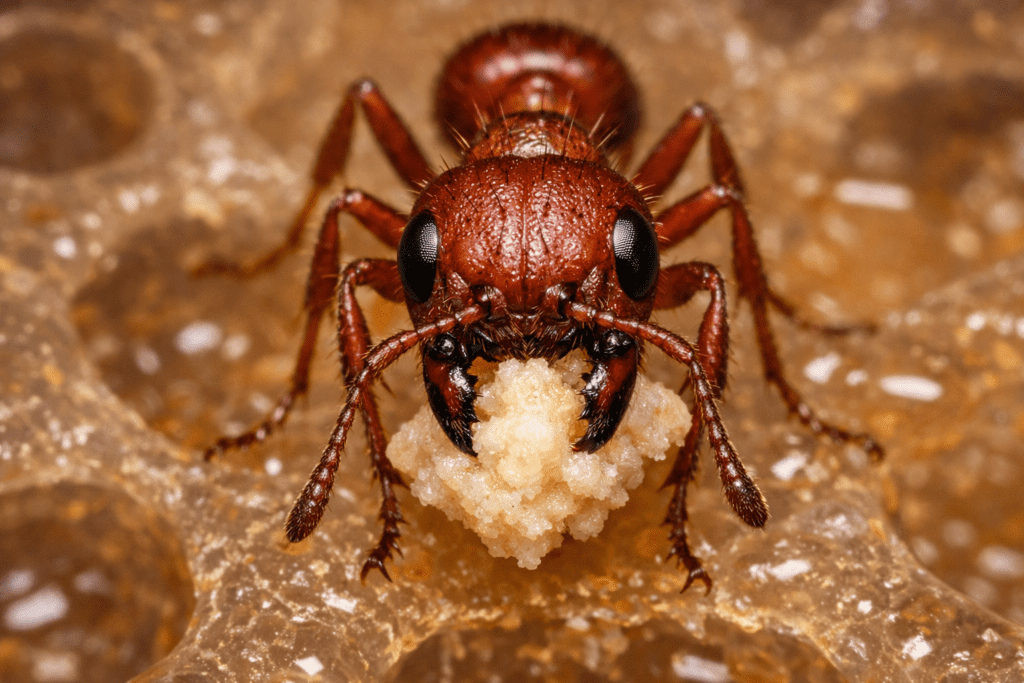
- “Grease ants” = ants recruiting to fats/proteins (peanut butter, bacon grease, pet food, meat drippings)
- Same home can show both patterns within weeks as colony needs change
How to identify what you’re dealing with (without guessing)
Hot Shot Bed Bug and Flea Killer, 1 Gallon
Hot Shot Bed Bug and Flea Killer 1 Gallon earns a solid 4.5-star rating from over 8,500 Amazon reviews for its effective contact killing of bed bugs and fleas, generous size, and ease of use, making it a strong value pick at around $25—though users note the potent odor and need for integrated pest management.
Most people try to identify ants by color alone, but that’s a trap. Many species overlap in size and color, and lighting changes everything. A better approach is a two-step ID: (1) confirm “ant” anatomy, then (2) confirm food preference and trail behavior.
Step 1: Confirm it’s an ant (not a termite)
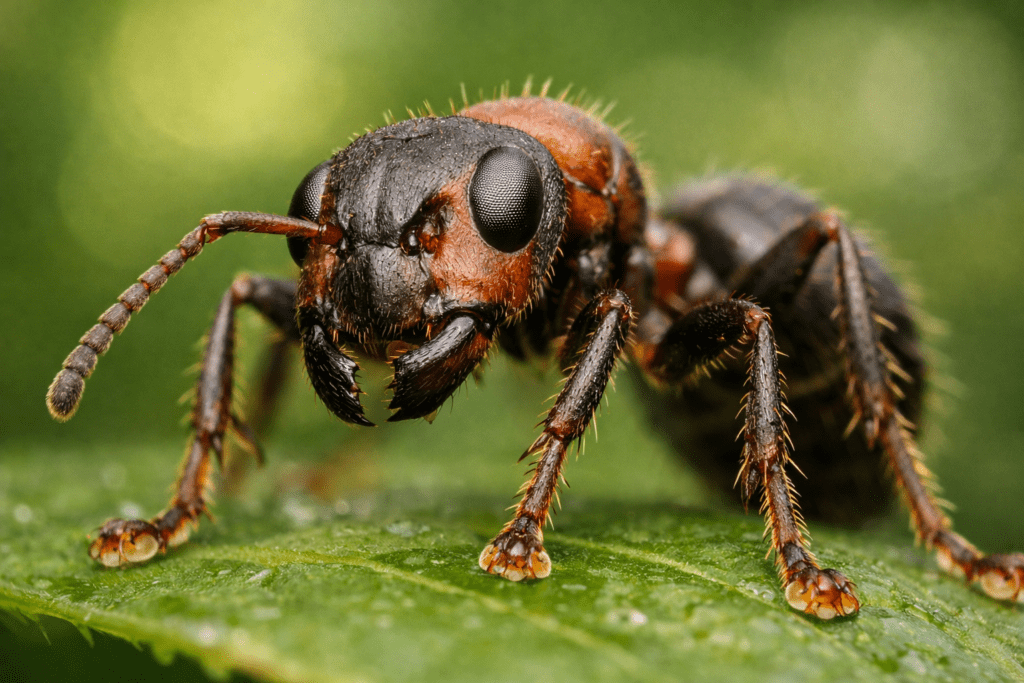
Ants share a few easy-to-spot traits:
- Elbowed antennae (bent like an arm)
- A pinched waist between thorax and abdomen (one or two small “nodes”)
- Workers are usually wingless, but winged reproductives can appear during swarms
Termites, by contrast, have straight antennae and a thicker waist. If you’re seeing piles of wings near windowsills, it’s worth double-checking.
Step 2: Run the 2-food preference test (10 minutes)
Place two small baits near the trail, a few inches apart:
- Honey or syrup (carb)
- Peanut butter (protein/fat)
Then watch for 5-10 minutes. The key is recruitment. A single ant sampling both doesn’t tell you much. What matters is which food gets a growing crowd first.
What you’ll learn:
- A fast-growing group at honey = “sugar ant” behavior
- A fast-growing group at peanut butter = “grease ant” behavior
- If they ignore both, you may be off the trail or they’re nesting elsewhere and just scouting
Step 3: Note these field clues (helps you choose control)
| Clue | What it often indicates |
|---|---|
| Trail runs along baseboards and edges | Typical foraging trail behavior |
| Ants appear mostly at night | Many household ants forage after dark |
| Ants show up after rain | Moisture pushes foragers indoors |
| Ants suddenly “split” into multiple trails after spraying | Colony stress response and possible budding |
For species-level help (like odorous house ants vs pavement ants vs carpenter ants), you’ll get better results with a close-up photo and size estimate. Some ants also have telltale behaviors. For example, odorous house ants (Tapinoma sessile) can give off a strong odor when crushed, and they’re common indoor invaders in many regions.
Actionable takeaway: Use the food test to choose bait first. Use photos and size to narrow species second.
Baiting and treatment that works (based on what they’re eating)
Terro T300B Liquid Ant Bait, 12 Baits
This product is specifically designed to attract and kill sugar ants and grease ants, making it highly relevant to the treatment section of the article.
Once you know whether the ants are acting like “sugar” or “grease” foragers, you can stop wasting time on mismatched products. The goal is not to kill the ants you see. The goal is to get a slow-acting toxicant into the colony through food sharing.
Ants lay pheromone trails to food, and workers feed nestmates through trophallaxis (food sharing). Many species also rely on larvae to process solid foods into liquids that adults can consume. That’s why the “right” bait can quietly collapse a colony, while sprays only create a short-lived break in activity.
If they prefer sweets: use a sweet liquid bait
Sweet-seeking ants often respond best to liquid baits formulated for carbohydrate foraging. Place small amounts where trails are strongest and refresh as needed.
Best practices
- Put bait directly on the trail, not in the middle of the room
- Use multiple small placements instead of one big station
- Expect increased activity for 1-3 days as recruitment ramps up
For product selection and active-ingredient comparisons, see our Best Ant Killers & Baits: Complete Buyer's Guide.
If they prefer fats/proteins: use a protein or grease bait/gel
Protein- or grease-seeking ants often ignore sweet liquids completely. In that case, switch to a bait designed for proteins and oils, often delivered as a gel or paste.
Best practices
- Apply gel in small dots along edges, cracks, and trail junctions
- Keep it away from heat sources that dry it out
- Replace when it hardens or collects dust
Avoid the #1 mistake: fast-kill sprays on active trails
Fast-contact insecticides can kill workers before they return to the nest. That sounds good, but it often reduces bait transfer and can trigger colony “budding” in some species, where part of the colony relocates and you end up with multiple problem areas.
If you want a non-bait approach for spot deterrence, use it strategically (entry points, exterior perimeters), not as a trail wipeout.
A simple, effective baiting plan (7-14 days)
- Day 1: Run the honey vs peanut butter test.
- Day 1-2: Place the matching bait on the strongest trail areas.
- Day 3-5: If bait is ignored, switch bait type (sweet to protein, or protein to sweet).
- Day 7: Refresh bait placements, clean crumbs and grease film daily.
- Day 10-14: Activity should drop sharply. If it doesn’t, you may have multiple colonies or a different species than assumed.
Actionable takeaway: Matching bait to current food preference is usually the difference between “ants forever” and real colony control.
Prevention: stop trails, food access, and entry points (so they don’t return)
Raid Ant and Roach Killer, 17.5 oz
Raid Ant and Roach Killer 17.5 oz earns a strong 4.6-star rating from over 26,000 Amazon reviews for its reliable on-contact killing power against ants and roaches, with residual effects up to 12 weeks. Users praise its ease of use and effectiveness, though the potent odor and pet/child precautions are common drawbacks. At around $9.98, it’s a solid, affordable choice for household pest control, but handle with care per label instructions.
Even the best bait works better when your home stops functioning like a buffet. Ant management is mostly about removing three things: food, water, and easy access.
Clean in a way that actually breaks trails
Ants navigate using chemical trails. If you only wipe crumbs, you may leave the trail intact. Use a cleaner that removes residue, then dry the area.
Trail-breaking routine
- Wash trail surfaces with soapy water
- Follow with a wipe-down using a mild acidic cleaner like diluted vinegar if the surface allows
- Dry thoroughly, especially around sinks and pet bowls
Target the foods that match the ants you have
If the food test points to sweets:
- Store sugar, cereals, and snacks in sealed containers
- Rinse recyclables (soda cans, juice bottles)
- Wipe sticky cabinet shelves and drawer corners
If the food test points to grease/protein:
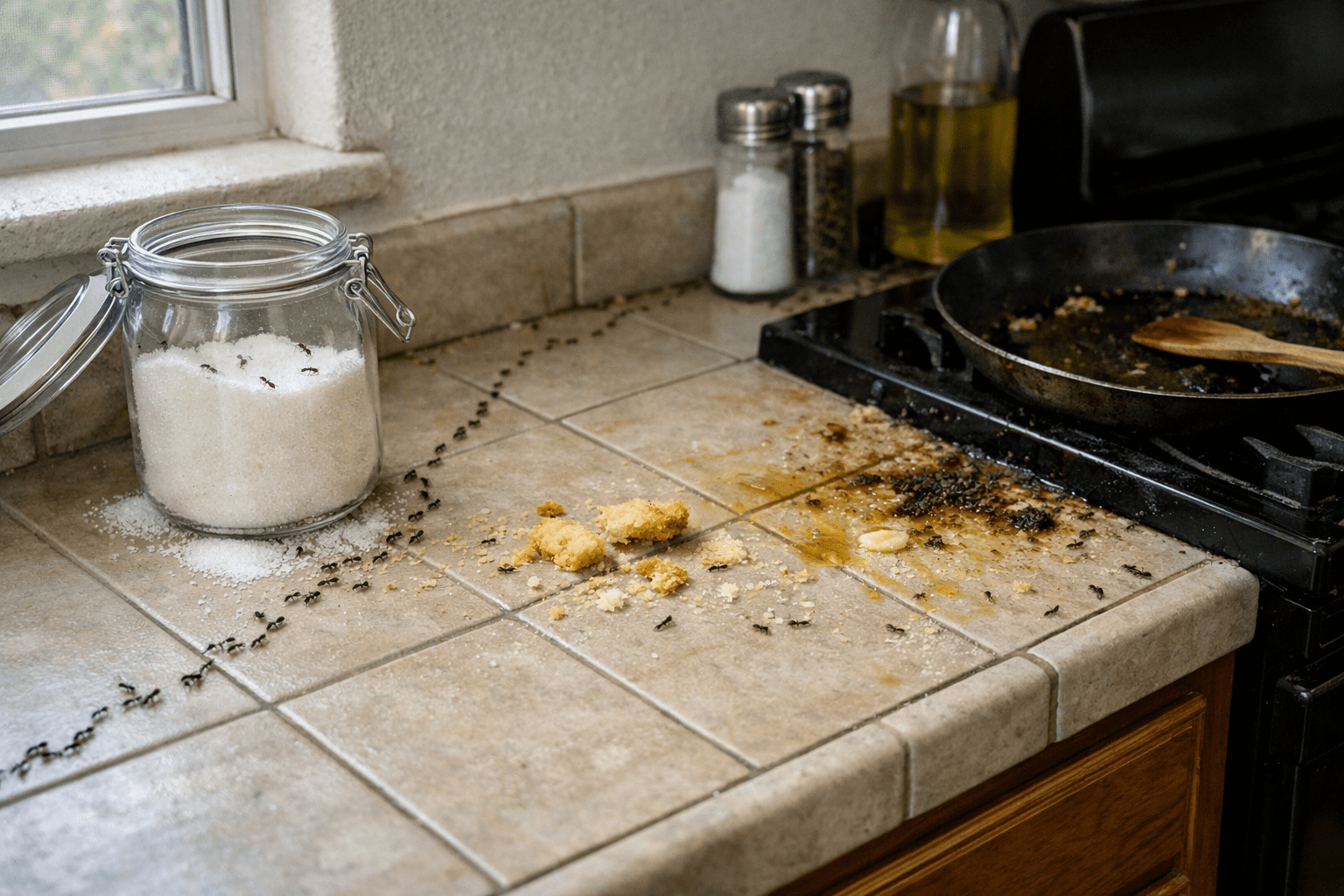
- Degrease stovetop backsplashes and range hoods
- Vacuum under appliances where crumbs and oils accumulate
- Feed pets on a schedule and clean bowls after meals
Seal entry points like you mean it
Ants often enter through tiny gaps:
- Along window frames and door thresholds
- Where pipes enter walls under sinks
- Cracks in foundation edges and siding seams
Quick sealing checklist
- Replace worn door sweeps
- Caulk small cracks and trim gaps
- Patch screens and weather stripping
For readers who prefer low-tox options, our Best Natural Ant Repellents and Sprays covers deterrents that fit into an IPM-style plan.
Don’t forget the outdoor source
Many “indoor” ant problems start outside, especially when nests are under pavers, along foundations, or in garden edges. If you see trails leading to exterior walls, you may need outdoor control too. Our guide to Best Outdoor Ant Killers for Lawns & Gardens can help you choose a targeted approach.
Actionable takeaway: Bait handles the colony. Cleaning and sealing prevent the next one from moving in.
When it’s not “sugar” or “grease” ants: species that change the plan
Sometimes the bigger issue isn’t what they’re eating. It’s what they’re damaging or where they’re nesting. A few common scenarios deserve a different response.
Carpenter ants (wood moisture problem, not sweet cravings)
Carpenter ants (Camponotus spp.) don’t eat wood like termites, but they can excavate it to nest, especially in damp or rotting areas. If you’re seeing:
- Large ants (often 1/4 inch or more)
- Sawdust-like frass near baseboards or window frames
- Ants emerging from wall voids or damp wood
…treat it as a carpenter ant situation. Start with moisture repair and targeted baits and dusts. Use our Best Carpenter Ant Treatments and Baits for species-specific control steps.
Odorous house ants and other “switch hitters”
Some household ants shift foods readily. You might see them on sweets today and pet food tomorrow. In those cases:
- Rotate bait types if acceptance drops
- Use smaller, fresher bait placements
- Focus on trail junctions and entry points
Pavement ants and outdoor nesting near foundations
Pavement ants (Tetramorium immigrans) often nest under concrete slabs, pavers, and foundation edges. They may forage indoors for both sweets and greasy foods. Outdoor perimeter baiting and sealing foundation gaps often makes the biggest difference.
When to call a professional
Consider professional help if:
- Ants return quickly after 2 weeks of correct baiting
- You suspect carpenter ants or ants nesting in wall voids
- You can’t locate trails and activity is widespread across rooms
- You have repeated swarms of winged ants indoors
For broader ant biology and household invasion patterns, the University of Minnesota Extension is also a solid reference for what to look for and when to escalate.
Actionable takeaway: Food preference guides bait choice, but species and nesting location determine how big the fix needs to be.
Key takeaways: choosing the right fix fast
If you remember only a few things about sugar ants vs grease ants, make it these:
- The labels usually describe diet preference, not a guaranteed species.
- Run a honey vs peanut butter test to confirm what they want right now.
- Use a slow-acting bait that matches that preference and place it on the trail.
- Skip fast-kill sprays on active trails. They often reduce colony control.
- Pair baiting with trail cleaning, food storage, moisture control, and sealing entry points.
- If ants are large or associated with wood damage, treat it like a carpenter ant issue.
Conclusion
The practical answer to sugar ants vs grease ants is simple: you’re usually seeing the same household ant behavior expressed through different cravings. Identify the craving with a quick food test, then match your bait and placement to what the colony is actively collecting. Combine that with basic sanitation and entry-point sealing, and most infestations fade within 1-2 weeks.
Next step: if you want help choosing the right bait format and active ingredient for your situation, start with our Best Ant Killers & Baits: Complete Buyer's Guide. If the ants are outdoors along the foundation, follow up with Best Outdoor Ant Killers for Lawns & Gardens.

As an Amazon Associate, I earn from qualifying purchases. Product recommendations are based on real reviews and independent research.