
n
n
n
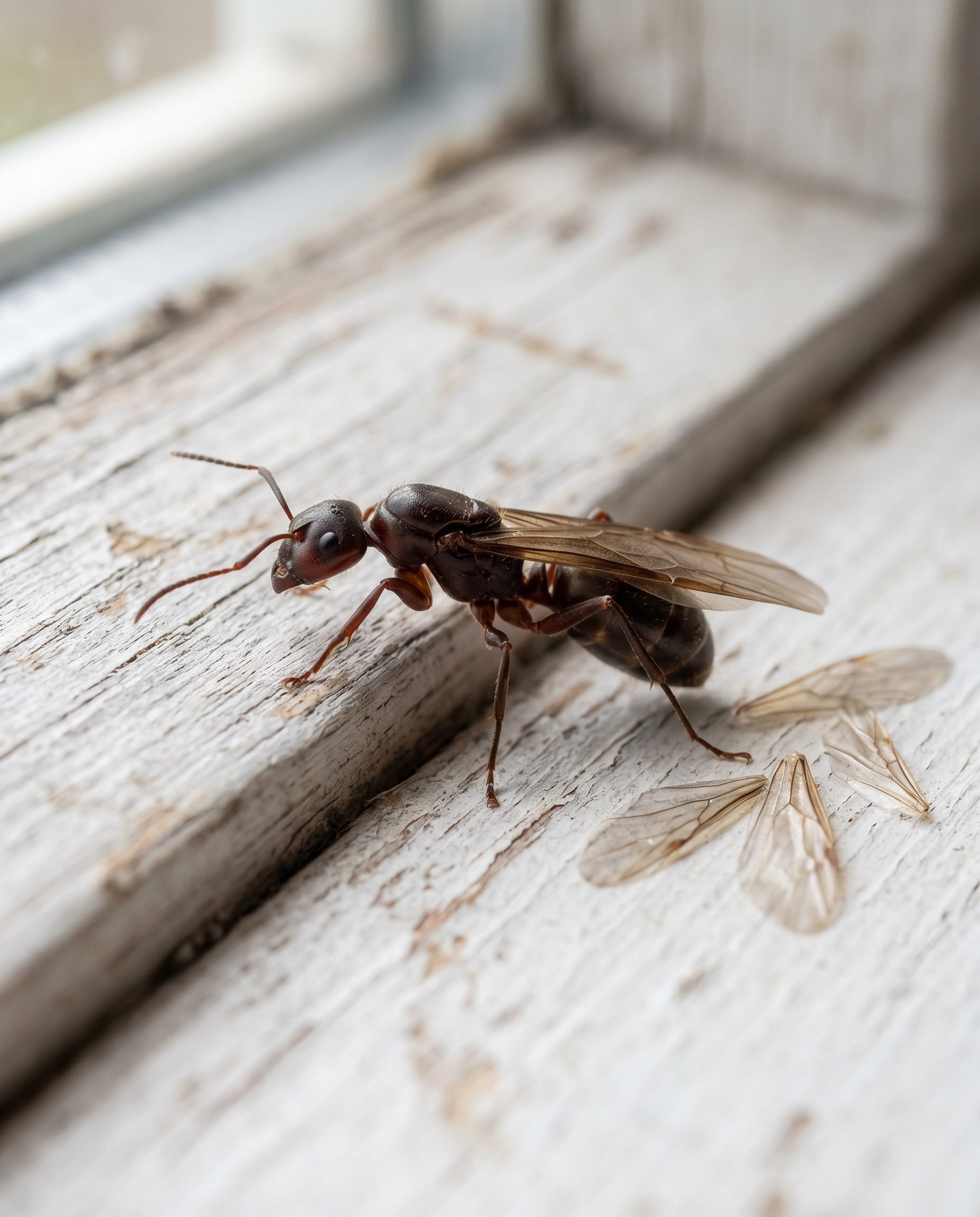
You found a small swarm of winged insects near a window, and the question writes itself: harmless flying ants, or termites eating the house. Three features settle it in seconds, no magnifier needed. Look at the waist first: a flying ant has an obvious pinched, narrow waist, while a termite swarmer is straight-sided with no waist at all. Then check the antennae (bent and elbowed on ants, straight and beaded on termites) and the wings (an ant’s front pair is clearly longer than the back pair, a termite’s four wings are all the same length). The ID matters because one is a nuisance and the other is a structural problem.
Our guide to bugs that look like ants goes further into the waist, wings and antennae checks.
nn
A pinched waist plus bent antennae plus uneven wings means flying ant; a straight body plus straight antennae plus four equal wings means termite, and that second ID is a structural emergency worth a professional inspection.
- Flying ant: narrow pinched waist, elbowed antennae, front wings longer than back
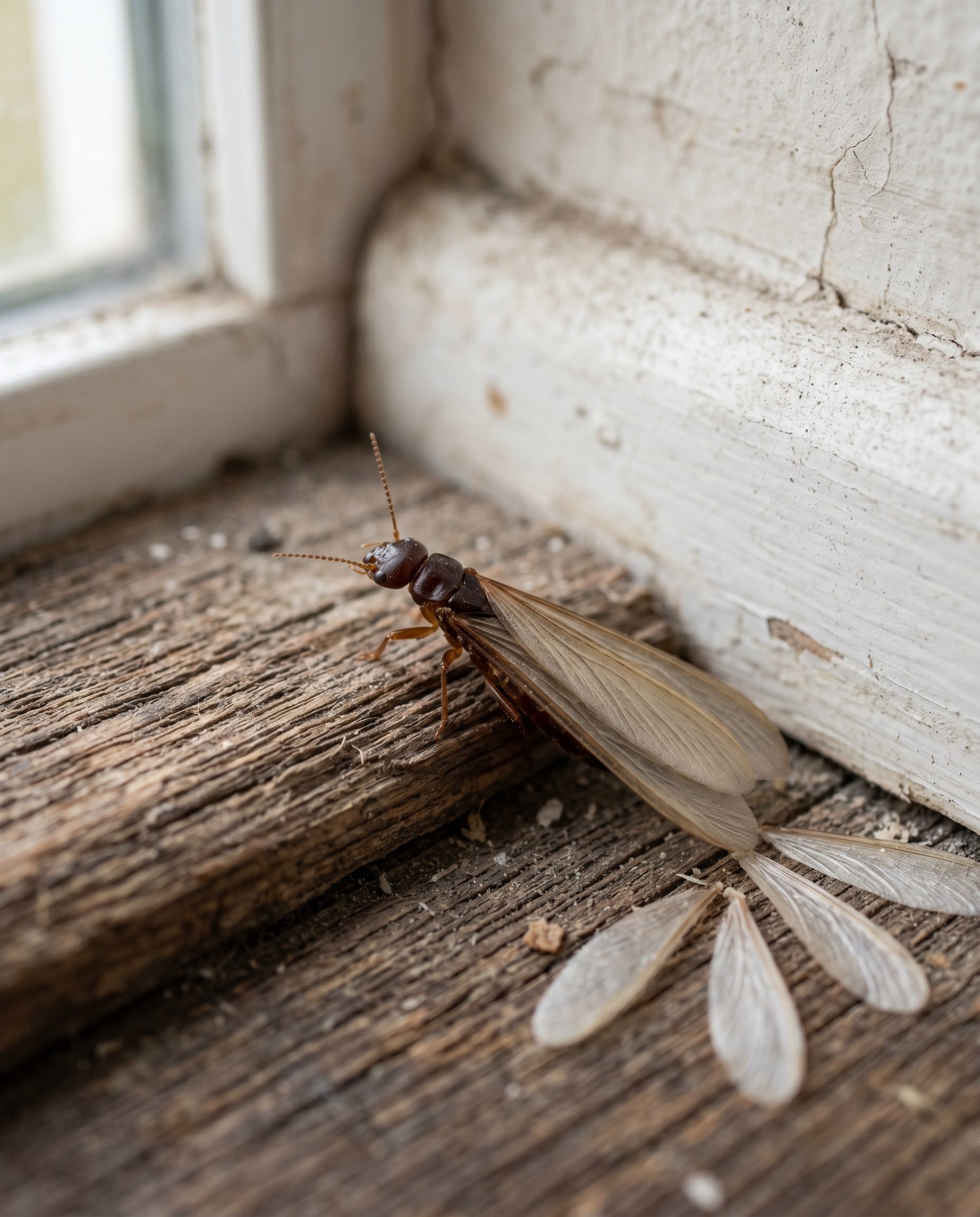
- Termite swarmer: broad straight body, straight antennae, four equal-length wings
- Why it matters: ants are a nuisance, termites feed on wood and need a pro
nn
nn
Which is which
nn
Both insects you are looking at are reproductives. Each spring (and sometimes fall), mature colonies release winged adults that fly off, pair up, and try to start a new colony. So a sudden cloud of winged bugs around a window or light is normal seasonal behavior for either one, not proof of anything yet.
nn
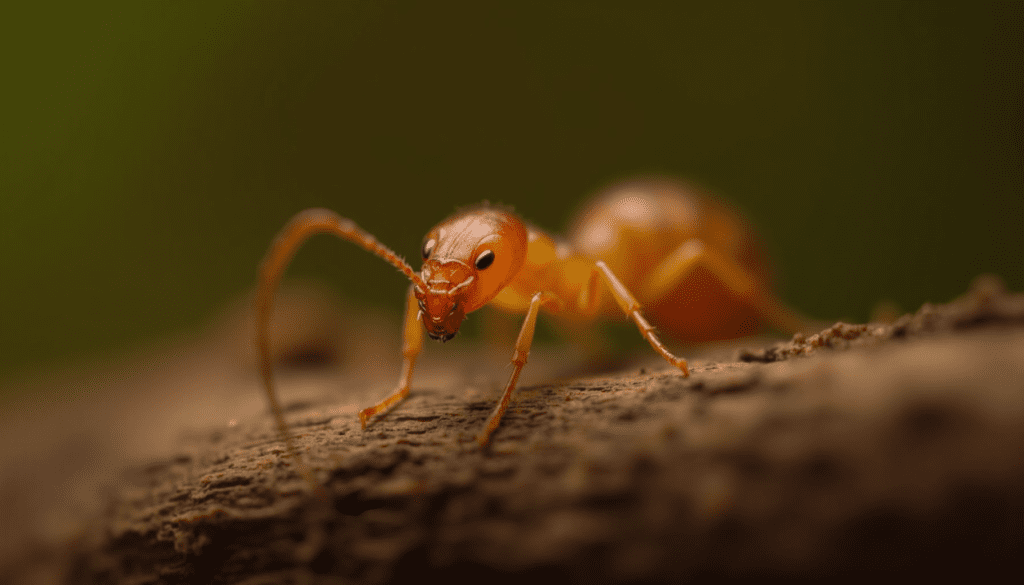
The fast way to read them is body outline. Waist shape is the single quickest tell. A flying ant keeps the classic ant silhouette: three clearly separate segments with a sharply pinched middle. A termite swarmer looks like a single straight tube, the same width front to back, almost wingless-looking until the wings catch the light. Read only this far and you already have your answer.
nn
The fast tell ranked
nn
Most ID pages dump a dozen features on you at once. In the field, entomologists lean on three, and they are not equally reliable. Ranked by how fast and how confidently they settle the call:
nn
First, the pinched waist versus broad body. University of Maryland Extension describes the ant as having a “pinched or ‘wasp-waist'” while the termite’s body “extends straight back from head” with no waist. This is the most reliable tell because it does not vary with species, lighting, or how cooperative the insect is.
nn
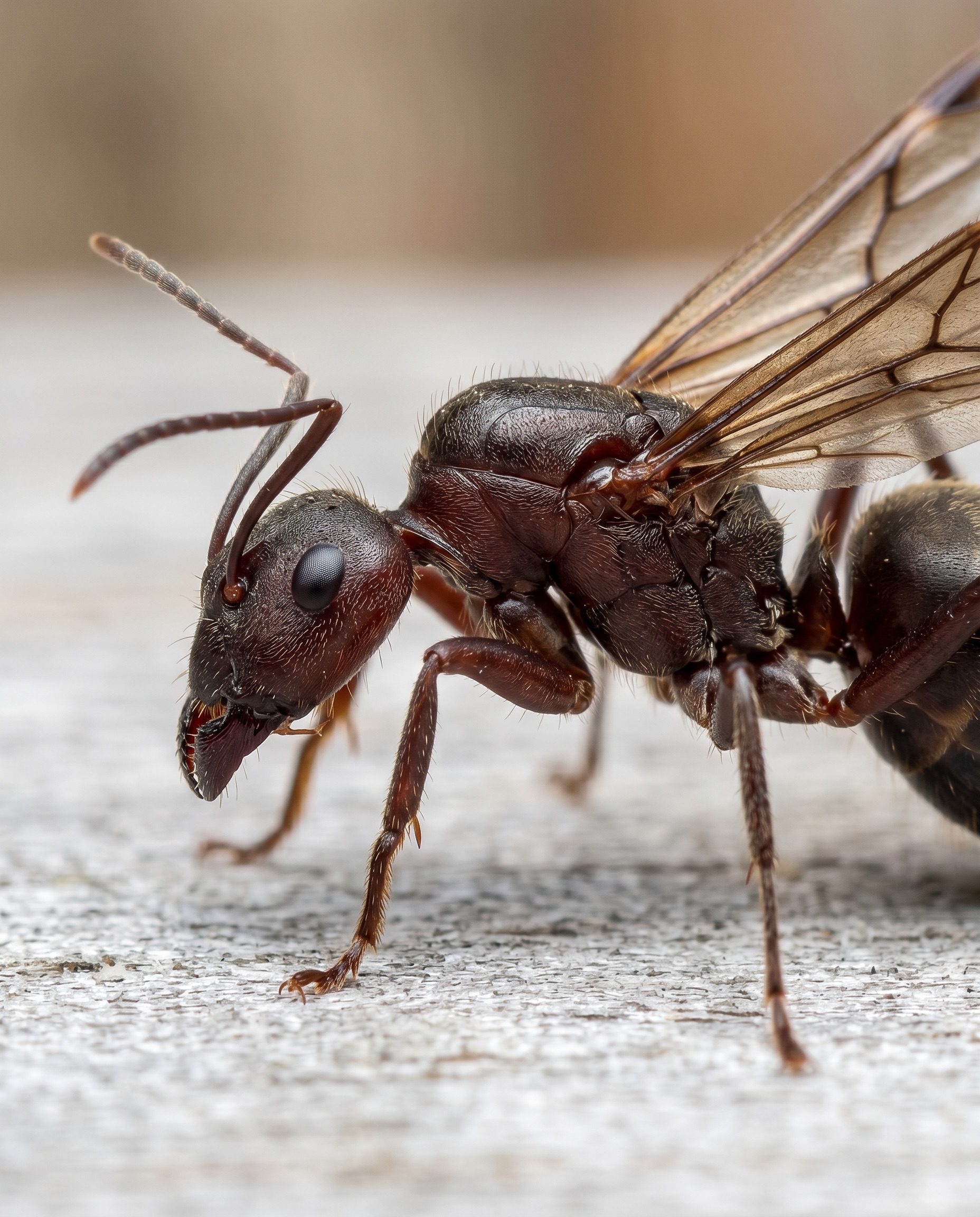
Second, the antennae. UC IPM’s guide to distinguishing ants from termites points to the abdomen, wings, and antennae together, and its winged-termite page notes a termite swarmer has antennae that are “not elbowed” above a “broad abdomen with no apparent waist.” An ant’s antennae bend at a sharp elbow; a termite’s run straight, in a string of tiny beads.
nn
Third, the wings, useful but the easiest to misread because both insects have two pairs and they overlap when folded. An ant’s front wings are visibly longer than its back wings. A termite’s four wings are all the same length and stretch well past the body. The wing tell is real, just slower than the waist.
nn
nn
Three tells at a glance
nn
Lay the three features side by side and the two insects stop looking alike. The first column is the feature; scan down whichever column matches what you are holding.
nn
| Feature | Flying ant | Termite swarmer |
|---|---|---|
| Waist | Narrow, pinched (wasp-waist) | Broad, no waist, straight-sided |
| Antennae | Bent at a sharp elbow | Straight, beaded, not elbowed |
| Wings | Front pair longer than back | Four wings, all equal length |
| Wing color | Often tinted brownish | Pale, translucent |
| Body color | Black, brown, or reddish | Pale to dark, uniform |
| Shed wings | Few, scattered | Piles near windows and lights |
nn
Mississippi State University Extension frames the same three features plainly: termites have “little to no visible waist” and “straight antennae,” with front and hind wings “the same length,” against an ant’s “narrow waist,” “bent antennae,” and shorter, uneven wings. Two independent Extension programs landing on the identical three tells is why these are the ones to memorize.
nn
About the flying ant
nn
A flying ant is just an ordinary ant in its reproductive stage. Common house and yard species, from carpenter ants down to small pavement and odorous house ants, all produce winged males and queens (collectively called alates) when the colony is ready to expand. They are insects with the standard three body regions, and the petiole, that tiny knob between thorax and abdomen, is what gives them the pinched waist.
nn
The good news is what they do not do. Flying ants do not eat the wood of your house. Carpenter ants can excavate galleries in wood that is already wet or rotting, but they tunnel for nesting space rather than food, and even they are a far slower, more localized problem than termites. Most flying ants around a window are simply passing through on a mating flight and will be gone in a day or two. If they are coming from inside, the practical fix is the same as any ant problem: find and break the trail, then bait the colony. Our guide to getting rid of ants in the house walks through that, and the carpenter ant guide covers the wood-nesting species specifically.
nn
nn
About the termite swarmer
nn
A termite swarmer is the winged reproductive of a termite colony, and the species most US homeowners meet is the eastern subterranean termite (*Reticulitermes flavipes*). University of Florida’s Featured Creatures profile of native subterranean termites calls these winged adults alates that “fly away from the parental nest to establish new colonies,” and notes the species is “the most widely distributed” across the eastern region of North America, north to Ontario and south to Key Largo.
nn
The reason a termite ID is the serious one comes down to diet. Termites “consume cellulose,” the main structural component of plant cells, “so any wood material in a house is a potential food source,” per the same UF profile. They digest it with the help of microorganisms in their gut, which lets a colony quietly convert structural lumber into food over months and years. A termite swarmer near your home is the visible tip of a hidden colony, and that is exactly why this winged bug, the one that looks like a harmless plain ant, is the one worth slowing down on.
nn
When and where you see them
nn
Timing is itself a clue. UC IPM’s Pest Note on subterranean termites reports that *Reticulitermes* “swarms during the afternoon in either spring or fall on clear days after a soaking rain.” UF puts eastern-subterranean flights from “early January and end in April,” during “warm, sunny, and windless early afternoons usually after rain.” So a swarm on a sunny spring afternoon right after a rain leans termite; a hot, dry midsummer flight leans ant, though neither rule is absolute.
nn
Location helps too. Termite swarmers are drawn to light and moisture, so people most often find them, or their shed wings, around windows, doors, bathrooms, and light fixtures. Termites drop their wings in quantity right after the flight, often leaving small heaps in the same indoor spots. Piles of discarded wings on a sill are a stronger termite signal than a few loose ones, since a handful of scattered wings could just as easily be ants, which shed too.
nn
Region matters as well. The eastern subterranean termite is the one most US households run into, and UF notes it covers the entire eastern half of North America, as far north as Ontario and south to the Florida Keys. Subterranean termites are active across most of the country, with the heaviest pressure through the South and Southeast where mild winters keep colonies foraging longer. Flying ants, by contrast, turn up everywhere from late spring into late summer. So in the Gulf states a sunny-afternoon spring swarm right after rain is a textbook termite flight, while in the colder north the same calendar window is short and a midsummer swarm is far more likely an ant. None of this replaces the waist check; it just tells you how worried to be while you do it.
nn
Why the ID changes your next move
nn
Get this one right and you save yourself either a needless panic or a costly delay. If the three tells say flying ant, you have a nuisance and a seasonal annoyance, not a threat to the building. Treat it like any ant: sanitation, sealing entry points, and bait if they are nesting indoors. No emergency, no specialist.
nn
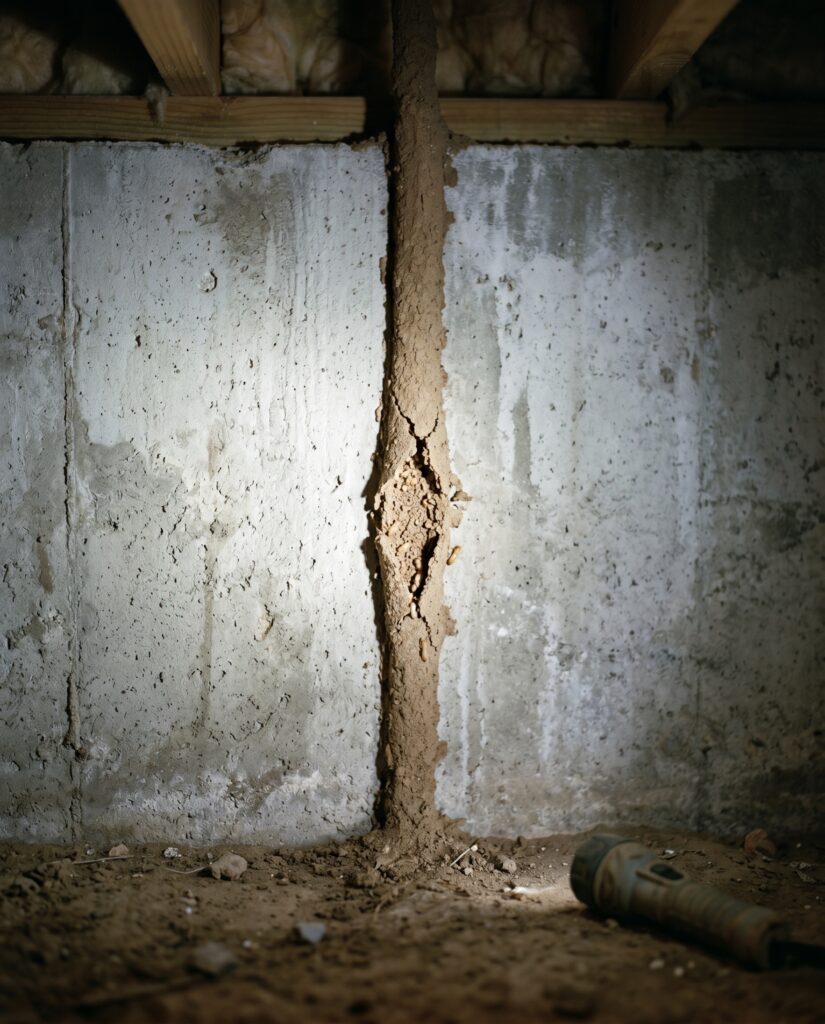
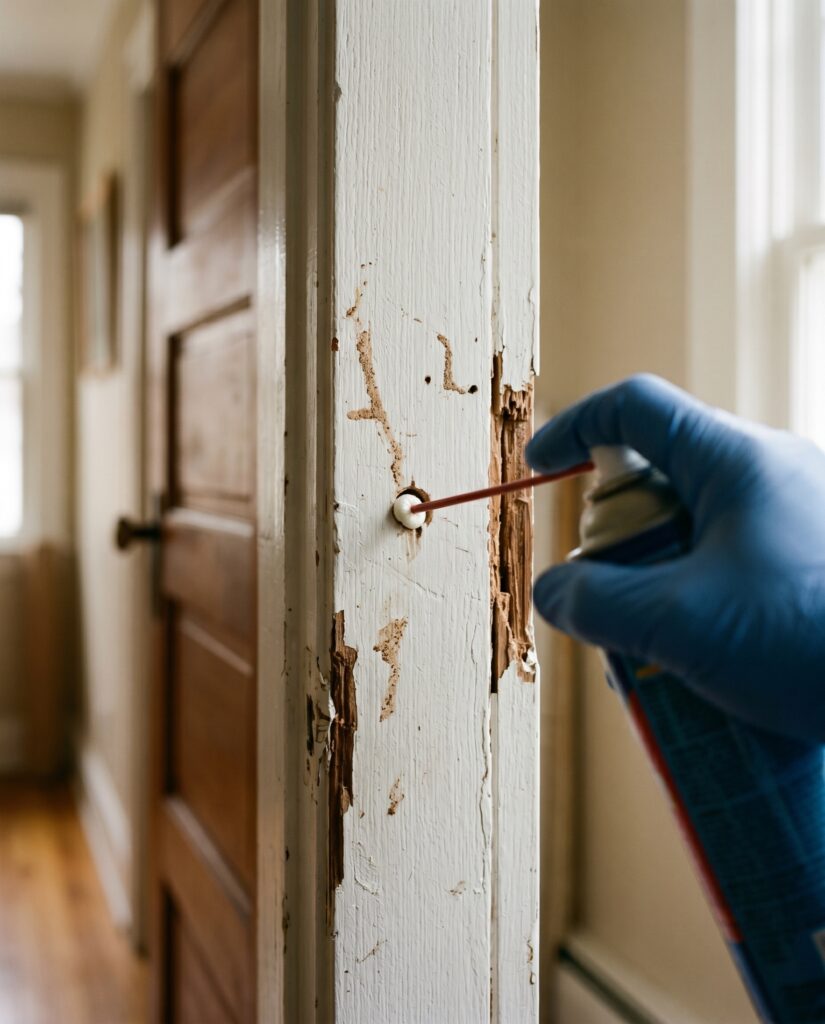
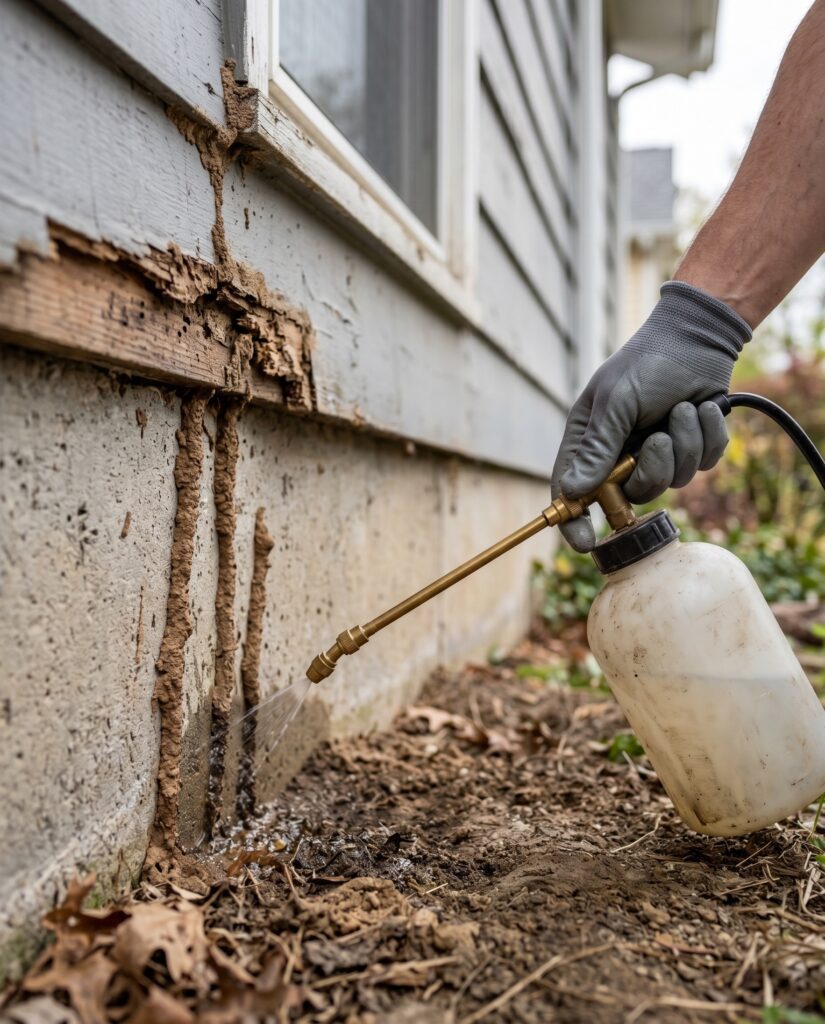
If the tells say termite, the move is different. A swarm alone does not prove an active infestation in your walls, but it does mean termites are reproducing nearby, and you cannot confirm what is happening inside the structure by eye. UC IPM is explicit that “seeing swarms of flying termites does not always mean your home or building is infested,” and that “a professional inspection of the structure is usually required to confirm an infestation.” Termite control is a job for a licensed professional, not a DIY spray. Subterranean termite treatment involves soil termiticides or baiting systems and structural inspection that homeowners are not equipped to do safely or correctly, so collect a couple of shed wings or a specimen in a bag, and schedule an inspection rather than reaching for a can.
nn
Common questions
nn
Can flying ants turn into termites, or the other way around?
n
No. They are entirely different insects from different orders. An ant never becomes a termite at any life stage; the winged form is just the reproductive stage of each one.
nn
Do flying ants damage wood like termites do?
n
Generally no. Flying ants do not eat wood. Carpenter ants can hollow out damp or decaying wood for nesting, but they do not consume it the way termites consume cellulose, and the damage is usually slower and more localized.
nn
I found a pile of wings but no insects. What does that tell me?
n
Shed wings, especially a small heap near a window or light, point toward a recent termite swarm, because termites drop their wings in numbers right after flying. A few scattered wings are less conclusive, since ants also shed after mating.
nn
Does seeing a swarm mean my house is already infested?
n
Not necessarily. A swarm means reproductives are active in the area. Confirming whether there is an active colony in your structure takes a professional inspection, which is the recommended next step if the ID is termite.
nn
Are the swarmers themselves dangerous to people?
n
No. Neither flying ants nor termite swarmers sting, bite, or carry disease in any meaningful way to humans. The concern with termites is the wood, not the insect on your sill.
nn
What if I genuinely cannot tell which one it is?
n
Capture one in a clear bag or jar and compare the waist and antennae against the three tells, or take a sharp phone photo. If you still are not sure, treat it as the more serious possibility and get a termite inspection; ruling termites out costs far less than catching them late.
nn
Final verdict
nn
The fastest, most reliable tell is the waist: a pinched, narrow middle means flying ant, a straight broad body with no waist means termite swarmer, with bent-versus-straight antennae and uneven-versus-equal wings as the two confirmations. Getting it right is not academic. A flying ant is a seasonal nuisance you can handle yourself, while a termite swarmer is the visible sign of a wood-eating colony that warrants a professional inspection. When the three tells say termite, save a specimen and book that inspection.
nn
If the swarmers turn out to be ants, our best ant killers and baits guide covers what to use, and fire-ant swarms are handled in how to get rid of fire ants in your yard.
nn
Pingback: How to Get Rid of Carpenter Ants Before They Damage Your Home
Pingback: Bugs That Look Like Ants: Termites and Four Others