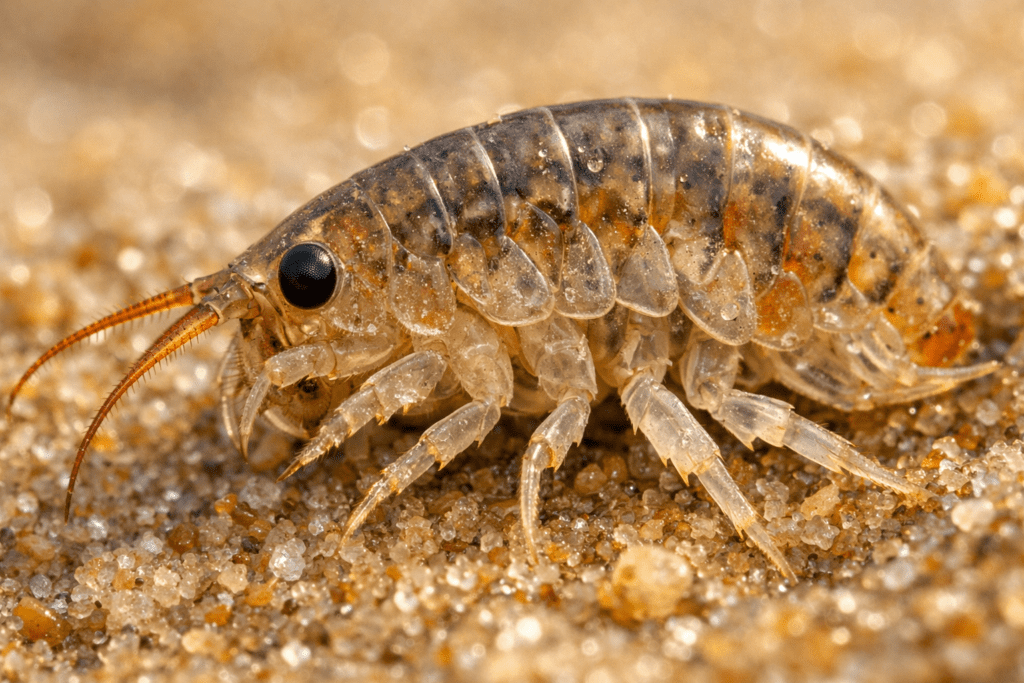
Finding fleas on your pet can make anyone wonder: cat flea vs dog flea – does it matter which one you have? In most homes, the answer is surprisingly simple: the “cat flea” is usually the culprit, even when the itching starts on a dog. What matters more than the name is how fast fleas multiply, where most of them hide (hint: not on your pet), and how to stop the cycle before it rebounds. This guide breaks down identification, risks, and practical control steps that work in real households.
n
Quick Answer: Cat Flea vs Dog Flea (What Most Pet Owners Need to Know)
n
Direct answer: In the cat flea vs dog flea question, cat fleas (Ctenocephalides felis) cause the vast majority of infestations on both cats and dogs, while dog fleas (Ctenocephalides canis) are comparatively uncommon in many regions, especially North America.
n
Here’s the snippet-friendly breakdown:
n
- n
- Most likely species on your pet: Cat flea (even on dogs).
- Can you tell by sight: Usually no. Cat and dog fleas look nearly identical without magnification.
- Where 95% of fleas are: Off the pet – in carpets, cracks, bedding, and yard debris.
- Fast reproduction: A female can lay up to ~50 eggs/day, so a “small” problem can become thousands quickly.
- What to do first: Treat all pets at the same time, then attack the home environment.
n
n
n
n
n
n
Cat flea vs dog flea comparison (at-a-glance)
n
| Feature | Cat flea (C. felis) | Dog flea (C. canis) |
|---|---|---|
| Commonness on pets | Extremely common on cats and dogs | Much less common overall; more often reported in parts of Europe |
| Host preference | Generalist – cats, dogs, humans, wildlife | More dog-associated |
| Visual ID (naked eye) | Looks like a typical flea | Looks like a typical flea |
| Practical takeaway | Assume this species unless confirmed otherwise | Treat the same way in most homes |
n
Cat Flea vs Dog Flea: What’s Actually Different (and What Isn’t)
n
If you’re staring at a tiny reddish-brown speck and hoping it will announce itself as “cat” or “dog,” you’re not alone. Fleas are about 1-2 mm long (roughly the size of a sesame seed), laterally flattened like a little living canoe, and built for moving through fur.
n
The big difference: prevalence, not appearance
n
Research and field experience consistently show that cat fleas dominate infestations on both cats and dogs. Data summarized in veterinary and extension resources notes that cat fleas commonly make up 90%+ of fleas found on pets, including dogs. Guidance from the Ohio State University Extension (Ohioline) flea fact sheet also emphasizes that cat fleas are the primary flea encountered on dogs and cats in many settings.
n
Dog fleas do exist, and they are a legitimate species. They’re simply less frequently encountered in many households, and they tend to be reported more often in certain regions (notably parts of Europe) than in North America.
n
The frustrating truth: you usually can’t ID them without magnification
n
To the naked eye, cat flea vs dog flea is a near-impossible call. Entomologists separate them by small anatomical details that require a microscope and training. In practical pest control terms, that means:
n
- n
- If your pet has fleas, treat the situation, not the species label.
- Your veterinarian’s prevention plan and your home cleanup matter far more than “cat” vs “dog.”
n
n
n
Visual checklist: what you can reliably identify at home
n
You may not identify the species, but you can confirm fleas quickly:
n
Home flea confirmation steps
n
- n
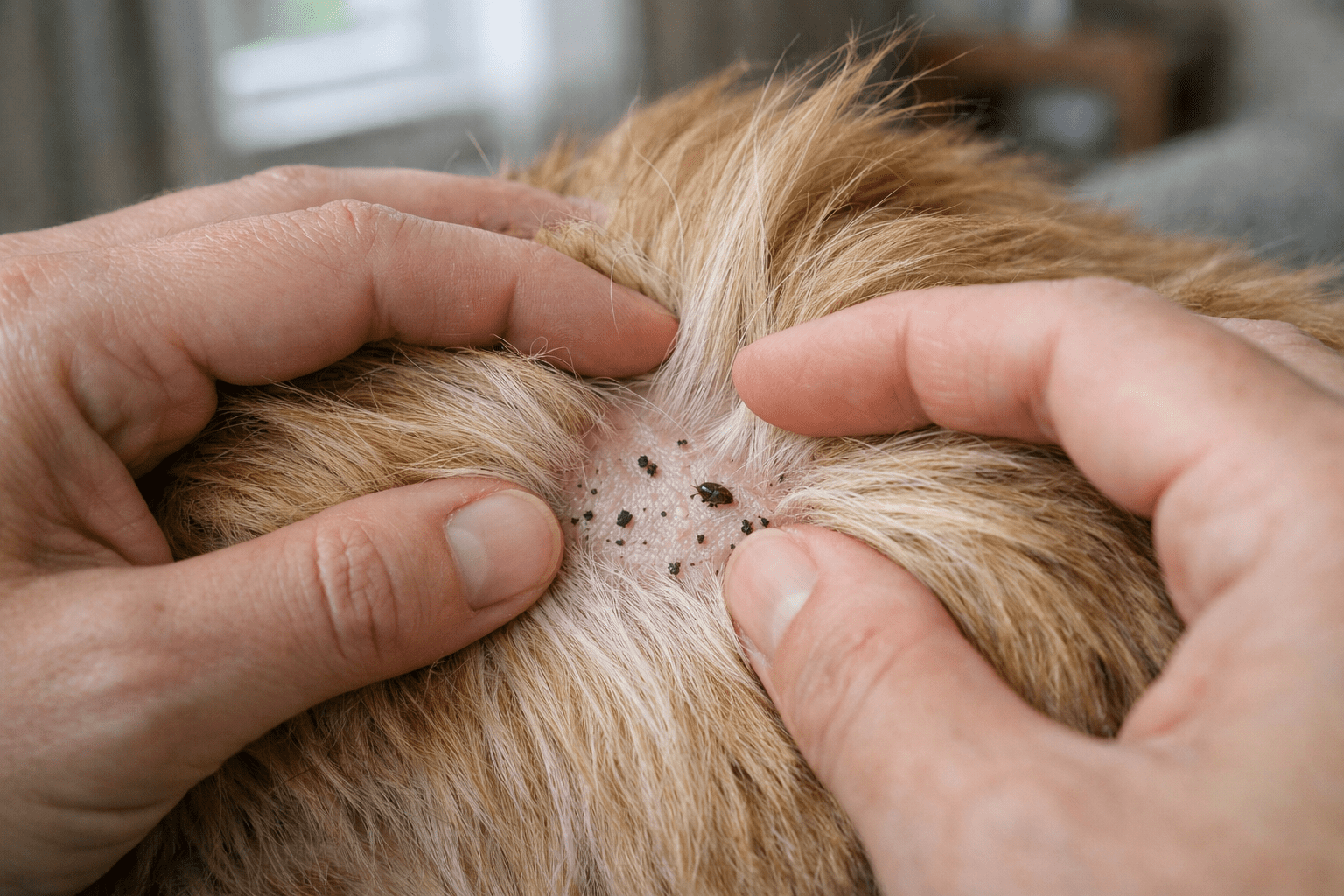
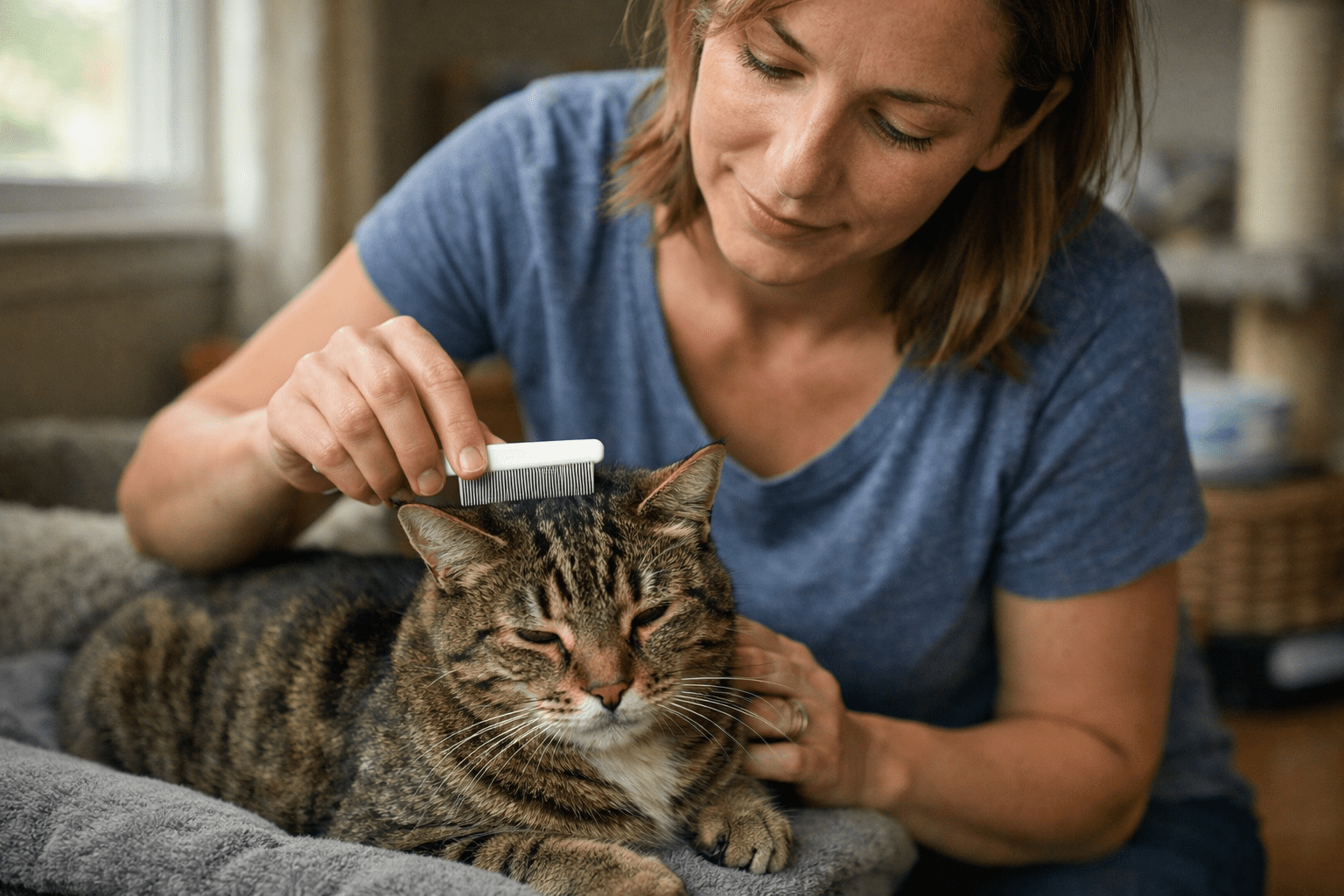
- Use a flea comb over the rump, tail base, and belly.
- Tap debris onto a white paper towel.
- Add a few drops of water.
- If specks smear reddish-brown, that’s “flea dirt” (digested blood).
n
n
n
n
n
What to watch for on pets
n
- n
- Dogs: itching, chewing at tail base, thinning hair on rump
- Cats: overgrooming, scabs along the back (often called “miliary dermatitis”)
n
n
n
Mini visual: “Where fleas hide” reality check
n
| Location | What’s there | Why it matters |
|---|---|---|
| On your pet | Mostly adults | Adults are only the visible tip |
| Carpet, rugs, couch seams | Eggs, larvae, pupae | Most of the population develops here |
| Pet bedding | All stages | Hot washing helps break the cycle |
| Yard shade, leaf litter | Immature stages | Outdoor hotspots can reinfest pets |
n
Actionable takeaway: Don’t waste time trying to visually separate cat fleas from dog fleas. Spend that time treating pets and the environment.
n
Why Cat Fleas End Up on Dogs (and Why Your Home Keeps “Reinfesting”)
nn
n
n Adams Flea and Tick Control for Cats and Dogs, 6 Countn
n
n
No Amazon product page or ASIN found for ‘Adams Flea and Tick Control for Cats and Dogs, 6 Count’ in search results; a similar Adams flea spray is available at Walmart but lacks review details, ratings, or third-party testing info. Cannot recommend without verified Amazon data.
n
n
n
n
nn
Many owners assume fleas behave like lice – living on the animal full time. Fleas are different. Think of your pet as the “feeding station,” while your home is the “nursery.”
n
Cat fleas are flexible opportunists
n
Cat fleas aren’t picky. They thrive on cats, dogs, and a range of mammals. That’s a big reason they dominate household infestations. In contrast, dog fleas tend to be more dog-associated and are simply encountered less often in many domestic settings.
n
This is also why a dog can pick up fleas even if it never meets a cat. Cat fleas can arrive via:
n
- n
- Wildlife (raccoons, foxes, rodents) moving through yards
- Visiting pets
- Shared hallways and common areas in apartments
- Previously infested indoor spaces (pupae can wait)
n
n
n
n
n
The life cycle is the real enemy
n
If you’ve ever treated your pet and still saw fleas two weeks later, that’s not always product failure. It’s often biology.
n
According to veterinary references like the Merck Veterinary Manual overview of fleas and flea allergy dermatitis, fleas develop through four stages, and the timing depends on warmth and humidity.
n
Visual: flea life cycle timeline (why “one treatment” rarely works)
n
| Stage | Where it lives | Typical time | What triggers progress |
|---|---|---|---|
| Egg | Falls off pet into environment | ~1-10 days | Warmth, humidity |
| Larva | Carpet, cracks, bedding | ~5-11 days | Feeds on flea dirt |
| Pupa (cocoon) | Protected in fibers/debris | Weeks to months | Vibration, CO₂, heat |
| Adult | On pet | Weeks to months | Blood meals, mating |
n
Pupae are the “time capsule” stage. Cocooned fleas can wait and then emerge when they sense a host. That’s why homes can seem to “reignite” after you thought you won.
n
For a deeper explanation, see Flea Life Cycle: Why They're So Hard to Eliminate.
n
Quick reality check: why adults are only a small fraction
n
A commonly cited rule of thumb in pest management is that adult fleas may represent only around 5% of the total flea population, with the rest hidden as eggs, larvae, and pupae off-host. That’s why you can comb off a few fleas and still have a major infestation brewing in the carpet.
n
Actionable takeaway: If you only treat the pet, you’re leaving most of the population untouched. Treat the pet + the home at the same time.
n
 n
nnn
Health Risks: Bites, Allergies, and Parasites (Cats, Dogs, and Humans)
nn
n
n Frontline Plus Flea and Tick Treatment for Dogs, 3 Dosesn
n
n
This product is a popular flea treatment for dogs, which is important for pet owners to consider when dealing with flea issues, especially since dog fleas can still be a concern.
n n n n Check Price on Amazon →n n
n
n
nn
n
n PetArmor Plus Flea and Tick Prevention for Cats, 3 Dosesn
n
n
PetArmor Plus for Cats (ASIN B07G5J5Z5Z) is a solid budget-friendly flea and tick prevention option with 4.4 stars from over 12,500 Amazon reviews, praised for quick efficacy and ease of use as a generic alternative to pricier brands. While some cats experience mild irritation or odor issues, it’s generally well-regarded for the price at around $20 for 3 doses, making it recommendable for cost-conscious pet owners seeking reliable protection.
n
n
n
n
nn
Fleas are not just an “itch problem.” They can also trigger allergic skin disease and transmit parasites. The good news is that most flea-related issues are preventable once you interrupt the life cycle and keep pets protected.
n
Flea allergy dermatitis is common and often mistaken for “dry skin”
n
Some pets react strongly to flea saliva. One bite can cause days of itching in sensitive animals. Veterinary references describe classic patterns:
n
- n
- Dogs: itching and hair loss near the tail base and rump (often described as a triangular or “Christmas tree” distribution along the back)
- Cats: scabs and bumps along the back and neck, plus heavy grooming and thinning hair
n
n
n
If your pet is intensely itchy but you rarely see fleas, that does not rule fleas out. In allergy cases, the pet may remove fleas quickly through grooming, leaving behind the reaction.
n
Parasites and disease concerns
n
Both cat fleas and dog fleas can play a role in transmitting:
n
- n
- Tapeworms (Dipylidium caninum): Pets can become infected by swallowing an infected flea while grooming.
- Bartonella species: Cat fleas are known vectors associated with bartonellosis in certain contexts.
- Typhus group rickettsiae: Fleas can be involved in transmission cycles in some regions.
n
n
n
n
The risk varies by geography and exposure, but it’s another reason consistent prevention matters.
n
Human bites: what they look like and how to confirm
n
Fleas will bite people, especially when pets are treated and adult fleas are hungry. Typical flea bites:
n
- n
- Small, itchy red bumps
- Often in clusters
- Common on ankles and lower legs (but can occur anywhere)
n
n
n
n
If you’re trying to compare bite patterns, InsectoGuide can help:
n
- n
- Flea Bites on Humans: Identification & Treatment Guide
- Mosquito Bites vs Bed Bugs, Fleas, Spiders & Ticks
n
n
n
Visual: “When to call the vet” checklist
n
| Situation | Why it matters | Next step |
|---|---|---|
| Pale gums, weakness (especially kittens/puppies) | Possible anemia from heavy flea feeding | Vet visit promptly |
| Severe itching, scabs, hair loss | Possible flea allergy dermatitis | Vet exam + strict flea control |
| Tapeworm segments (rice-like) in stool or near tail | Often linked to flea exposure | Vet deworming + flea prevention |
| Skin infection odor, oozing sores | Secondary bacterial infection | Vet care recommended |
n
Actionable takeaway: If itching is intense or persistent, treat fleas as a likely trigger even if you rarely see them.
n
How to Get Rid of Fleas (Works for Both “Cat Flea” and “Dog Flea” Problems)
nn
Most flea control fails for one reason: it’s done in pieces. Fleas require a coordinated plan – pet protection plus environmental cleanup.
n
Step 1: Treat every pet at the same time
n
If one pet remains untreated, it becomes the safe harbor that keeps the population going.
n
Options to discuss with your veterinarian include:
n
- n
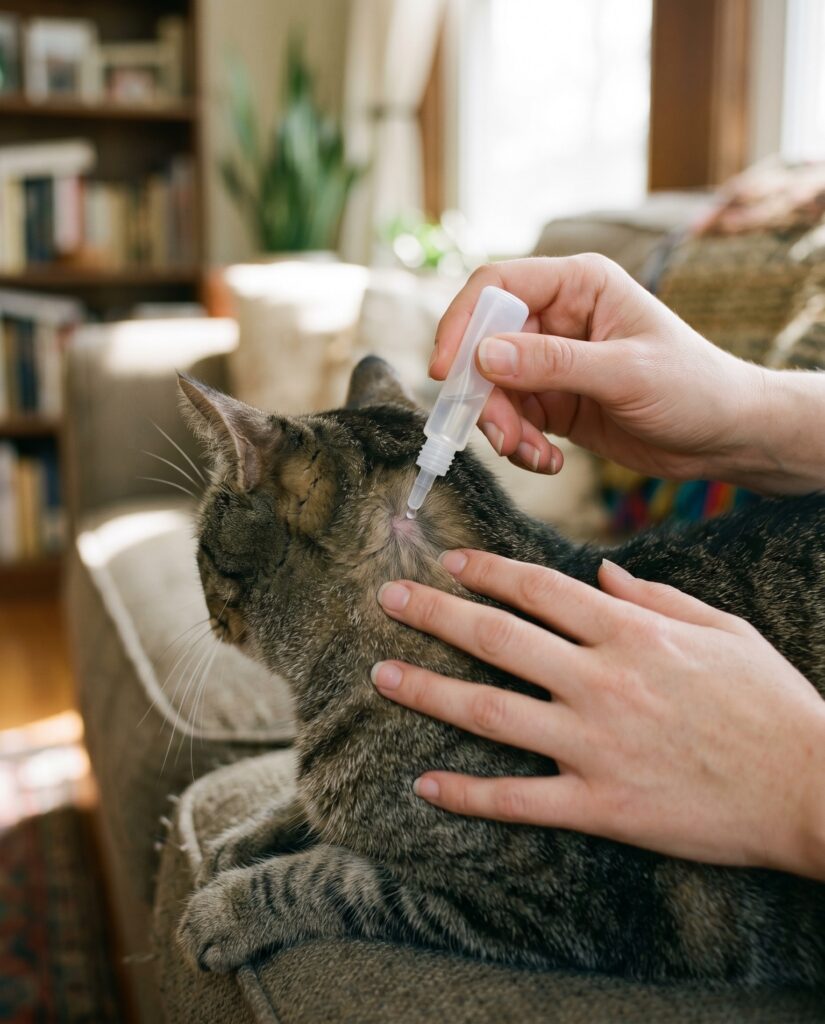
- Oral prescription preventives (often fast-acting and convenient)
- Topical treatments applied to the skin
- Insect growth regulators (IGRs) in some products, which reduce reproduction
n
n
n
n
Important safety note: Never use dog flea and tick products on cats. Some ingredients that are safe for dogs can be dangerous for cats. Product safety guidance like the Northern Vet explanation of dog vs cat flea and tick product differences highlights why species-specific labeling matters.
n
Step 2: Hit the environment where fleas develop
n
Remember: eggs and larvae are in the home, not on the pet.
n
Home action plan (7-14 days minimum)
n
- n
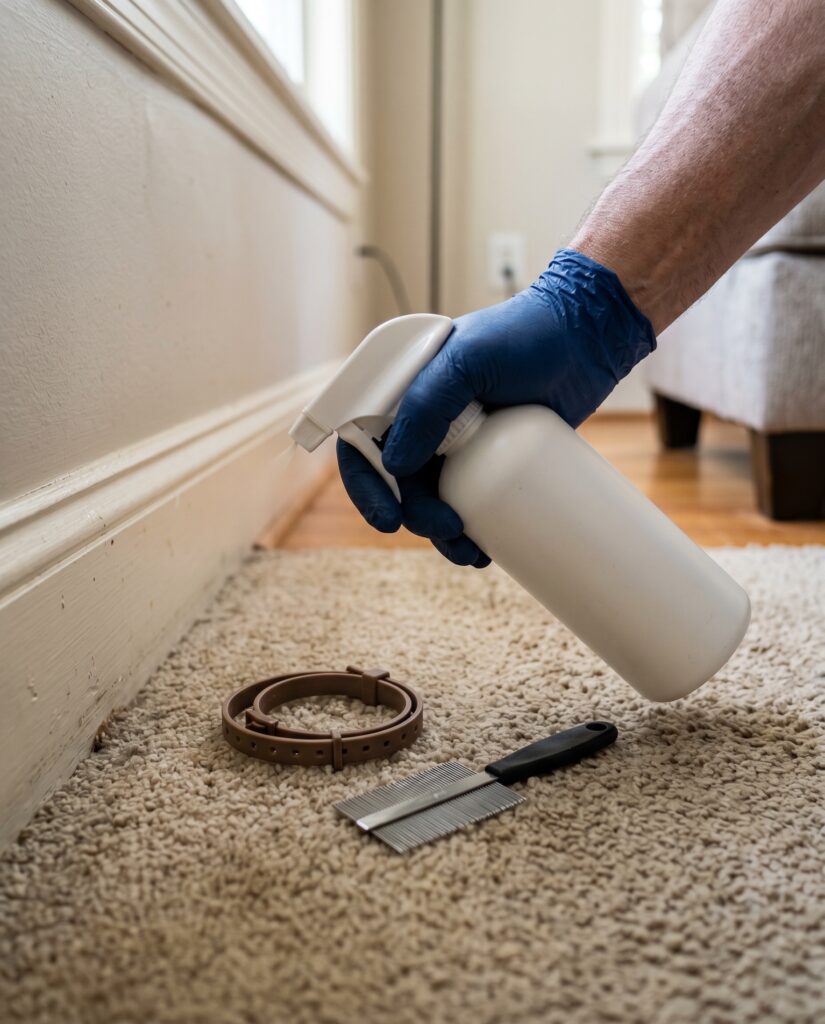
- Vacuum daily for at least a week (carpets, edges, under furniture).
- Empty the vacuum canister outside, or seal and discard the bag.
- Wash pet bedding and throw blankets in hot water weekly.
- Focus on “pet zones” – sleeping areas, couches, sunny carpet patches.
n
n
n
n
n
Step 3: Consider targeted home treatments (when needed)
n
If you’re seeing repeated adult fleas despite treating pets and vacuuming, you may need additional tools:
n
- n
- IGR-based indoor sprays (these don’t kill instantly, but they stop development)
- Professional pest control for heavy infestations or multi-unit buildings
n
n
n
A good professional will emphasize integrated pest management: treating pets, reducing indoor development sites, and using the least pesticide necessary for control.
n
Step 4: Don’t forget outdoor hotspots
n
Many flea problems are mostly indoors, but outdoor sources can matter, especially in warm months.
n
Outdoor focus areas:
n
- n
- Shaded spots where pets rest
- Under decks and porches
- Leaf litter and organic debris near foundations
n
n
n
n
Outdoor steps
n
- n
- Rake and remove debris in shaded areas.
- Limit wildlife attractants (secure trash, avoid leaving pet food outside).
- If needed, ask a professional about yard treatments that target flea larvae.
n
n
n
n
Visual: “Do this, not that” flea control chart
n
| Do this | Not that |
|---|---|
| Treat all pets on the same schedule | Treat only the pet that’s scratching |
| Vacuum daily during the initial push | Assume one cleaning solves it |
| Use cat-labeled products on cats | Use dog-only products on cats |
| Expect a few weeks of follow-through | Stop early when you see fewer fleas |
| Talk to a vet for the right preventive | Rotate random over-the-counter products |
n
Actionable takeaway: The fastest results come from combining vet-approved pet treatment with aggressive vacuuming and laundering for 2-4 weeks.
n
 n
nnn
Cat Flea vs Dog Flea Myths That Keep Infestations Going
n
Fleas thrive on misunderstandings. Clearing up a few myths can save you weeks of frustration.
n
Myth 1: “Cat fleas only live on cats, dog fleas only live on dogs.”
n
Reality: Cat fleas commonly infest both cats and dogs, and they can bite humans too. That’s why the “cat flea” is often the main household flea, regardless of which pet you own. Overviews like the Orkin guide to fleas on cats and dogs also note that pets often share the same flea species.
n
Myth 2: “If I don’t see fleas, my pet doesn’t have fleas.”
n
Reality: Fleas are small, fast, and good at hiding. In flea allergy cases, even a few bites can cause big symptoms. Use a flea comb and look for flea dirt.
n
Myth 3: “Fleas stay on the pet.”
n
Reality: Most of the population is in the environment as eggs, larvae, and pupae. That’s why home treatment behaviors (vacuuming, washing bedding) are not optional.
n
Myth 4: “Fleas are only a summer problem.”
n
Reality: In many homes, fleas can cycle year-round, especially indoors where temperature and humidity stay stable. Pupae can also wait for months, then emerge when conditions are right.
n
Myth 5: “Flea bites mean bed bugs.”
n
Reality: Bite patterns overlap. Fleas often bite ankles and lower legs, while bed bugs often bite exposed skin during sleep. If you’re unsure, compare signs in Fleas vs Bed Bugs: How to Tell Them Apart.
Our guide to bugs that jump goes further into separating a flea from a springtail.
n
Visual: quick “Which pest is it?” clue list
n
| Clue | More consistent with fleas | More consistent with bed bugs |
|---|---|---|
| Pet scratching + flea dirt | Yes | No |
| Bites mainly on ankles/lower legs | Common | Less typical |
| Bugs found in pet bedding | Common | Sometimes |
| Bugs found in mattress seams | Possible | Very common |
n
Actionable takeaway: Assume fleas can be present even when you don’t see adults. Confirm with flea dirt testing and treat the environment.
n
Conclusion: The Practical Take on Cat Flea vs Dog Flea
n
For most households, the cat flea vs dog flea question has a simple outcome: cat fleas are usually responsible for infestations on both cats and dogs, and you typically can’t tell the species by eye anyway. The winning strategy is consistent pet protection plus environmental cleanup, carried out long enough to outlast the pupal “waiting” stage.
n
Next step: confirm flea dirt with a comb, treat all pets on the same schedule, and follow a 2-4 week home plan of vacuuming and hot-washing bedding. If bites are part of the mystery, compare patterns in Flea Bites on Humans: Identification & Treatment Guide and Mosquito Bites vs Bed Bugs, Fleas, Spiders & Ticks to narrow down the cause.
n
As an Amazon Associate, I earn from qualifying purchases. Product recommendations are based on real reviews and independent research.