
German cockroaches are the hardest roach to clear because they breed fast, hide in tight crevices, and shrug off most sprays. The fix that actually works is boring: gel bait placed in the right crevices, paired with an insect growth regulator, and rotated to different active ingredients every few weeks. Skip the foggers and the spray-the-baseboards routine, because those scatter the roaches, push egg-carrying females into wall voids, and contaminate your bait. Tighten up food and water at the same time, monitor with sticky traps, and you starve the population while the bait does the killing.
Rotating gel bait plus an insect growth regulator is what breaks a German roach population. Foggers and repellent sprays scatter them, ruin your bait, and feed resistance.
- Do first, free: cut off food and water, declutter cardboard, set sticky traps to find the hot spots
- The real killer: small gel-bait beads in crevices plus an IGR, rotated to a new active ingredient every few weeks
- Skip: foggers, baseboard spraying, and any repellent product near where bait is placed
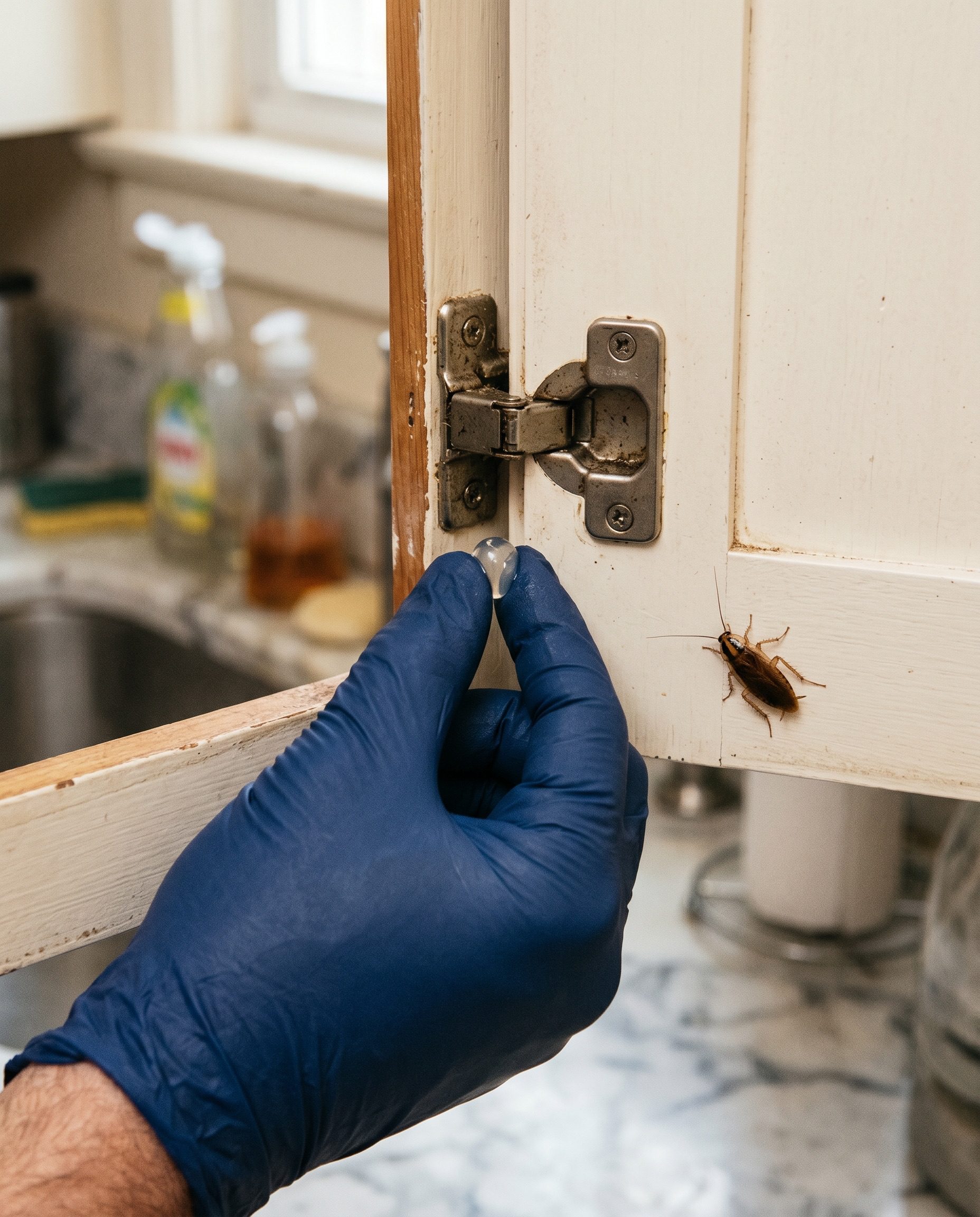
Why they win by default
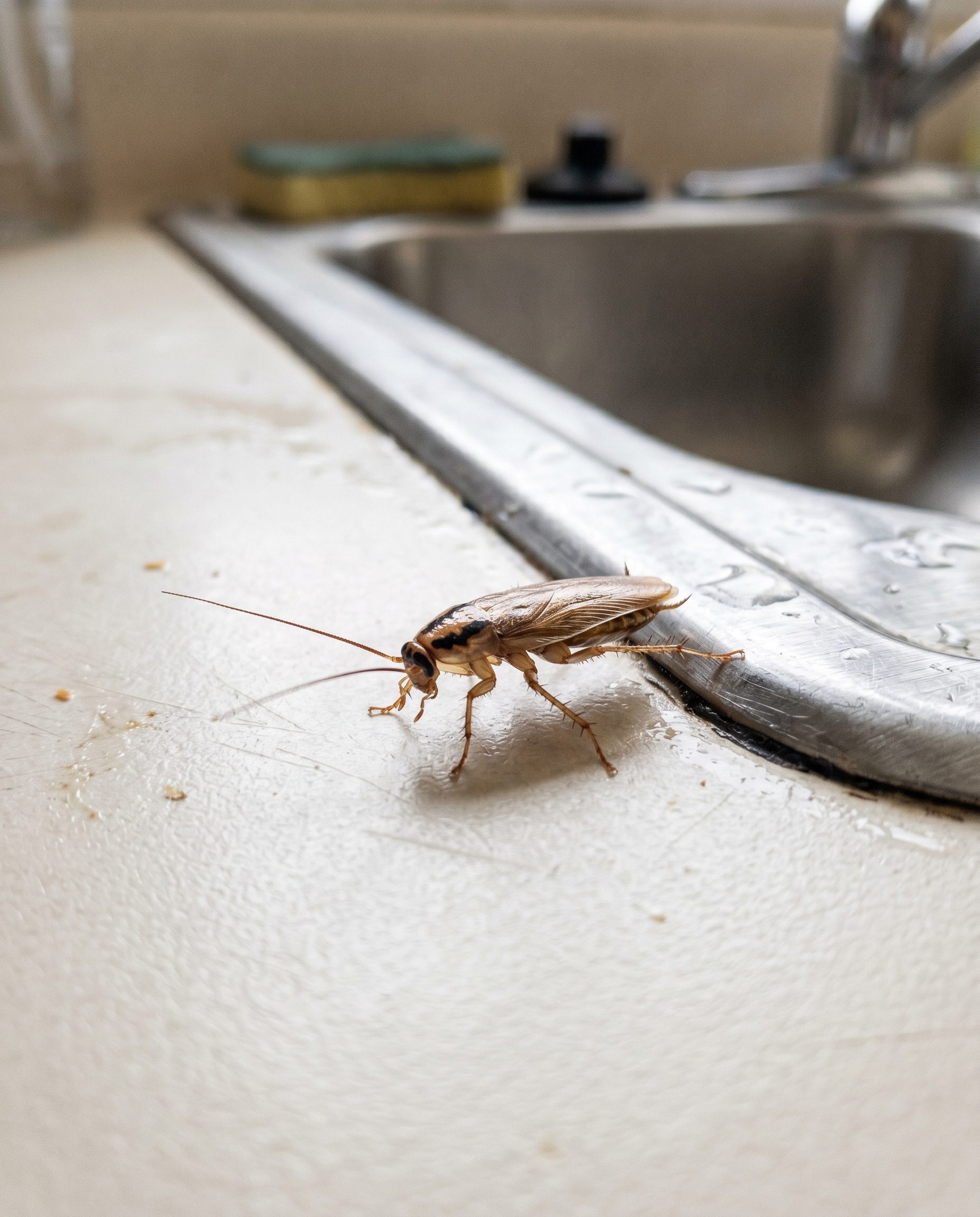
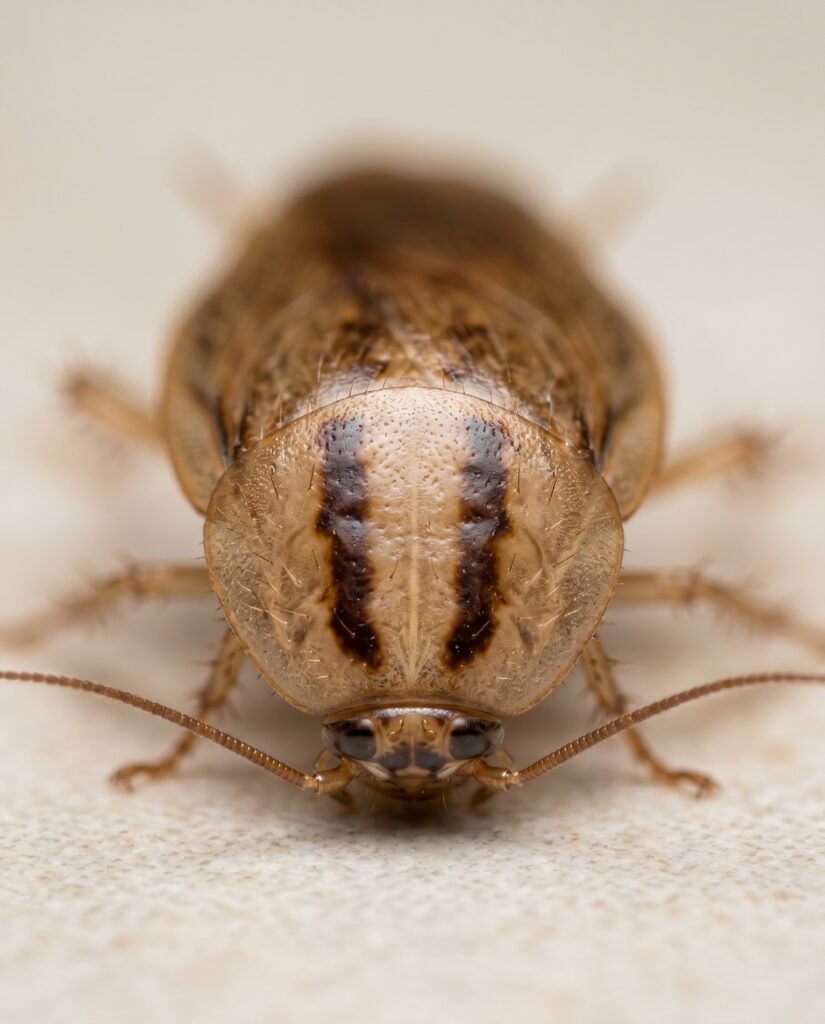
The German cockroach, *Blattella germanica*, is the small tan roach with two dark parallel stripes running down the shield behind its head. Adults run about half an inch, and per the UF Featured Creatures profile of the German cockroach, each female carries an egg case holding 30 to 40 eggs and produces several of them in a lifetime. That math compounds quietly inside your walls. A handful you see on the counter usually means dozens more in the crevices you don’t.
Their second advantage is chemistry. German cockroaches have beaten every insecticide class thrown at them, and the NC State Extension guide on German cockroach management notes resistant populations have been recorded for every class used against them since the 1950s. So the species is not just prolific, it is pre-adapted to survive the products most people reach for first. That is why brute force fails and a smarter sequence wins.
If you are not certain you are dealing with German roaches versus a bigger sewer-dwelling species, sort that out first, because the playbook differs. Our German vs American cockroach comparison walks through the size, color, and habitat tells, and the broader guide to getting rid of cockroaches covers the species you are less likely to have indoors.
Do this tonight for free
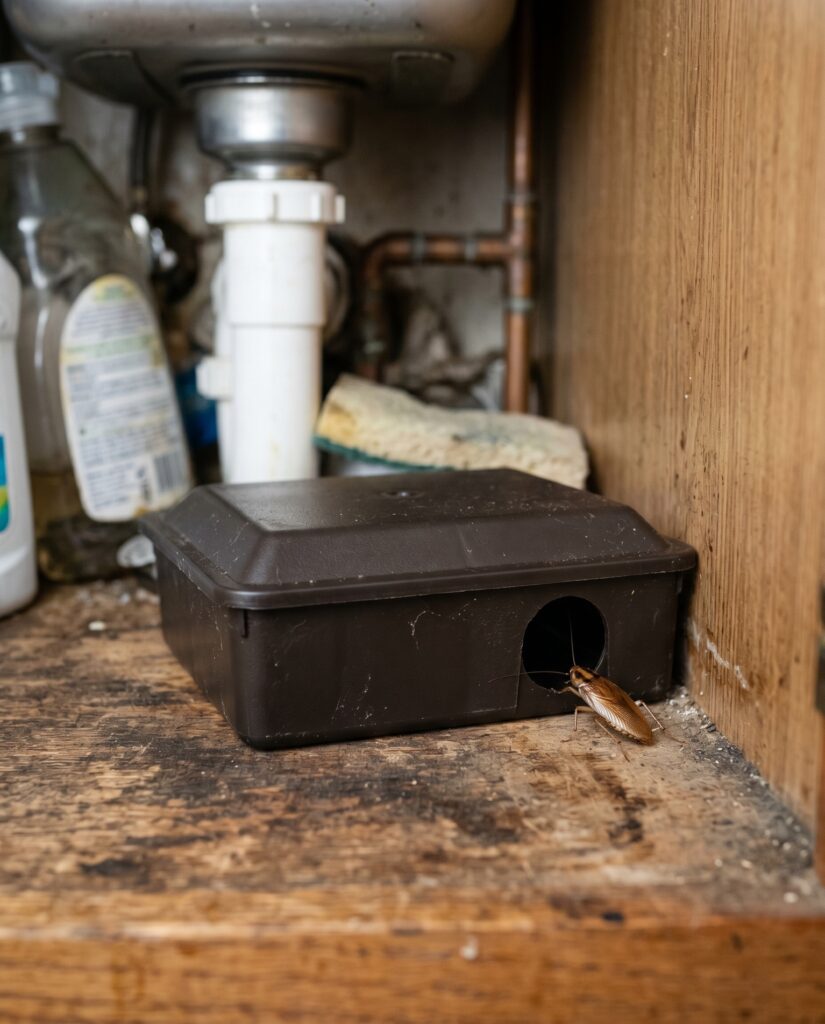
Before you spend a dollar, take away what they live on. German roaches need food, water, and a tight hiding spot, and removing any leg of that triangle weakens the whole population. Wipe up grease and crumbs nightly, store food and pet food in sealed containers, and run the dishwasher instead of leaving dishes in the sink. Fix the slow drip under the sink, because a damp cabinet is a roach watering hole.
Clutter is harborage. Recycle the cardboard and paper bags, since roaches both nest in and feed on them, and pull stored boxes out of warm corners near the fridge and stove. Vacuum the cracks where the floor meets the cabinets to pick up droppings, egg cases, and the roaches themselves; this is the same allergen-reducing step the EPA’s integrated pest management principles put ahead of any spraying.
None of this kills the colony on its own. What it does is make your bait the most attractive food in the room, which is exactly what you want before the next step.
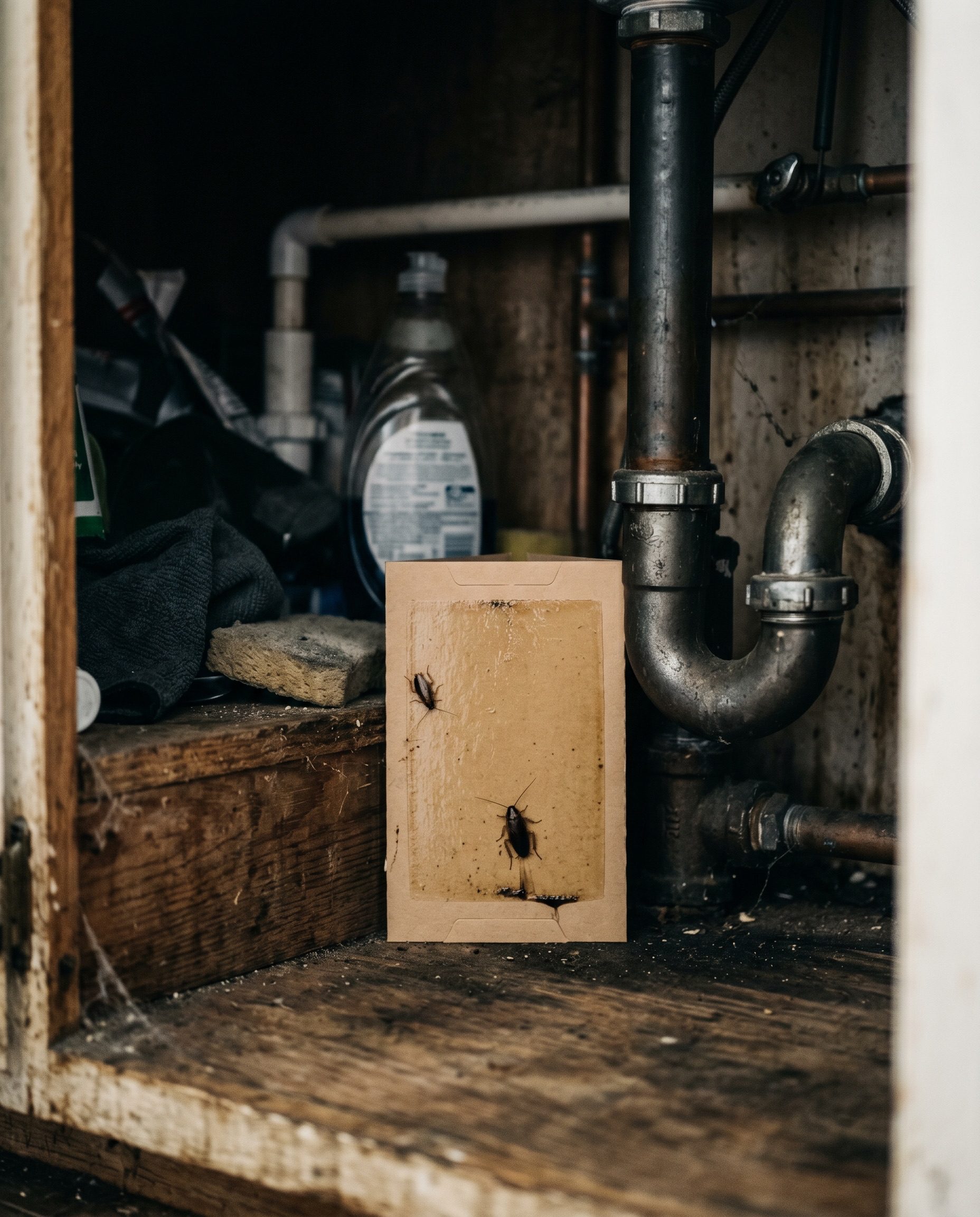
Find them with sticky traps
You cannot treat what you cannot find, and German roaches hide in the last place you’d look. Plain sticky monitors are your eyes on the problem, working around the clock while you sleep. Place them flush in corners, behind the toe-kick under cabinets, beside the dishwasher and fridge motor, and inside the cabinet under the sink. Where the traps fill fastest, the harborage is closest.
Check them after a couple of nights. A trap that catches small nymphs is sitting near a breeding pocket, and that spot earns the most bait. The UF assessment-based approach treats these monitors as decision tools, not just catch counts; the UF IFAS guide to assessment-based German cockroach management describes proper trap placement as the difference between catching a fraction of the population and actually mapping it. Map first, then bait the map.
Why foggers and sprays backfire
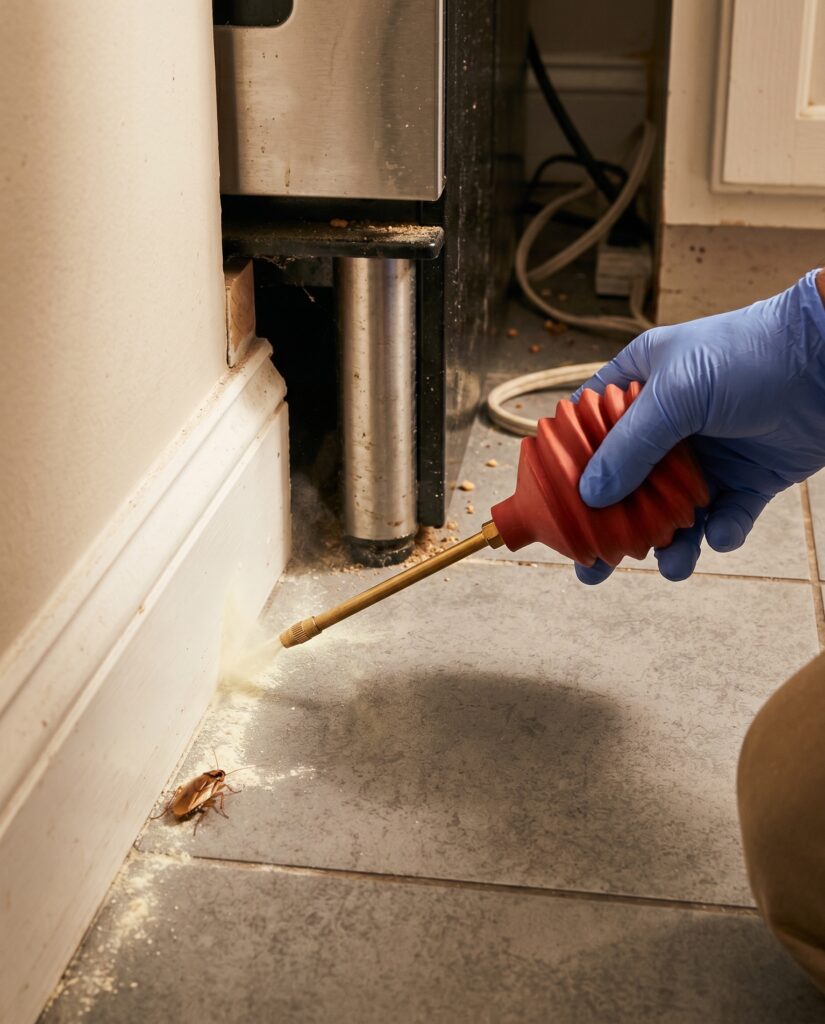
Here is the part most people get wrong. A total-release fogger or a can of contact spray feels like decisive action, and it is exactly the wrong move against this species. Foggers spray into open air and never reach the crevices where roaches actually live and breed. UC IPM is blunt about it: the UC IPM Pest Notes on cockroach control says total-release foggers are often ineffective because they don’t penetrate harborages, and they carry flammability and exposure risks on top of that.
Worse, repellent sprays do active harm. They make the population scatter into wall voids and neighboring rooms, the same UC IPM note warns, and egg-carrying females you push deep simply restart the cycle somewhere you can’t see. Then there is the bait problem: spray a repellent product where you’ve placed gel bait and you’ve poisoned your own trap. The UF assessment-based guidance is direct that a repellent product applied near bait will contaminate it and render the bait ineffective.
So the rule is simple. If you are baiting, you are not spraying the same surfaces. Pick the strategy that reaches where they hide, and don’t sabotage it with the strategy that doesn’t.
Bait plus IGR, rotated
This is the combination that wins. Gel bait gets carried back and shared through the population, reaching roaches you never see, while an insect growth regulator (IGR) keeps the survivors from maturing and breeding. Used together they hit the colony from both ends, the foragers and the next generation.
Place gel bait in small pea-size beads inside crevices, not smeared on open surfaces. Tuck dots into cabinet hinges, the corners under the sink, behind and beside the stove and fridge, and along the seams the sticky traps flagged. Many small placements beat a few big ones. For the IGR, the UF guidance offers a useful tactic: it suggests placing bait close to but not directly on top of an IGR treatment, so the IGR doesn’t reduce the bait’s palatability. The IGR also nudges gravid females back into normal foraging, which makes them more likely to hit your bait.
Then comes the step almost everyone skips: rotate to a different active ingredient. Stick with one bait too long and two things happen. Resistance creeps in, and the population can develop glucose aversion, a behavioral trait where roaches that once swarmed a sweet bait start treating it as bitter and walk away. The NC State Extension surveillance guide recommends rotating among baits with different modes of action every three to four months, and switching to a protein-based bait if a sweet one suddenly stops pulling roaches. Rotation keeps the bait both lethal and appetizing.
If you want a starting shortlist of formulations to rotate between, our roundup of the best cockroach gel baits breaks down which active ingredients pair well for a rotation.
Use them safely indoors
Bait and IGRs are low-exposure compared with broadcast spraying, but they are still pesticides, and where you put them matters. Keep gel bait out of reach of children and pets and off food-prep surfaces; tuck it into crevices and the backs of cabinets, not on countertops or near pet bowls. Wipe up any stray smear. The advantage of crevice baiting over baseboard spraying, as NC State notes, is that far less active ingredient is broadcast across surfaces kids and pets touch.
Read the product label before you place anything, because under federal law the directions are binding. The EPA’s pesticide label rules state plainly that it is a violation of federal law to use a product in a manner inconsistent with its labeling, which is the whole reason the label is the law. Follow the placement sites and the keep-away and storage directions exactly. If you ever suspect a child or pet got into a product, get medical or veterinary help and call your local poison control center.
| Approach | What it does | Verdict |
|—|—|—|
| Gel bait plus IGR, rotated | Shared colony-wide, blocks the next generation, stays effective | The core of any real fix |
| Sticky monitor traps | Finds harborages, tracks progress | Essential, not a killer on its own |
| Foggers and baseboard sprays | Miss crevices, scatter roaches, contaminate bait | Skip for this species |
Common questions
How long does it take to get rid of German cockroaches?
With consistent baiting and good sanitation, you should see catch counts on your sticky traps drop within two to three weeks, but a heavy infestation can take a couple of months to fully clear. Keep baiting and monitoring after the visible roaches are gone, because egg cases hatch on their own schedule.
Why do I still see roaches after baiting?
Usually one of three things: too few bait placements, bait placed on open surfaces instead of in crevices, or a repellent spray nearby that contaminated the bait. Sometimes the population has shifted away from a sweet bait, which is your cue to rotate to a different active ingredient.
Do I need a professional?
Many homeowners can clear a small to moderate German roach problem with the bait-IGR-rotation routine. If you live in a connected apartment or building, roaches can move between units and reinfest, so a coordinated treatment with your neighbors or a licensed pro is often what finally settles it.
Are gel baits safe around kids and pets?
Used per the label and tucked into crevices out of reach, they expose your family to far less product than spraying surfaces does. Keep beads off food-prep areas and away from pet bowls, wipe up any stray gel, and store the tube out of reach.
Will keeping the kitchen clean alone get rid of them?
Sanitation is the foundation and it starves the population, but it rarely finishes the job by itself for an established infestation. Pair it with bait and an IGR; cleaning makes the bait the most attractive food in the room, which is exactly the point.
Does cold or DIY home remedies work on German roaches?
Boric acid has a real role as a slow-acting stomach poison when applied as a fine dust in voids per the label, but vinegar, essential oils, and other home sprays mostly just move roaches around. Spend your effort on bait, IGR, and exclusion instead.
Final verdict
German cockroaches earn their reputation as the hardest roach to beat, but the species rewards patience over firepower. Bait the crevices, add an IGR, and rotate the active ingredient, while you cut off food and water and let sticky traps tell you where the trouble is. Leave the foggers in the store and keep repellent sprays away from your bait, because the moment you scatter this roach or contaminate its food, you’ve handed it the win. Boring and consistent beats dramatic every time here.
Pingback: German Cockroach vs American Cockroach: Size, Color and Behavior