
Finding the right beekeeping starter kits is the fastest way to go from “I’d love to keep bees” to a first confident hive inspection. The challenge is that many kits look similar online, yet they differ in box count, frame style, protective gear quality, and whether they set you up for your first season or leave you scrambling for add-ons. This guide breaks down what beginners actually need, what can wait, and how to choose a kit that matches your climate, budget, and lifting comfort – without buying a pile of gear you won’t use.
Quick Answer: What are the best beekeeping starter kits for beginners?
The best beekeeping starter kits for beginners are Langstroth-based kits that include at least one deep brood box (ideally two), complete frames and foundation, a smoker and hive tool, and beginner-friendly protective gear (veil plus jacket or suit). If a kit skips any of those, plan to add them immediately.
Use this quick checklist before you buy:
| Must-have item | Why it matters in year 1 | Beginner-friendly target |
|---|---|---|
| 1-2 deep brood boxes | Enough space for brood and food | 2 deeps for many temperate areas |
| Frames + foundation (for every box) | Prevents last-minute shortages | 10 frames per 10-frame box |
| Bottom board + inner + outer cover | Basic hive structure and weather protection | Standard Langstroth parts |
| Entrance reducer | Helps small colonies defend and regulate airflow | Included |
| Smoker + hive tool | Calmer inspections and safe prying | Included, decent quality |
| Veil + gloves (minimum) | Reduces fear and sting risk | Veil that seals well |
| Jacket or full suit | Makes early inspections smoother | Strongly recommended |
Quick buying rule: choose assembled if you are short on tools or time. Choose 8-frame if lifting is a concern.
Why most beginners should start with a Langstroth kit (and what “standard” really means)
Walk into any beekeeping class or local bee club meeting and you will see the same basic hive style again and again: stacked rectangular boxes with removable frames. That is the Langstroth hive, and it dominates beginner kits for good reasons.
For a first-year beekeeper, “standardized parts” is not a boring detail – it is what keeps you from getting stuck mid-season. When your colony expands in spring, you need another box, more frames, or a replacement lid fast. Langstroth equipment is widely available, interchangeable across suppliers, and aligns with most beginner education.
According to guidance from major suppliers like Dadant & Sons’ beginner kit overview and common kit formats from Mann Lake hive kits, beginner kits typically center on Langstroth components because they are modular and easy to inspect.
The “standard” configuration most kits assume
Here is the practical structure behind most starter kits:
- Brood chamber (deep boxes): where the queen lays and the colony stores food for itself.
- Honey supers (often medium boxes): where you harvest surplus honey later.
- Frames + foundation: removable “skeletons” bees draw comb onto.
Visual guide: Langstroth box roles (beginner view)
| Box type | Common depth | Primary use |
|---|---|---|
| Deep | ~9 5/8 in | Brood and main food stores |
| Medium | ~6 5/8 in | Honey supers (easier lifting) |
| Shallow | ~5 3/8 in | Honey supers (less common now) |
Actionable takeaway
If your goal is to learn quickly and get help locally, pick a Langstroth kit in the same frame size your local mentors use. That way, borrowed equipment, spare frames, and advice all match your setup.
What a good starter kit should include (and what you can skip at first)
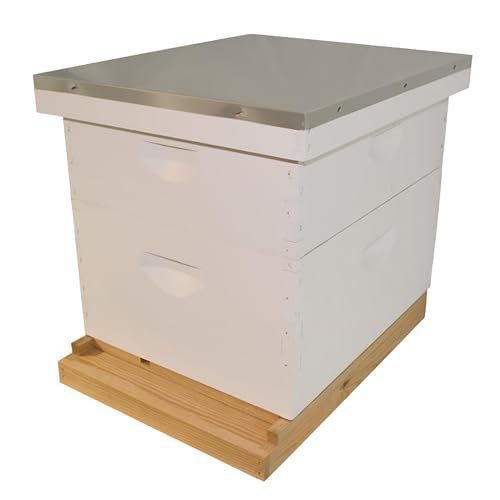
Mann Lake Complete Hive Kit Combo, Includes 1 Deep and 1 Medium Super Box, Quality Pine, Ideal for Beekeeping Beginners, Made in USA, 10 Frame, Painted
This comprehensive starter kit includes essential Langstroth components such as deep brood boxes, frames, and protective gear, making it ideal for beginners.
Many first-time beekeepers assume “deluxe” means “best.” In reality, the best kit is the one that covers the non-negotiables for safe inspections and steady colony growth, while leaving specialty purchases for later.
A practical baseline is echoed in beginner checklists like Beekeeping for Newbies’ starter kit guide and the way curated kits are packaged by suppliers such as Betterbee’s beginner kits. The themes are consistent: complete woodenware, complete frames, basic tools, and protective gear that helps you stay calm.
The “non-negotiables” for year one
Hive hardware
- Bottom board (solid or screened)
- Inner cover + outer/telescoping cover
- Entrance reducer
- At least 1 deep box (many beginners benefit from 2)
- Frames and foundation for every box you own
Tools
- Hive tool (for propolis-glued parts)
- Smoker (for calmer inspections)
Protective gear
- Veil (minimum)
- Gloves (optional later, helpful now)
- Jacket or full suit (recommended for most beginners)
Quick visual checklist: buy-now vs buy-soon vs buy-later
| Buy now (day 1) | Buy soon (first 2-6 weeks) | Buy later (after first season) |
|---|---|---|
| Veil, smoker, hive tool | Feeder, extra frames, spare box | Extractor, bottling tank |
| Deep box(es) + frames | Varroa monitoring kit | Queen rearing tools |
| Covers + bottom board | Honey supers (if needed) | Specialty pollen traps |
What kits often miss (budget for it anyway)
Even strong kits usually do not include:
- Bees (package or nucleus colony)
- Varroa mite monitoring tools and treatments
- Hive stand or cinder blocks
- Local class or club dues
Varroa matters because it is a major driver of colony losses. Backyard colonies are not “set and forget.” National bee health messaging consistently stresses monitoring and management, including for hobbyists. A kit is a foundation, not a health plan for your bees.
Actionable takeaway
Before clicking “buy,” write a two-column list: “Included in kit” and “Still needed.” If Varroa monitoring is not on your “still needed” list, add it now.
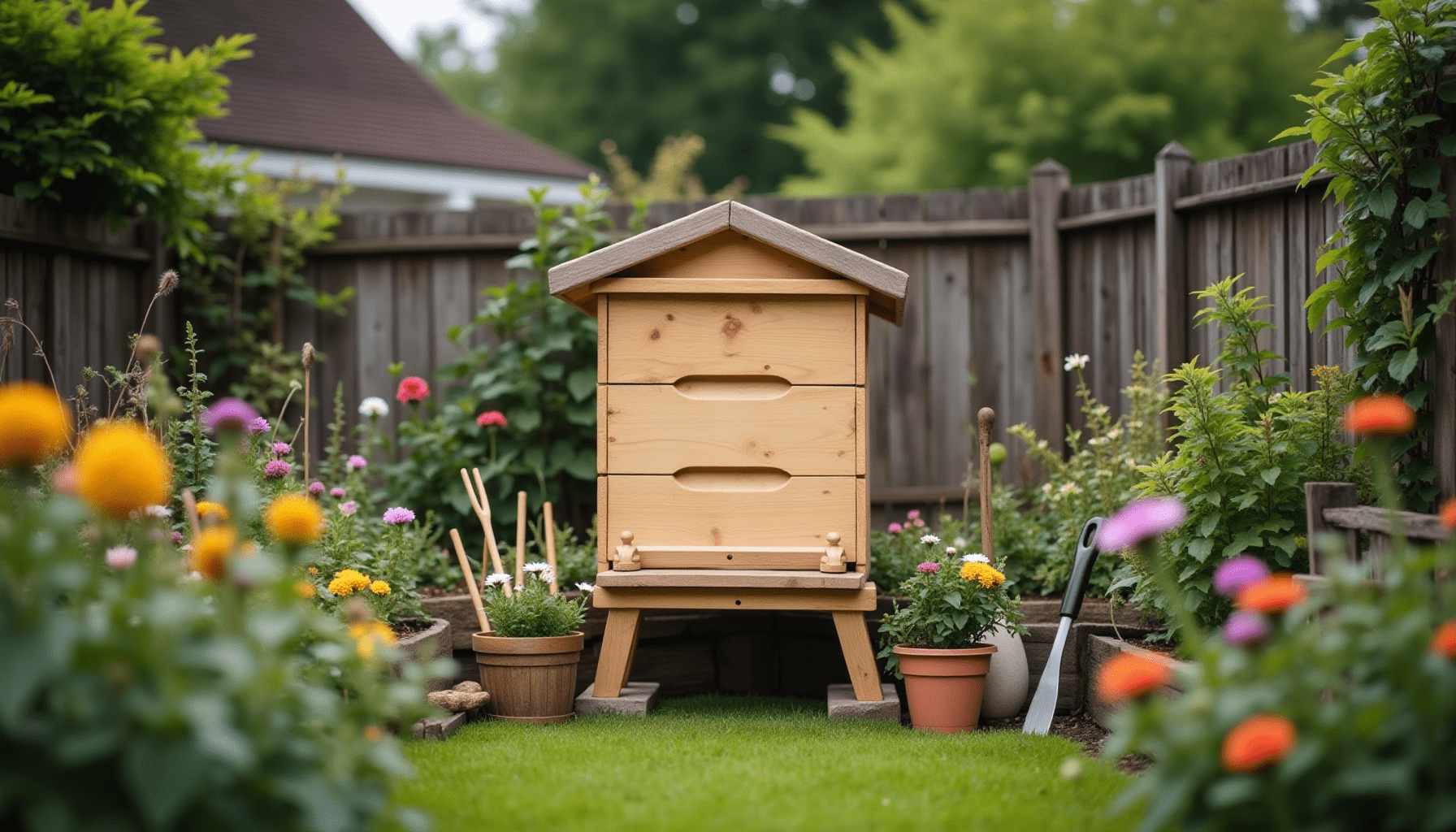
8-frame vs 10-frame, assembled vs unassembled: choosing the format that fits your body and schedule
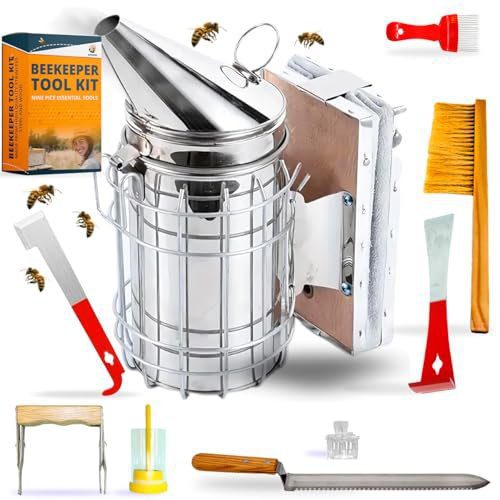
SunVara Bee Keeping Starter Kit Beekeeping Supplies, Bee Keeping Supplies-All Beekeeping Tools Bee Supplies and Equipment, Honey Bee Hive Starter Kit Tools Beekeeping Bee Smoker for Beekeeping
This kit provides all the necessary tools for a beginner beekeeper, including a smoker and hive tool, which are crucial for safe hive inspections.
Most new beekeepers do not quit because bees are “too hard.” They quit because the gear becomes frustrating: boxes are heavier than expected, assembly takes longer than planned, or parts do not match what their mentor uses. Two choices drive most of that experience: frame count and assembly level.
8-frame vs 10-frame: the lifting reality
A full deep can be heavy, especially during a nectar flow. Many experienced keepers plan their equipment around what they can lift safely, repeatedly, and without twisting.
Comparison chart: 8-frame and 10-frame starter kits
| Feature | 8-frame | 10-frame |
|---|---|---|
| Weight per box | Lighter, easier on backs | Heavier, fewer trips |
| Capacity per box | Slightly less | Slightly more |
| Availability | Good, sometimes less local stock | Very common |
| Beginner comfort | Often higher if lifting is a concern | Fine if you can lift confidently |
Practical rule: If you have any back, shoulder, or wrist issues, strongly consider 8-frame or plan on using medium boxes for honey supers.
Assembled vs unassembled: time is part of the cost
Suppliers commonly sell both formats, including the assembled and unassembled beginner kit options outlined by Dadant & Sons.
Assembled kits
- Faster start
- Fewer mistakes with box squareness and frame spacing
- Higher price
Unassembled kits
- Lower cost per box
- Requires clamps, glue, nails/staples, and time
- Mistakes can create gaps that invite burr comb and headaches
Mini decision tool (pick one):
- Choose assembled if you want to install bees within days of delivery.
- Choose unassembled if you enjoy DIY and can build boxes square and tight.
Actionable takeaway
If your bees are arriving soon (especially a nuc), do not gamble on a weekend build. An assembled kit often prevents a stressful, rushed installation.
What “best” means by budget: essential vs deluxe kits (and how to avoid overbuying)
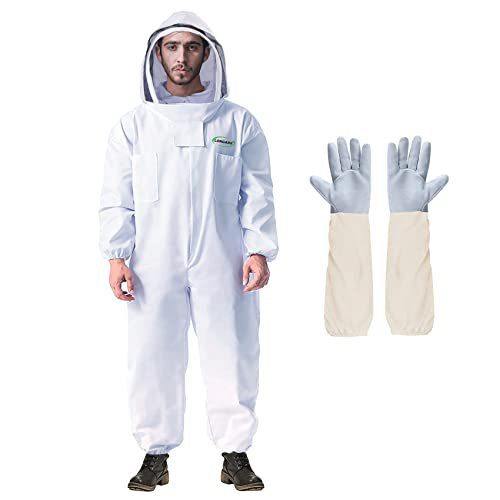
LONGADS Professional Bee Suit for Men and Women, Full Body Beekeeping Suit with Gloves & Protective Round Veil, Size XL (Fits 65-69 Inches / 5’5″-5’9″) for Apiary & Backyard
This protective suit is essential for beginners to reduce fear and sting risk during hive inspections, aligning with the article’s emphasis on safety.
“Best” depends on your goal for year one. Do you want to learn inspections and overwinter a healthy colony? Or are you aiming for a honey harvest in the first season? Your kit should match that intent.
Most reputable brands offer a ladder of kits: essential, deluxe, and “ultimate.” You can see this pattern across suppliers such as Mann Lake hive kits, curated beginner bundles from Betterbee, and retailer collections like Galena Farms starter kits or Lappe’s Bee Supply beginner kits. The names vary, but the differences are predictable: number of boxes, quality of protective gear, and included tools.
Budget tiers (what you’re really paying for)
Essential (lean start)
- Typically: 1 deep (sometimes 2), basic covers and frames, smoker/hive tool, minimal protective gear
- Best for: cautious budgets, people unsure they will stick with it
- Risk: you may need to buy the second deep quickly during spring buildup
Deluxe (balanced beginner)
- Typically: 2 deeps, possibly a medium super, better veil/jacket, smoker and hive tool
- Best for: most beginners in temperate climates
- Benefit: fewer urgent add-on purchases mid-season
Ultimate (fully loaded)
- Typically: multiple supers, full suit, extra tools and accessories
- Best for: confident beginners with mentorship and storage space
- Risk: extra boxes can sit unused and attract wax moths if stored poorly
A simple “don’t overbuy” rule that still protects your bees
More equipment is not always better on day one. Bees manage temperature and defend space more easily when the hive volume matches colony strength. Starting with a tall stack of empty boxes can slow them down in cool weather and may invite pests.
Visual: “Add space as needed” ladder
- Start: 1 deep with frames (or a nuc in a deep)
- Add: second deep when frames are being drawn and used
- Add: honey super when brood boxes are strong and nectar flow begins
Actionable takeaway
A balanced kit is usually one that includes two deep brood boxes and quality protective gear, but does not force you to place every box on the hive immediately.

The overlooked essentials: bees, Varroa monitoring, placement, and safety planning
A starter kit is the gear. Successful beekeeping is the gear plus decisions you make before your first bee arrives.
1) Bees: package vs nuc (and why your kit must match)
Most kits assume Langstroth frames, but you still need to choose how your colony begins.
Package bees
- A box of worker bees plus a caged queen
- Pros: often cheaper, widely available
- Cons: slower buildup, no drawn comb
Nucleus colony (nuc)
- A small established colony on frames with brood and food
- Pros: faster start, often easier for beginners
- Cons: costs more, availability is limited, must match your frame size
Quick match check
- If you buy an 8-frame kit, confirm your nuc frames are compatible.
- If you buy 10-frame, you still need the correct frame size (deep vs medium).
2) Varroa: your kit is not complete without a monitoring plan
Varroa mites (Varroa destructor) are a top stressor for managed honey bees, and backyard hives are not exempt. Even if your kit includes a screened bottom board, you still need a reliable way to measure mite levels and respond.
Beginner-friendly monitoring options (visual list)
- Sticky board counts (simple, less precise)
- Alcohol wash or similar sampling methods (more reliable)
If you are looking for a starting point, check region-specific recommendations from a local extension service or beekeeping association. Many beekeepers also use national guidance and research summaries from the USDA Agricultural Research Service to understand current bee health priorities.
3) Hive placement: the best kit cannot fix a bad site
A good site reduces stress on both bees and beekeeper.
Placement checklist
- Morning sun, especially in cooler climates
- Dry ground with good drainage
- Slight elevation (stand or blocks)
- Wind protection when possible
- Water source nearby or provide one
4) Sting safety: plan like a responsible adult, not a fearless hobbyist
Most stings are minor, but allergic reactions can happen. Medical literature often cites a small percentage of adults experiencing more serious reactions. Beginners should treat protective gear as normal safety equipment, like gloves and eye protection in a workshop.
Basic readiness checklist
- Keep a veil that seals well around the neck and shoulders
- Know the signs of anaphylaxis
- Have a plan for who to call and where to go if a reaction occurs
- Consider discussing sting allergy risk with a clinician if you have concerns
This is also where it helps to think about other outdoor bite and sting issues around your home. If you are building a safer backyard routine, InsectoGuide’s guides on Mosquito Bite Treatment: Complete Relief Guide and Mosquito-Borne Diseases: Complete Prevention Guide pair well with beekeeping safety planning.
Actionable takeaway
Order bees only after your kit is on-site and ready. Then add Varroa monitoring to your calendar the same way you add inspections.
Key takeaways + next steps
The best beekeeping starter kits are the ones that make your first season simpler: standard Langstroth parts, complete frames, real protective gear, and the tools that keep inspections calm and controlled.
Remember these five points:
- Choose Langstroth equipment for compatibility with mentors, parts, and learning resources.
- Two deep brood boxes is a strong default for many beginners, but add space as the colony grows.
- Pick 8-frame if lifting is a concern; pick 10-frame if you want maximum standardization and do not mind heavier boxes.
- Do not treat any kit as “complete” without budgeting for bees and Varroa monitoring.
- A good site and a safety plan prevent many early-season problems.
Next step: decide whether you are starting with one hive or two, then build a simple shopping list that includes your kit plus bees, a feeder, and Varroa monitoring tools. For broader backyard bite prevention while you work around hives, see How to Mosquito-Proof Your Backyard: Complete Guide and keep the Mosquito Bite Treatment: Complete Relief Guide bookmarked for summer field days.
As an Amazon Associate, I earn from qualifying purchases. Product recommendations are based on real reviews and independent research.


Pingback: Discover the Best Bee Smokers for Effective Beekeeping Practices