You spot droppings under the sink or hear something scratching in the ceiling, and the first question is always the same: is it a mouse or a rat? The fastest tells are size, droppings, and where it nests. A house mouse (Mus musculus) is small, with oversized ears and a thin tail, and it leaves pointed droppings the size of a grain of rice. A rat is two to four times bigger and drops blunt, capsule-shaped pellets, and Norway rats burrow at ground level while roof rats climb into attics. Get the ID right before you buy anything, because it sets your trap size, your bait, and where you look.
Bat guano is the fuller treatment of the crush test that separates them.
Size, droppings, and nesting separate a mouse from a rat, and the ID decides how you respond: a house mouse is small with big ears and rice-grain droppings, while Norway and roof rats are much larger with blunt, capsule-shaped droppings and different hiding spots.
- The confirming feature: Dropping shape and size, pointed rice grains for a mouse, blunt capsules up to three-quarters of an inch for a rat.
- Most-confused look-alikes: Voles, shrews, and chipmunks, told apart by tail, snout, and whether the damage is indoors or in the yard.
- What it means: Mice take small traps near the wall; rats need bigger traps and a few days of caution before they touch them.
Mouse or rat in two lines
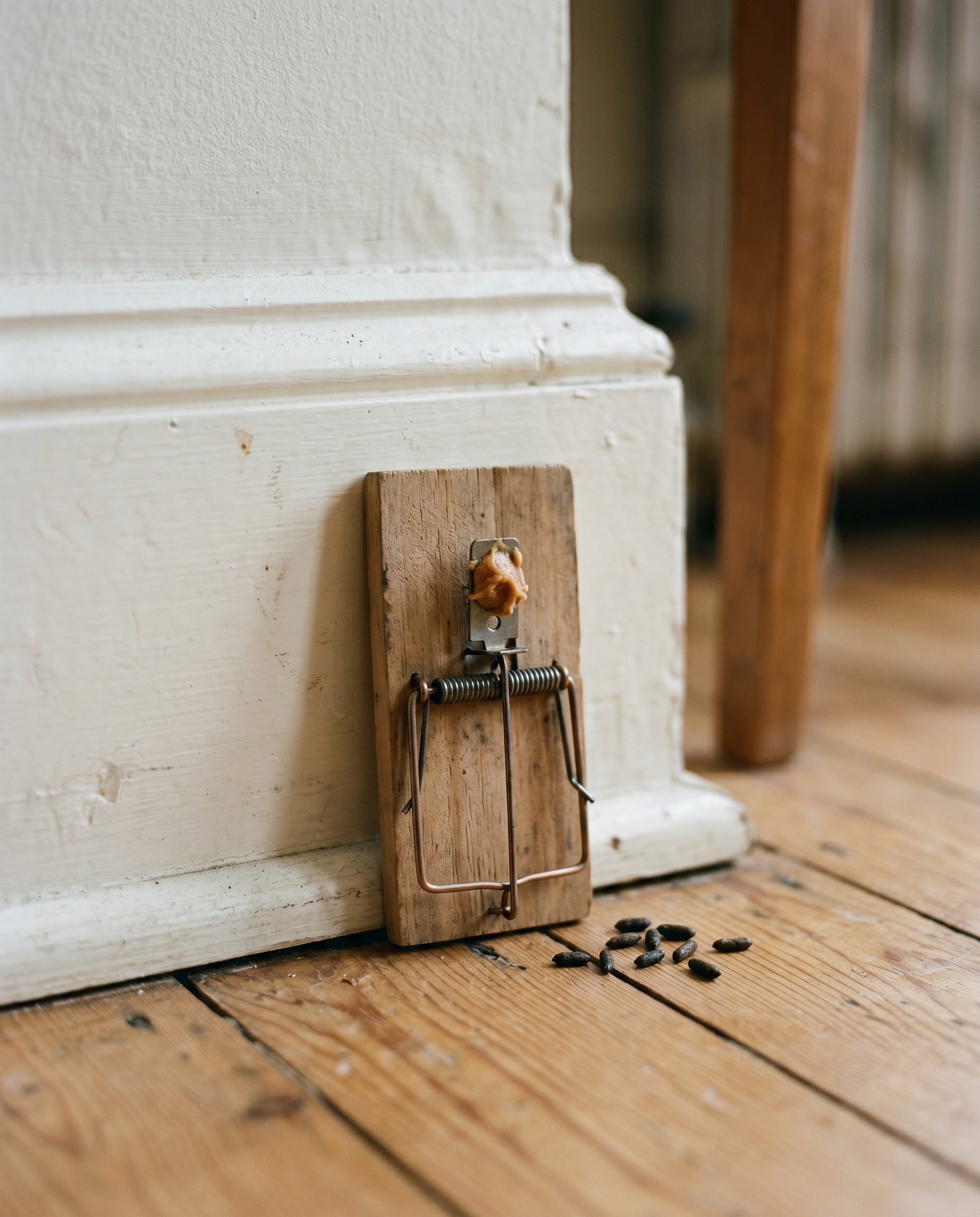
A house mouse is small, roughly two to four inches in the body with a tail about the same length again, dusty gray-brown, and the giveaway is the ears, which look too big for the head. It weighs less than an ounce, so it fits through a gap the width of a pencil. The droppings are the size and shape of a grain of rice, pointed at the ends, and you find them scattered along baseboards and inside cupboards.
A rat is unmistakably heavier when you see one. The two species in US homes are the Norway rat (Rattus norvegicus) and the roof rat (Rattus rattus), and both run six to nine inches in the body before the tail. A rat’s droppings are blunt capsules, a quarter inch to three-quarters of an inch long, far bigger than a mouse’s. The single fastest split is the dropping: if it is rice, you have mice, and if it is something closer to an olive pit, you have rats. For the full removal playbook once you know which, our guide to getting rid of mice and guide to getting rid of rats split by species for a reason.
The droppings tell you first
Droppings are the most reliable ID because you almost always find them before you see the animal. Shape matters more than count. Mouse droppings are about an eighth of an inch, slender, and tapered to a point at each end, the way a grain of rice is tapered. Rat droppings are blunt or rounded at the ends and three to six times the size. Roof rat pellets tend to be slightly curved and pointed at the tips, while Norway rat pellets are fatter with blunt ends, which is a useful second-level split once you know it is a rat.
Freshness reads off color and texture. New droppings are dark and soft with a slight shine, and they go gray, dry, and crumbly within a week or so, which tells you whether the activity is current or old. The UC IPM Pest Notes on the house mouse describes the same rice-grain pellet and the grease-marked runways mice leave along walls. One safety rule before you clean any of it up: never sweep or vacuum dry droppings, because that can aerosolize hantavirus from deer mice and other wild rodents. Open windows to air the room, wet the droppings with a bleach or disinfectant solution, wear gloves, then wipe and bag them. If anyone develops fever, body aches, or breathing trouble after a cleanup, see a doctor.

Size, tail, and snout up close
Once you see the animal, the body gives you a clean answer in a second. A mouse has a small, triangular head and a thin, lightly furred tail that is roughly as long as its body. The feet are small, the eyes and ears look large in proportion, and the whole animal could sit on a tablespoon. People consistently mistake a young rat for an adult mouse, so do not go by size alone with a juvenile.
That is where the head settles it. A young rat has a noticeably blunt, heavy muzzle and large feet that look out of proportion to its body, while a mouse keeps a delicate, pointed snout and dainty feet at every age. Tail texture helps too: a rat’s tail is thicker, scalier, and often shorter than its body in the Norway rat, while a roof rat’s tail is longer than its body. Color is the weakest clue, since both run gray to brown, so lead with head shape and foot size instead.
Voles, shrews, and chipmunks get blamed
Plenty of “mouse” sightings are not mice at all, and the confusion usually happens because all of these are small and brown and fast. The thing that separates them is rarely color. It is tail length, snout shape, and crucially whether the trouble is indoors or out in the yard. Voles wreck lawns and garden roots and leave surface runways in the grass, but they rarely come inside. Shrews have a long pointed snout and tiny eyes and eat insects, not your pantry. Chipmunks have stripes and a bushy tail and live outdoors. Here is the quick separation.
| Animal | Key feature | Where you find it |
|---|---|---|
| House mouse | Big ears, thin tail as long as the body, rice-grain droppings | Indoors, along walls and in cupboards |
| Norway rat | Heavy body, blunt muzzle, tail shorter than body | Ground burrows, basements, crawlspaces |
| Roof rat | Slimmer, tail longer than body, agile climber | Attics, rafters, trees, upper floors |
| Vole | Stocky, very short tail, small ears | Lawns and gardens, surface runways |
| Shrew | Long pointed snout, tiny eyes, velvety fur | Outdoors, leaf litter, rarely indoors |
| Chipmunk | Body stripes, bushy tail, larger size | Outdoors, yards, woodpiles, near foundations |
If the damage is a chewed bag in the pantry, you are dealing with a mouse or a rat. If it is tunnels in the grass or nibbled bulbs, look at voles and leave the indoor traps in the box.
Where each one nests
Where the animal lives is part of the ID, and it also tells you where to set traps. A house mouse nests close to food, usually within about thirty feet, in wall voids, behind appliances, in stored boxes, and in drawer backs, building a shredded nest of paper and insulation. Mice are curious and sample new objects readily, which is why fresh traps work fast on them.
Rats split by species, and that split decides which floor of the house to search. Norway rats are ground dwellers that dig burrows along foundations, under slabs, and in basements and crawlspaces. Roof rats are climbers that take the attic, the rafters, and the upper floors, and they travel along utility lines and tree limbs to get there. UC IPM’s guidance on Norway and roof rats lays out this vertical split and notes that rats are far more cautious than mice, a behavior called neophobia. A new trap can sit untouched for several days while a rat decides it is safe, so bait an unset trap first and only arm it once the bait is being taken. If you are still piecing together what is moving through your house, our walkthrough of the signs of mice in the house covers the grease marks, gnawing, and runway clues that go with the droppings.
What the ID changes about your response
Getting the species right is not academic, because it sets three practical things. Trap size is the first. A mouse snap trap is too small to kill a rat humanely and will only injure it, so match the trap to the animal: small snap or electronic traps for mice, large rat-sized snap or electronic traps for rats. Skip glue boards in both cases, since they are inhumane and catch fewer animals than a well-placed snap trap.
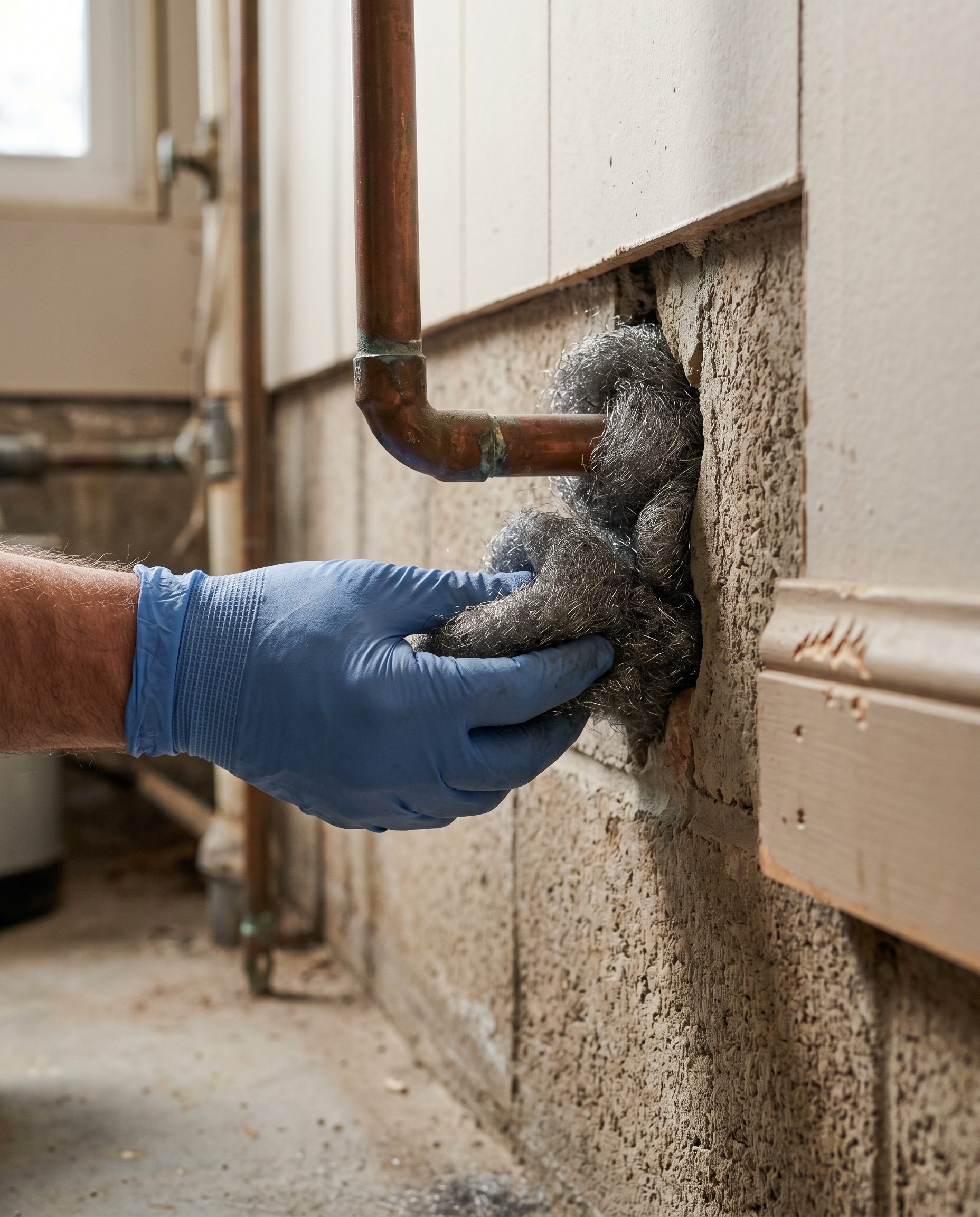
Placement and bait come next. Mice run tight to walls, so set mouse traps flush against the baseboard with the trigger toward the wall, every six to ten feet where you see droppings. Rats follow the same wall-hugging habit but need traps spaced farther apart and pre-baited for several days first. The most durable fix for either is sealing them out, since both follow the EPA’s integrated, prevention-first approach to pest control: pack gaps with steel wool and hardware cloth, store food in sealed containers, and cut off water.
Poison bait is a last resort, not a first move. Rodenticides cause secondary poisoning when an owl, hawk, dog, or cat eats a poisoned rodent, and the EPA restricts the most hazardous second-generation rodenticides for consumer use for exactly that reason. If you use bait at all, use locked tamper-resistant stations and never loose pellets, because rodenticides can poison pets and wildlife through secondary exposure and a child can reach scattered bait. For most homes, trapping and exclusion clear the problem without any of that risk, and one more thing to drop: ultrasonic plug-in repellents are largely unproven and do not clear an infestation, so do not spend money on them.
Common questions
Is it a mouse or a baby rat?
Look at the head and feet, not the size. A young rat has a blunt, heavy muzzle and oversized feet that look too big for its body, while a mouse of any age keeps a delicate pointed snout, dainty feet, and ears that look large for its head. Droppings settle it too, since even a juvenile rat leaves blunt capsules far bigger than a mouse’s rice-grain pellets.
What do mouse droppings look like versus rat droppings?
Mouse droppings are about an eighth of an inch, slender, and pointed at both ends like a grain of rice. Rat droppings are blunt or rounded capsules a quarter inch to three-quarters of an inch long, several times larger. If the pellet looks like rice, you have mice; if it looks closer to an olive pit, you have rats.
Could the droppings be from a vole or shrew instead?
Usually not, if you found them indoors. Voles and shrews live outside and rarely enter homes, so droppings inside your pantry or along a baseboard almost always mean a mouse or a rat. Voles leave their sign in lawn runways and chewed roots, and shrews leave little household evidence at all.
Do I need a different trap for a rat than a mouse?
Yes. A mouse snap trap is too small to kill a rat cleanly and will only injure it, so use a large rat-sized snap or electronic trap for rats and the small version for mice. Glue boards are a poor choice for either because they are inhumane and catch fewer animals than a properly placed snap trap.
Where should I look first based on the rodent?
Search where the species nests. Mice stay within about thirty feet of food in wall voids and cupboards, Norway rats burrow at ground level in basements and crawlspaces, and roof rats climb into attics and rafters. Matching your search to the animal saves you from setting traps on the wrong floor of the house.
Final verdict
If you have rice-grain droppings and an animal with big ears and a delicate snout, it is a house mouse. If the droppings are blunt capsules and the animal is heavy with a thick tail and oversized feet, it is a rat, and the floor it favors tells you whether it is a ground-burrowing Norway rat or an attic-climbing roof rat. Voles, shrews, and chipmunks get blamed for indoor sightings they rarely cause, so let the location and the tail settle those. Pin the ID first, because it picks your trap size, your placement, and where you search, and it keeps you from wasting money on the wrong gear.
Next steps:
– Once you have confirmed mice, work through our guide to getting rid of mice.
– If the droppings say rats, our guide to getting rid of rats splits the approach by species.
– Match the rest of the evidence with our signs of mice in the house walkthrough.