n
n
n
If boxelder bugs and Asian lady beetles are gathering on your house in fall, the fix that actually works is an exterior treatment on the sunny walls where they cluster, done in early fall before they get inside, paired with sealing. The short answer: treat the outside in late summer to early fall, seal the gaps they use to slip in, and spot-handle the few that make it indoors with a vacuum, not a can of spray. In our own place we keep one perimeter spray for the warm fall walls and a handheld vacuum for the stragglers, nothing more. Most lists push indoor wall-spraying as the headline fix; that is the one to skip, and the comparison below shows why timing on the outside beats chasing bugs on the inside.
Where the autumn gathering and the gaps behind it is the actual question, our guide to insects gathering on an outside wall answers it.
nn
n
The win is an early-fall exterior treatment on sunny walls plus sealing, not indoor spraying: hit the outside where they cluster before they get in, seal entry points, and vacuum the few that make it indoors.
n
- n
- Do first (free): Seal gaps around windows, doors, eaves, and utility lines so fewer bugs get inside at all.
- Best for the common case: An exterior perimeter spray on warm, sunny walls applied in late summer to early fall, before they cluster heavily.
- Skip: Indoor wall-spraying and crushing; dead-bug piles attract carpet beetles and crushed lady beetles stain and stink.
n
n
n
n
nn
nn
Seal before you spray
nn
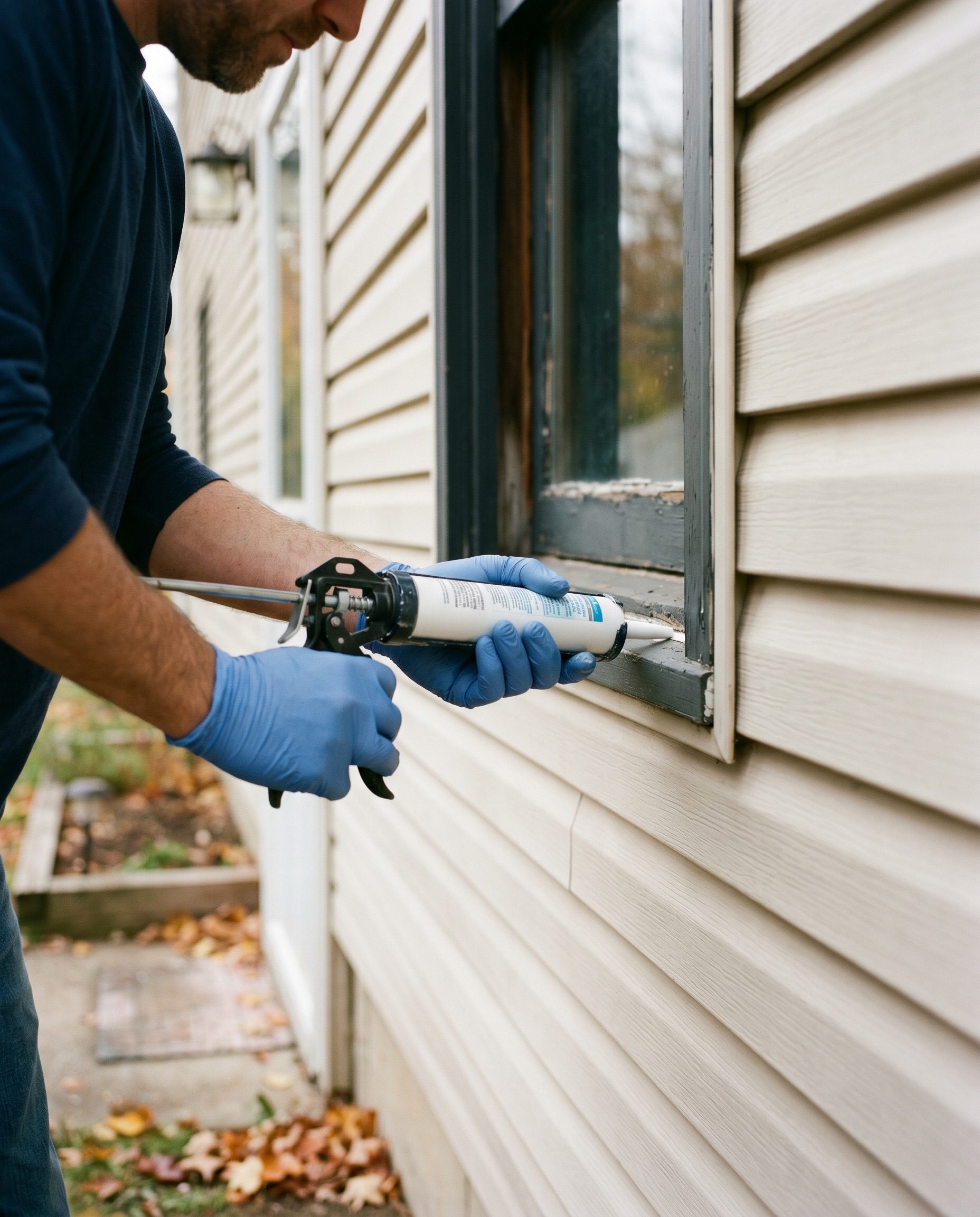
The free step comes first, because exclusion does work no spray can match. Boxelder bugs and Asian lady beetles get indoors through the same gaps you can close in an afternoon: around window and door frames, where utility lines and pipes enter, under loose siding, and at soffit and eave vents. The University of Minnesota Extension’s boxelder bug guidance puts sealing and exclusion first for exactly this reason, since once they are inside the wall voids, no convenient spray reaches them. Caulk the cracks, repair torn screens, and add door sweeps before the weather cools. Our walkthrough on how to get rid of boxelder bugs lays out the sealing order room by room.
nn
These insects do not bite, sting, spread disease, or damage your house. They are a nuisance, not a threat, which is why the responsible plan is exclusion and exterior timing, not carpet-bombing your living space. If you are not sure what you are looking at, our fall-invader ID guide sorts boxelder bugs, stink bugs, lady beetles, and cluster flies apart so you treat the right thing.
nn
Why indoor spraying backfires
nn
Here is the part most “killer” roundups get wrong. Spraying the inside walls feels like action, but it is the weakest move you can make against a fall invader. The bugs you kill in the wall voids and behind baseboards die out of reach and pile up, and dead-bug piles draw carpet beetles that then chew on fabrics and stored goods. The UC IPM guidance on overwintering invaders like the brown marmorated stink bug is direct that indoor spraying is not recommended for this whole group, because it does not stop the influx and creates a second problem.
nn
Crushing is the other trap. Never crush an Asian lady beetle: the University of Minnesota Extension on multicolored Asian lady beetles notes they release a yellow, acrid fluid that stains walls, curtains, and carpet and gives off a foul smell when handled roughly. Boxelder bugs leave their own reddish stain when squashed. One more thing worth saying plainly: native lady beetles and some stink bugs are partly beneficial in the garden, so the goal is to keep these few out of the house, not to wipe out every beetle on the property.
nn
nn
Exterior timing vs indoor chasing
nn
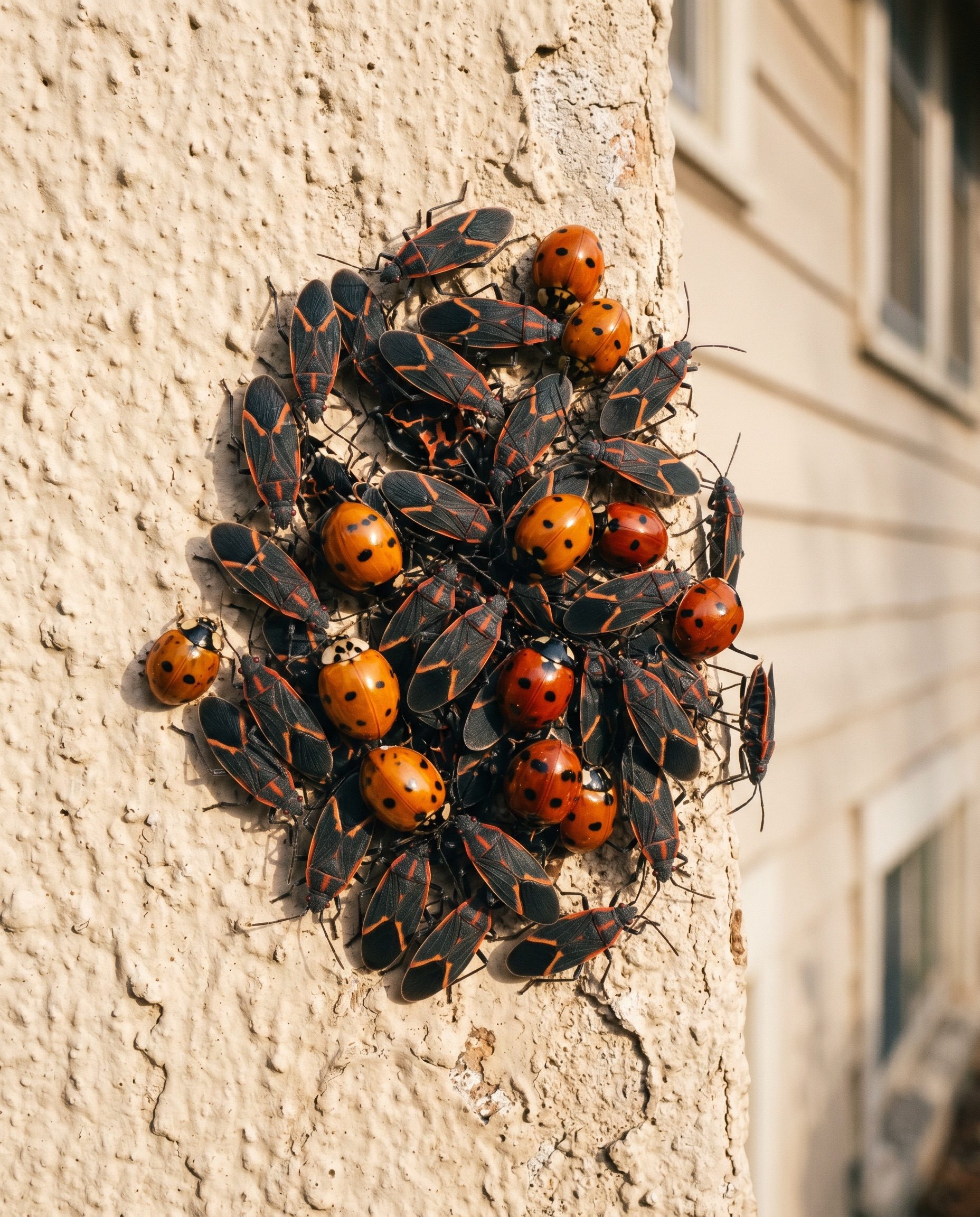
The whole game is timing on the outside. These bugs spend warm fall afternoons basking on the sunny, usually south- and west-facing walls before they squeeze inside to overwinter, and that window is when an exterior treatment earns its place. The point is to treat where and when they gather, not to react after they are already in the bedroom.
nn
| Approach | Best for | Watch-out |
|---|---|---|
| Exterior perimeter spray | Sunny walls in late summer to early fall, before clustering peaks | Follow the label; time it for the warm walls, keep kids and pets off until dry |
| Sealing and exclusion | Every situation, the permanent fix that cuts next year’s numbers | Labor, not a one-time spray; do it before the weather cools |
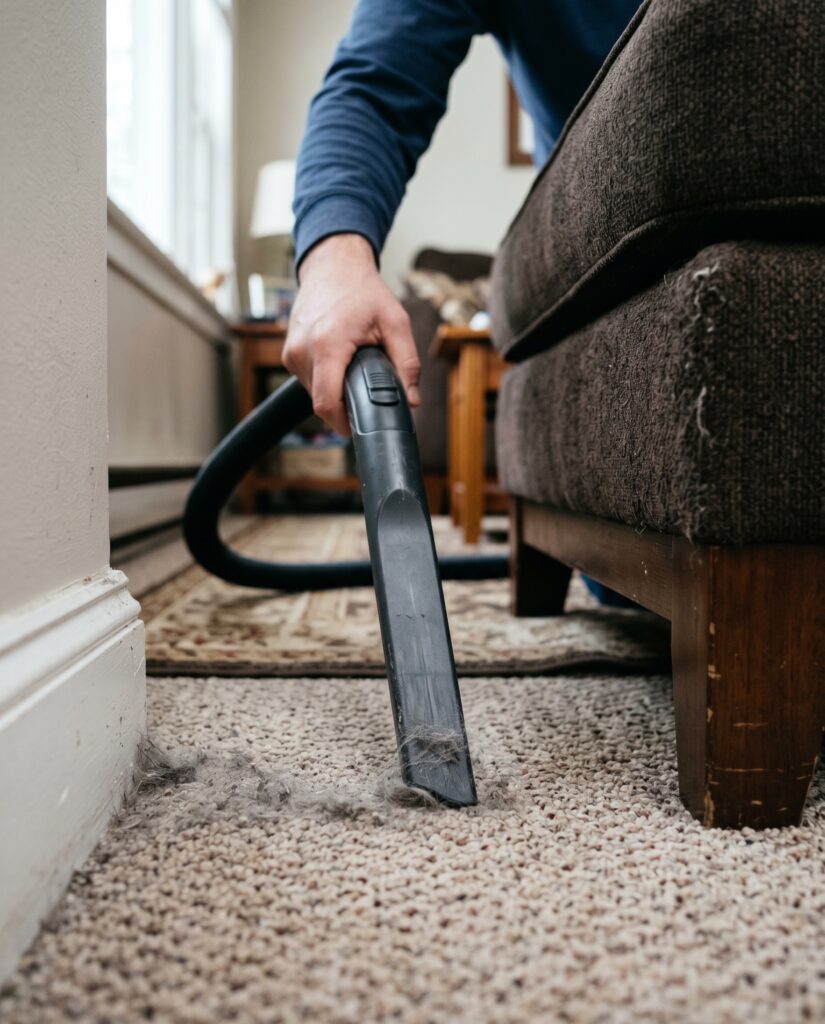
| Vacuuming indoors | The stragglers that already made it inside | Empty the bag or canister outside so they do not stain or smell |
nn
Why not just spray the inside and be done? Because the influx comes from outside, and an indoor can never touches the source. An exterior application on the warm walls, timed before the heavy clustering, intercepts them where they congregate. For the few already indoors, a vacuum is the right tool, full stop. The StopBMSB research consortium’s management guidance reaches the same conclusion for the wider fall-invader group: exclusion plus a well-timed exterior perimeter, with mechanical removal inside, rather than indoor chemical use. Our fall pest-proofing guide pairs the sealing checklist with the right exterior timing.
nn
How to apply the exterior spray
nn
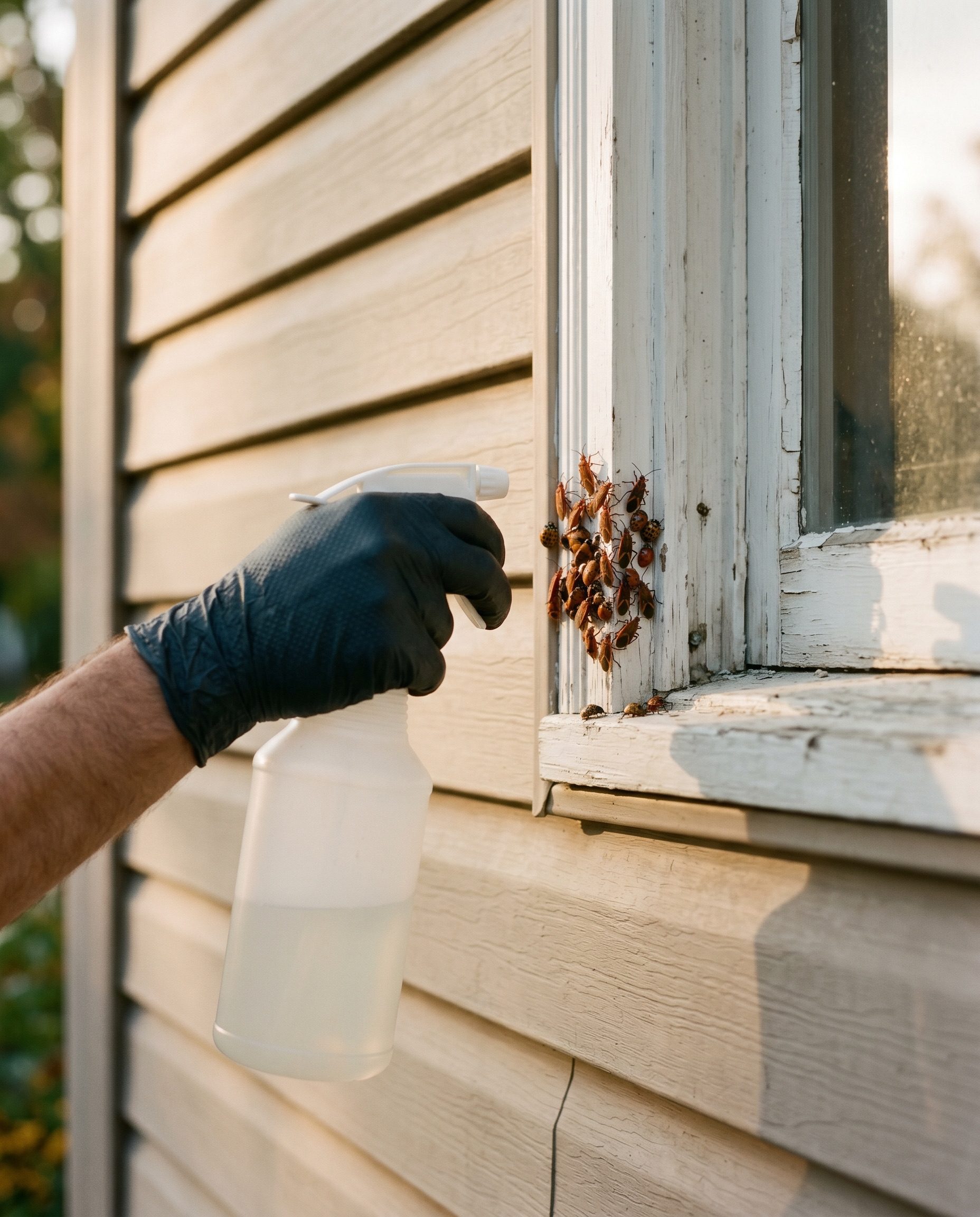
Treat the sunny walls, not the air. Apply a labeled exterior perimeter product to the warm, sun-facing walls and around the gaps these bugs use: window and door frames, eaves, soffits, and where pipes and wires enter. Coverage of the warm clustering walls beats blanketing the whole house, and the early-fall window, before the bugs pack in tight, is when it does the most good. Read and follow the product label, because under federal law the label is the law; the EPA’s safe pest control guidance backs an exclusion-first, label-driven approach and the right perimeter timing.
nn
Treat these cans as the pesticides they are. Keep children and pets off treated surfaces until everything is fully dry, do not apply an indoor product outdoors or the reverse, and never spray surfaces that touch food. If you have any application or exposure question, check the product label first, and if someone is exposed, contact a doctor or your local poison control center. The honest line on these insects: because they are harmless nuisances, a light, well-timed exterior pass plus sealing is plenty, and there is no case for heavy indoor chemical use.
nn
nn
The picks
nn
Cards come after the analysis on purpose, because the job decides what you buy. These three cover a ready-to-use exterior spray, an economical concentrate for large wall areas, and a plant-based option for the stragglers you find inside, and all are common, widely available products for this pest.
nn
InsectoGuide is reader-supported. As an Amazon Associate we earn from qualifying purchases at no extra cost to you.
nn
n 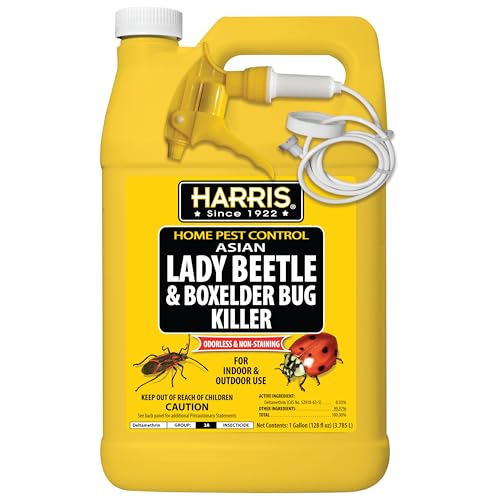 n
n
n
n
A ready-to-use spray for the sunny exterior walls where these bugs cluster.
n
n
nn
n 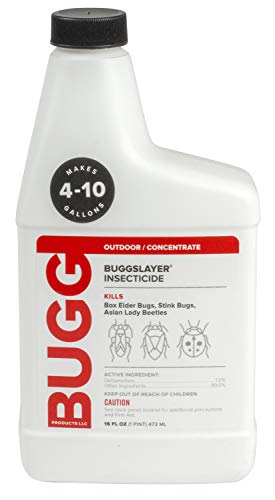 n
n
n
n
A concentrate for covering large exterior walls economically.
n
n
nn
n 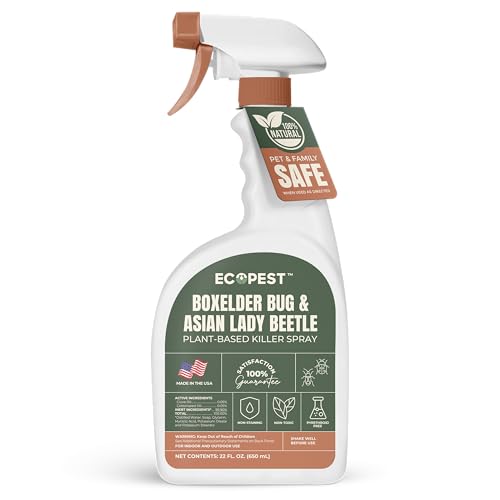 n
n
n
n
A plant-based contact spray for the stragglers you find inside.
n
n
nn
Common questions
nnDo boxelder bugs or Asian lady beetles damage the house or bite?n
No. They are overwintering nuisances that gather on warm walls and slip inside to wait out winter. They do not feed on your home, do not spread disease, and do not bite in any meaningful way, so the goal is keeping them out, not treating an emergency.
nnShould I spray the inside walls where they keep showing up?n
Skip it. Indoor spraying does not stop the influx from outside, and the bugs that die in wall voids pile up and attract carpet beetles. The UC IPM guidance on overwintering invaders advises against indoor spraying for this group; vacuum the stragglers instead.
nnCan I just crush the ones I see?n
Don’t. Crushed Asian lady beetles release an acrid, staining fluid, and boxelder bugs leave a reddish mark, so squashing them on a wall or carpet trades one problem for a stain. Vacuum them up and empty the canister outside.
nnWhen is the best time to treat the outside?n
Late summer to early fall, before the heavy clustering starts. The University of Minnesota Extension ties control to the warm fall window when these bugs gather on sunny walls, so an exterior pass then intercepts them before they get in.
nnWill killing them hurt the good bugs in my garden?n
It can if you overdo it. Native lady beetles and some native stink bugs are partly beneficial, so keep treatment to the house walls and entry points rather than broadcasting it across the yard, and lean on sealing and vacuuming as your main tools.
nn
Final verdict
nn
There is no magic indoor killer for fall invaders, and any list that leads with spraying your walls is steering you wrong. Start free by sealing the gaps around windows, doors, eaves, and utility lines, then time an exterior perimeter treatment on the sunny walls for late summer to early fall, before they cluster heavily. For the few that still slip in, vacuum them up and empty the canister outside; never crush them and never blanket the inside with spray. Boxelder bugs and Asian lady beetles are harmless nuisances that follow the stink bug playbook, so the win is outside-and-early plus sealing, with a light hand that spares the beneficial bugs in your garden.
nn